· Workspace Trends · 7 min read
2026 Flexible Workspace Trends: The Hospitality-Led Office Reset for Indian SMEs
In 2026, a 'Space-as-a-Service' model is redefining India's office landscape. Learn how hospitality-driven flexible workspaces bridge the RTO-flexibility gap, driving growth and compliance for modern businesses.
TL;DR: The 2026 office landscape is defined by structured hybrid work. The winning model for Indian businesses is ‘Space-as-a-Service,’ merging hospitality-grade amenities with flexible terms to bridge the return-to-office (RTO) and agility gap, enabling smarter growth and compliance.
For the Indian entrepreneur or SME founder, the office is no longer just a fixed cost on the balance sheet; it’s a strategic growth lever. The past few years have created a complex challenge: managing rising commercial real estate costs in key hubs like Chennai’s OMR, adapting to employee preferences for flexibility, and finding a workspace that actively supports business scaling. The stark choice between a rigid, capital-intensive traditional lease and the isolation of permanent remote work is now obsolete. A new, dominant model has emerged from the global ‘Great Calibration.’ It is defined by structured flexibility, where businesses anchor key collaborative days in professional environments while empowering focused work remotely. This model is powered by the evolution of flexible workspaces from simple shared desks into full-scale, hospitality-driven professional hubs. In 2026, this isn’t a trend—it’s the new standard for competitive businesses seeking agility without compromise on quality or professionalism.
What Are the 2026 Flexible Workspace Trends?
The 2026 flexible workspace trends represent the maturation of the hybrid work era, moving beyond basic co-working to a sophisticated ‘Space-as-a-Service’ model. This model is characterised by hospitality-grade management, wellness-centric design, and deeply embedded flexibility that aligns with corporate real estate strategies. It is the strategic response to bridging the gap between organisational need for collaboration and culture (Return-to-Office) and employee demand for autonomy and work-life balance. For Indian businesses, it translates to accessing premium, professionally managed environments on agile terms that support rapid scaling, talent retention, and operational de-risking.
The Core Driver: From Transactional Space to Growth-Centric Service
Gone are the days when workspace was a passive, long-term lease. The shift is towards an active partnership where the environment is a service designed to enhance business outcomes. The data is clear: corporate adoption has passed a tipping point, with 58% of global firms now embedding flex space into their portfolios. Why? Because a traditional 5-year lease in a Grade-A building locks in capital and risk, especially during India’s dynamic economic cycles and festive season downtimes. For an Indian SME, this service-centric approach means predictability. Your workspace partner handles the burdens of facilities management, GST-compliant billing, high-speed IT infrastructure, and maintenance—freeing you to focus on product development and client acquisition. The dramatic 37% shortening of average lease terms to just over 6 years reflects this demand for agility; businesses now require the ability to scale a team up or down without being trapped by real estate commitments.
Crizone Business Centre Insight: “Our members, from startup founders to branch managers, prioritise operational calm. They seek a ‘plug-and-play’ professional address that eliminates the chaos of dealing with separate vendors for AC, internet, and pantry supplies, which is especially valuable in Chennai’s humid climate.”
| Cost Factor | Traditional Chennai Office (1,000 sq. ft, OMR) | Flexible ‘Space-as-a-Service’ Solution (10 Dedicated Desks) |
|---|---|---|
| Monthly Fixed Cost | ₹ 2.5 Lakhs (Rent + Maintenance) | ₹ 1.8 - 2.2 Lakhs (All-Inclusive Membership) |
| Security Deposit | ₹ 10-15 Lakhs (Refundable, capital blocked) | ₹ 1-2 Lakhs (Minimal upfront capital) |
| Fit-Out & Furniture | ₹ 8-12 Lakhs (One-time Capex) | ₹ 0 (Included in service) |
| Admin Overheads | HR for facility management, multiple vendor contracts | Single Point of Contact for all services |
| Agility | Locked in for 3-5 years minimum | Scale team size up/down with 1-month notice |
How Does Hospitality-Driven Design Impact Your Team’s ROI?
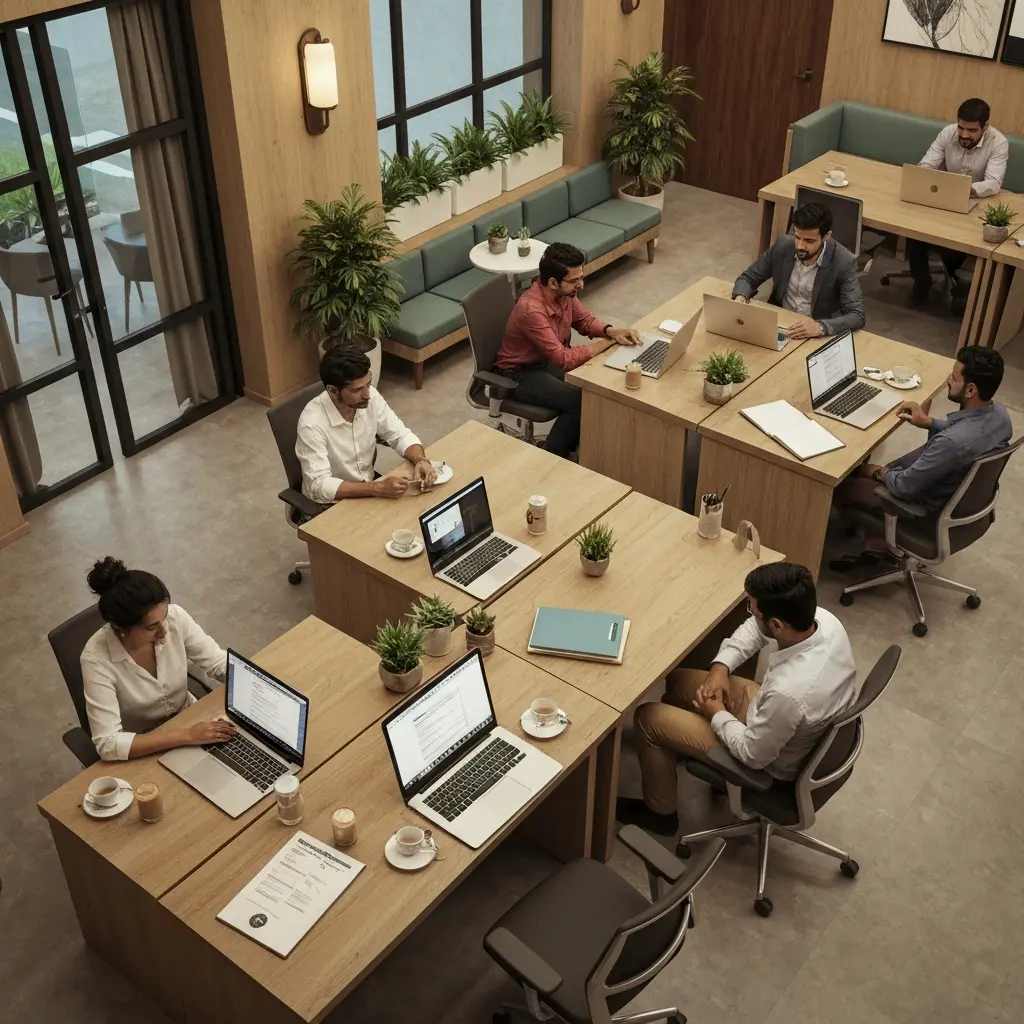
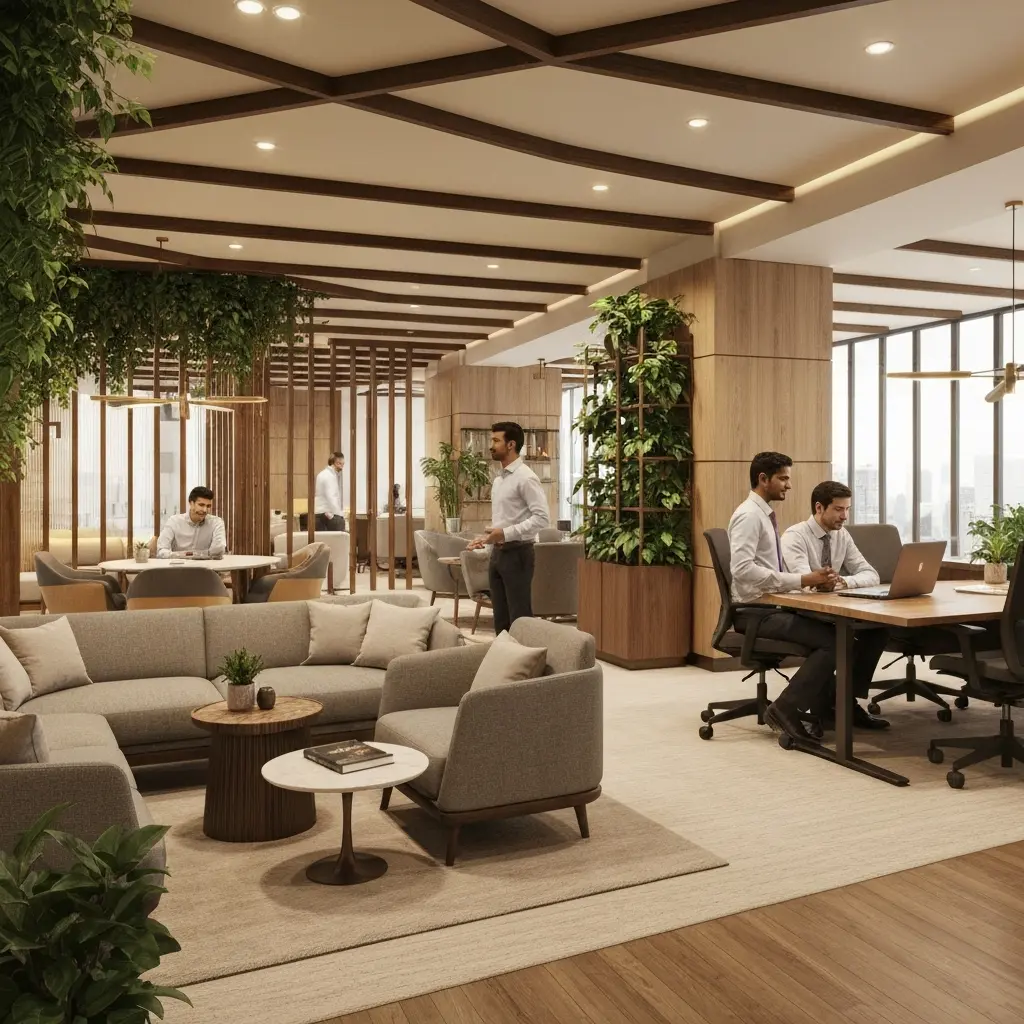
The term ‘flexible workspace’ in 2026 is synonymous with intentional, wellness-centric design. It’s a direct response to the employee bargaining power shift. While extreme resistance to RTO has softened, talent still expects a workplace that values their well-being and productivity. A staggering 70% of new builds now feature biophilic interiors, meditation zones, and advanced air filtration—these are not luxuries but proven ROI metrics for retention and performance. Imagine your development team taking a brainstorming break in a quiet, plant-filled courtyard instead of a cramped pantry. Or your sales head preparing for a crucial pitch in a sound-proof phone booth after a quick meditation session. This environment directly counters the common distractions of a home office or the sterile monotony of a traditional cubicle farm. It’s about creating a destination that employees want to come to for high-impact work, making structured ‘anchor days’ genuinely productive.
[Image of a professional infographic showing the ROI of a wellness-designed workspace: arrows connect ‘Biophilic Design’ to ‘15% Increase in Reported Well-being’, ‘Dedicated Collaboration Zones’ to ‘23% Faster Project Cycle Time’, and ‘Hospitality Service’ to ‘90% Tenant Retention Rate’.]
Growth Tip for Founders: Your workspace is a talent retention tool. A professional, wellness-focused environment signals that you invest in your team’s health and success, making it easier to attract and retain top performers in competitive Indian markets like Chennai or Bangalore.
Is a Structured Hybrid Model Right for Your Indian Business?
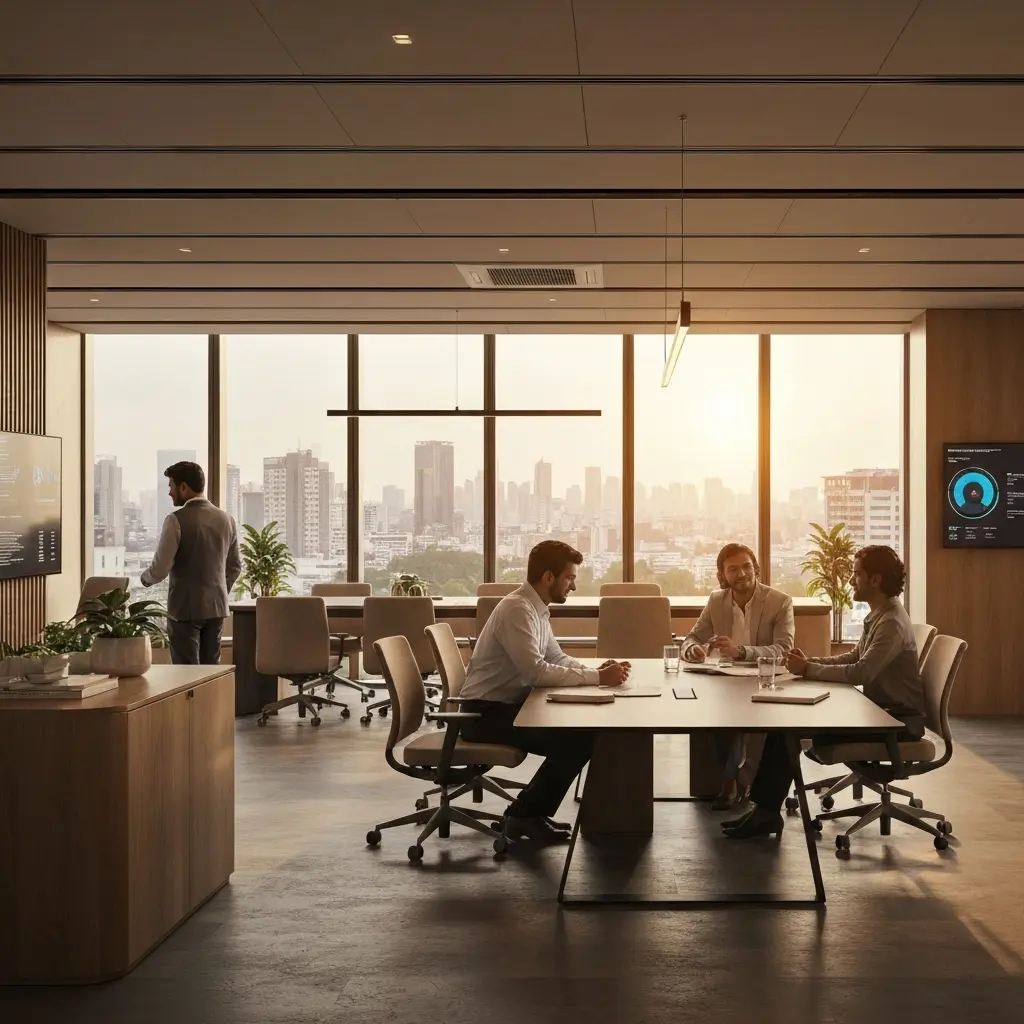
The debate is settled: the future is hybrid, but it requires structure to succeed. The 2026 data shows 77% of firms now use designated ‘anchor days’ in flexible suites specifically for collaboration, team-building, and client meetings. This model answers the core need for culture and cohesion that pure remote work lacks, without enforcing a costly, underutilised five-day office week. For an Indian business, this means you can establish a prestigious corporate presence in a prime location like Chennai’s Guindy or Anna Nagar—without bearing the full cost. A 10-person team might use a private cabin for three anchor days a week for whiteboarding sessions and client workshops, while working remotely on focused tasks. This maximises the value of the physical space while offering the flexibility that modern professionals value. As noted by JLL in their 2026 India Real Estate Outlook, “Flexible spaces are becoming the nucleus for hybrid work strategies, enabling portfolio resilience.”
The 2026 Outlook for India’s Workspace Market
In 2026, the Indian flexible workspace market will accelerate beyond metro cores into thriving secondary cities and suburban hubs, mirroring the global ‘Sun Belt’ trend. Expect growth in locales like Coimbatore, Chandigarh, and Pune’s emerging corridors. Landlords of traditional buildings will increasingly de-risk by launching their own branded flex offerings, increasing supply and competition. Furthermore, niche demand for ‘Industrial Flex’ or co-warehousing will surge, catering to the booming D2C and e-commerce sector needing combined office and logistics setups. The clear winner will be the operator who perfects the hospitality ethos—where the front desk team knows your name, your preferences, and proactively ensures a flawless professional experience, every single day.
Key Takeaways
- Adopt ‘Space-as-a-Service’: Move from a capital-intensive lease to an operational expense model that provides agility and predictable billing.
- Prioritise Hospitality & Wellness: Choose a partner whose design and service standards actively enhance employee well-being and productivity, a key factor for retention.
- Implement Structured Hybrid: Define 2-3 weekly ‘anchor days’ for collaboration in a professional flex hub to build culture without mandating a full-time office presence.
- Decentralise Strategically: Consider flexible centres in suburban or secondary city hubs to reduce employee commute stress and tap into local talent pools.
- Future-Proof with Flexibility: Integrate flexible workspace solutions into your long-term real estate strategy to mitigate vacancy risk and scale on demand.
The 2026 workspace reset is ultimately about aligning your physical environment with your strategic business goals. It moves the office from a fixed overhead to a dynamic asset that supports talent, enables agility, and projects professionalism. The businesses that thrive will be those that recognise this shift and partner with providers who deliver not just space, but a comprehensive growth-enabling service. For businesses in Chennai looking to navigate this new landscape, Crizone Business Centre embodies this 2026 ethos. We provide the hospitality-driven, professionally managed flexible environments that bridge the RTO-flexibility gap, allowing you to focus squarely on scaling your venture. Explore how a calibrated workspace strategy can become your competitive advantage.
Continue your workspace search
Explore the most relevant Crizone pages next
If this article is part of your Chennai workspace research, these pages help you move from reading into comparing live plans, locations, and fit.
Explore coworking plans in Chennai
Compare day passes, dedicated desks, private offices, meeting rooms, and virtual office options from one commercial hub page.
Book a day pass in Chennai
Best fit if you need occasional workspace access, a short productive break from home, or a flexible desk for a single day.
Compare dedicated desk options
A stronger fit for regular monthly use when you want a fixed seat, better routine, and predictable workspace costs.