· Business Growth & Workspace · 6 min read
Circular Pivot: 2026 Net-Zero Flexible Workspace Strategies
As regulations and costs rise, flexible workspaces in 2026 must adopt circular design, EaaS models, and data-led sustainability to meet net-zero goals and tenant demands.
TL;DR: The 2026 workspace mandate is net-zero performance, not just green features. Success requires a circular economy strategy—embracing Energy-as-a-Service, urban mining, and smart refurbishment to cut costs, comply with regulations, and attract top talent in India’s competitive market.
For the Indian business leader, the operational landscape is increasingly complex. Beyond managing talent and navigating GST, you are now accountable for your company’s environmental footprint. Large enterprise clients and global partners are demanding audit-ready data on your Scope 3 emissions, which includes the impact of your office space. A traditional five-year lease in a glass tower on OMR no longer signifies growth; it can represent a costly, inflexible, and unsustainable liability. The pivot for 2026 is towards agile, high-performance spaces that are built on principles of regeneration, not just consumption, turning your operational base from a cost centre into a strategic growth asset.
What is a Circular Economy Workspace?
A Circular Economy workspace is designed to eliminate waste and pollution, circulate materials, and regenerate nature. It moves beyond basic recycling to a systemic approach where every element—from construction materials to energy systems—is sourced responsibly, used efficiently, and recovered for future use. This creates a Net-Zero Workspace that actively reduces its carbon footprint through strategies like adaptive reuse of buildings, modular fit-outs for easy reconfiguration, and subscription-based clean energy models, ensuring long-term value and compliance.
Why Your Office Footprint is Now a Boardroom Issue
Enterprise clients, particularly those with EU operations or over ₹3,700 Crore in turnover, are now legally bound by frameworks like the Corporate Sustainability Reporting Directive (CSRD). They must meticulously report their Scope 3 emissions—the indirect emissions from their value chain, which includes their office providers. Simply stating your space has “green features” is insufficient. In 2026, premium tenants demand granular, real-time data on energy consumption, water use, and material provenance. Your choice of workspace directly impacts your clients’ compliance and your own ESG standing.
Crizone Pro Tip: When negotiating with large clients or investors, highlight your workspace’s data-readiness. Providing metrics on reduced per-capita carbon footprint can be a decisive competitive advantage in 2026.
This shift makes the traditional Capex-heavy office model risky. Why bear the full capital cost and embodied carbon of a new fit-out when alternatives exist? The 2026 answer is refurbishment and urban mining. Reusing an existing building shell can save 50-70% in embodied carbon compared to new construction. Sourcing materials locally—like reclaimed wood from old Chennai chettinad homes or recycled glass—cuts supply chain emissions and supports the community.
| Cost & Impact Factor | Traditional Office Fit-Out (Chennai) | Circular Economy Refurbishment |
|---|---|---|
| Upfront Capital Cost | High Capex (₹50-80 Lakhs for 2,000 sq. ft.) | Lower Capex; shift to operational Opex models |
| Embodied Carbon | Very High (new materials, transport) | Up to 70% lower (reused structure, urban-mined materials) |
| Long-term Flexibility | Low (fixed walls, difficult to reconfigure) | High (modular, demountable systems) |
| Data for ESG Reporting | Limited or estimated | Real-time, audit-ready from smart IoT systems |
Is Your Energy Bill a Fixed Cost or a Managed Service?
The global Energy-as-a-Service market has surpassed $119 billion, signalling a fundamental change. Instead of a high upfront investment in solar panels and batteries, businesses can now subscribe to clean energy and efficiency as a managed service. This Opex model aligns perfectly with the flexible workspace ethos. For an Indian SME, this means predictable monthly costs, no maintenance headaches, and a guaranteed reduction in operational carbon emissions. The provider handles the technology, performance, and upgrades.
This is powered by AI-integrated IoT systems. Smart sensors autonomously manage HVAC, creating micro-zones that cool only occupied areas—a critical efficiency in Chennai’s climate. Circadian lighting systems adjust throughout the day, boosting occupant well-being while cutting power use. These systems aren’t just for comfort; they directly reduce operational energy costs by up to 20%, turning sustainability into direct, measurable savings.
[Image of a modern office control dashboard showing real-time energy consumption, air quality index (PM2.5, CO2), and occupancy heatmaps.]
How Does Design Directly Drive Your Team’s Output?
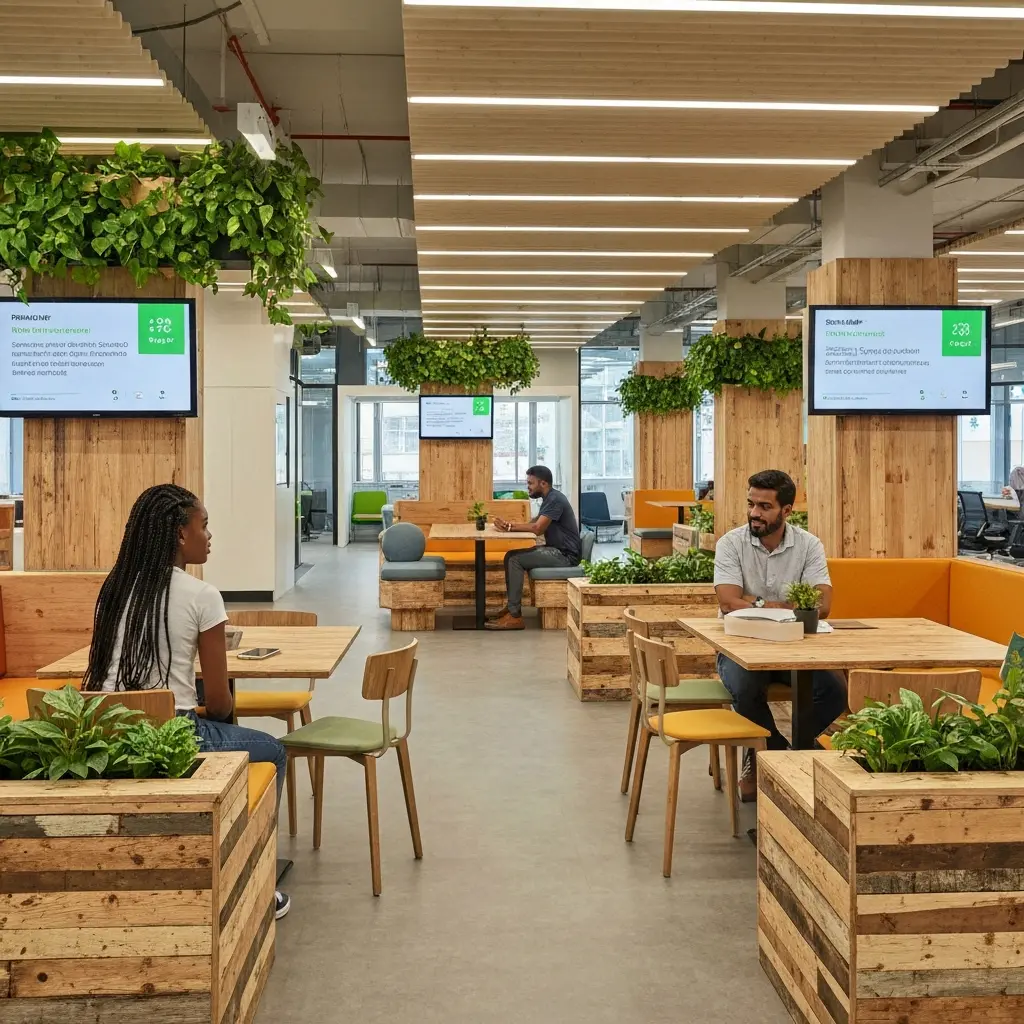
Sustainable design in 2026 has proven its ROI. Biophilic integration—thoughtful incorporation of natural light, air-purifying plants, and natural materials—is linked to a 6% boost in productivity and 15% increase in creativity. This isn’t an abstract benefit; it translates to faster project delivery and more innovative solutions for your clients.
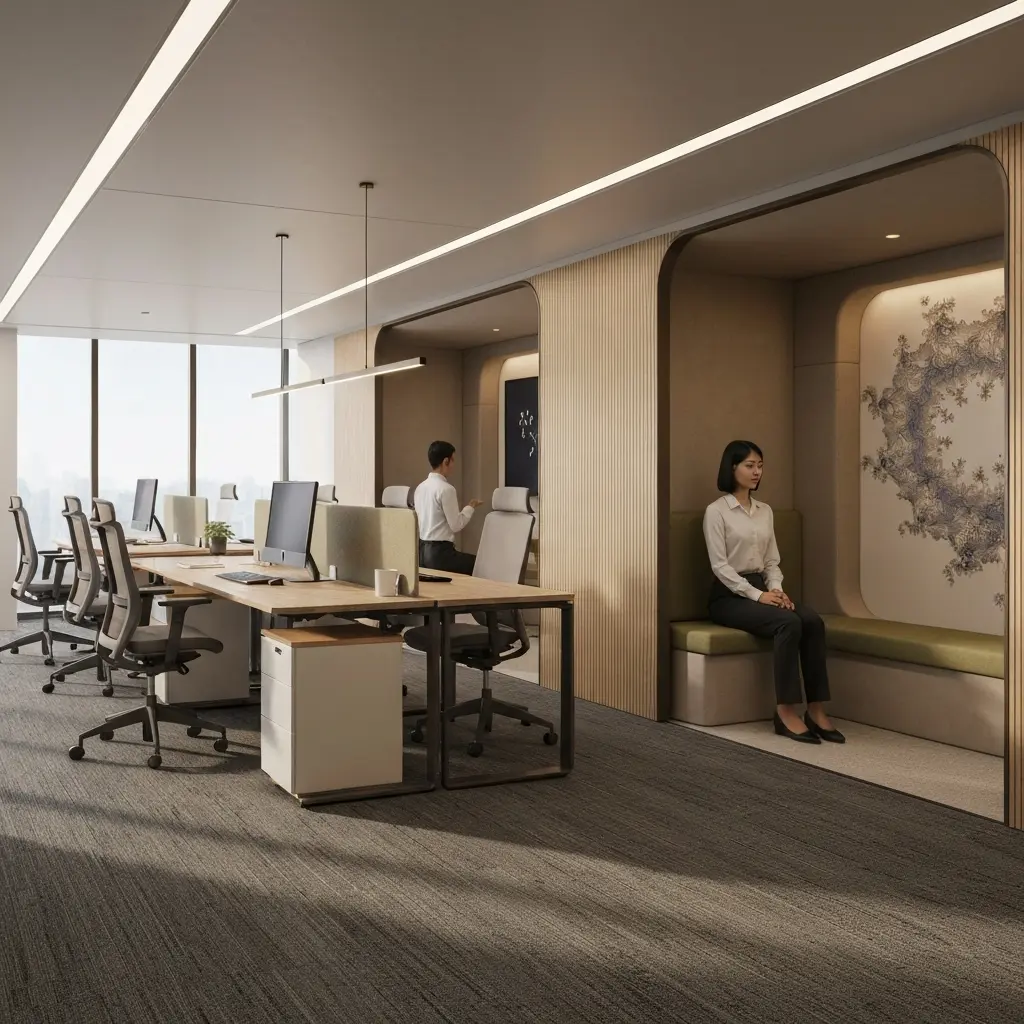
The concept has evolved to include human-centric sustainability. Acoustic balance ensures focus in open areas and clear communication in call booths, reducing fatigue. Neuro-inclusive design, with varied lighting and quiet retreat spaces, caters to diverse cognitive needs, making your workspace more attractive to top talent. This holistic approach to well-being is now a core pillar of corporate ESG, moving beyond mere energy efficiency to support social equity and mental health.
Furthermore, the trend of rightsizing is accelerating. Businesses are abandoning large, underutilised HQs for smaller, premium flex spaces. This dramatically lowers the carbon footprint per employee while providing access to superior, professionally managed facilities and networking ecosystems. It’s a strategic downsizing of physical space to upsize operational efficiency and talent appeal.
The 2026 Outlook for Indian Workspaces
In the coming year, we predict a rapid bifurcation in the Indian flexible workspace market. Standard providers offering mere desks and Wi-Fi will struggle. The premium segment will be defined by operators who can provide verified net-zero performance, circular design credentials, and seamless data integration for tenant ESG reporting. Demand will surge for spaces in adaptively reused heritage or quality older buildings in well-connected locations, as they offer inherent sustainability advantages. The operator’s role will shift from landlord to a true sustainability and productivity partner, managing a complex portfolio of energy, technology, and well-being services.
Key Takeaways
- Prioritise Data over Aesthetics: Choose a workspace partner that provides real-time, audit-ready data on energy, water, and air quality to simplify your Scope 3 reporting.
- Embrace the Opex Shift: Explore Energy-as-a-Service models to access clean energy and smart building tech without large upfront capital expenditure.
- Value Circular Fit-outs: Seek spaces that use modular, refurbished, or urban-mined materials; this reduces embodied carbon and showcases genuine commitment.
- Demand Human-Centric Design: Your team’s productivity is directly influenced by biophilic elements, acoustic comfort, and neuro-inclusive spaces.
- Rightsize Strategically: A smaller, high-performance, net-zero ready flex space often offers a better per-capita ROI and carbon footprint than a traditional large lease.
Ultimately, the circular pivot is not merely an environmental trend but a comprehensive business resilience strategy. It future-proofs your operations against regulatory shifts, insulates you from volatile energy costs, and creates an environment where your team can perform at its peak. In Chennai’s dynamic market, your workspace must be an active agent for growth, not a passive overhead.
We have designed Crizone Business Centre with this 2026 mindset. From our material choices and smart building management to our focus on holistic well-being, we provide the net-zero ready, strategically flexible environment Indian growth businesses require. Let us show you how your workspace can become a catalyst for sustainable success.
Continue your workspace search
Explore the most relevant Crizone pages next
If this article is part of your Chennai workspace research, these pages help you move from reading into comparing live plans, locations, and fit.
Explore coworking plans in Chennai
Compare day passes, dedicated desks, private offices, meeting rooms, and virtual office options from one commercial hub page.
Book a day pass in Chennai
Best fit if you need occasional workspace access, a short productive break from home, or a flexible desk for a single day.
Compare dedicated desk options
A stronger fit for regular monthly use when you want a fixed seat, better routine, and predictable workspace costs.