· Business Growth & Workspace · 7 min read
Coworking Market Forecast 2026: A Growth Catalyst for Indian Businesses
The 2026 office landscape is defined by a supply gap and strategic enterprise expansion into flexible workspaces. Learn how this trend fuels cost savings, talent access, and revenue growth for Indian SMEs.

TL;DR: In 2026, a strategic supply gap in commercial real estate and strong enterprise demand for flexibility are converging. This creates a powerful opportunity for Indian businesses to leverage coworking for significant cost savings, broader talent recruitment, and superior revenue growth, while avoiding the risks of rigid, traditional office mandates.
Introduction: The Strategic Imperative for Indian Businesses
Indian businesses, from SMEs on SP Road to tech startups in Bengaluru, face a perennial trio of challenges: escalating commercial rents in prime areas, the high cost and logistical strain of talent acquisition, and the pressure to remain agile in a competitive market. The traditional five-year lease in a Grade A building on Mount Road represents a significant, fixed capital commitment that can stifle growth. However, the global commercial real estate sector has pivoted decisively. As of 2026, it is moving from ‘defensive’ cost-cutting to ‘offensive’ strategic growth, with a massive supply gap opening for high-quality flexible workspaces. This Coworking Market Forecast 2026 indicates a fundamental shift where agility is not just an operational tactic, but a core growth strategy.
What is the Coworking Market Forecast 2026?
The Coworking Market Forecast 2026 analyses the pivotal trends shaping the global flexible workspace industry this year. It is defined by two concurrent forces: a strategic ‘infill’ opportunity created by the removal of legacy office inventory through conversions, and a surge in enterprise expansion specifically targeted towards coworking and flex spaces. This forecast highlights how these macroeconomic shifts translate into direct economic benefits, talent advantages, and competitive outperformance for businesses that adopt flexible workspace policies.
How the 2026 Supply Gap Creates a Cost Advantage for Indian Businesses
The record conversion of over 90,000 underperating office units into residential space in early 2026 is a critical market reset. This ‘adaptive reuse’ is effectively removing vast amounts of older Class B and C inventory from direct competition with modern flex hubs. For an Indian SME, this means the remaining high-quality commercial supply becomes more premium and expensive for traditional leases. Simultaneously, the average lease term for providers has compressed to 77 months, reflecting a 37% shift toward agility. This allows flexible workspace operators to offer more competitive, scalable pricing.
Consider a Chennai-based fintech startup needing space for 20 employees. A traditional lease on OMR involves hefty capital expenditure for furniture, fit-out, and security deposits, plus fixed costs for utilities and maintenance regardless of utilisation. A flexible membership converts these into variable, predictable operational expenses.
| Cost Component | Traditional Office (Chennai, 20 employees) | Flexible Coworking Solution (e.g., Crizone) |
|---|---|---|
| Annual Base Rent & Deposit | ₹ 15-20 Lakhs + 10-month deposit | ₹ 4-8 Lakhs (membership fees, no deposit) |
| Furniture & Fit-out Capex | ₹ 3-5 Lakhs one-time | Included in membership |
| Utilities (AC, Power) | ₹ 1.5-2 Lakhs (variable, risk) | Included & predictable |
| Admin & Maintenance Staff | ₹ 1-2 Lakhs (salaries) | Included (front desk, tech support) |
Business Growth Tip: Calculate your true cost of occupancy. Factor in not just rent, but also legal fees for lease agreements, property tax responsibilities, and the productivity loss from managing office logistics. A flexible workspace turns these liabilities into a managed service.
This model aligns perfectly with the Indian business reality of navigating seasonal cash flows and GST compliance cycles. The direct economic saving cited in global data—$11,000 per employee—translates into a substantial advantage in the Indian context, freeing capital for R&D, marketing, or expansion into new markets like Delhi or Mumbai.
[Image of a comparative cost analysis chart: Traditional Office vs. Flexible Workspace, showing stacked bars for Rent, Capex, Utilities, and Admin costs.]
Is Hybrid Work the Key to Talent and Revenue Growth?
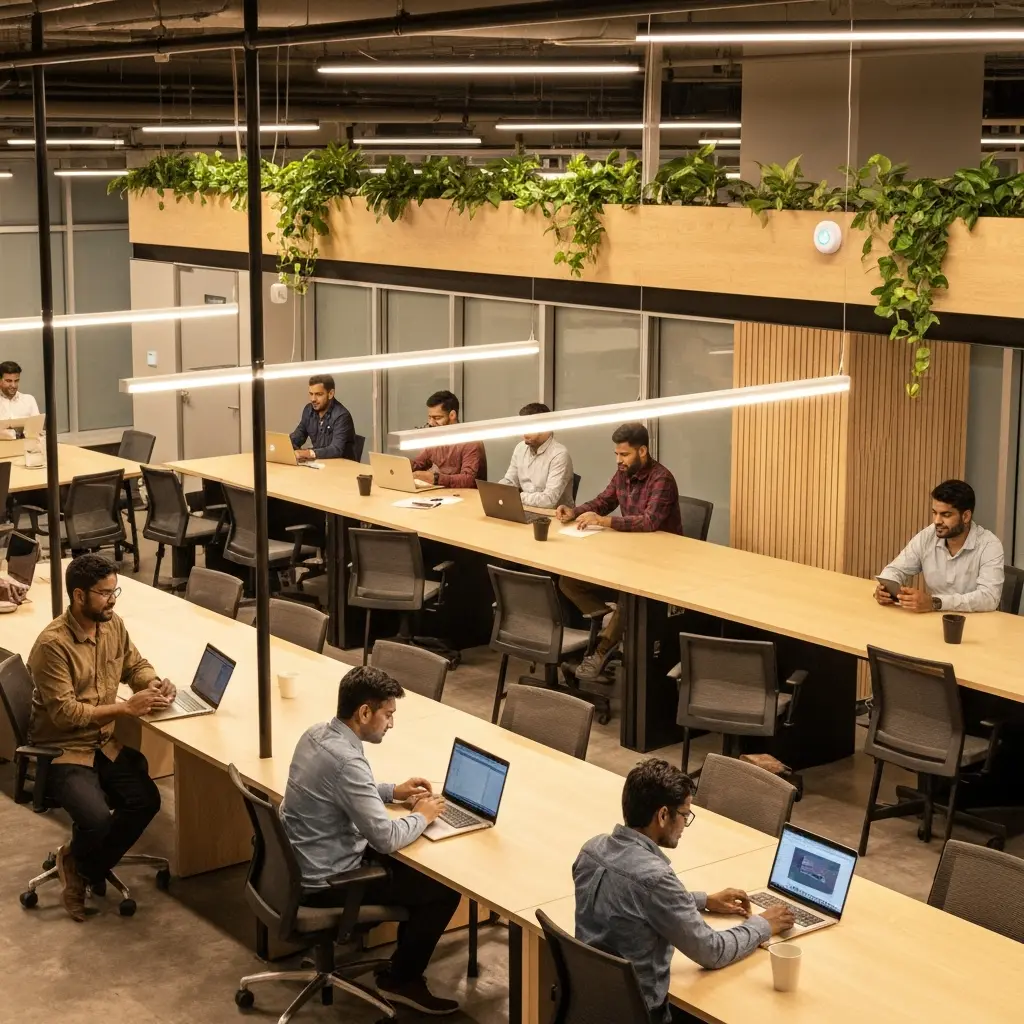
The stabilisation of global office utilisation at 54% is not a random figure; it represents the new ‘anchor day’ demand pattern. Employees have structured their work lives around core in-person days for collaboration, often Tuesday to Thursday. For a business leader, this creates a predictable demand profile that a flexible workspace membership can perfectly service, without paying for empty desks on Mondays and Fridays. Enforcing a rigid five-day mandate backfires: 29% of employees would actively seek new employment if their flexible arrangement was revoked.
Manager Insight: “Hybrid isn’t about location alone; it’s about trust and output. Our policy allows teams to choose their anchor days at our business centre. This has reduced attrition and increased project delivery speed, as people avoid peak OMR traffic on non-core days.”
The talent acquisition driver is even more compelling for India’s diverse talent pool. 62% of business leaders cite accessing talent across broader geographical regions as the primary motivator. A company headquartered in Chennai can now seamlessly recruit and onboard a top developer from Pune or a marketing specialist from Ahmedabad by offering a reputable local flex workspace membership, bypassing relocation costs and delays. This strategic flexibility directly fuels the 16 percentage point revenue outperformance observed for companies with flexible policies over their rigid peers. In essence, agility attracts and retains the talent that drives growth.
The Asia-Pacific Surge: What It Means for Your Indian Enterprise
While North America holds the largest market share, the Asia-Pacific region is the fastest-growing sector for 2026. This 23.2% global share is driven by the rapid expansion of startup ecosystems and the digital transformation of traditional businesses across India, Southeast Asia, and Australia. For an Indian enterprise, this trend signifies two things. First, the local supply and quality of flexible workspace options will continue to improve rapidly, with operators introducing more enterprise-grade services, formal meeting suites, and sector-specific hubs. Second, it validates flexible work as a core component of regional business competitiveness.
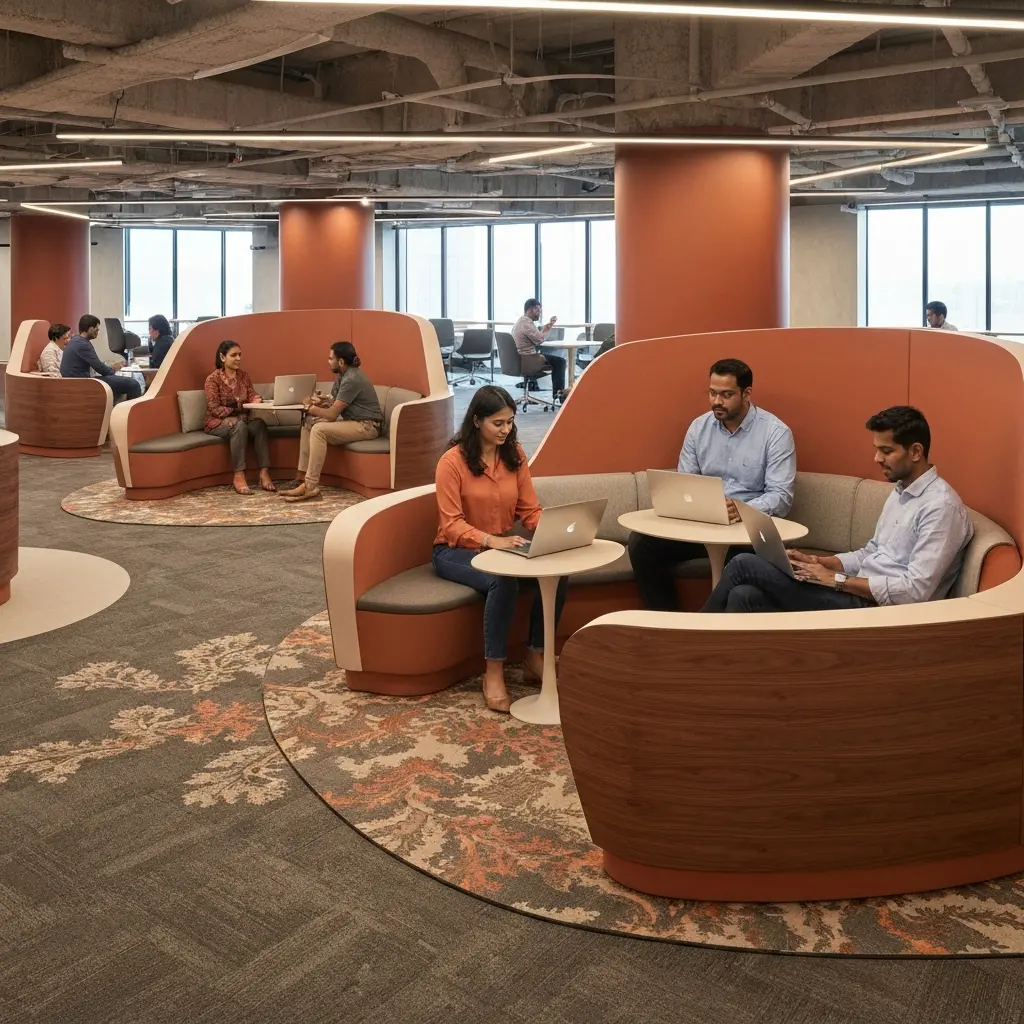
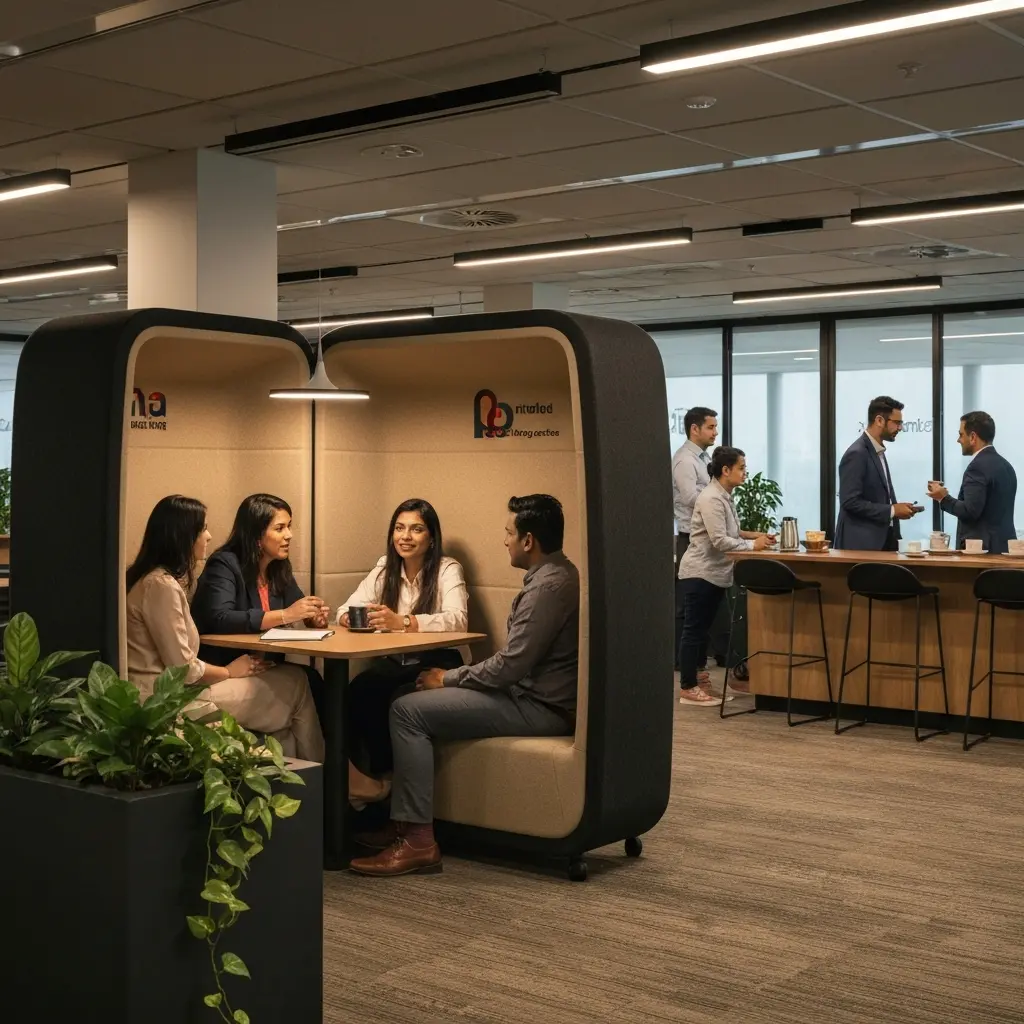
Reports from firms like JLL India consistently highlight that occupiers are seeking ‘best-in-class’ flex spaces that offer not just a desk, but a professional ecosystem. This goes beyond Wi-Fi and coffee to include premium client meeting facilities for pitches, high-end video-conferencing rooms for global teams, and administrative support for handling couriers and correspondence—services crucial for Indian businesses dealing with global clients and complex domestic logistics.
The 2026 Outlook for the Indian Workspace Market
The Indian workspace market in 2026 will be characterised by strategic portfolio expansion into flex spaces. With 70% of corporate real estate leaders planning to add office space and 44% targeting coworking, we will see more Indian enterprises—from large corporate branch offices to scaling SMEs—using flexible hubs as their primary growth infrastructure. This will accelerate beyond metro cities into tier-II and tier-III locations, facilitating truly decentralised operations. The supply gap from conversions will keep pressure on traditional lease rents, making the economic argument for flexibility even stronger. Success will hinge on choosing partners that offer not just space, but a genuine growth ecosystem: networking events, business mentorship, and seamless administrative backend support.
Key Takeaways for Founders, Freelancers, and Branch Managers
- Treat workspace as a strategic variable, not a fixed asset. Its cost and configuration should scale directly with your team size and project pipeline.
- Use hybrid flexibility as a talent retention and acquisition tool. It allows you to access a national talent pool without relocation overheads.
- Calculate Total Cost of Occupancy (TCO). Include hidden costs like fit-out capex, administrative staff, and utility management when comparing options.
- Align your space with the 54% utilisation ‘anchor day’ norm. Pay only for the space you need on the days your team actually uses it.
- Choose a workspace partner that enhances your brand. The right environment supports client meetings, team morale, and operational efficiency.
Conclusion
The 2026 Coworking Market Forecast is not merely an industry report; it is a blueprint for strategic business growth in India. The convergence of a structural supply gap and deliberate enterprise expansion into flexible environments creates a unique window of opportunity. By adopting a flexible workspace strategy, Indian businesses can convert real estate from a capital-intensive liability into an agile, talent-enabling, growth-driving asset. The data is clear: this approach lowers costs, expands talent access, and correlates strongly with superior revenue performance.
For businesses in Chennai looking to capitalise on this 2026 strategic infill, Crizone Business Centre provides the calibrated, professional ecosystem to support this growth. Our centres are designed to be your seamless, calmly efficient growth partner, offering the flexibility, infrastructure, and community that modern Indian enterprises require to thrive.
Continue your workspace search
Explore the most relevant Crizone pages next
If this article is part of your Chennai workspace research, these pages help you move from reading into comparing live plans, locations, and fit.
Explore coworking plans in Chennai
Compare day passes, dedicated desks, private offices, meeting rooms, and virtual office options from one commercial hub page.
Book a day pass in Chennai
Best fit if you need occasional workspace access, a short productive break from home, or a flexible desk for a single day.
Compare dedicated desk options
A stronger fit for regular monthly use when you want a fixed seat, better routine, and predictable workspace costs.