· Workspace Trends · 11 min read
Distributed Work Strategy: Chennai Startups Thrive with Flexible Hubs
Unlock growth for your Chennai startup with a distributed work strategy. Discover how flexible workspaces and a hub-and-spoke model optimize talent, costs, and agility.

The entrepreneurial spirit in Chennai is palpable, a vibrant ecosystem where innovation meets ambition. Yet, even as startups scale, they often grapple with age-old challenges: attracting top talent, managing escalating operational costs, and maintaining agility in a fiercely competitive market. The answer, increasingly, isn’t just remote work or a simple hybrid model; it’s a strategically crafted Distributed Work Strategy.
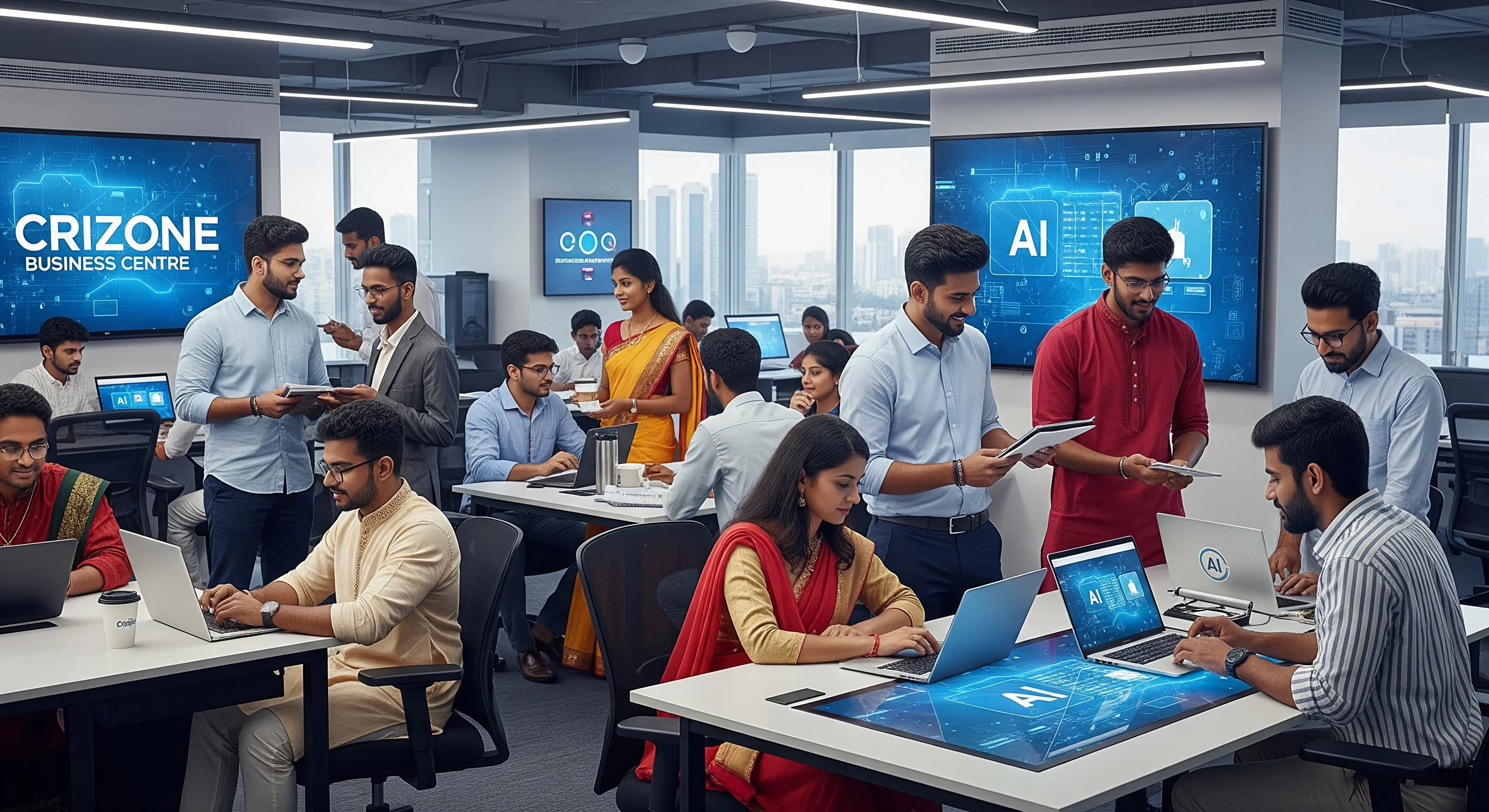
This isn’t merely about allowing employees to work from home; it’s about intentionally decentralizing your workforce and physical presence to gain a competitive edge. For Chennai startups, this means leveraging the city’s diverse talent pools and embracing flexible workspace solutions as strategic growth engines. As anticipated by Q3-Q4 2025 reports from leading consultancies like JLL India and Mercer, businesses are refining their models, with multi-location flexible hubs becoming a key competitive differentiator. For Crizone Business Centre, we see this firsthand in the evolving demands of Chennai’s most dynamic businesses.
Beyond Hybrid: Understanding the Distributed Work Strategy for Chennai Startups
Many companies are familiar with remote or hybrid work, but a Distributed Work Strategy takes this concept a significant step further. It’s a deliberate organizational design choice where teams and functions are spread across various geographical locations, often without a single, dominant central office. Instead, it relies on a network of physical and virtual touchpoints.
For a Chennai startup, this might mean:
- Core Team Hub: A primary office for leadership and essential functions, perhaps a private cabin or dedicated desks at a professional business centre like Crizone in Ambattur or Mogappair.
- Satellite Workspaces: Leveraging flexible coworking spaces or smaller private offices closer to employees’ homes or specific project sites.
- Fully Remote Roles: Specific positions designed to operate entirely from home, supported by robust digital infrastructure.
The essence lies in intentionality. It’s about designing a system that optimizes for talent access, cost efficiency, and operational agility, rather than simply reacting to a need for remote work. This proactive approach is particularly powerful for Chennai, a sprawling metropolis where traffic, commute times, and access to diverse talent pools present unique challenges and opportunities.
The Unfair Advantage: How Distributed Work Fuels Startup Growth in Chennai
Embracing a distributed work model offers several strategic benefits that can accelerate growth for Chennai’s startups:
Tapping into Chennai’s Wider Talent Pool
One of the most significant advantages is the expanded access to talent. Traditionally, startups were limited to hiring individuals willing to commute to a central office. With a distributed strategy, you can attract skilled professionals from across Chennai – from Ambattur to Mogappair, and beyond – who might otherwise be inaccessible due to commute constraints. This allows you to hire for expertise, not proximity, significantly broadening your recruitment net.
- Scenario: A tech startup in Guindy needs specialized developers. Instead of competing only for those willing to brave daily traffic, they can hire top-tier talent living closer to areas like Ambattur, offering them a professional workspace at Crizone Business Centre’s Ambattur location, drastically improving work-life balance and retention.
Optimized Operational Costs, Maximized Value
Traditional office leases in prime Chennai locations come with hefty price tags and long-term commitments. A distributed model, especially one leveraging flexible workspaces, allows startups to significantly reduce their fixed real estate overheads.
- You pay only for the space you need, when you need it.
- Capital that would be tied up in property can be reinvested directly into product development, marketing, or talent acquisition.
This is where flexible workspaces like Crizone Business Centre’s affordable coworking spaces in Ambattur and Mogappair become invaluable. They offer premium infrastructure – high-speed internet, professional meeting rooms, 24/7 access – at a fraction of the cost of setting up and maintaining a traditional office. Imagine redirecting significant rental savings into expanding your sales team or accelerating R&D.
Agility and Resilience in a Dynamic Market
Chennai’s market is dynamic, and startups need the ability to pivot quickly. A distributed work strategy provides unparalleled operational agility:
- Scalability: Easily scale your team up or down without the burden of renegotiating leases or relocating.
- Business Continuity: In unforeseen circumstances (e.g., natural disasters, public transport disruptions), your operations are not tied to a single physical location, ensuring greater resilience.
- Market Responsiveness: Quickly set up a local presence in a new Chennai sub-market by utilizing a flexible hub, testing the waters without significant investment.
Blueprint for Success: Implementing a Hub-and-Spoke Model with Flexible Workspaces
A highly effective implementation of a distributed work strategy for Chennai startups is the ‘hub-and-spoke’ model. This framework combines a central ‘hub’ with multiple ‘spoke’ locations, optimizing for collaboration, convenience, and cost-efficiency.
Defining Your ‘Hub’
Your hub typically serves as the primary physical touchpoint for leadership, strategic planning, and company-wide gatherings. It might be a smaller, dedicated private cabin or a cluster of dedicated desks at a professional business centre. This space acts as the cultural anchor, where core team members can connect for crucial face-to-face interactions, brainstorming, and project kick-offs. For many Chennai startups, this hub might be a private cabin at Crizone, offering the privacy and professionalism needed for critical operations.
Empowering ‘Spokes’ with Flexible Coworking Hubs
‘Spokes’ are satellite workspaces that provide convenient, professional environments for employees closer to their homes. These can be:
-
Hot Desks: Ideal for employees who need occasional access to a professional workspace.
-
Dedicated Desks: For those who prefer a consistent, personalized workspace without the commitment of a full private office.
-
Meeting Rooms: For local team collaborations, client meetings, or interviews.
-
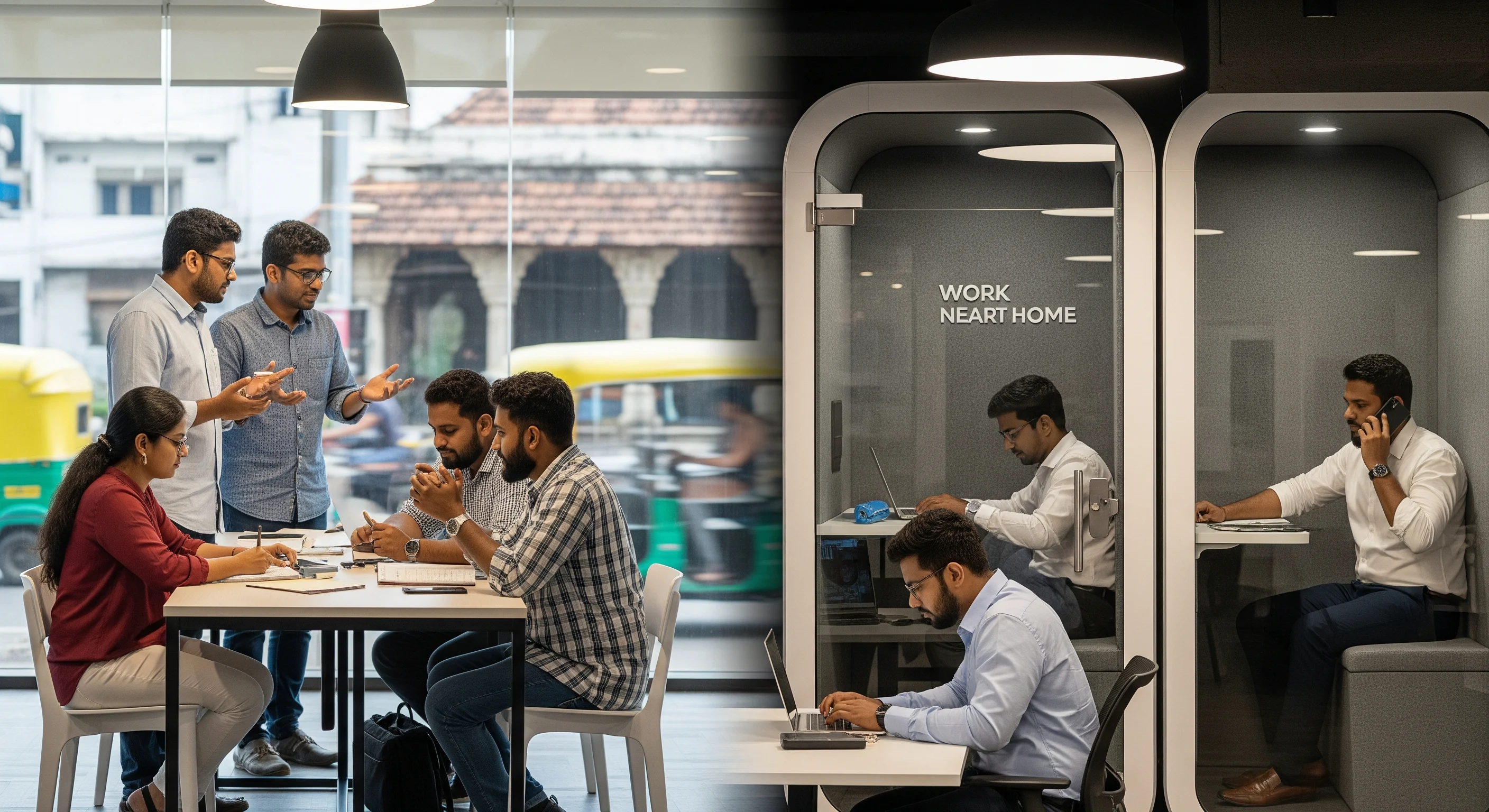
Use Case: Consider a marketing startup with its main ‘hub’ (private cabin) at Crizone’s Mogappair location. Their content writers live closer to Ambattur and utilize Crizone’s flexible desk solutions there. Meanwhile, their sales team, constantly on the move, books meeting rooms at either location as needed for client presentations. This distributed model reduces commute stress, enhances productivity, and provides a professional front for all client interactions across Chennai.
The Virtual Backbone: Integrating Virtual Office Services
Even with physical hubs and spokes, a strong virtual presence is critical. Virtual office services provide a professional business address, mail handling, and call answering, offering credibility without the need for a constant physical presence. For a growing Chennai startup, Crizone’s virtual office services can establish a reputable Chennai presence, essential for registrations, banking, and instilling client trust, all while maintaining operational flexibility.
Cultivating Connection: Fostering Culture & Collaboration in a Distributed Setup
One common concern with distributed work is maintaining company culture and fostering collaboration. With intentional effort, this can be not just preserved, but enhanced.
Intentional Communication Channels
Effective communication is the bedrock of any distributed team. Implement a robust tech stack: a primary chat platform (e.g., Slack, Microsoft Teams), video conferencing tools (Zoom, Google Meet), and project management software (Asana, Trello). Establish clear protocols for communication – when to use chat, when to call, when to schedule a video meeting.
Scheduled In-Person Touchpoints
While daily in-person interaction might be reduced, planned gatherings are vital. Utilize meeting rooms at your flexible hubs for:
- Quarterly strategic reviews
- Team-building workshops
- Onboarding sessions for new hires
- Celebratory events
Crizone’s well-equipped meeting rooms offer the perfect neutral ground for these vital collaborative moments, providing a professional, distraction-free environment that reinforces team bonds.
Leveraging Technology for Seamless Workflows
Ensure all teams have access to reliable high-speed internet and cloud-based tools for shared documents, CRM, and project tracking. Investing in secure VPNs and robust IT support is non-negotiable. At Crizone, our infrastructure is designed to support these needs, offering reliable connectivity and a professional environment that minimizes tech-related disruptions.
Community & Networking Beyond Your Team
One often overlooked benefit of coworking spaces is the inherent community and networking events they foster. For distributed team members who might feel isolated working remotely, being part of a vibrant coworking community provides opportunities for serendipitous connections, idea sharing, and learning from other entrepreneurs. This can significantly combat feelings of isolation and enrich individual professional lives.
Measuring What Matters: KPIs for Distributed Work Success
To ensure your distributed work strategy is truly driving growth, it’s crucial to define and track key performance indicators (KPIs):
-
Employee Engagement & Retention: Track eNPS (Employee Net Promoter Score), turnover rates, and feedback from regular pulse surveys. A well-executed distributed strategy should improve these metrics.
-
Productivity Metrics: Monitor project completion rates, individual output, and team-level goal attainment. Focus on outcomes rather than hours spent.
-
Cost Savings: Quantify reductions in real estate expenses, utility bills, and potentially even recruitment costs due to a wider talent pool.
-
Talent Acquisition Metrics: Track time-to-hire, quality of hire, and acceptance rates, observing if the distributed model makes your startup more attractive.
-
Commute Time Reduction: Survey employees on their commute times before and after implementing the strategy, correlating it with reported job satisfaction and energy levels.
-
Practical Tip: Implement regular, anonymous surveys to gather insights into employee satisfaction with their workspace setup, tech support, and collaboration tools. This feedback loop is essential for continuous improvement.
Navigating the Roadblocks: Challenges & Best Practices
No strategy is without its challenges. Proactive planning can mitigate common pitfalls of distributed work:
Communication Gaps
- Challenge: Misunderstandings due to lack of non-verbal cues, delayed responses across time zones.
- Best Practice: Over-communicate. Document everything. Establish ‘core collaboration hours’ when all team members are expected to be online for real-time interaction. Encourage video calls over purely audio or text communication.
Technology & Infrastructure Disparities
- Challenge: Inconsistent internet speeds, outdated hardware, cybersecurity risks for remote workers.
- Best Practice: Standardize essential hardware and software. Provide stipends for home office setups. For physical ‘spokes,’ choose professional environments like Crizone Business Centre which offers high-speed internet and robust infrastructure, mitigating these concerns entirely.
Management & Leadership Adaptation
- Challenge: Managers struggling to lead teams they don’t see daily, micromanagement, or lack of trust.
- Best Practice: Invest in training for managers on remote/distributed leadership. Focus on outcomes and results, not just presence. Foster trust through transparency and empowerment. Regular one-on-one check-ins are crucial.
Maintaining Work-Life Balance
- Challenge: The lines between work and home blur, leading to burnout.
- Best Practice: Encourage clear boundaries. Promote digital detox periods. Offer resources for mental well-being. Ensure employees in flexible hubs like Crizone benefit from a professional business environment that separates work from home life, even if only for a few hours a day.
Chennai’s Edge: Why Local Flexible Hubs are Game-Changers
Chennai’s unique urban landscape makes a distributed work strategy, powered by local flexible hubs, particularly potent. The city’s geographical spread, traffic congestion, and diverse residential zones mean that a centralized office often creates significant commuting burdens for employees from areas like Ambattur or Mogappair.
By strategically placing ‘spoke’ offices in key locations, startups can:
- Reduce Commute Times: Significantly improve employee well-being and productivity by cutting down on daily travel, a major stressor in Chennai.
- Enhance Local Presence: Establish a professional presence in new sub-markets, making it easier to serve clients or recruit talent from those areas.
- Support Local Economies: By utilizing local flexible workspaces, startups contribute to the economic vibrancy of different Chennai neighborhoods.
Crizone Business Centre, with its strategically located affordable coworking spaces in Ambattur and Mogappair, is perfectly positioned to support Chennai startups in implementing this cutting-edge strategy. We provide not just space, but a complete ecosystem: from flexible desk solutions like hot desks and dedicated desks to private cabins & meeting rooms, complemented by virtual office services, high-speed internet & 24/7 access, and a vibrant community & networking events calendar. We understand the local context and are committed to helping Chennai’s entrepreneurial ecosystem thrive.
Conclusion: Your Growth Story Starts with Strategic Distribution
The future of work for Chennai startups is undoubtedly distributed. It’s a strategic imperative that unlocks unparalleled access to talent, optimizes costs, and builds a more agile, resilient organization. By moving beyond traditional office models and embracing a hub-and-spoke strategy powered by flexible workspaces, you’re not just adapting to change; you’re actively shaping your growth trajectory.
For Chennai startups ready to embrace this future, Crizone Business Centre offers the perfect partnership. Our professional and affordable spaces in Ambattur and Mogappair provide the ideal foundation for your distributed teams, ensuring they have the tools, environment, and community to excel.
Ready to explore a distributed work strategy for your Chennai startup? Visit Crizone Business Centre today to discover our flexible workspace solutions in Ambattur and Mogappair. Let’s build your growth story, together.
Frequently Asked Questions (FAQ)
Q: What is a distributed work strategy? A: A distributed work strategy is an intentional organizational design choice where teams and functions are spread across various geographical locations, utilizing a network of physical hubs and virtual connectivity, rather than relying on a single central office.
Q: How can flexible workspaces help Chennai startups grow? A: Flexible workspaces enable Chennai startups to access a wider talent pool, optimize operational costs by avoiding expensive long-term leases, and gain operational agility to scale quickly or adapt to market changes. They provide professional infrastructure without significant capital investment.
Q: What are the benefits of a hub-and-spoke model for startups? A: The hub-and-spoke model allows startups to maintain a core central office (hub) for leadership and strategic meetings, while utilizing satellite flexible workspaces (spokes) closer to employees’ homes, reducing commutes, fostering local presence, and enhancing overall team convenience and productivity.
Q: How much does a coworking space cost in Chennai? A: Coworking spaces in Chennai, like Crizone Business Centre, offer a range of affordable options from hot desks starting from a few thousand rupees per month to private cabins, depending on the services and duration. They are significantly more cost-effective than traditional office leases, offering flexibility to suit various budgets and needs.
Continue your workspace search
Explore the most relevant Crizone pages next
If this article is part of your Chennai workspace research, these pages help you move from reading into comparing live plans, locations, and fit.
Explore coworking plans in Chennai
Compare day passes, dedicated desks, private offices, meeting rooms, and virtual office options from one commercial hub page.
Explore coworking space in Ambattur
A practical route if your search is driven by Ambattur access, nearby industrial links, or lower-friction commuting from that side of Chennai.
Explore coworking space in Mogappair
A strong fit for startup and freelancer searches centered on Mogappair, metro access, and the Ambattur-Mogappair business corridor.