· Workspace Trends · 6 min read
Enterprise Flex Strategy: 2026's High-Performance Workspace Shift
Explore how enterprise flex strategy with managed office suites is transforming Indian businesses in 2026, offering cost savings and agility for growth in Chennai and beyond.
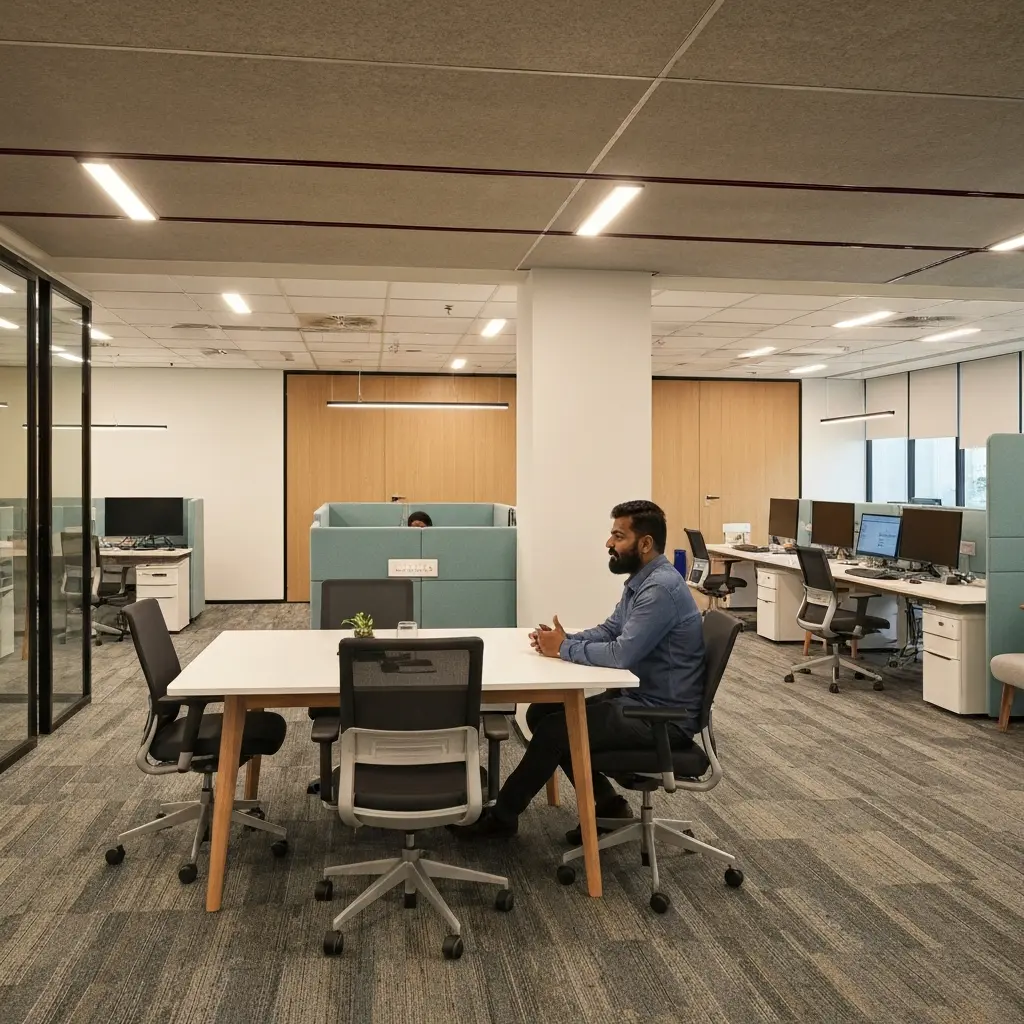
TL;DR: By 2026, enterprise flex strategy is essential for Indian businesses, offering managed office suites that reduce costs, enhance productivity, and adapt to hybrid work trends, especially in cities like Chennai.
Indian businesses, from burgeoning startups on Chennai’s OMR corridor to established SMEs, face mounting pressures: escalating commercial rents, grueling commutes, and the relentless pursuit of top talent. The traditional long-term lease, once a cornerstone of corporate real estate, now represents a significant financial rigidity in an era demanding agility. This is where the enterprise flex strategy emerges as a transformative solution. Global trends, corroborated by JLL India, indicate a seismic shift towards flexible workspace models, with over 58% of corporates integrating them permanently to counter shorter lease cycles. The average lease term has collapsed by 37% since 2020, pushing firms towards more agile real estate options. For Indian entrepreneurs, this strategy offers a way to mitigate risks associated with fixed assets and align workspace costs with revenue fluctuations, particularly during festive seasons or economic downturns.
What is Enterprise Flex Strategy?
Enterprise flex strategy refers to the intentional incorporation of flexible, managed office solutions into a company’s real estate portfolio. It involves leasing high-performance workspaces—from dedicated desks to fully serviced suites—on agile terms, with all operational expenses managed by the provider. This approach allows businesses to scale resources up or down based on demand, eliminating the fixed overheads and long commitments of traditional leases. Optimised for featured snippets, it is a data-driven method to enhance operational efficiency and employee satisfaction while reducing capital expenditure.
Cost Efficiency and Financial Agility: The Core of Flex Strategy
The financial appeal of an enterprise flex strategy is undeniable. Traditional office leases in prime Chennai locations like Nungambakkam or T Nagar can lock businesses into decade-long commitments, with rents escalating annually. In contrast, flexible managed suites offer terms as short as months, with all operational costs—from air conditioning maintenance in Chennai’s humid climate to GST-compliant billing—bundled into a single, predictable fee. This shift is driven by the global drop in average lease terms from 121 months in 2020 to 77 months in 2025, reflecting a demand for agility.
For an Indian SME, this translates to direct cost savings and improved cash flow. Consider the following comparison for a team of 20 in Chennai:
| Cost Component | Traditional Office (Annual in INR) | Flexible Managed Suite (Annual in INR) |
|---|---|---|
| Base Rent | ₹18,00,000 | ₹9,60,000 |
| Property Tax | ₹1,20,000 | Included |
| Maintenance | ₹2,40,000 | Included |
| IT Infrastructure | ₹3,00,000 | Included |
| Security & Housekeeping | ₹1,80,000 | Included |
| Total | ₹26,40,000 | ₹9,60,000 |
Note: Figures are illustrative based on Chennai market rates. The managed suite cost assumes a premium provider with all-inclusive services.
By opting for a managed suite, businesses can reallocate savings of over ₹16 lakhs annually towards marketing, R&D, or talent acquisition. Moreover, the flexibility to downsize during lean periods—without penalty—protects against market volatilities.
Crizone Pro Tip: Convert fixed real estate costs into variable operational expenses by choosing a managed flex suite. This not only improves liquidity but also simplifies financial planning, as all costs are transparent and consolidated.
Is Hybrid Work Boosting or Busting Productivity?
Hybrid work is now a permanent fixture, with a structured 3-day-week mandate becoming common in Indian corporates. This shift necessitates workspaces designed for performance, not just presence. Global data shows that ‘Smart Suites’ in prime central business districts maintain occupancy rates above 75%, compared to the 68-70% average, by catering to hybrid teams. The key differentiator is design: moving from open-plan layouts to ‘Activity Neighborhoods’ that prioritize acoustic zoning for virtual collaboration.
In Chennai, where office spaces must account for ambient noise from air conditioning systems, acoustic optimization is critical. High-performance flex spaces invest in soundproofing and dedicated collaboration pods, ensuring that virtual meetings with clients or remote teams are uninterrupted. Additionally, wellness certifications like LEED or WELL have shifted from premium bonuses to mandatory requirements for 68% of enterprise occupiers. This focus on employee wellbeing directly impacts productivity and retention, reducing absenteeism and enhancing engagement.
Manager Insight: Design your hybrid workspace around specific activities—focus zones, collaboration hubs, and virtual meeting rooms. This approach minimizes distractions and maximizes output, essential for teams splitting time between office and home.
Market Evolution: From Metropolitan Cores to Professional Hubs
The flexible workspace market is evolving rapidly, with enterprise clients (10,000+ employees) now driving 32% of new enquiries, up from 18% in 2022. This isn’t limited to metros; demand in secondary cities and suburban towns across India grew by 25% in 2025, signaling a decentralized ‘professional hub’ movement. For instance, businesses in Chennai are exploring options in Porur or Ambattur to avoid OMR traffic while staying connected via metro.
AI-driven spatial intelligence tools are becoming standard, helping operators increase revenue by up to 50% through predictive occupancy optimization. These tools enable refined desk-sharing ratios, currently targeting 1.5:1, meaning fewer dedicated desks are needed without compromising access. Furthermore, a new ‘Super-Hub’ collaboration model has emerged, where specialized operators refer members to create regional innovation ecosystems. Imagine a MedTech startup in a flex space being connected to a SaaS firm for digital solutions, fostering cross-industry growth.
According to JLL India’s latest report, the Indian flex space market is poised for a 17% CAGR, mirroring global trends. This growth is fueled by the need for agility in the face of economic uncertainties and the rising preference for managed services that handle everything from TDS compliance to daily operations.
The 2026 Outlook for Indian Workspaces
As we look to 2026, the Indian workspace landscape will be characterised by several key trends. First, the adoption of flexible solutions will accelerate in tier-2 and tier-3 cities, as companies seek cost-effective alternatives to metropolitan cores. Chennai will see a proliferation of ‘high-performance’ flex inventory in transit-oriented developments, leveraging metro connectivity. Second, ESG and wellness certifications will become baseline expectations for any enterprise contract, driven by corporate sustainability mandates. Third, AI and IoT integration will standardise, enabling real-time space utilization analytics and energy efficiency. Finally, the blurring lines between coworking and managed offices will lead to more hybrid offerings, catering to diverse business sizes and needs.
Key Takeaways
- Audit Your Real Estate Strategy: Regularly review your workspace needs against hybrid work patterns to avoid over-committing to fixed leases.
- Embrace Managed Services: Select flex providers that offer all-inclusive packages, covering IT, maintenance, and administrative tasks to reduce overhead.
- Leverage Community and Networks: Choose spaces that facilitate connections within your industry, enhancing business development opportunities.
- Plan for Scalability: Ensure your workspace agreement allows for easy expansion or contraction, aligning with business growth cycles.
- Prioritise Employee Experience: Opt for spaces with wellness certifications and activity-based design to boost productivity and talent retention.
The enterprise flex strategy is no longer a fringe option but a mainstream imperative for Indian businesses seeking resilience and growth. By embracing managed office suites, companies can navigate real estate volatility while fostering a productive, hybrid-ready workforce. For Chennai-based entrepreneurs and corporates, Crizone Business Centre offers precisely this high-performance flex inventory, designed to support your business ambitions in 2026 and beyond.