· Workspace Trends · 7 min read
Hub-and-Spoke Model: The 2026 Fix for Indian RTO & Cost Pressures
As RTO mandates clash with commute resistance, India's 2026 office is hybrid and suburban. Learn how the Hub-and-Spoke model cuts costs and retains talent for SMEs and corporates.
TL;DR: By 2026, the office conflict is clear: CEOs want people back, but talent rejects long commutes. The strategic resolution is the Hub-and-Spoke model, where a central corporate hub is supplemented by suburban flexible spokes. For Indian businesses, this hybrid approach bridges compliance, cuts real estate costs by up to 30%, and is key to talent retention in a competitive market.
Introduction: India’s Workplace Dilemma in 2026
India’s business leaders face a complex realignment. On one hand, the global push for a return-to-office (RTO) is a strong directive, driven by a need for oversight, collaboration, and culture. On the other, the workforce has fundamentally shifted. The prospect of daily three-hour commutes on congested corridors like Chennai’s OMR or Delhi’s Gurugram Expressway is a primary driver of attrition. This creates a strategic gap: how does a company enforce presence without losing its best people? The answer emerging from global data, and now taking root in India, is not a binary choice between home and a central tower. It is a networked, agile approach that satisfies corporate mandates while respecting employee geography and well-being. This is the era of the Hub-and-Spoke Office Model, a foundational shift in corporate real estate strategy.
What is the Hub-and-Spoke Office Model?
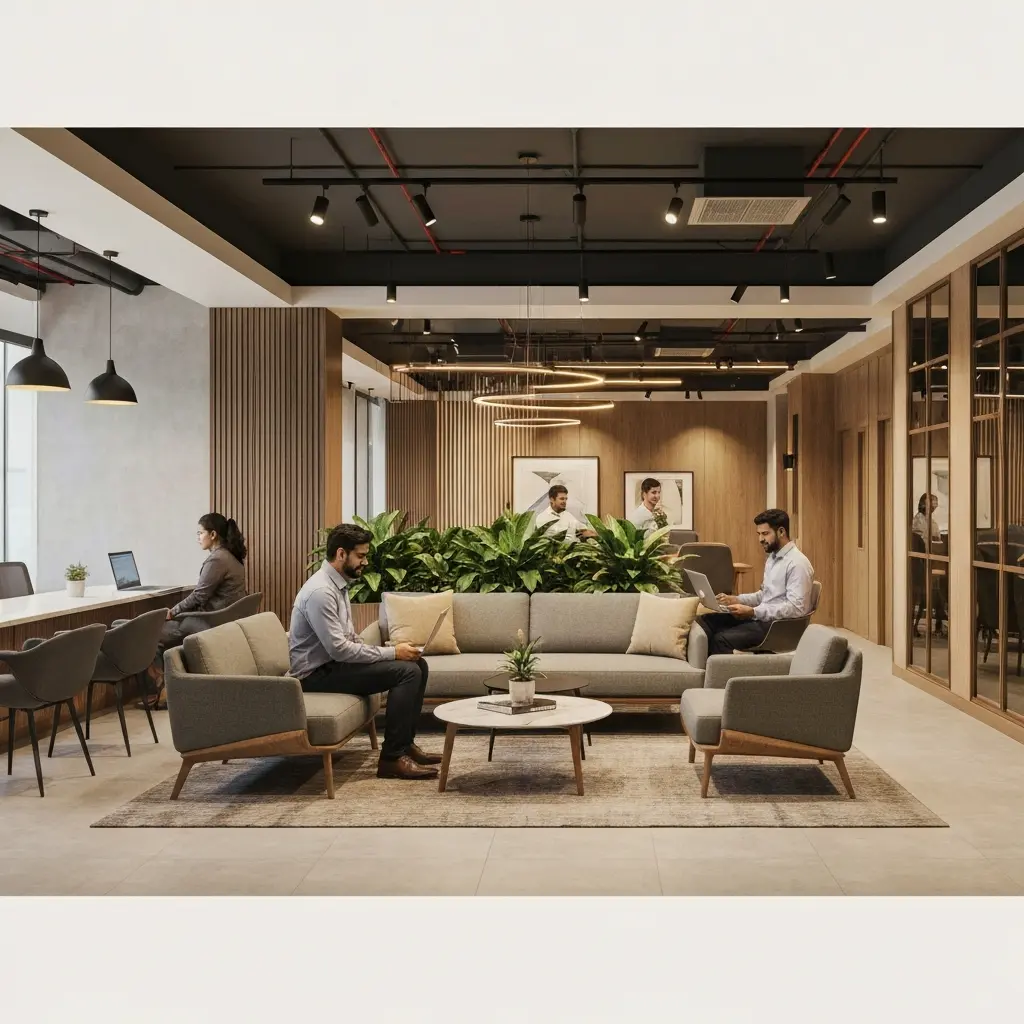
The Hub-and-Spoke model is a corporate real estate strategy where a company maintains a central, flagship headquarters (the Hub) while distributing its workforce across smaller, flexible satellite offices (the Spokes). These spokes are typically located in suburban or tier-2 city clusters, closer to where employees live. They are not full-scale replicas of the HQ but are often managed, amenity-rich flexible workspaces that provide professional infrastructure, collaboration spaces, and seamless connectivity to the main office. This model is designed to offer operational oversight and cultural cohesion from the hub, while granting employees the work-life balance and reduced commute of a local spoke.
The Three Drivers of India’s Spoke Surge
1. Bridging the RTO-Talent Retention Gap
The 2026 workplace is defined by ‘The Great Compliance.’ While outright resignations over RTO mandates have decreased, a significant 33% of employees indicate they would immediately seek a ‘closer-to-home’ alternative. This is the core tension. A suburban spoke directly addresses this by turning a punitive two-hour commute into a manageable 20-minute journey. For an Indian SME, this is a powerful retention tool. It allows leadership to mandate in-office collaboration days—crucial for mentoring junior staff or complex project kick-offs—without imposing a crushing logistical burden. The spoke becomes the compromise that prevents talent poaching by fully remote competitors.
Manager Insight: A suburban spoke isn’t a concession; it’s a strategic talent net. You meet your team where they are, literally, reducing absenteeism and increasing daily productive hours by eliminating commute fatigue.
2. The CFO’s Priority: Agile, Cost-Efficient Portfolios
Real estate agility is the new corporate priority. The average lease term for flexible spaces has compressed dramatically, offering CFOs a powerful tool for financial de-risking. In a high-interest-rate environment, committing capital to long-term, fixed leases in premium locations is a significant liability. The Hub-and-Spoke model transforms this. The central hub can be optimised or rightsized, while the suburban spokes are operated on flexible terms. This converts a large fixed cost into a variable, scalable operational expense.
| Cost Factor | Traditional Central Office (Chennai CBD) | Hub-and-Spoke with Flexible Spoke (e.g., Velachery/OMR) |
|---|---|---|
| Monthly Rent (per desk) | ₹18,000 - ₹25,000 | ₹8,000 - ₹12,000 (Spoke) + |
| Optimised Hub Cost | ||
| Lease Commitment | 36-60 months (inflexible) | 3-24 months (highly flexible) |
| Fit-out & Capex | High upfront cost (₹5-10 Lakhs) | Minimal to none; managed by operator |
| Operational Overheads | Full management burden (AMC, staff, utilities) | Bundled into membership; predictable billing |
This financial agility allows businesses to scale teams up or down for project cycles or festive season variations without being locked into empty, paid-for space.
3. The Productivity Premium of Amenitized Spaces
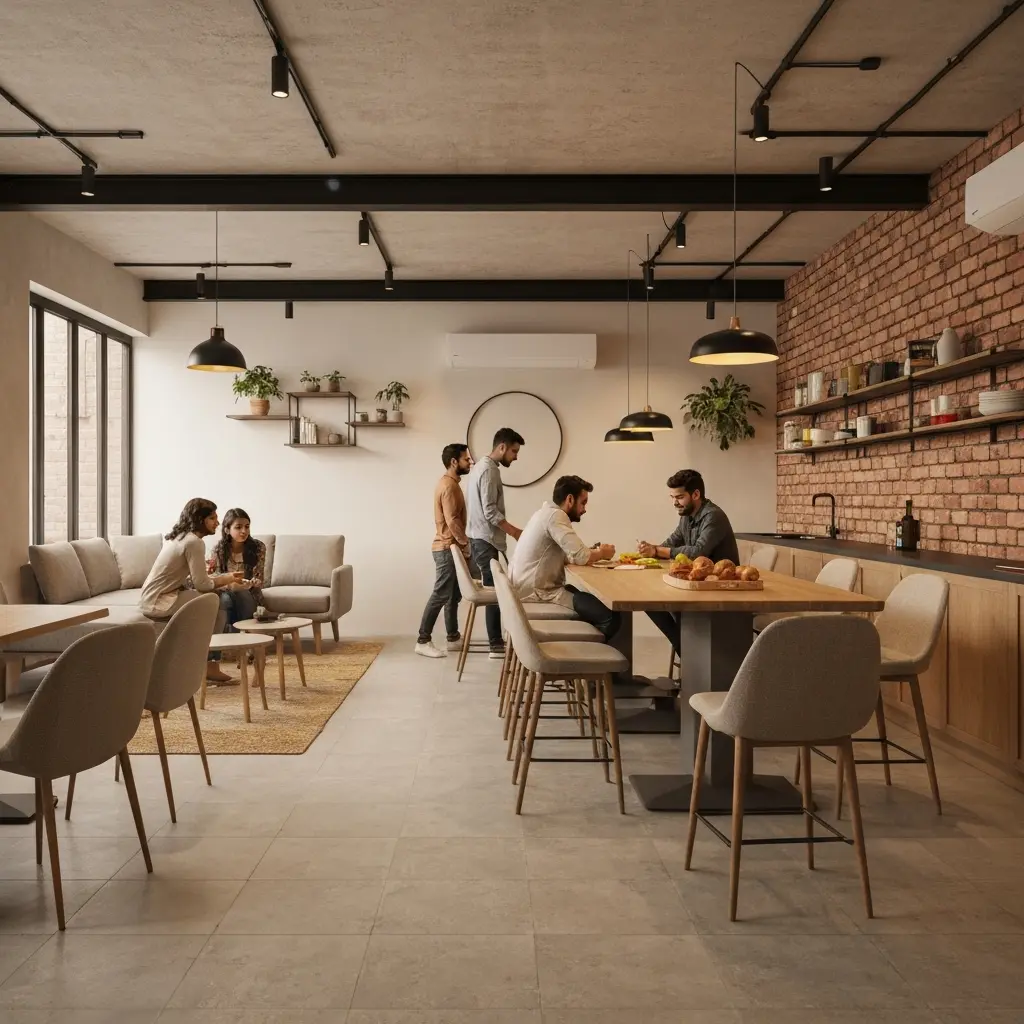
Wellness-centric design is no longer a luxury; it’s a proven ROI driver. Data shows 84% of employees in ‘amenitized’ flexible environments report better health and productivity. For the Indian context, this extends beyond a gym. It includes reliable, high-speed internet that doesn’t falter during monsoon-induced outages, ample, conflict-free parking, hygienic cafeterias, and meeting rooms with top-tier video conferencing tech to connect seamlessly with the hub or global clients. A suburban spoke that offers this eliminates the daily friction of a traditional office, where battling for parking or suffering through inconsistent AC in humid weather drains mental energy before the workday even begins.
[Image of Hub-and-Spoke Network Diagram] A visual representation of a corporate headquarters (Hub) in a city center connected via digital infrastructure to multiple suburban flexible workspace spokes where distributed teams work.
Is the Hub-and-Spoke Model Right for Your Business?
Adoption is no longer niche. Enterprise adoption has crossed the tipping point, with a majority of major corporate occupiers now integrating flexible solutions as a permanent pillar. The question for Indian founders and branch managers is one of fit. This model is particularly potent for:
- Growth-stage Startups & SMEs: Needing to attract talent from across a metro without the budget for a central premium address.
- Corporate Branch Offices: Looking to establish a presence in a new city (like Chennai) with a small team, avoiding long-term lease lock-in.
- Project-based Teams: In sectors like IT, consulting, or creative services, where teams swell and contract.
- Businesses with Diverse Workforce: Whose employees are dispersed across a large metropolitan area, from central Chennai to burgeoning suburbs like Porur or Navalur.
The key is to view real estate not as a fixed asset, but as a dynamic tool for talent strategy and operational resilience.
Crizone Pro Tip: Start with a pilot. Use a flexible spoke for a specific team or project. Measure the impact on commute time, meeting attendance, and project delivery velocity before scaling the model.
The 2026 Outlook for India’s Workspace Market
The trends point to an accelerated, specialised evolution. Expect suburban flexible workspace development in Indian metros to significantly outpace growth in crowded central business districts. Occupancy will follow demand, with these amenity-rich spokes maintaining high utilisation. Furthermore, the ‘one-size-fits-all’ coworking floorplate will give way to ‘Specialised Flex’—spaces tailored for specific industries like MedTech, engineering labs, or content creation studios, catering to niche equipment and workflow needs. Technology integration will be paramount, with smart booking systems, IoT-enabled spaces, and seamless digital connectivity becoming the baseline expectation, not a differentiator. The Indian office in 2026 will be a portfolio: a mix of owned, leased, and flex spaces, meticulously curated to balance cost, culture, and compliance.
Key Takeaways
- The commute is the new battleground for talent. Offering a high-quality workspace near employees’ homes is a decisive retention strategy in 2026.
- Agility beats ownership. Shifting from long-term fixed leases to flexible terms protects your balance sheet and allows you to scale operations responsively.
- Productivity is designed, not assumed. Invest in workspaces that actively remove daily friction (commute, tech, amenities) to unlock your team’s full output.
- Start with a spoke, not a revolution. Pilot the model with a single team or department to build internal proof before wider rollout.
- Your real estate portfolio is now a strategic tool. It should directly enable your talent strategy and operational goals, not just provide desks.
Conclusion
The ‘Great Collision’ between mandate and preference is not a problem to be solved by force, but a gap to be bridged with strategy. The Hub-and-Spoke model represents this strategic bridge for the modern Indian enterprise. It allows leadership to foster the collaboration and culture that drives growth, while empowering employees with the flexibility and well-being that sustains it. It turns real estate from a static cost centre into a dynamic engine for talent attraction and operational efficiency. For businesses navigating this new landscape in Chennai, the solution lies in a partner that provides not just space, but a strategically located, fully managed, and professionally amenitised ecosystem designed for growth. Crizone Business Centre offers this precise Hub-and-Spoke solution, providing your teams with calm, efficient, and connected workspaces across the city, turning geographical challenges into strategic advantages.