· Workspace Trends · 7 min read
Institutional Flex 2026: A Strategy for Indian Business Growth
As Return-to-Office mandates rise, institutional flex spaces have become a strategic asset for agile growth. Learn how Indian SMEs and corporates can leverage this new normal.
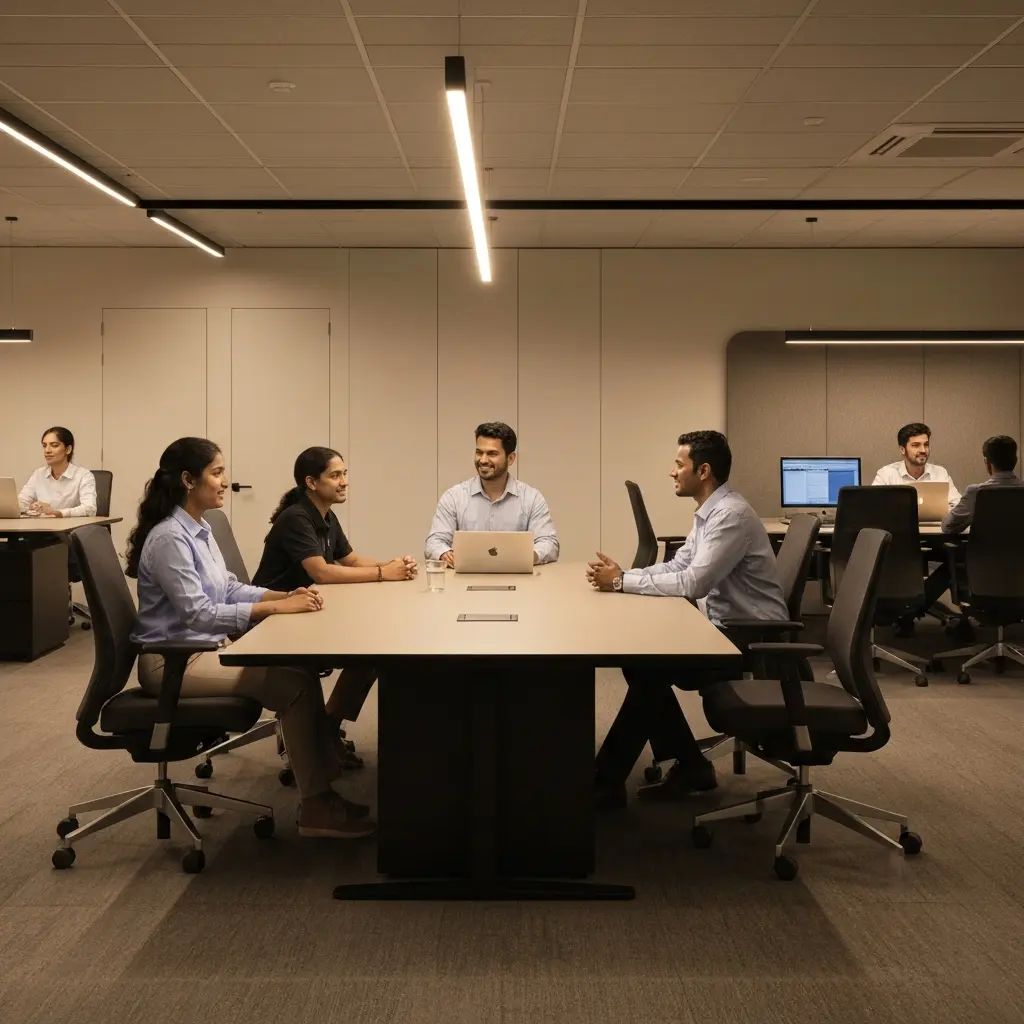
TL;DR: The 2026 workspace landscape demands agility. While RTO mandates require physical presence, the business case is now for institutional-grade managed offices. They offer cost-efficient growth, future-proof design, and a solution for managing distributed teams and GCC expansion in the Indian market.\n\n\n## Introduction\n\nIndian entrepreneurs and business heads are navigating a complex challenge: balancing rising operational costs in Chennai and beyond with the demand for talent and competitive agility. The traditional 5-9 office lease, with its inflexible terms and hefty upfront capital expenditure, is increasingly misaligned with modern business rhythms. Concurrently, the global trend of formal Return-to-Office (RTO) mandates has reached India, with many corporations enforcing more structured in-office policies. This creates a tension—how does one commit to a physical space without sacrificing the financial and operational flexibility that fuelled growth? The answer lies in the maturation of the Institutional Flex 2026 market, transforming flexible workspace from a temporary solution into a core strategic asset for portfolio optimization.\n\n\n## What is Institutional Flex 2026?\n\nInstitutional Flex 2026 refers to the evolution of managed offices and premium coworking spaces into a formal, investment-grade asset class within commercial real estate (CRE). Characterised by long-term management agreements between landlords and professional operators, it provides enterprises with fully-serviced, technologically advanced, and design-optimised workspaces on flexible, scalable terms. Unlike traditional leases, it shifts real estate from a fixed capital cost to a variable operational expense, managed by specialists to de-risk occupancy and enhance employee experience in the hybrid work era.\n\n\n## The Strategic Shift: From Cost Centre to Growth Partner\n\nThe fundamental change in 2026 is perceptual. For an Indian SME or a corporate branch, workspace is no longer just an overhead line item; it is a tool for talent acquisition, operational resilience, and market responsiveness. With 55% of major corporations globally using flex space as a core strategy, the model has proven its enterprise-grade reliability. In India, this is accelerated by the explosive growth of Global Capability Centres (GCCs), which are projected to drive 35-40% of office absorption. These GCCs require immediate, premium, and compliant setups—a demand perfectly met by institutional flex providers who handle everything from GST-compliant billing to IT infrastructure.\n\nFor a growing business, this means launching a new team or entering a new city like Chennai without the 12-18 month lead time and ₹50 Lakh+ fit-out cost of a traditional office. The operator bears the capital risk and management burden, allowing leadership to focus on core business growth.\n\n> Crizone Pro Tip: Treat your workspace as a strategic recruitment tool. A premium, well-located managed office in Chennai signals stability and care to top talent, directly impacting your ability to hire and retain in a competitive market.\n\n\n## Navigating the Mandate Milestone: The “Hub & Spoke” Advantage\n\n2026 is the year of the “Mandate Milestone,” with firms enforcing 4-5 day in-office policies. However, a hard-line RTO does not necessitate a rigid, centralised headquarters. This is driving a surge in the ‘hub and spoke’ model, where a central corporate office is supplemented by satellite flex spaces. This strategy mitigates key Indian urban challenges: employee commute fatigue from areas like OMR or the city centre, and talent pools spread across a metro region.\n\nA Chennai-based company can maintain its core HQ while placing sales or tech teams in a professionally managed spoke location near major residential hubs or metro connectivity. This satisfies RTO requirements while boosting morale and productivity—66% of employees now see the office as a place for intentional collaboration, not just a desk. A managed spoke provides that collaborative environment without the commute penalty.\n\n| Cost Factor | Traditional Chennai Office (1,000 sq. ft.) | Institutional Managed Office (10 Dedicated Desks) |\n| :--- | :--- | :--- |\n| Security Deposit | ₹8-10 Lakhs (10 months rent) | Typically 2-3 months membership fee |\n| Monthly Rent | ₹80,000 - ₹1,00,000 | ₹4,00,000 - ₹5,50,000 (all-inclusive) |\n| Maintenance & AMC | ₹15,000 - ₹20,000/month + separate contracts | Included |\n| IT/Infrastructure Capex | ₹5-15 Lakhs (one-time) | Included |\n| Administrative Staff | HR/Admin overhead | Dedicated Centre Management included |\n| Agility | Locked into 3-5 year lease | Scale up/down with 1-3 month notice |\n\n\n## Designing for Productivity: The Human-Centric Workspace\n\nThe 2026 flex space is engineered for focus and well-being, moving beyond aesthetic gimmicks. The top design priority is human-centric acoustic engineering—ensuring privacy in phone booths and focus zones while enabling vibrant collaboration in common areas. This is critical in the Indian context, where open-plan layouts can often become disruptive. Furthermore, ‘Invisible Technology’ is paramount: discreet AI for climate control (a blessing in Chennai’s humidity), smart lighting that adjusts to circadian rhythms, and seamless booking systems for meeting rooms.\n\nThis reduces the cognitive load of transitioning between home and office, making the mandated office days more productive and less stressful. For a business, this translates directly into higher output and fewer distractions. A study by JLL India emphasises that well-designed flexible spaces can improve employee productivity by up to 15%, making the investment in a quality managed environment directly contributory to the bottom line.\n\n[Image of a serene, acoustically treated focus booth in a modern Indian office, with integrated, discreet technology controls.]\n\n\n## Is Your Portfolio Agile Enough for 2026’s Volatility?\n\nEconomic uncertainty demands operational flexibility. Average lease terms for flex operators have dropped 37% since 2020 to around 77 months (just over 6 years), reflecting occupiers’ demand for shorter commitments. For an Indian business, this agility is a hedge against market shifts. It allows for rapid consolidation or expansion in response to festive season demand cycles, project wins, or funding rounds without being trapped in a long-term liability.\n\nThis is the essence of CRE portfolio optimization: using institutional flex to create a buffer. Instead of signing a 5-year lease for projected headcount, a business can take a 2-year managed office agreement for current needs, using on-demand access for peak periods. This model turns real estate from a drag on agility into its engine.\n\n> Manager Insight: “The true cost of a traditional lease isn’t just the rent; it’s the lost opportunity cost of being unable to pivot quickly. In 2026, agility is a competitive moat.”\n\n\n## The 2026 Outlook for the Indian Workspace Market\n\nThe Indian market will see accelerated polarization. On one end, large institutional consolidations will create national players offering seamless multi-city managed office networks. On the other, hyper-specialised ‘niche hubs’ for sectors like MedTech or DeepTech will emerge in clusters like Chennai’s IT corridor. The supply gap presents an opportunity; while flex penetration is still low, the 59% corporate preference for it indicates massive growth potential. Expect more Indian landlords to partner with operators under management agreements, bringing premium flex inventory to key micro-markates. The winners will be businesses that leverage this institutional quality and flexibility to attract GCC partnerships and top-tier talent.\n\n\n## Key Takeaways\n\n* View workspace as OpEx, not CapEx: Shift to flexible, all-inclusive membership models to preserve capital for core business innovation.\n* Adopt a hub & spoke strategy: Use managed satellite offices to comply with RTO mandates while reducing employee commute strain and tapping distributed talent.\n* Prioritise human-centric design: Choose spaces where acoustic privacy and invisible technology are standard, directly supporting employee focus and well-being.\n* Build in contractual agility: Opt for shorter, scalable commitments to hedge against economic volatility and project-based demand shifts.\n* Leverage operator expertise: Offload the complexities of facility management, compliance, and IT to dedicated professionals, freeing your team to focus on growth.\n\n\n## Conclusion\n\nThe Great Recalibration of 2026 is not a temporary trend but a permanent restructuring of how businesses occupy space. The binary choice between a rigid traditional lease and a fully remote team is obsolete. The strategic path forward is a partnership with an institutional-grade provider that delivers the prestige, productivity, and compliance of a corporate office with the agility and efficiency of a modern platform. This model aligns perfectly with the growth trajectory of ambitious Indian businesses. For companies in Chennai looking to navigate this new landscape with a partner that embodies calm efficiency and professional rigour, the solution is clear. Discover how a tailored managed office strategy at Crizone Business Centre can become the foundation for your next phase of growth.