· Workspace Trends · 6 min read
Navigating Hybrid Creep: Flex Space Solutions for 2026
Learn how the 2026 Hybrid Creep crisis affects Indian businesses and why flexible workspaces are key to growth and adaptation in Chennai's dynamic market.
TL;DR: The 2026 ‘Hybrid Creep’ crisis, marked by increased in-office mandates and a global shortage of Class-A flex spaces, challenges Indian businesses. Adopting premium flexible workspaces mitigates real estate risks, enhances productivity, and supports sustainable growth in dynamic markets like Chennai.
Introduction
Indian businesses, from SMEs in Chennai to corporate branches nationwide, face a perfect storm in 2026. Rising real estate costs, notorious traffic on corridors like OMR, and the imperative to retain talent collide with a new global trend: the ‘Hybrid Creep’. This gradual increase in mandatory office days, as seen with major firms like Microsoft, demands agile workspace solutions. Unlike rigid 10-year leases that lock in capital and flexibility, the shift towards institutional-grade flexible spaces offers a strategic escape. For Indian entrepreneurs, this isn’t just about real estate; it’s about securing growth amidst uncertainty, where skipping the OMR traffic can mean gaining hours of productive work.
What is Hybrid Creep?
Hybrid Creep refers to the steady, often policy-driven increase in the number of days employees are required to work from a physical office. Initially emerging from post-pandemic hybrid models, it has escalated in 2026, with mandates like 3-5 days in-office becoming common. This trend creates sudden demand for ‘overspill’ desks in high-quality flexible workspaces, as companies seek to accommodate returning staff without long-term lease commitments. In the Indian context, it forces businesses to reevaluate their office strategies to balance employee preferences with operational needs.
The Hybrid Creep Crisis: Implications for Indian Businesses
As global corporations enforce stricter in-office policies, Indian SMEs and startups must navigate a tightening supply of premium flex spaces. With 55% of major firms integrating flex space permanently, competition is intensifying, especially in hubs like Chennai. The supply-demand gap, exacerbated by low new construction, means that securing a ‘Plug-and-Play’ office requires swift action. For a growing tech startup on OMR, this could delay expansion plans or force compromises on location and amenities.
The ‘Hybrid Creep’ metric shows 34% of hybrid workers now need to be in-office 4+ days weekly, up from 23% in 2023. This spikes demand for coworking hubs as overflow solutions, but with occupancy constraints, prices may rise. Indian businesses must act strategically to lock in flexible terms before market pressures mount. Moreover, employee resistance remains a risk; 64% of workers globally would consider quitting if remote flexibility is revoked, highlighting the need for a balanced approach that respects talent while meeting business goals.
Crizone Pro Tip: For Chennai-based SMEs facing return-to-office mandates, a flexible workspace in a central location with metro connectivity can reduce commute stress and foster team collaboration, aligning with the ‘calmly efficient’ work culture.
How Workspace Design is Evolving for 2026 Productivity
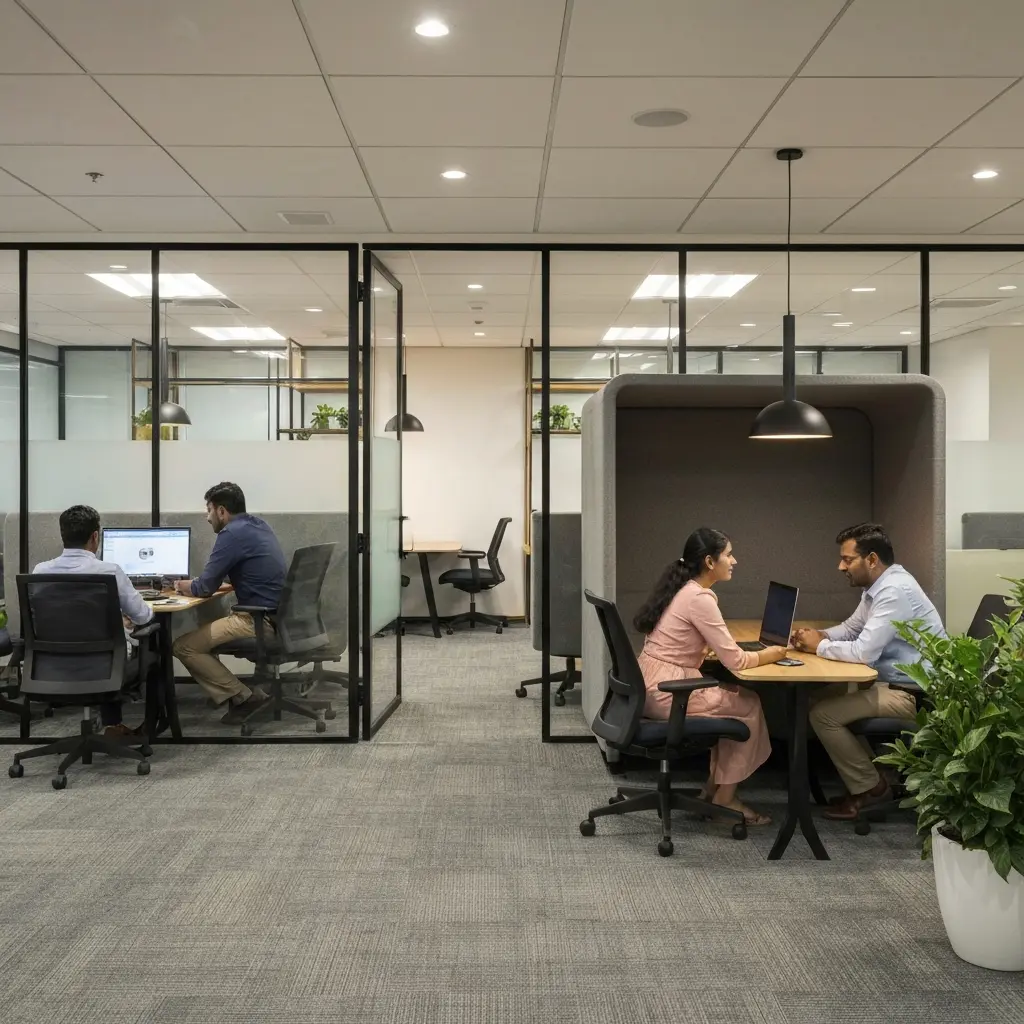
Hospitality-as-a-Service (HaaS) has redefined the office from a task-completion site to a social and collaboration destination. In India, where networking and client meetings are crucial, this shift means workspaces must offer premium amenities like lounges and event spaces. Acoustic privacy is now the top design priority, with 40% of meetings including remote participants. Operators are retrofitting open-plan areas with ‘Teams-Ready’ soundproof pods, essential for confidential discussions in bustling Chennai offices.
Sustainability has transitioned from compliance to a growth catalyst. Enterprise tenants in 2026 demand Carbon-Zero reporting for their flex portfolios, making Regenerative Biophilic certifications a market differentiator. For Indian businesses, this aligns with growing ESG (Environmental, Social, and Governance) expectations from investors and clients. A workspace with energy-efficient systems, such as optimized HVAC for Chennai’s humid climate, not only reduces costs but enhances brand reputation.
Manager Insight: According to a JLL India report, sustainable workspace design can boost employee well-being by 15%, directly impacting retention and productivity in Indian SMEs.
Strategic Flexibility and Cost Benefits for Indian Growth
Asset flexibility is the new liquidity, with average lease terms for flex providers dropping by 37% to 77 months in 2026. This allows Indian businesses to scale up or down without the burden of long-term commitments, crucial during festive seasons or economic shifts. The emerging ‘Super-Hub’ model, where specialized spaces form alliances, creates innovation ecosystems—imagine a biotech startup in Chennai collaborating with a hard-tech maker space nearby.
Operational AI dynamically optimizes HVAC, lighting, and desk allocations based on real-time data, reducing operational costs by up to 20%. For an Indian SME, this means lower electricity bills and a more comfortable work environment. Financially, flexible spaces offer significant savings compared to traditional offices, as shown in the table below for Chennai:
| Cost Component | Traditional Office (Per Month in Chennai) | Crizone Flex Membership (Per Month) |
|---|---|---|
| Rent in CBD/OMR | ₹2.5 Lakhs | ₹50,000 - ₹1.5 Lakhs (scalable) |
| Maintenance & Utilities | ₹80,000 (estimated) | Included |
| Furniture & IT Setup | One-time capex of ₹10-15 Lakhs | Included |
| Compliance (GST/TDS) | Additional administrative overhead | Managed by provider |
| Total Effective Cost | ₹3.3 Lakhs + capex + operational hassle | Transparent, all-inclusive pricing |
This comparison highlights how flexible solutions free up capital for core business activities, such as marketing or R&D. For a freelancer or small team, it eliminates the hassle of managing leases and utilities, allowing focus on client work. The shorter lease terms also provide agility to adapt to market changes, such as expanding during peak seasons or consolidating during downturns.
The 2026 Outlook for the Indian Workspace Market
In 2026, India’s workspace market will see accelerated adoption of premium flex spaces, driven by Hybrid Creep and supply constraints. Tier-2 cities may emerge as growth corridors, but Chennai will remain a hotspot due to its IT and startup ecosystem. Expect a 25-30% increase in leasing activity for ‘Plug-and-Play’ spaces, with sustainability and technology integration becoming non-negotiable for tenants. Indian businesses will prioritise spaces that offer seamless hybrid meeting capabilities and wellness amenities to attract top talent.
The regulatory landscape, including GST and TDS compliance, will favour operators who simplify these processes for clients. As employee expectations evolve, workspaces that blend professionalism with hospitality will lead the market. For founders and branch managers, early adoption of flexible strategies will be key to navigating the impending shortage and maintaining competitive edge.
Key Takeaways
- Assess Your Hybrid Policy: Balance in-office mandates with employee flexibility to avoid talent attrition, using flex spaces as a buffer.
- Prioritise Design for Productivity: Choose workspaces with acoustic privacy and sustainable features to enhance collaboration and well-being.
- Leverage Cost Efficiency: Opt for flexible memberships over traditional leases to save on capex and operational costs, reallocating funds to growth initiatives.
- Embrace Technological Integration: Select providers offering AI-driven optimisations for energy and space utilisation, reducing overheads.
- Plan for Scalability: Use short-term flex agreements to adapt quickly to market changes, such as festive season downturns or expansion phases.
Conclusion
The 2026 ‘Hybrid Creep’ crisis presents both a challenge and an opportunity for Indian businesses. By moving away from rigid office leases towards institutional-grade flexible workspaces, companies can navigate real estate shortages, boost productivity, and support sustainable growth. This strategic shift is not merely about cost savings; it’s about creating an adaptive environment where teams thrive amidst changing norms. For businesses in Chennai, Crizone Business Centre offers precisely this solution—premium, flexible workspaces designed to be your growth partner, with locations that mitigate traffic woes and amenities that foster innovation. Explore how we can help your business adapt and excel in the evolving landscape.