· Business Growth & Workspace · 6 min read
Scope 3 Emissions Reporting: 2026's Key to ESG Compliance
From 2026, operational carbon tracking is critical for ESG compliance. Learn how modern flexible workspaces like Crizone provide the data enterprises need.

TL;DR: By 2026, ESG compliance pivots to Scope 3 emissions reporting. Modern workspaces like Crizone provide real-time operational carbon tracking, meeting LEED v5 standards and helping Indian businesses command a market premium while reducing compliance costs and complexity.
For Indian businesses navigating the complexities of growth, a silent yet significant pressure point has emerged beyond traffic and talent. Investor scrutiny, regulatory frameworks, and global supply chain requirements now demand verifiable proof of sustainable operations. The traditional office lease, with its fixed, opaque utility bills, is increasingly a liability in an era where environmental, social, and governance (ESG) metrics directly impact valuation and access to capital. The new demand from corporate branches and growth-focused SMEs is for workspace that actively contributes to their sustainability story through robust, transparent Scope 3 emissions reporting.
What is Scope 3 Emissions Reporting?
Scope 3 emissions are the indirect greenhouse gas emissions that occur in a company’s value chain, including leased assets like office space. For businesses operating from flexible or serviced offices, the energy consumption of that workspace falls under their Scope 3 reporting obligations. From 2026, providing detailed, auditable data on this operational carbon has become a primary function of premium workspaces, moving sustainability from a branding exercise to a core compliance metric.
Why Your Workspace is Your ESG Audit Point in 2026
By late March 2026, corporate sustainability mandates have solidified. A recent industry report confirms that 73% of corporate leaders now voluntarily disclose Scope 3 data, creating an unprecedented demand for workspaces that can provide it. This shift is driven by regulations like the EU’s Corporate Sustainability Reporting Directive (CSRD) and India’s own evolving Business Responsibility and Sustainability Reporting (BRSR) framework. For a company in Chennai leasing a traditional 2,000 sq. ft. office on OMR, calculating the precise carbon footprint of that space is complex and expensive.
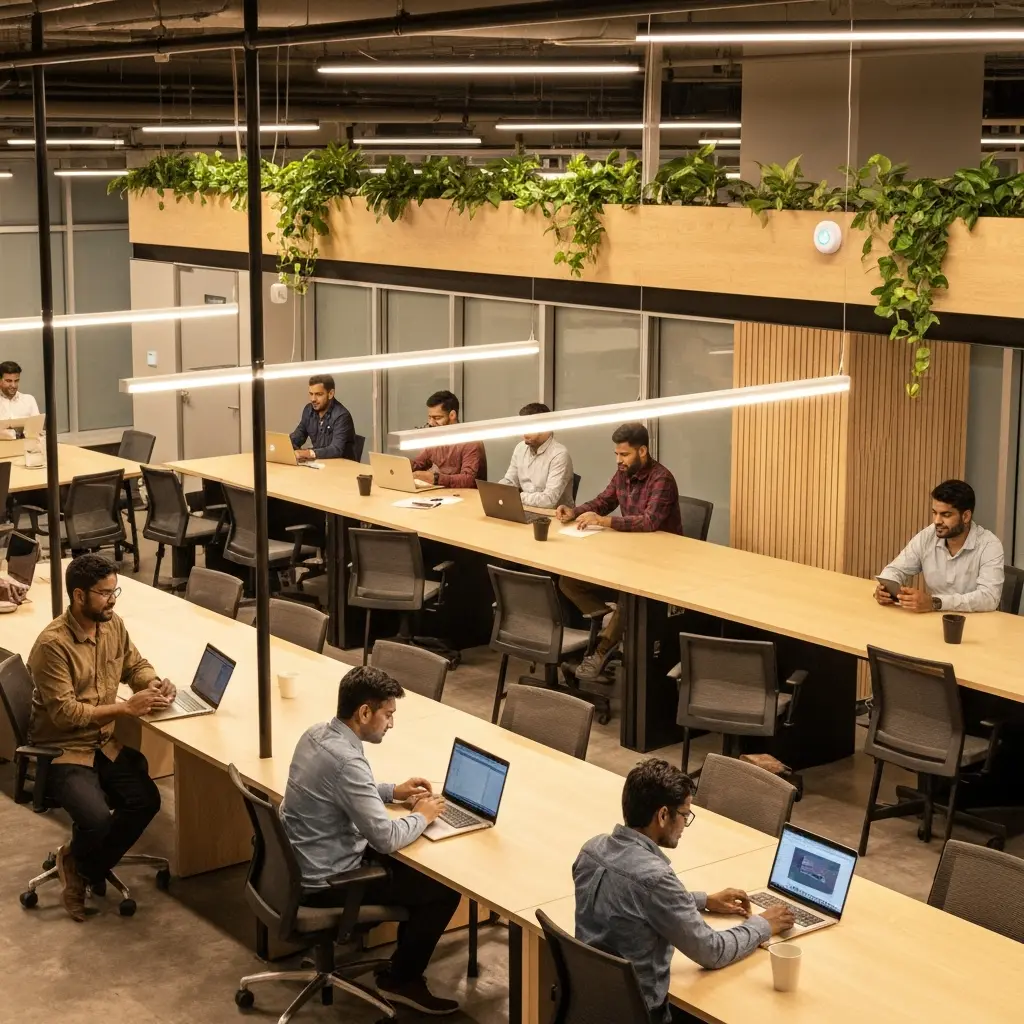
In contrast, a modern business centre equipped with smart metering provides this data at the departmental or even seat level. This granularity is no longer a luxury; it is a prerequisite for enterprise-grade flexible office suites. It allows a tenant to directly audit their specific energy draw, satisfying their annual environmental audit with precision and significantly lowering the internal cost of compliance.
Crizone Pro Tip: When evaluating a workspace, ask for a sample of the carbon data report provided to tenants. The ability to furnish granular, real-time energy usage per dedicated desk or private suite is a clear indicator of a mature ESG infrastructure.
How LEED v5 and Operational Efficiency Create a ‘Green Premium’
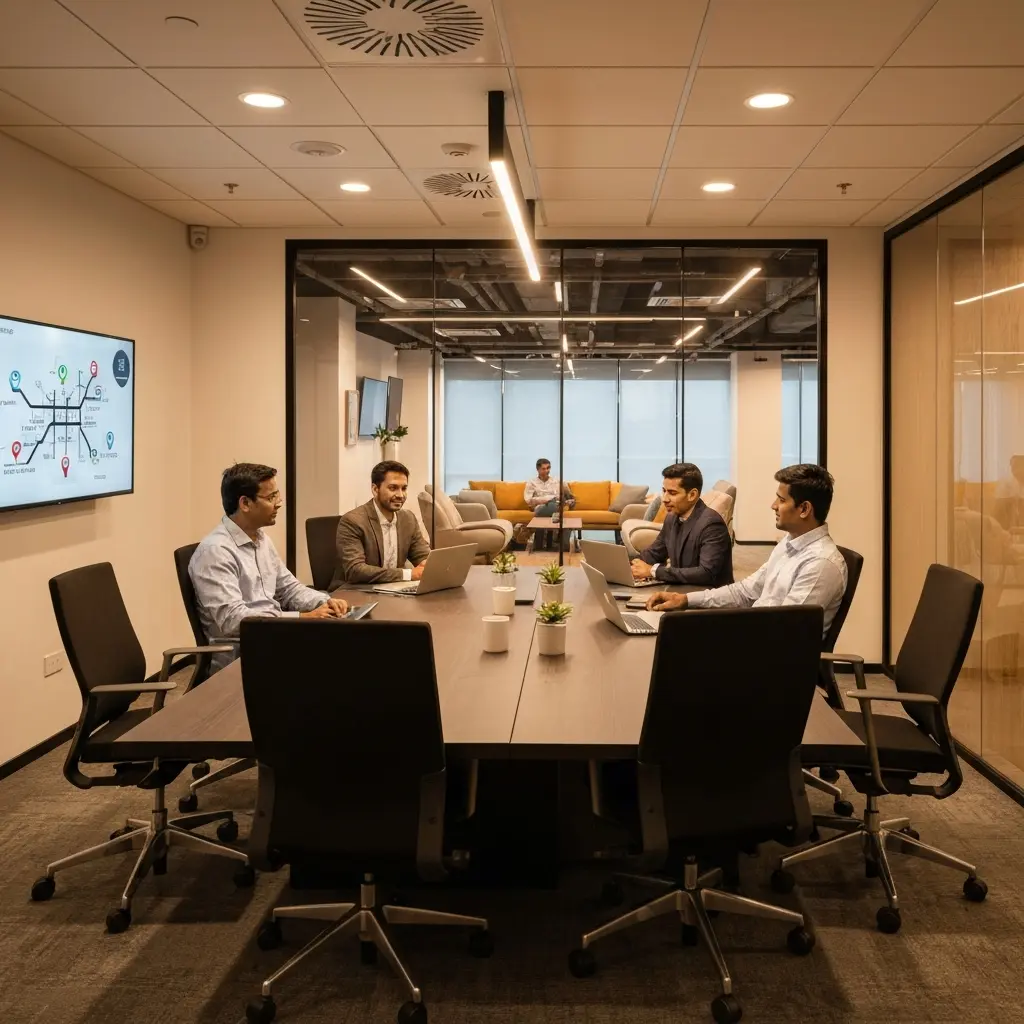
The global benchmark has also risen sharply. LEED v5, the standard for new project registrations from early 2026, now allocates 50% of its total points specifically to carbon-related strategies. This focus rewards operational efficiency, not just sustainable construction materials. Data indicates that modern, well-utilised coworking spaces produce 30% less carbon per employee than traditional low-density corporate offices due to superior asset consolidation—shared meeting rooms, reception, and amenities—and consistently higher occupancy rates.
This operational edge translates directly to the bottom line for tenants and operators. As of Q1 2026, workspaces with verified real-time carbon dashboards command a 12-15% price premium. This ‘Green Premium’ reflects the tangible value of reduced compliance risk and enhanced brand equity for the occupying business. For an Indian SME, operating from such a space is a defensible business expense that supports growth.
| Compliance Cost Factor | Traditional Chennai Office | Premium Flexible Workspace (e.g., Crizone) |
|---|---|---|
| Annual ESG Data Audit | ₹ 2-5 Lakhs (external consultant fees) | Included in membership (automated reporting) |
| Energy Efficiency | Fixed, often outdated HVAC; high waste | 22%+ less waste via smart, occupancy-based systems |
| Carbon Per Employee | Higher due to low density and fixed schedules | Up to 30% lower through shared infrastructure |
| Market Positioning | Neutral or negative for sustainability | Enables ‘Green Premium’ and investor appeal |
Is a ‘15-Minute City’ Strategy Your Key to Lowering Commuter Carbon?
For many businesses, the largest part of their Scope 3 footprint is employee commuting. The ‘15-Minute City’ effect has become a primary sustainability driver, with 65% of new flexible workspace memberships in 2026 chosen for locations within a short commute. This strategic decision drastically lowers the member company’s commuter carbon footprint—a critical, often outsized, component of their overall report.
For a Chennai-based team, choosing a business centre like Crizone, strategically located with access to metro connectivity and key residential hubs, is a direct ESG intervention. It moves the needle on a major emission source without costly internal transport subsidies. Furthermore, operational waste reduction has evolved; high-value ESG contracts now require 100% paperless onboarding and mobile-only access, eliminating physical waste like PVC cards from the outset.
[Image of a flow chart showing how workspace data feeds into corporate ESG reporting] Caption: How granular workspace data (energy, waste, commute) flows into a company’s broader Scope 3 emissions report, simplifying compliance.
Manager Insight: The shift is from visible sustainability—recycling bins and plants—to invisible, data-driven efficiency. The real value for a growing business lies in the backend systems: smart sensors that adjust lighting and cooling based on real-time headcount, which over 55% of global operators now use, cutting costs and carbon simultaneously.
The 2026 Outlook for Indian Workspaces
The trajectory for India’s workspace market is clear. By 2026, operational carbon tracking will be as standard a feature for premium flexible offices as high-speed internet was in 2020. Expect a rapid bifurcation in the market, with a growing ‘green premium’ for spaces offering digital product passports for furniture (ensuring circularity) and real-time dashboards. As noted by JLL in their 2025 India Real Estate Outlook, ‘occupiers will increasingly select assets based on performance data.’ For Indian corporates and SMEs, the workspace will transition from a passive cost centre to an active partner in de-risking their ESG journey, reducing audit burdens, and enhancing their corporate narrative.
Key Takeaways
- Data is Mandatory: From 2026, granular energy and carbon data from your leased workspace is essential for credible Scope 3 emissions reporting.
- Efficiency Pays: Workspaces designed for high occupancy and smart operations can cut per-employee carbon by 30%, directly benefiting your ESG metrics.
- Location is an ESG Tool: Choosing a workspace within a 15-minute commute for your team is one of the most effective ways to reduce your overall carbon footprint.
- Audit the Infrastructure: Prioritise spaces with LEED v5-aligned systems, smart zone metering, and paperless/mobile-first operations to future-proof your compliance.
- The Premium is Real: Investing in a ‘Green Flex’ space with verified data can command a 12-15% market premium for your own services by bolstering your sustainability credentials.
Conclusion
The business landscape is evolving where sustainability is quantified, reported, and valued. The 2026 pivot to rigorous Scope 3 emissions reporting transforms your choice of workspace from a real estate decision into a strategic compliance and growth decision. For founders and managers in Chennai seeking a calm, efficient partner in this transition, the infrastructure, data, and strategic location offered by a centre like Crizone provide not just a prestigious address, but a foundational pillar for sustainable, credible, and accelerated business growth.
Continue your workspace search
Explore the most relevant Crizone pages next
If this article is part of your Chennai workspace research, these pages help you move from reading into comparing live plans, locations, and fit.
Explore coworking plans in Chennai
Compare day passes, dedicated desks, private offices, meeting rooms, and virtual office options from one commercial hub page.
Book a day pass in Chennai
Best fit if you need occasional workspace access, a short productive break from home, or a flexible desk for a single day.
Compare dedicated desk options
A stronger fit for regular monthly use when you want a fixed seat, better routine, and predictable workspace costs.