· Workspace Trends · 7 min read
The Elastic Portfolio: Smart Indian Workspace Strategy for 2026
Discover how the 'Elastic Portfolio' strategy helps Indian businesses balance mandatory office days with operational efficiency, converting high real estate costs into strategic growth capital.

TL;DR: By 2026, an ‘Elastic Portfolio’ strategy will be essential for Indian businesses. It solves the conflict between mandatory office days and underutilised space by blending core HQ space with on-demand flex workspaces. This converts fixed real estate costs into agile operational expenditure, freeing capital for growth while meeting employee expectations.
For Indian entrepreneurs and growing companies, the office has become a point of tension. On one hand, there is immense pressure to maintain a professional address, foster collaboration, and meet the demands of clients who expect stability. On the other, the realities of Chennai’s traffic, rising rental costs in corridors like OMR and ECR, and the proven productivity of hybrid models create a powerful counter-current. This friction is not unique to India; it is a global phenomenon reaching a critical point in 2026. Major corporations worldwide are enforcing stricter return-to-office (RTO) mandates, yet their expensive, long-term leases sit half-empty for much of the week. This is the paradox of the modern workplace, and the strategic solution emerging is the Elastic Portfolio. It represents a fundamental shift from viewing office space as a fixed asset to treating it as a flexible, scalable service aligned directly with business outcomes.
What is an Elastic Portfolio?
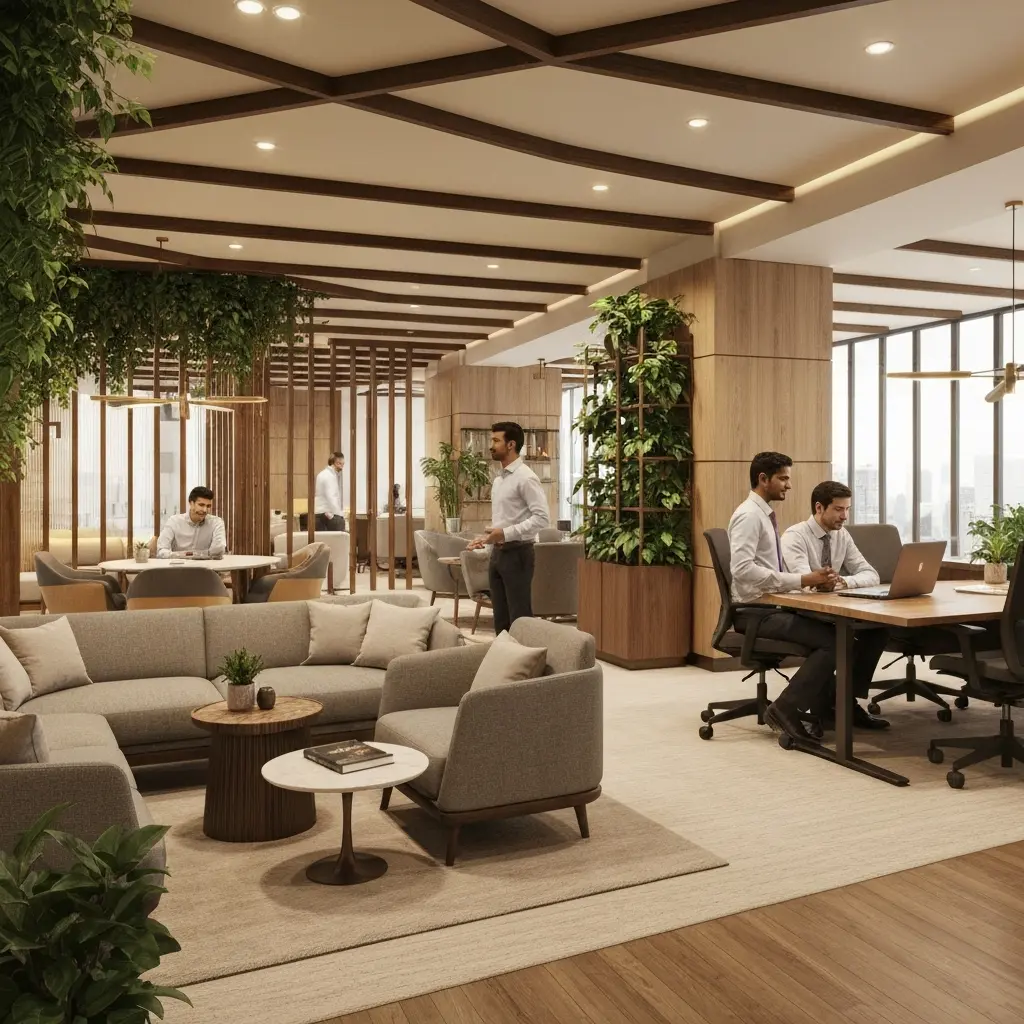
An Elastic Portfolio is a corporate real estate strategy where a company intentionally blends different types of workspace to optimise for cost, culture, and flexibility. Instead of a single, large, fixed-term lease, a business maintains a smaller, core headquarters and strategically supplements it with on-demand access to premium flexible workspaces and meeting rooms. This elastic model allows a firm to scale its physical footprint up or down in response to actual team size, project needs, and mandated in-office days, effectively bridging the gap between policy and practical utilisation.
Solving the 2026 Cost and Utilisation Crunch
The core driver for adopting an elastic strategy is financial prudence. A traditional five-year lease for a 2,000 sq. ft. office in a Grade-A Chennai building is a significant, high-risk capital expenditure (CapEx). You pay for the space 365 days a year, regardless of whether your team is fully in, travelling, or working remotely. With RTO mandates creating a pronounced mid-week surge (peak attendance is Tuesday-Thursday), you are effectively paying for ‘ghost’ square footage on Mondays and Fridays. An elastic portfolio converts this fixed cost into a predictable operational expense (OpEx). You pay only for the space and amenities you use, when you use them. This frees up crucial capital—often running into lakhs—that can be redirected towards marketing, R&D, or talent acquisition.
Crizone Insight: For a Chennai-based SME, the savings are tangible. The capital tied up in security deposits, fit-outs, and monthly rents for underutilised space can instead fund a new marketing campaign or two additional senior hires.
Consider the financial contrast for a growing team of 20:
| Cost Factor | Traditional Chennai Office (2,000 sq. ft.) | Elastic Portfolio Strategy |
|---|---|---|
| Monthly Commitment | Fixed rent (~₹4-6 Lakhs), plus maintenance. | Core small office + 10-15 flex desks & meeting room credits. |
| Capital Lock-in | High: 6-12 months deposit + fit-out costs (₹20-40 Lakhs). | Minimal to none: often just a monthly membership fee. |
| Scalability Cost | High penalty and delay to expand or contract. | Instant: scale up or down by the desk, by the month. |
| Operational Burden | Full responsibility for IT, housekeeping, AC maintenance. | Managed service: all bundled into a single invoice. |
How Does This Support Talent and Culture in India?
RTO mandates, if poorly implemented, can trigger attrition. Data suggests a significant portion of professionals would consider leaving a job over a rigid five-day office week. The elastic portfolio offers a sophisticated solution. It allows leadership to mandate in-office collaboration days—say, Tuesdays to Thursdays—without forcing employees into a long, costly commute to a single location every day. Instead, companies can provide access to a network of premium flex spaces closer to where employees live, like a hub in Adyar or near a Metro station. This ‘hub-and-spoke’ model respects employees’ time and well-being, softening the RTO policy. Furthermore, these modern flex spaces are designed as talent magnets, featuring ESG-compliant environments, reliable high-speed internet, and vibrant professional communities that foster networking and serendipitous collaboration far beyond a sterile, underused corporate floor.
Manager Insight: “Mandating days in the office is about culture and collaboration, not occupancy tracking. Providing a high-quality, convenient workspace shows employees you value their time and productivity, which is key for retention in India’s competitive talent market.”
Is a Managed Office the Right Elastic Solution for Your Firm?
For larger Indian enterprises or SMEs planning a dedicated branch or team hub, the ‘Managed Office’ is the pinnacle of the elastic strategy. This is not just a few desks in a shared lounge; it is a fully customised, private office suite operated by a flex space provider. They handle everything: IT infrastructure, furniture, security, pantry services, and facility management, delivering a turnkey solution. This is ideal for companies that need a branded, controlled environment but want zero headache from landlord negotiations, GST compliance on utilities, or managing service staff. It offers the prestige and privacy of a corporate office with the flexibility and financial predictability of a service. As noted in JLL’s 2026 outlook, this product is seeing surging demand as companies seek to reduce corporate overhead and focus purely on their core business operations.
The 2026 Outlook for the Indian Workspace Market
The trends defining 2026 globally will resonate strongly in India’s major metros. We anticipate a sharper divide in Chennai’s commercial real estate. Grade-B buildings with poor amenities will struggle with high vacancy, while demand will concentrate on ‘prime’ or ‘trophy’ assets. Businesses will increasingly seek partners who have secured spaces in these premium locations to fulfill their elastic portfolio needs. Furthermore, with ESG and sustainability reporting becoming a ‘deal-breaker’ for large occupiers and their clients, flex spaces with green certifications will move from a ‘nice-to-have’ to a mandatory criterion for many forward-looking Indian companies. The national office vacancy rate may remain high, but the usable, efficient, and flexible fraction of that market will be in high demand.
Key Takeaways
- Convert CapEx to OpEx: Shift from locking capital in long-term leases to variable, membership-based costs that align with actual usage.
- Solve the Mid-Week Surge: Use on-demand flex spaces and meeting rooms to accommodate peak attendance days without paying for empty space on others.
- Retain Talent Strategically: Implement RTO mandates by offering high-quality workspace options that reduce commute burden and enhance daily experience.
- Prioritise Managed Services: For dedicated team spaces, consider a Managed Office to eliminate operational overhead and focus management energy on business growth.
- Future-Proof with ESG: Choose workspace partners with strong sustainability credentials to meet evolving corporate and client expectations.
Conclusion
The workplace conflict of 2026 is not a problem to be endured but an opportunity to be strategic. The Elastic Portfolio model provides a clear, financially sound framework for Indian businesses to navigate the competing demands of cost control, talent retention, and operational presence. It moves the conversation from mere real estate occupancy to strategic resource allocation. For businesses in Chennai looking to implement this agile approach, the path forward involves partnering with a provider that understands both global trends and local nuances—from OMR traffic patterns to the need for flawless AC during humid months.
As your growth partner, Crizone Business Centre is designed to be the elastic element in your portfolio, offering the premium, professionally managed flex spaces and meeting facilities that turn a fixed cost centre into a dynamic platform for your business’s next phase of expansion.