· Workspace Trends · 12 min read
What is a Nomad Village? The 2026 Coliving Strategy
Digital nomadism has matured into a global mobility segment, creating demand for managed, long-stay 'Nomad Villages'. This is the 2026 playbook for operators.
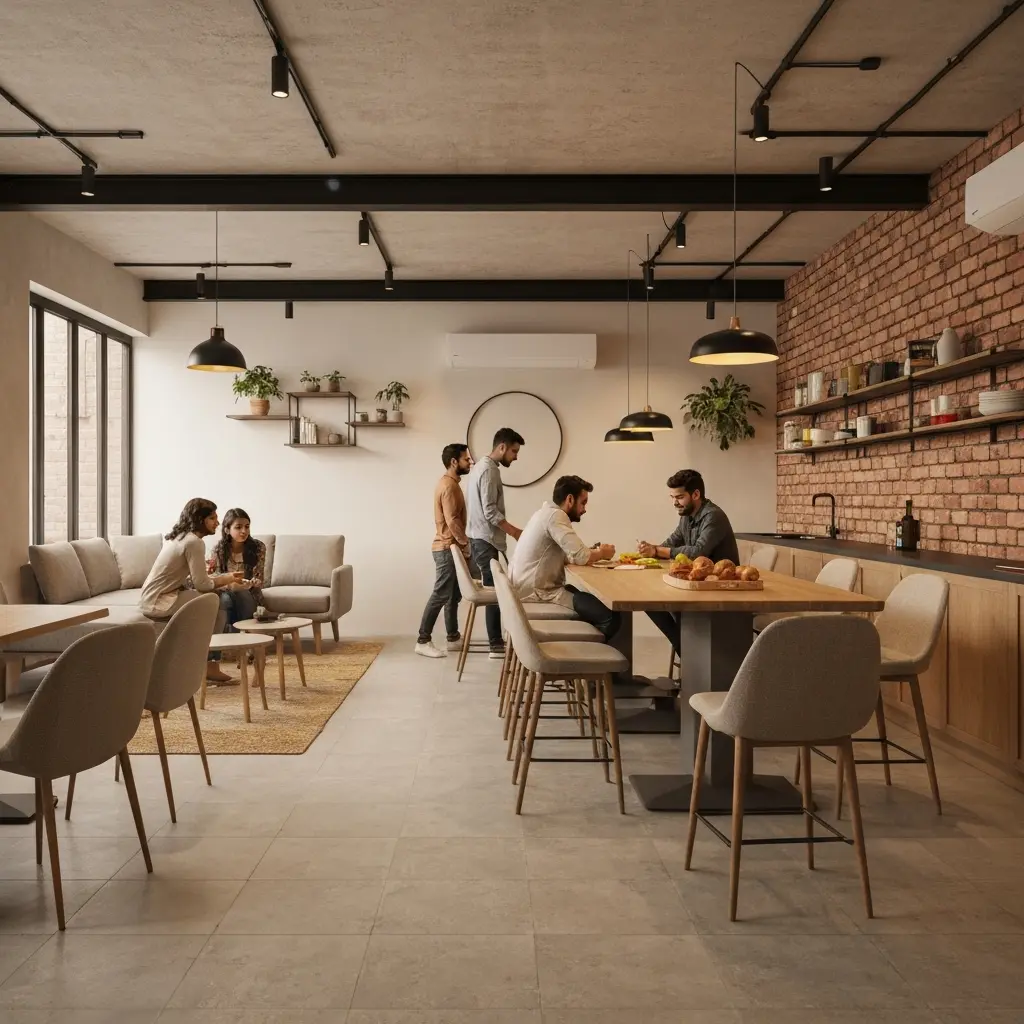
TL;DR: By 2026, digital nomadism is a mature, institutionalised segment. The strategic opportunity lies in creating ‘Nomad Villages’—managed, long-stay residential hubs in secondary cities that offer legal compliance, family-sized units, and community. This playbook outlines the shift from transient tourism to semi-permanent residency driven by new visas, tax incentives, and high operator yields.
Introduction: The End of Niche Nomadism
The era of the lone backpacker working from a beach café is evolving into a structured, high-value economic segment. As of 2026, over 70 countries offer dedicated remote work visas, and the global coliving market has surpassed USD 17 billion. This isn’t merely a lifestyle trend; it’s a fundamental shift in global mobility, where skilled professionals are actively choosing their base based on infrastructure, community, and legal frameworks. For managed workspace and residential operators, this represents a pivotal moment. The focus is no longer on short-term stays but on cultivating ‘Nomad Villages’—comprehensive ecosystems in strategic locations that cater to a demographic seeking stability, growth, and connection. This strategic playbook analyses the key drivers and operational shifts defining this institutionalised market.
What is a Digital Nomad Village?
A Digital Nomad Village is a purpose-built, managed residential and community hub designed for the long-stay (12+ months) remote professional. It transcends traditional coliving by integrating guaranteed high-speed connectivity, streamlined legal and visa support, family-oriented accommodations, and professionally curated community programmes. These villages are strategically located in Tier-2 or emerging cities where operational costs are favourable, yet quality of life and access remain high. The core value proposition is providing a turnkey solution for semi-permanent residency, allowing nomads to focus on their work and life without administrative friction.
The 2026 Demographic: From Solo to Settled
The digital nomad profile has matured significantly. The average age is now 36, and a substantial 26% of U.S. nomads travel with children. This demographic shift necessitates a fundamental redesign of coliving assets. Operators must move beyond single-occupancy pods to include one, two, and three-bedroom family units. Amenities must expand to encompass childcare facilities, local school integration services, and family-friendly community events. This evolution from transient individual to settled professional family creates stable, long-term tenancy, directly impacting occupancy rates and revenue predictability. The demand is no longer just for a desk and a bed, but for a holistic living environment conducive to both career growth and family life.
Operator Insight: The family nomad segment represents the most stable tenant profile. Designing for them requires partnerships with local education providers and family service networks, transforming your asset into a true community anchor.
Visa Arbitrage and the Geographic Pivot
The competitive landscape for nomad destinations is now defined by visa accessibility and fiscal policy. Thailand’s Destination Thailand Visa (DTV), offering a five-year stay, and Spain’s flat 15% tax rate for eligible professionals under its Start-up Act are 2026 market leaders. Simultaneously, new frontiers like Slovenia are gaining traction by offering Schengen access. This ‘visa arbitrage’ is pushing operators to pivot geographically. Saturated hubs like Lisbon face ‘Nomad Inflation,’ making secondary cities like Tirana, Tbilisi, or Da Nang more attractive. Here, Capital Expenditure (CAPEX) is 30-50% lower, while yields remain high due to strong, unmet demand from professionals leveraging these new visa regimes.
2026 Destination Attractiveness Matrix
| Destination Type | Example | Key 2026 Driver | Operator Consideration |
|---|---|---|---|
| Established Hub | Lisbon, Mexico City | Brand Recognition | High saturation, rising costs, lower yield potential |
| Policy Leader | Thailand, Spain | Long-term Visa / Tax Incentives | Stable, high-earning tenant base attracted by policy |
| New Frontier | Slovenia, Albania | Schengen Access / Low CAPEX | First-mover advantage, high growth potential |
The Core Infrastructure: Beyond Wi-Fi
In 2026, baseline infrastructure expectations have been radically elevated. Simply offering broadband is insufficient. High-speed, low-latency satellite mesh networks (like Starlink Gen 3) and seamless universal eSIM connectivity platforms are non-negotiable, with 98% of nomad-certified spaces listing these as standard. This infrastructure supports not just work, but seamless integration with global healthcare providers, financial services, and education platforms. Reliability is paramount; a connectivity failure is a direct revenue loss. Operators must therefore invest in redundant, enterprise-grade systems and market this technical robustness as a core feature, not a utility.
Image suggestion: a modern coliving workspace showing multiple screens, a satellite internet terminal, and eSIM packaging.
Financial Performance and Community-Led Stability
The institutional appeal of the Nomad Village model is crystallised in its financial performance. Managed hubs report Revenue Per Available Room (RevPAR) figures 15-20% higher than traditional hospitality assets. This premium is driven by significantly lower tenant turnover costs and ‘community-led occupancy stability.’ When 49.6% of tenants prefer stays longer than 12 months, marketing and onboarding expenses plummet. This stability is actively cultivated through curated events, professional networking, and wellness programmes that foster belonging. The asset transforms from a service provider into a growth partner for its residents, which in turn secures long-term revenue.
Growth Tip: Measure success not just by occupancy, but by ‘community engagement scores’ and average length of stay (ALOS). A thriving community is your most powerful retention tool and marketing channel.
Government Integration: From Tourism to Economic Development
A critical 2026 trend is the formal integration of nomad programmes into national and regional economic development plans. Governments no longer view remote workers merely as tourists but as high-spending, skill-rich catalysts for revitalising secondary cities and rural areas. National investment agencies are proactively seeking partnerships with professional operators to develop these hubs. This opens doors for favourable zoning, potential grants, or public-private partnerships (PPPs). For operators, aligning your development proposal with a government’s economic goals for a region can be a decisive strategic advantage.
The 2026 Outlook for Managed Hubs
The coming year will see a clear bifurcation in the market. Generic, short-term coliving spaces will face intense price competition. Conversely, professionally managed Nomad Villages that master the trifecta of legal facilitation, community curation, and institutional-grade infrastructure will command premium pricing and achieve valuation multiples akin to purpose-built student accommodation or build-to-rent sectors. Expect increased institutional investment flowing into operators with proven systems for tenant retention in specific, policy-advantaged geographic niches. The winning model is a hybrid: part residential real estate, part hospitality, and part professional services firm.
Key Takeaways for Operators
- Design for Families: Incorporate family-sized units and family-life services to capture the most stable, long-term tenant demographic.
- Follow the Visa: Base geographic expansion decisions on emerging long-term visa programmes and favourable tax regimes, not just low costs.
- Infrastructure is Non-Negotiable: Invest in and prominently market redundant, high-speed satellite and eSIM connectivity as a core product feature.
- Cultivate, Don’t Just Host: Actively programme professional and social community events to drive occupancy stability and reduce churn.
- Partner with Governments: Position your project as a catalyst for local economic development to unlock potential partnerships and smoother operations.
Conclusion: Building for Permanence in Motion
The institutionalisation of the digital nomad signifies a permanent shift. The opportunity in 2026 and beyond lies not in catering to perpetual tourists, but in building grounded, high-quality communities for a new class of global professionals. These individuals seek roots, even if temporary, and a platform for their ambitions. The strategic playbook is clear: pivot to secondary cities with favourable policies, build for mature demographics, invest in unbreakable infrastructure, and foster genuine community. By executing this, operators transition from providing a space to facilitating a lifestyle and a career, securing resilient, premium returns in the process.