· Business Growth & Workspace · 6 min read
Bio-Somatic Design: A 2026 Blueprint for Workspace ROI
Learn how 2026's workspace evolution, centred on Bio-Somatic Design and circadian lighting, directly impacts productivity and profit for Indian businesses.
TL;DR: Beyond aesthetics, 2026’s Bio-Somatic Design is a biological mandate. It combines circadian lighting, kinetic ergonomics, and wellness infrastructure to directly reduce absenteeism by 67% and boost creativity by 15%, offering a clear, data-backed return on your workspace investment.
For the Indian business leader, the primary workspace challenge has evolved. It is no longer just about managing rising commercial rents in areas like Guindy or OMR, or navigating Chennai’s traffic for client meetings. The core challenge is human capital: attracting top talent, ensuring their well-being amidst high stress levels, and optimising their output to drive growth. Traditional long-term leases lock capital and flexibility, while the home office fails to provide the structure or collaborative energy needed for scale. The solution emerging in 2026 is not a different desk, but a fundamentally different environment designed for the human body and mind.
What is Bio-Somatic Design?
Bio-Somatic Design is an advanced workspace philosophy that moves beyond superficial biophilia to create environments that actively regulate the human nervous system and optimise metabolic health. It treats the workspace as a biological partner, using integrated systems—from circadian-synchronised lighting to air quality sensors and movement-first furniture—to reduce cognitive fatigue, enhance focus, and improve long-term well-being. This data-driven approach directly links environmental design to measurable business outcomes like productivity and reduced absenteeism.
How Does a “Healthy” Workspace Drive Your Bottom Line?
The link between employee well-being and business performance is now quantifiable. For an Indian SME, where every team member’s contribution is critical, the impact of a poorly designed office is a direct drag on growth. Data indicates that high-performance ergonomic interventions can reduce absenteeism by up to 67%, generating a ₹3 to ₹6 return for every ₹1 invested. Consider the cost of a key employee being out during a crucial product launch or a festive season quarter. This isn’t a wellness perk; it’s a verified business imperative that protects your operational continuity and profitability.
Crizone Pro Tip: View your workspace not as an overhead, but as a performance-enabling asset. The right environment mitigates the common Indian office pitfalls of inconsistent AC leading to discomfort or poor ventilation causing afternoon fatigue, directly safeguarding your team’s output.
A traditional approach might involve a one-time furniture purchase. The Bio-Somatic pivot requires a strategic view of the entire environment. The financial logic becomes clear when you analyse the total cost of occupancy.
| Cost Factor | Traditional Chennai Office (1,000 sq ft) | Bio-Somatic Flexible Membership |
|---|---|---|
| Monthly Base Rent (OMR/Guindy) | ₹1.5 Lakh - ₹2.5 Lakh | From ₹15,000 per dedicated desk |
| Ergonomic Furniture (Capex) | ₹5 Lakh+ (Amortised) | Included & Professionally Sourced |
| Maintenance & Utilities | ₹30,000 - ₹50,000/month | Fully Included (AC, Power, Internet) |
| Wellness Tech (Lighting/Air) | Significant Additional Capex | Integrated Infrastructure |
| Layout Flexibility Cost | High (Construction/Reconfiguration) | Built-in via Modular Design |
| Primary Risk | Long-term liability, idle space | Scalable, operational expense aligned with use |
The 2026 Toolkit: Lighting, Air, and Kinetic Movement
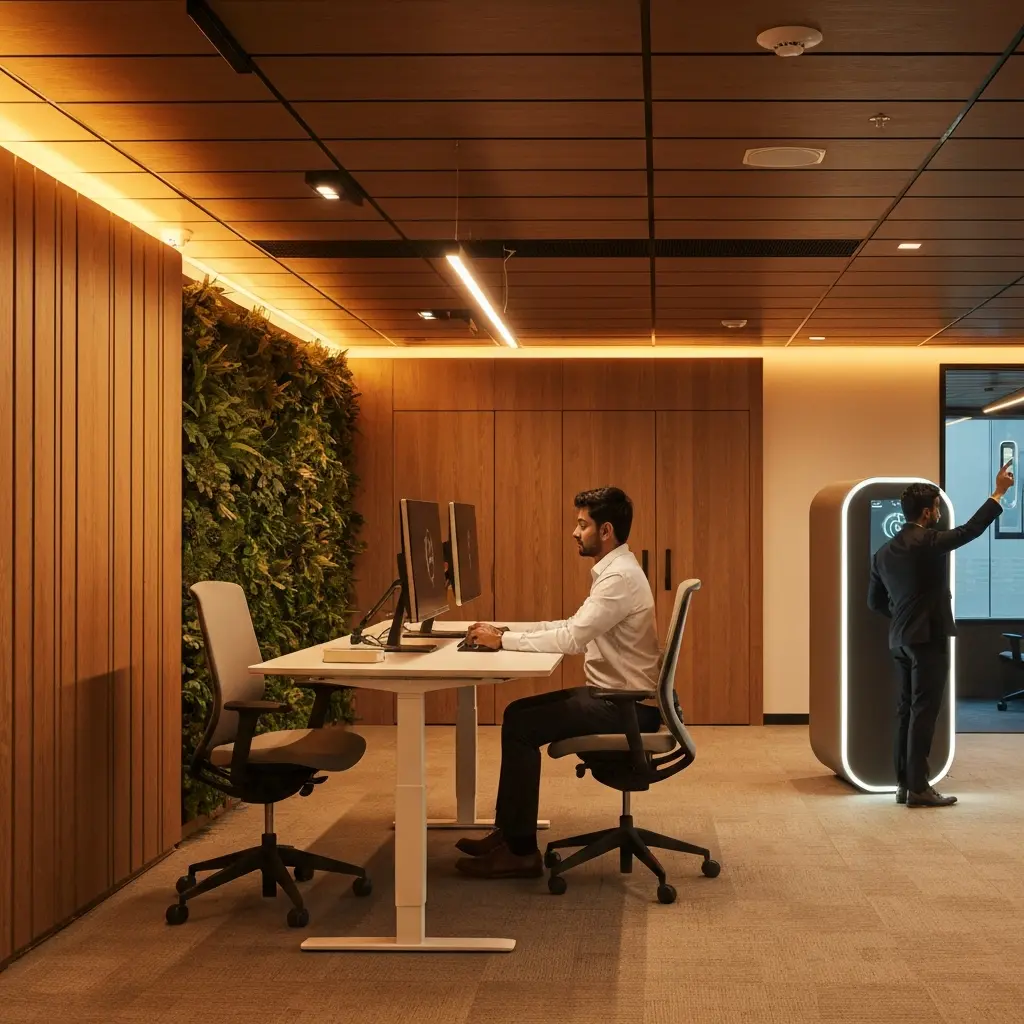
The science is in the details. Modern Circadian Lighting systems do more than illuminate; they regulate. Automated to shift from 5000K (crisp, alerting white) to 2700K (warm, calming amber) throughout the day, they synchronise with the body’s natural rhythm. This combats the post-lunch slump endemic to Indian workdays and improves sleep quality, leading to more consistent daily performance. Similarly, smart wellness infrastructure uses IoT sensors to maintain CO2 levels below 800ppm and humidity between 40-60%—critical in Chennai’s climate—to prevent cognitive fog and maintain sharpness during long strategy sessions.
Furniture is no longer static. Kinetic Ergonomics is standard, with chairs like the Herman Miller Cosm encouraging micro-postural shifts during deep work. This movement-first approach, combined with strategically placed “Amenity Spines” that prompt walking to community hubs, integrates light physical activity into the day. This addresses metabolic health concerns without requiring a separate gym visit, a significant value for time-pressed founders.
[Image of Kinetic Workspace Layout] Diagram: An activity-based layout showing zones for focused work (with circadian lighting pods), collaborative hubs, and mindfulness areas, all connected by a central “amenity spine” to encourage movement.
Is Your Office Design Future-Proof and Sustainable?
Business growth demands agility. Modular space concepts and activity-based working allow operators to achieve 20-30% higher density without clutter, passing on efficiency savings. For a growing startup, this means you can scale your team from 10 to 20 without the logistical nightmare and cost of moving offices. You simply adjust your membership plan. Furthermore, the circular economy for furniture has matured. Top providers now specify pieces designed for disassembly and repair, targeting 15+ year life cycles. This meets evolving Scope 3 sustainability reporting requirements that corporate clients and environmentally conscious talent increasingly demand, future-proofing your operational choices.
Manager Insight: The shift is toward High-Control Environments. The ability for a developer to dial down distractions in a focus pod or for a manager to set a warmer light for a sensitive client call empowers your team. This level of personal environmental control was absent in both traditional offices and home setups, and is a key driver for the 53% global office utilisation rate we see in 2026.
The 2026 Outlook for Indian Workspaces
The Indian flexible workspace market will deepen its segmentation. Premium operators will compete on Bio-Somatic Design credentials—the quality of air, light, and ergonomics—as a core differentiator, not just location. We predict a surge in demand for “somatic” amenities like mindfulness zones and recovery pods, which home offices cannot replicate, making the commute worthwhile. For businesses, the workspace will be increasingly viewed through a lens of talent retention and health ROI. Strategic partnerships, like those offered by Crizone, will provide access to this cutting-edge infrastructure without the capital outlay, making advanced workplace science accessible to SMEs and corporate branches alike.
Key Takeaways for Business Leaders
- Quantify Wellness: Frame workspace upgrades as an investment with a clear ROI, citing the 67% reduction in absenteeism linked to ergonomic design.
- Demand Biological Metrics: Prioritise spaces that monitor and manage air quality (CO2 <800ppm) and offer circadian lighting, not just aesthetic plants.
- Choose Kinetic & Modular: Opt for providers with movement-first furniture and flexible layouts that can scale with your team’s size and needs.
- Future-Proof with Sustainability: Align with operators committed to the circular economy, mitigating risk and appealing to modern talent.
- Control is Key: Ensure your team has agency over their immediate micro-climate (light, noise, temperature) to maximise deep work periods.
Conclusion
The workspace has transformed from a passive container for business activity into an active growth partner. Bio-Somatic Design represents this shift: a strategic, evidence-based approach that directly influences your team’s health, creativity, and output. For the ambitious Indian business, ignoring this evolution means operating with a preventable disadvantage. It is time to move beyond the conventional lease and adopt an environment engineered for success. Discover how a workspace designed on these principles can become your strategic advantage. Experience the calibrated environment of Crizone Business Centre, where our design is intentionally crafted to support your team’s well-being and your business’s growth trajectory in Chennai.
Continue your workspace search
Explore the most relevant Crizone pages next
If this article is part of your Chennai workspace research, these pages help you move from reading into comparing live plans, locations, and fit.
Explore coworking plans in Chennai
Compare day passes, dedicated desks, private offices, meeting rooms, and virtual office options from one commercial hub page.
Book a day pass in Chennai
Best fit if you need occasional workspace access, a short productive break from home, or a flexible desk for a single day.
Compare dedicated desk options
A stronger fit for regular monthly use when you want a fixed seat, better routine, and predictable workspace costs.