· Business Growth & Workspace · 6 min read
Flexible Workspace Growth: How Chennai Businesses Navigate the 2026 Lease Rollover
A massive wave of lease expirations in 2026 is forcing Indian businesses to reconsider traditional offices. This post explores how flexible workspaces offer cost savings, talent retention, and strategic agility for SMEs and corporates.
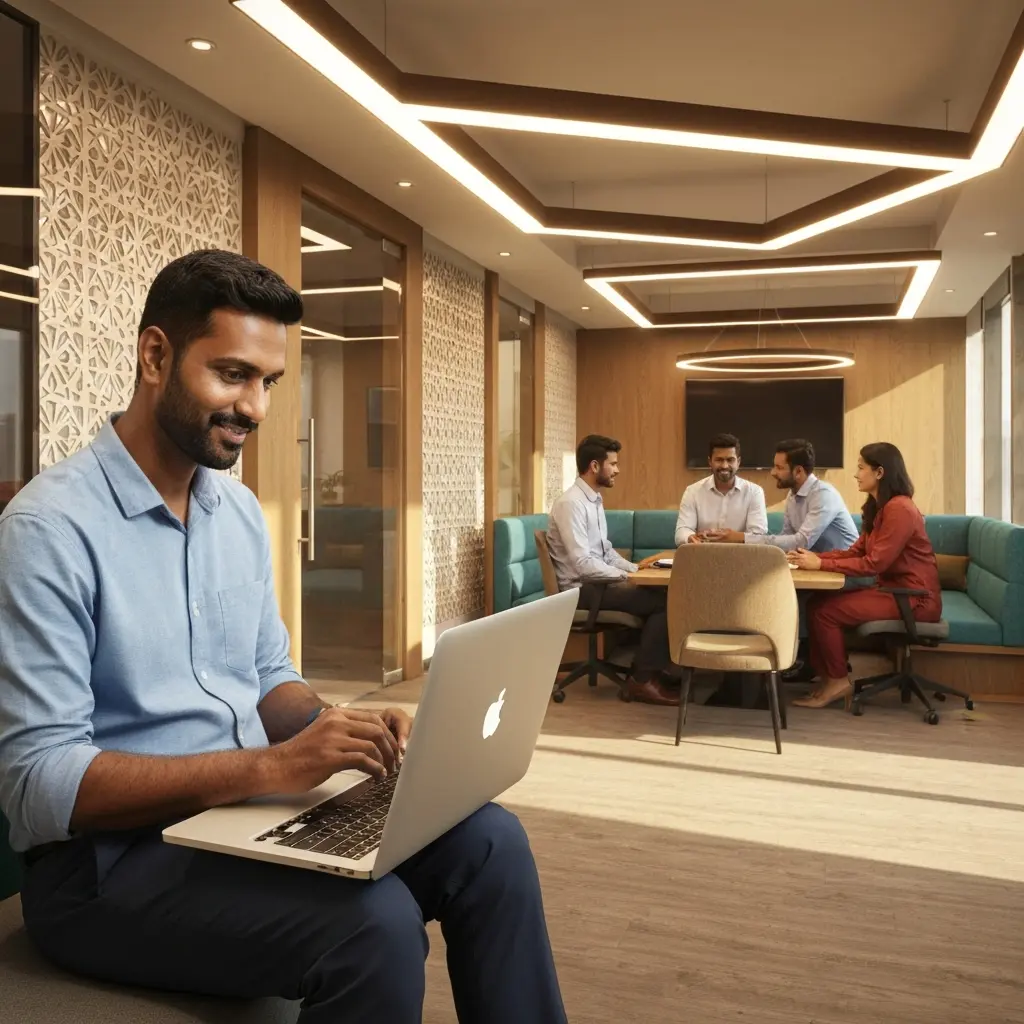
TL;DR: The 2026 global lease rollover crisis is a catalyst for change. Businesses in Chennai can avoid costly renewals by pivoting to flexible workspaces, saving up to ₹9 Lakhs per employee annually while boosting talent retention and operational agility. This shift is not just a trend; it’s a strategic necessity for growth.
In Chennai’s competitive landscape, entrepreneurs and SME founders face a familiar trifecta: escalating real estate costs on Mount Road or in OMR, the daily drain of navigating traffic, and the constant challenge of attracting and retaining skilled talent. The traditional 3- or 5-year lease, once a badge of stability, now feels like an anchor, limiting flexibility and consuming capital. This is precisely why the approaching 2026 global lease rollover crisis is a pivotal moment for Indian businesses. As a significant portion of commercial leases signed during the 2017–2019 boom expire, companies worldwide—and here in Chennai—are confronted with a critical choice: renew a rigid, costly commitment or migrate to a modern, flexible workspace solution. This movement, driven by a ‘flight to quality,’ is not merely about saving money; it’s about Flexible Workspace Growth as a core strategy for scalability, resilience, and talent appeal in the hybrid work era.
What is Flexible Workspace Growth?
Flexible Workspace Growth refers to the strategic adoption of agile, managed office environments—such as coworking spaces, business centres, and serviced offices—over traditional long-term leases. It is characterised by shorter commitment terms, scalable layouts (from a single desk to entire floors), and inclusive amenities (high-speed internet, meeting rooms, administrative support). This model allows businesses to align their physical footprint precisely with operational needs, enabling rapid expansion, contraction, or experimentation without the financial and legal burdens of a conventional lease. In essence, it transforms real estate from a fixed cost into a variable, strategic tool for growth.
The Financial Imperative: Cost Savings and Cash Flow Freedom
The most immediate impact of flexible workspace growth is on a company’s bottom line. Global data indicates companies in Tier 1 cities save an average of $11,000 to $13,000 per employee annually by opting for flexible terms. Translated to the Chennai context, this can mean savings of ₹8-9 Lakhs per employee, a transformative figure for an SME. These savings stem from eliminating upfront capital expenditure (capex) on furniture, fit-outs, and deposits, and from reducing fixed overheads like maintenance, utilities, and security.
Crizone Pro Tip: For a growing startup, preserving cash flow is paramount. A flexible workspace membership converts a large, sunk capital cost into a predictable monthly operational expense. This frees up funds to invest in marketing, R&D, or hiring that next critical team member.
Consider the comparison for a 10-person team in Chennai:
| Cost Component | Traditional Office Lease (Annually) | Flexible Workspace Solution (Annually) |
|---|---|---|
| Base Rent (OMR Area) | ₹ 6,00,000 - ₹ 8,00,000 | ₹ 4,80,000 - ₹ 6,00,000 (inclusive membership) |
| Fit-out & Furniture | ₹ 2,00,000 (one-time capex) | ₹ 0 (included) |
| Utilities & Maintenance | ₹ 1,20,000 | ₹ 0 (included) |
| Admin/Support Staff | ₹ 3,60,000 (if hired) | ₹ 0 (provided by centre) |
| **Total Estimated Annual Cost ** | ₹ 12,80,000+ | ₹ 4,80,000 - ₹ 6,00,000 |
The financial advantage extends beyond direct savings. It provides agility. During a festive season when productivity dips, or if a project requires a temporary larger team, you can scale your space up or down without renegotiating a multi-year contract.
The Talent Equation: Retention, Productivity, and Privacy
In today’s market, your workspace is a direct tool for talent management. A striking 76% of employees globally state they would seek new employment if flexible location options were removed. In India, where commute stress is a significant quality-of-life factor, offering a choice between a central, well-equipped business centre and remote work can be a decisive perk. It’s viewed as equivalent to an 8% salary increase.
Furthermore, the nature of demand within flexible spaces has evolved. The trend for enclosed private offices and focus pods now outpaces open-plan hot desks by a 3:1 ratio. This reflects a deeper need for privacy and concentrated work, even within a collaborative environment.
Manager Insight: A corporate branch manager can use a flexible workspace to offer satellite locations. Instead of forcing all team members to commute to a central corporate HQ in, say, Guindy, you can provide access to a premium centre in Anna Nagar or near the Chennai Metro. This reduces absenteeism and boosts morale.
[Image of a modern, private office pod within a vibrant coworking space]
Is Hybrid Work Right for Your Chennai-Based Team?
Hybrid work is no longer a temporary experiment; it’s a permanent strategy for nearly 60% of large occupiers. The question for Indian businesses is not if but how. A flexible workspace provides the formal ‘anchor’ location necessary for client meetings, team collaboration, and GST-compliant business address, while supporting remote days. This structure is crucial for maintaining discipline, company culture, and data security. For an SME founder, it allows you to hire the best talent across Tamil Nadu—or even India—without the immediate need to establish a full office in their city. You can centralise operations at your Crizone hub while providing employees with access to meeting rooms in other cities through allied networks.
The 2026 Outlook for the Indian Workspace Market
The coming year will see the global trends manifest strongly in India. The expiration of pre-pandemic leases will force many Chennai businesses to make decisions. We will see a continued ‘flight to quality,’ with companies leaving aging, poorly connected Class B buildings for premium, amenity-rich spaces that support hybrid work models. Flexible workspace inventory will grow significantly as landlords convert vacant floors into managed hubs. For Indian entrepreneurs, this means more choice, better quality, and increased negotiating power. The market will mature, focusing not just on desks but on integrated services—legal, accounting, IT support—making the workspace a true growth partner.
Key Takeaways
- Financial Agility is Critical: Moving to a flexible model can save an SME ₹8-9 Lakhs per employee annually, freeing capital for core business investment.
- Talent Retention is Linked to Space: Offering a premium, flexible work location is a top-tier perk that reduces attrition and commute-related stress.
- Privacy is Paramount: Ensure your flexible space solution offers private cabins and focus pods, not just open desks, to meet modern productivity demands.
- Hybrid Work Requires an Anchor: A formal, professional business centre address is essential for compliance, client trust, and team cohesion in a hybrid model.
- 2026 is a Decision Point: Use your upcoming lease review as an opportunity to strategically pivot, not just renew.
Conclusion
The 2026 lease rollover crisis is not a distant global phenomenon; it’s an imminent local decision point. For the growth-oriented business in Chennai, it presents a unique opportunity to shed the constraints of the traditional office and adopt a workspace that is as agile and ambitious as the company itself. This pivot to flexible workspace growth is a strategic move that directly addresses the core challenges of cost, talent, and scalability.
At Crizone Business Centre, we provide this exact solution—a premium, calm, and efficiently managed environment designed to be the growth partner for Chennai’s entrepreneurs, freelancers, and corporate teams. Let your next workspace decision be a step forward, not just a renewal.
Continue your workspace search
Explore the most relevant Crizone pages next
If this article is part of your Chennai workspace research, these pages help you move from reading into comparing live plans, locations, and fit.
Explore coworking plans in Chennai
Compare day passes, dedicated desks, private offices, meeting rooms, and virtual office options from one commercial hub page.
Book a day pass in Chennai
Best fit if you need occasional workspace access, a short productive break from home, or a flexible desk for a single day.
Compare dedicated desk options
A stronger fit for regular monthly use when you want a fixed seat, better routine, and predictable workspace costs.