· Business Growth & Workspace · 7 min read
Flex M&A Surge: How Institutional Demand Reshapes India's Workspace Market
A wave of consolidation is sweeping the flexible workspace sector, driven by Fortune 500 demand. Learn how this Flex M&A surge impacts costs, compliance, and strategy for Indian businesses.
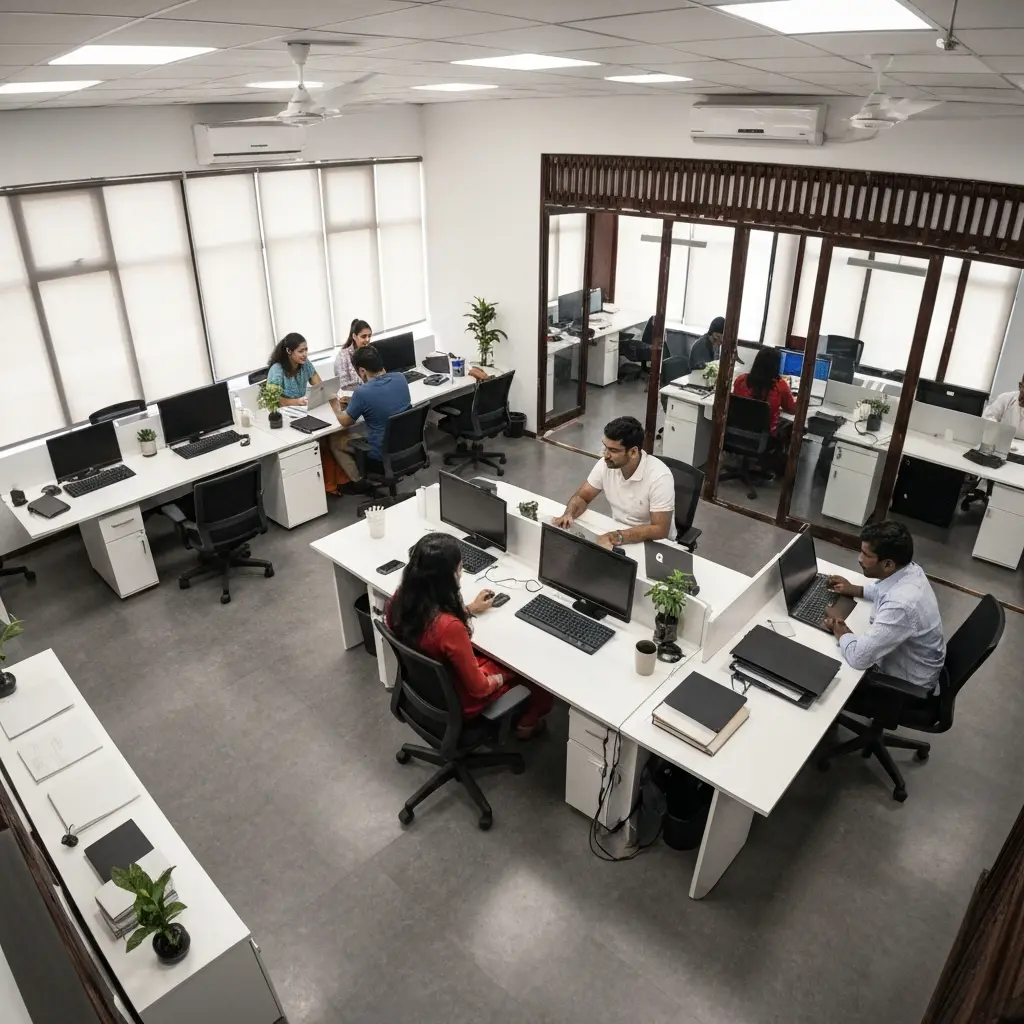
TL;DR: The flexible workspace sector is undergoing massive consolidation driven by large enterprise demand for global, standardised solutions. This Flex M&A wave means more institutional-grade spaces and simplified corporate contracts, but potentially less boutique choice for Indian SMEs. Understanding this shift is key to future-proofing your office strategy.
For founders in Chennai navigating OMR traffic or managers in Bengaluru grappling with talent retention, the office has always been more than just an address. It’s a strategic lever for growth, culture, and efficiency. Yet, the traditional long-term lease—with its crippling upfront deposit, rigid lock-in periods, and operational headaches—is increasingly misaligned with the agility modern Indian businesses require. This friction has fuelled a decade of growth for flexible workspaces. Now, a new, powerful force is reshaping this market entirely: the institutionalisation of demand. We are entering a phase of intense Flex M&A consolidation, a wave where global giants are acquiring local players to meet the exacting standards of the world’s largest corporations. For the Indian entrepreneur, this trend is not a distant headline; it directly influences the quality, cost, and contractual framework of the flexible spaces you will rely on to scale.
What is Flex M&A?
Flex M&A refers to the wave of mergers and acquisitions within the flexible workspace industry. It marks a transition from a fragmented market of independent operators to a more consolidated landscape dominated by a few large, institutional-grade providers. This consolidation is primarily driven by demand from large enterprises (Fortune 500 and equivalent Indian corporates) that seek standardised, globally scalable workspace solutions under a single Master Service Agreement (MSA), rather than dealing with multiple boutique vendors.
Why Are Global Giants Consolidating the Market?
The driving force behind this consolidation isn’t speculative investment; it’s a fundamental change in how large corporations procure real estate. The mandate from global CFOs is clear: swap long-term, capital-intensive lease liabilities for agile, operational expense (OpEx)-based contracts. This corporate shift creates a specific demand profile that only large, consolidated operators can fulfil at scale.
The Rise of the ‘One Contract, 1000 Locations’ Model: Enterprises no longer want to negotiate separate leases for a branch in Chennai, a sales hub in Pune, and a tech team in Hyderabad. They demand a single, standardised Master Service Agreement (MSA) that grants instant access to a vetted, consistent network of spaces. This scalability is something boutique, single-city operators cannot provide, creating a powerful incentive for consolidation.
The Management Agreement (MA) Standard: To scale rapidly without the balance sheet burden of fixed rents, consolidators are increasingly using Management Agreements. Here, the operator (like a global flex brand) manages the space for a building owner under a revenue-share model, taking on no direct lease liability. This allows for explosive portfolio growth with lower capital risk. For an Indian SME, this means your flexible workspace is increasingly likely to be run by a large national or global brand, even if the building is locally owned.
Crizone Pro Tip: When evaluating a flexible workspace, ask about their parent company and network reach. A local operator now backed by a national consolidator can offer you future scalability you may not have considered, like seamless access to a desk in another city during a business trip.
The 30% OpEx Advantage: Consolidated operators achieve significant economies of scale. By centralising procurement for everything from coffee and toilet paper to IT infrastructure and cleaning services across hundreds of locations, they can reduce operational costs by 20-30%. This efficiency can translate into more competitive pricing or higher-quality amenities for the end-user—the Indian business owner.
| Cost Factor | Traditional SME Office (Chennai, 10-seater) | Consolidated Flex Space (Chennai, 10 Dedicated Desks) |
|---|---|---|
| Monthly Rent + Maintenance | ₹1.5 Lakh - ₹2 Lakh | ₹1.2 Lakh - ₹1.8 Lakh (All-inclusive) |
| Security Deposit | ₹6 Lakh - ₹12 Lakh (4-6 months) | ₹50,000 - ₹1.5 Lakh (Refundable) |
| IT/Internet Setup | CapEx: ₹2 Lakh+ | OpEx: Included in monthly fee |
| Administrative Overhead | Dedicated staff for facilities, reception | Professionally managed, centralised services |
| Annual Cash Flow Impact | High upfront CapEx, fixed monthly OpEx | Low upfront, predictable, all-inclusive OpEx |
How Does This Impact Your Business Growth Strategy?
For an Indian SME, startup founder, or branch manager, this market shift is not merely academic. It presents specific advantages and considerations for your growth trajectory.
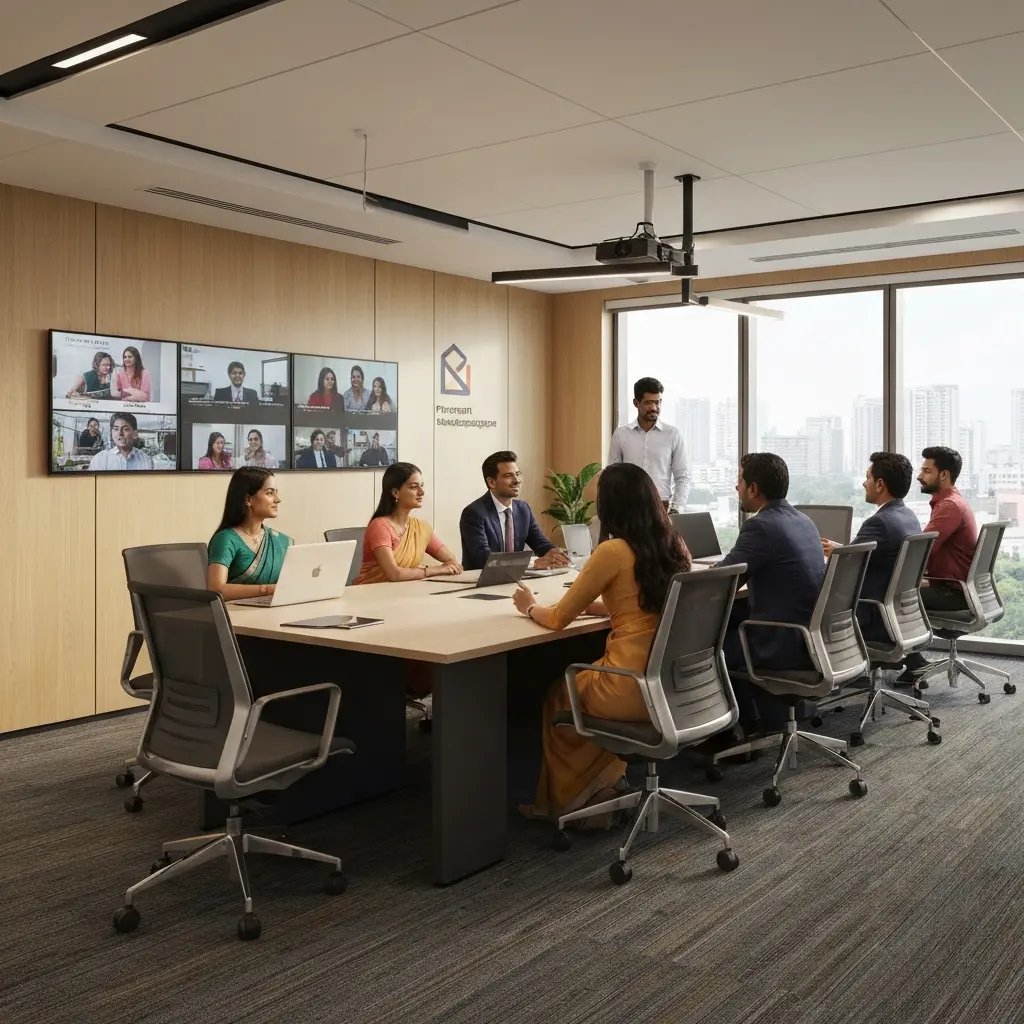
Access to ‘Institutional-Grade’ Amenities: As consolidators raise standards to meet global corporate SLAs (Service Level Agreements), the baseline quality of flex spaces rises. You gain access to enterprise-grade cybersecurity, advanced video conferencing suites, premium meeting rooms, and ESG-compliant environments—amenities previously out of reach for a small team. This allows you to project a more professional image to clients and investors without the capital outlay.
ESG and Compliance Becomes Table Stakes: A key driver of M&A selection is a target’s ability to provide data. Large corporates have 2026 deadlines for detailed Scope 3 emissions reporting (which includes leased spaces). Consolidators are acquiring operators who have invested in smart-building sensors for real-time energy and occupancy data. Choosing a workspace from a consolidated provider can simplify your own corporate sustainability reporting, a growing concern for Indian firms seeking global partnerships.
Simplified Portfolio Management for Multi-City Growth: If your business plan involves expanding to the National Capital Region (NCR) or Bengaluru within the next 18 months, working with a consolidated flex provider from day one can make that transition seamless. You avoid the hassle of sourcing, vetting, and contracting with a new local operator in each city. Your MSA can simply be amended to add the new location, saving countless managerial hours.
Manager Insight: “For a growing company, the biggest cost isn’t always rent; it’s managerial bandwidth. A standardised flex contract across cities frees up leadership to focus on product and sales, not negotiating electricity bills in three different states.”
The Potential Downside: Homogenisation and Price Pressure: The flip side of consolidation is potential loss of unique, community-driven boutique spaces that cater to specific niches. Furthermore, as prime inventory is absorbed for large enterprise suites, demand may push desk rates up in top-tier micro-markets. Your strategy should involve locking in favourable terms with a quality provider early, before the wave fully crests in the Indian market.
[Image of a flowchart showing enterprise demand leading to Flex M&A, resulting in standardised MSAs, ESG compliance, and cost advantages for SMEs.]
What Does the 2026 Outlook Mean for India?
The global trends of Flex M&A and institutionalisation will accelerate in India through 2026. We predict a significant shakeout in the market, with well-capitalised national brands acquiring strong regional players, particularly in high-growth secondary cities like Pune, Hyderabad, and Ahmedabad. The definition of ‘prime’ flex inventory will expand beyond traditional CBDs to include well-connected suburban hubs and ‘New Power’ corridors. For Indian businesses, the choice will increasingly be between large, reliable networks offering global parity and niche, hyper-local communities. The era of the flexible workspace as a purely tactical, short-term solution is over; it is now a strategic, long-term partner for scalable growth.
Key Takeaways for Indian Business Leaders
- View flexible workspace as a strategic growth lever, not just a cost-saving tactic. The right partner can provide scalability, compliance, and a professional edge.
- Prioritise providers with strong national or global networks if multi-city expansion is on your roadmap within 2-3 years.
- Inquire about ESG and data transparency. Your future clients and investors will demand it, and a consolidated operator will have the systems in place.
- Understand the shift from lease to Management Agreement. It signals operator stability and a lower-risk model for the building owner, which benefits you as a tenant.
- Negotiate terms with an eye on the long-term. As the market consolidates, locking in a favourable MSA with a quality provider can shield you from future rate increases in premium locations.
Conclusion
The 2026 Flex M&A wave is fundamentally redefining the commercial real estate landscape. For the astute Indian business leader, this consolidation is an opportunity. It offers access to higher standards, simpler contracts, and a pathway to scale that aligns perfectly with the agile growth ambitions of modern enterprises. The key is to understand the forces at play and choose a workspace partner that is not just a landlord, but a facilitator of your business ambitions. At Crizone Business Centre in Chennai, we are built on the principles that this new era demands: institutional-grade infrastructure, unwavering service standards, and a commitment to being the calm, efficient platform from which your business can confidently grow, whether you’re a team of five or planning for fifty.