· Business Growth & Workspace · 6 min read
Enterprise Flex Space 2026: The Rise of India's Liquid HQ
Learn how Indian enterprises are swapping rigid 10-year leases for Liquid HQs—a managed network of flexible workspaces—to optimise portfolios and boost agility in 2026.
TL;DR: By 2026, India’s leading firms are pivoting to ‘Liquid HQs’—a managed network of on-demand workspaces. This shift from decade-long leases to 24-month flex contracts is driven by a need for cost control, variable capacity, and a resilient, distributed talent strategy. The era of the fixed office is evolving rapidly.
The challenge for modern Indian businesses is stark: rising rental costs in prime corridors, unpredictable economic cycles, and a hybrid workforce that refuses a one-size-fits-all office. The decade-long property lease, once a pillar of corporate stability, has become a significant liability. It anchors capital, restricts agility, and locks businesses into a single location—a considerable risk when talent is dispersed and market demands shift overnight. Meanwhile, the demand for agility, operational efficiency, and employee choice has never been higher. The Enterprise Flex Space 2026 model is the strategic answer to this dissonance, offering a fluid infrastructure that scales with ambition, not just with square footage.
What is Enterprise Flex Space 2026?
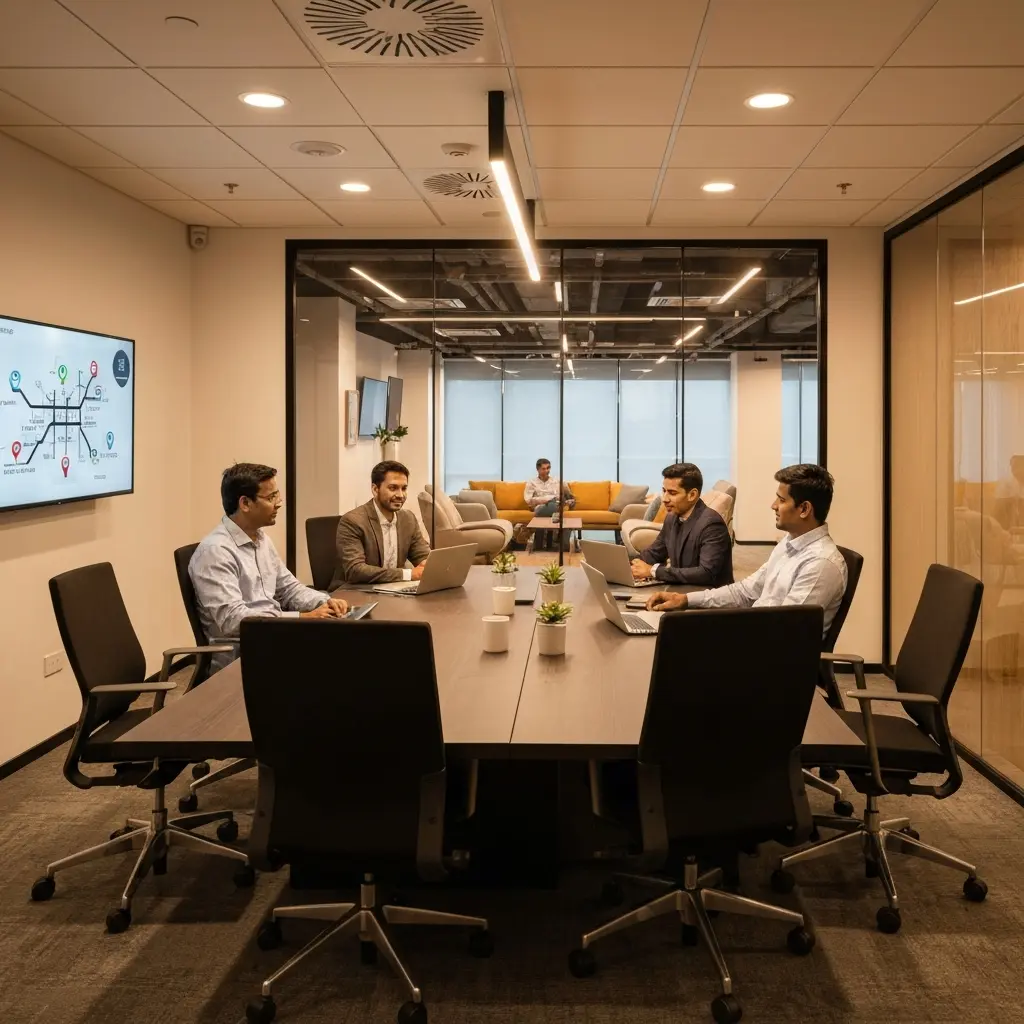
Enterprise Flex Space 2026 refers to a strategic portfolio approach where corporations replace a significant portion of their traditional long-leased office space with a managed, distributed network of premium flexible workspaces. This ‘Liquid HQ’ model provides variable capacity across multiple locations under short-term, predictable, and scalable agreements. It transforms real estate from a fixed capital expense into an agile operational tool, directly supporting business growth and talent strategy in India’s dynamic market. The core shift is from owning space to accessing a curated network of on-demand workplaces.
Why the Pivot from Lease to Liquid is Now Unavoidable
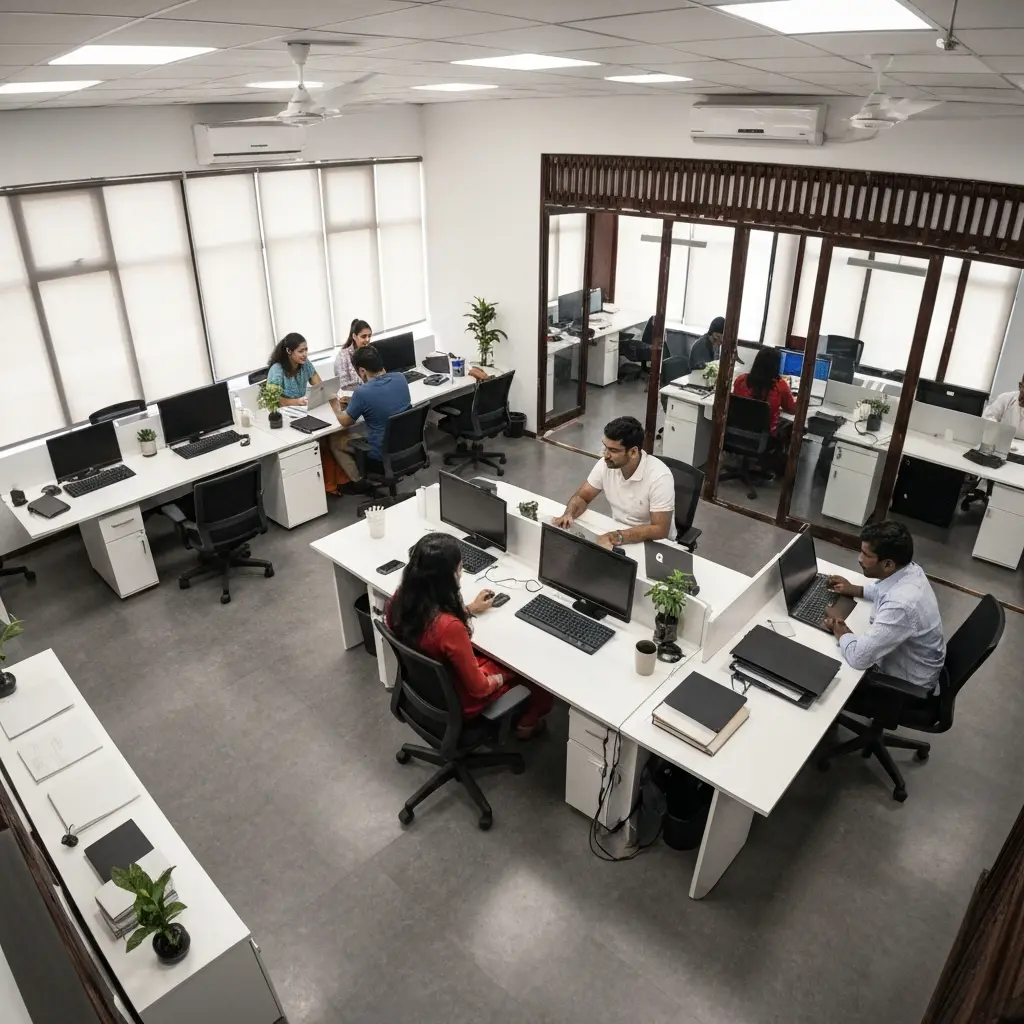
For an Indian SME or startup, committing to a 10-year lease in OMR or Guindy is often the second-largest financial decision after payroll. It represents a massive fixed cost, complex TDS and GST compliance overhead, and a bet on unchanged business needs for a decade. The global data is clear: the average lease cycle has compressed by 37% since 2020. The reason is pure financial logic. Why lock in a 3,000 sq. ft. office for 60 employees when your project teams fluctuate between 30 and 80 people month-to-month? The Liquid HQ strategy converts this uncertainty into a manageable variable cost.
Business Growth Tip: For a growing firm, the goal is not to fill an office, but to fulfil projects. A managed flex network lets you ramp up workspace in Chennai for a critical Q4 sprint, then scale down post-delivery, preserving capital for R&D and talent acquisition.
| Cost Factor | Traditional Chennai Office (3-yr lease) | Managed Flex Network (24-mo access) |
|---|---|---|
| Monthly Fixed Rent | ₹4-8 Lakhs (Prime location, 5,000 sq.ft) | ₹1.5-3 Lakhs (for equivalent usable desks/meeting rooms) |
| Capital Outlay (Fit-out) | ₹50-80 Lakhs (One-time) | ₹0 (Fully managed & furnished) |
| Maintenance & Operations | ₹1-2 Lakhs/month (Staff, AMC, repairs) | Included in membership |
| Contract Lock-in | 36-120 months | 12-24 months |
| Agility Cost | High (Penalty for exit/downsize) | Low (Scalable up/down monthly) |
Table based on market analysis and operational expense data from JLL India’s 2025 Flexible Workspace Report.
How Managed Networks Drive Portfolio Optimization
The 2026 trend is not about renting a few coworking desks; it is about strategic portfolio optimization. As JLL reports indicate, flexible workspaces are expected to account for 24% of the average corporate portfolio by end-2026. For an Indian corporation, this means a ‘hub-and-spoke’ model: a central flagship office complemented by satellite flex spaces in talent-rich suburbs or other cities like Coimbatore or Hyderabad. This setup slashes the gruelling daily commute for employees, tapping into local talent pools while keeping core teams connected.
The financial impact is profound. Pivoting to a managed flex model can trim total real estate operational expenses by up to 55% for large-scale occupiers. This saving isn’t just from rent; it eliminates fit-out depreciation, reduces in-house facility management headcount, and turns opaque utility spends into predictable per-desk costs. This liberated capital can be redirected to technology adoption, marketing blitzes during festive seasons, or higher employee benefits—investments that directly fuel growth.
[Image of a Hub-and-Spoke Office Network Diagram]
Is Your Team Ready for a Modular Ecosystem?
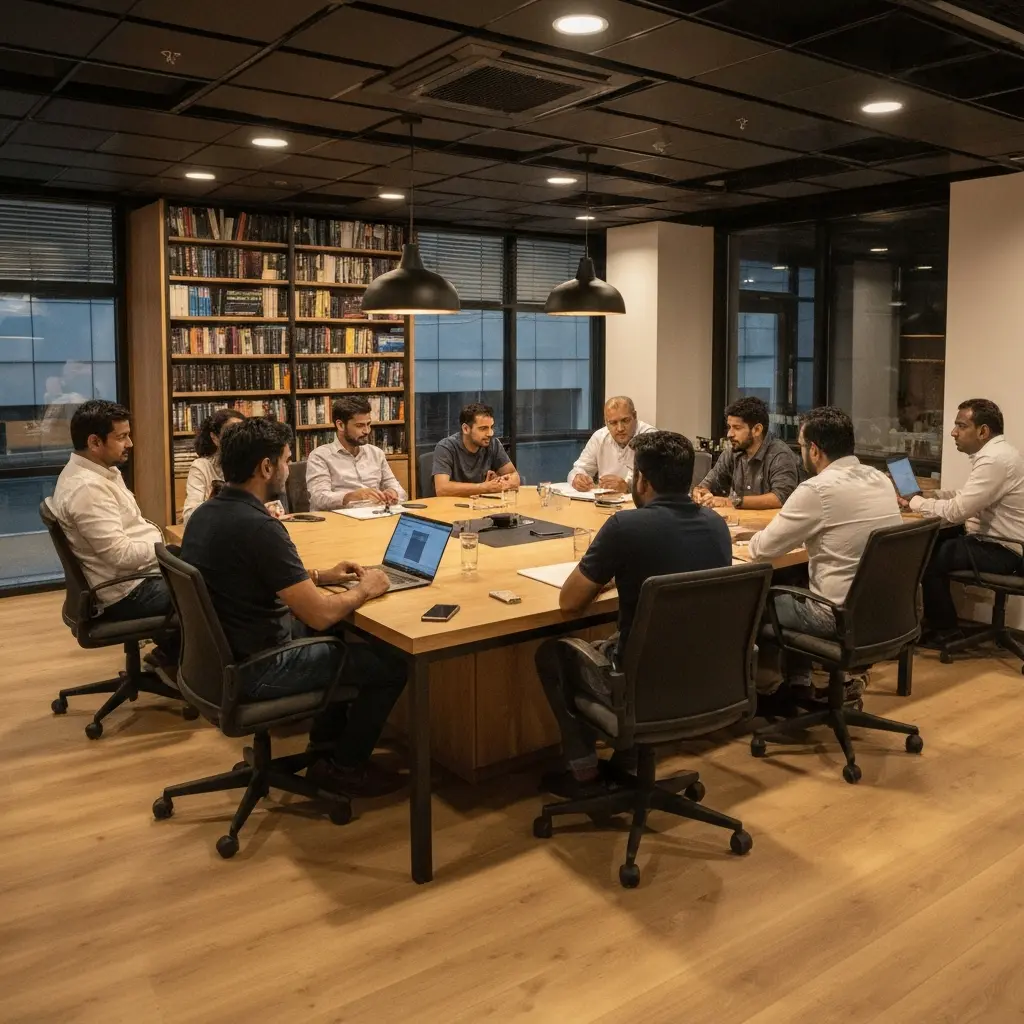
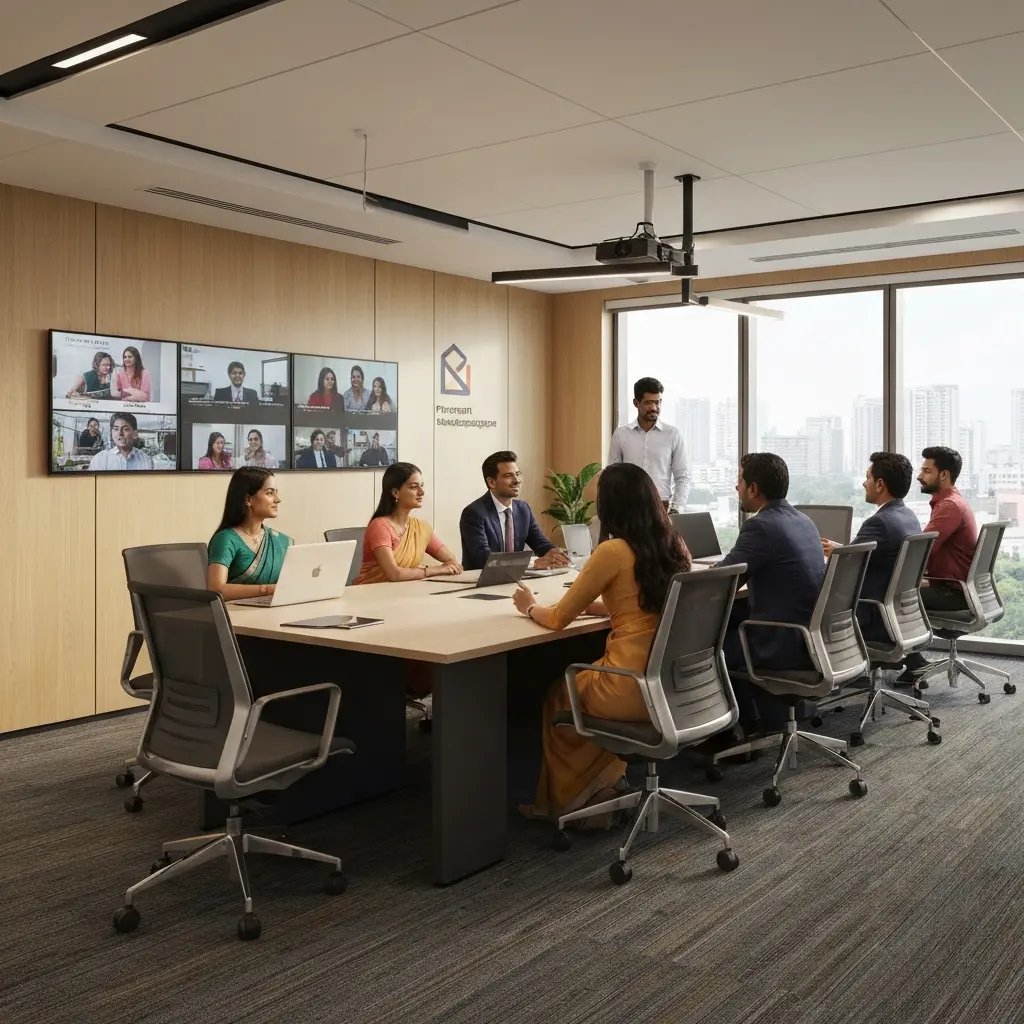
Workplace design in 2026 has evolved from static open plans to ‘Modular Ecosystems.’ This means spaces filled with interoperable micro-zones—soundproof phone booths, mobile collaboration pods, and bookable project rooms—that can be reconfigured weekly. This directly impacts productivity for Indian teams. A developer needs deep-focus silence, a sales team needs a huddle space for a client call, and a creative team needs a writable-wall room for brainstorming. One rigid floor plate cannot efficiently serve all these needs.
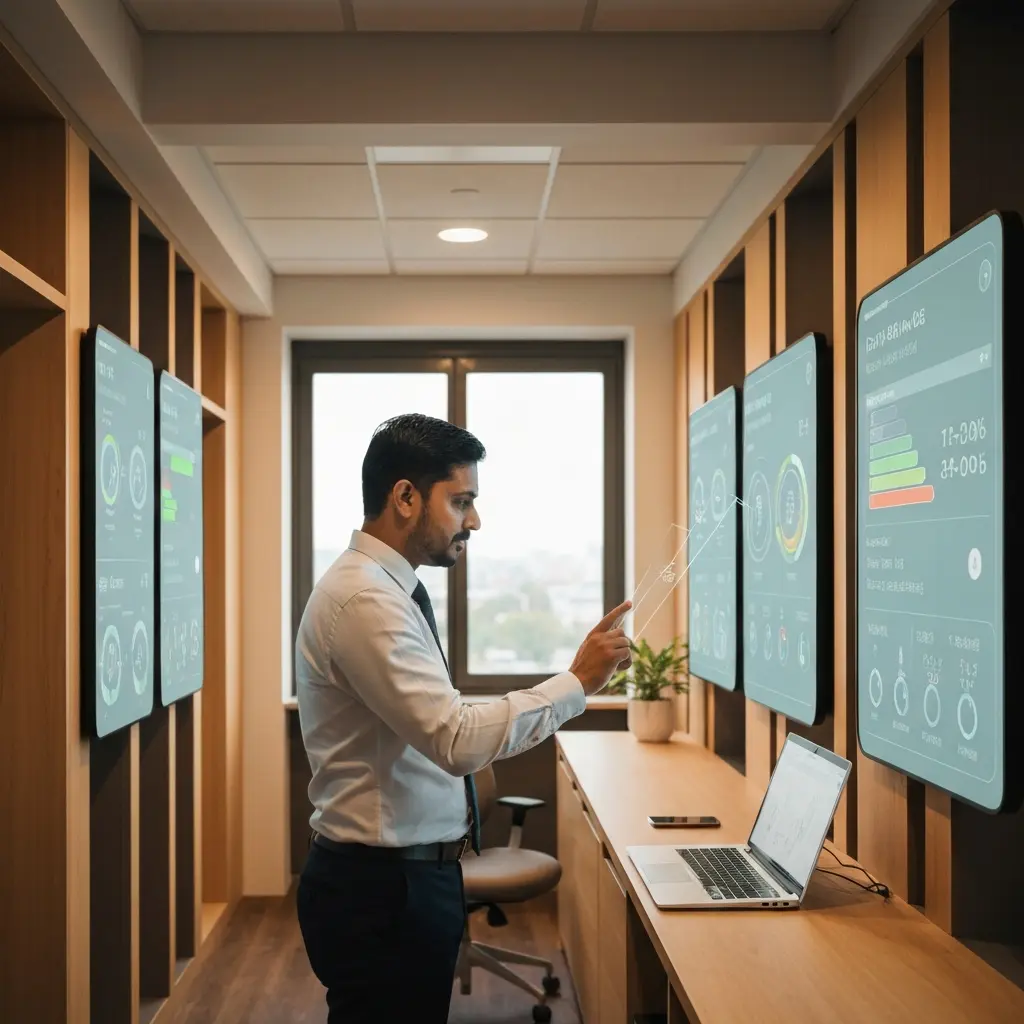
The integration of AI has moved beyond simple booking apps. ‘Autonomous Workspace Teammates’ can now analyse team calendars to pre-book project rooms, suggest optimal in-office days for collaboration based on sentiment analysis of communication channels, and even map ‘serendipity’ by suggesting which teams are in the building to foster cross-pollination. This intelligent layer ensures that the physical workspace actively supports hybrid work rhythms, a critical factor for talent retention in India’s competitive market.
Manager Insight: The humid Chennai weather makes consistent, high-quality HVAC non-negotiable. A premium managed network provides this seamlessly, whereas in a traditional lease, a failing chiller during a critical client visit becomes your operational crisis to solve.
The 2026 Outlook for India’s Workspace Market
The outlook for 2026 is one of accelerated stratification and sophistication. Rental rates for premium ‘Class A’ managed spaces in key Indian metros are expected to hold firm or improve, as demand concentrates on high-performing, amenity-rich assets. Conversely, lower-tier traditional offices without flexibility or modern infrastructure face obsolescence. We will see a significant rise in management agreements—like those pioneered by global operators—coming to India, where workspace providers partner with landlords to offer turn-key solutions without long-term tenant leases.
Geographically, demand will surge in India’s secondary and tertiary cities—the equivalents of the Sun Belt metros—as companies build distributed teams. For a Chennai-based firm, this means easy, brand-consistent access to workspace in Pune or Bengaluru for sales teams, eliminating the need for costly branch office setups. The workspace is becoming a managed service, as critical and predictable as your internet connectivity.
Key Takeaways
- Convert Capex to Opex: Shift large, upfront fit-out capital into predictable monthly operational expenses that scale with your business.
- Build a Distributed Talent Strategy: Use a network of workspaces to hire the best talent across cities, not just within commute distance of one central office.
- Demand Intelligence, Not Just Space: Choose providers that offer data insights on space utilization and AI-driven tools to enhance team collaboration.
- Future-Proof Your Portfolio: Allocate a portion of your real estate budget (aiming for 20-30%) to flexible solutions to maintain strategic agility.
- Mitigate Systemic Risk: Short-term commitments protect your business from unforeseen market downturns or sudden shifts in work patterns.
Conclusion
The move towards Enterprise Flex Space is not a fleeting trend but a fundamental recalibration of how businesses view their physical footprint. It aligns real estate strategy directly with business strategy, offering the agility to expand, contract, and pivot without penalty. For the growth-oriented Indian business, the question is no longer if to incorporate flexibility, but how much and how soon. It represents a smarter way to allocate precious resources in a volatile economic climate.
At Crizone Business Centre, we are built for this exact future. Our premium managed workspace network across Chennai is designed to be your seamless Liquid HQ partner, providing the calibre of space, technology, and calm efficiency that enterprises require in 2026 and beyond. Let’s discuss how your portfolio can evolve.
Continue your workspace search
Explore the most relevant Crizone pages next
If this article is part of your Chennai workspace research, these pages help you move from reading into comparing live plans, locations, and fit.
Explore coworking plans in Chennai
Compare day passes, dedicated desks, private offices, meeting rooms, and virtual office options from one commercial hub page.
Book a day pass in Chennai
Best fit if you need occasional workspace access, a short productive break from home, or a flexible desk for a single day.
Compare dedicated desk options
A stronger fit for regular monthly use when you want a fixed seat, better routine, and predictable workspace costs.