· Business Growth & Workspace · 7 min read
RevPAM Strategy: How Smart Workspaces Drive Indian Business Growth in 2026
Learn how the RevPAM revolution, shifting from leases to management agreements, offers Indian SMEs a scalable, cost-efficient path to growth through smarter workspace strategies.

TL;DR: By 2026, the flexible workspace model will focus on revenue per available member (RevPAM) via managed suites and service diversification. This shift offers Indian businesses capital-light, scalable, and profit-protected growth, moving beyond simple desks to integrated strategic partnerships.
Introduction: The Real Cost of Growth for Indian Businesses
Scaling a business in India presents a classic dilemma. You need space to house a growing team, but traditional office leases in Chennai or Bengaluru tie up ₹8-15 lakh in deposits and commit to multi-year terms during economic uncertainty. The alternative—working remotely—often sacrifices the productivity of structured collaboration and professional credibility. This is where the global evolution of flexible workspaces offers a strategic solution for the Indian entrepreneur. The market is maturing from a real estate arbitrage play into a sophisticated service layer. It is now defined by a focus on RevPAM optimization—maximising revenue per available member through intelligent asset use and value-added services. This shift directly aligns with the needs of Indian SMEs seeking agility without compromising on professionalism or growth potential.
What is RevPAM Optimization?
RevPAM optimisation is the strategic practice of maximising the revenue generated from each workspace member by diversifying service offerings and refining the physical space allocation. It moves beyond simply renting desks to actively managing a portfolio of revenue streams—from private managed suites and meeting room bookings to virtual office services. In the Indian context, it represents a smarter way for workspace providers to create value, which in turn translates to more stable, feature-rich, and scalable solutions for businesses. This focus ensures operators can invest in the amenities that truly matter, like reliable high-speed internet and professional meeting facilities, rather than underused luxury add-ons.
The Foundation: From Capex to Service Partnership
The core of the 2026 model is the capital-light Management Agreement (MA). For a business owner, this operational shift is profoundly beneficial. Instead of a provider being a landlord subletting space at a margin, they become a strategic partner invested in your success within the building. This aligns incentives; their revenue is tied to your satisfaction and tenure. For a Chennai-based startup, this means accessing a premium space on OMR without the burden of directly managing fit-outs, maintenance staff, or complex vendor contracts for AC and security. The provider handles operations, allowing you to focus purely on business growth.
Crizone Pro Tip: When evaluating a workspace, ask about their operator model. A management agreement often signals a long-term partner focused on service delivery, not just property leasing.
| Cost Factor | Traditional Chennai Office (500 sq. ft.) | Flexible Managed Suite Solution |
|---|---|---|
| Security Deposit | ₹4-7.5 Lakhs (5-10 months rent) | ₹50,000 - ₹1.5 Lakhs (as refundable deposit) |
| Fit-out & Furniture Capex | ₹5-10 Lakhs (one-time) | Typically included |
| Monthly Operating Cost | Rent + Maintenance (~₹75,000) + Admin | All-inclusive membership fee |
| Contract Flexibility | 36-60 months lock-in | 6-24 month terms, scalable seats |
| Admin Overhead | Hiring front desk/IT support, vendor management | Fully managed by operator |
Demand Shift: The Rise of the Corporate-Grade Managed Suite
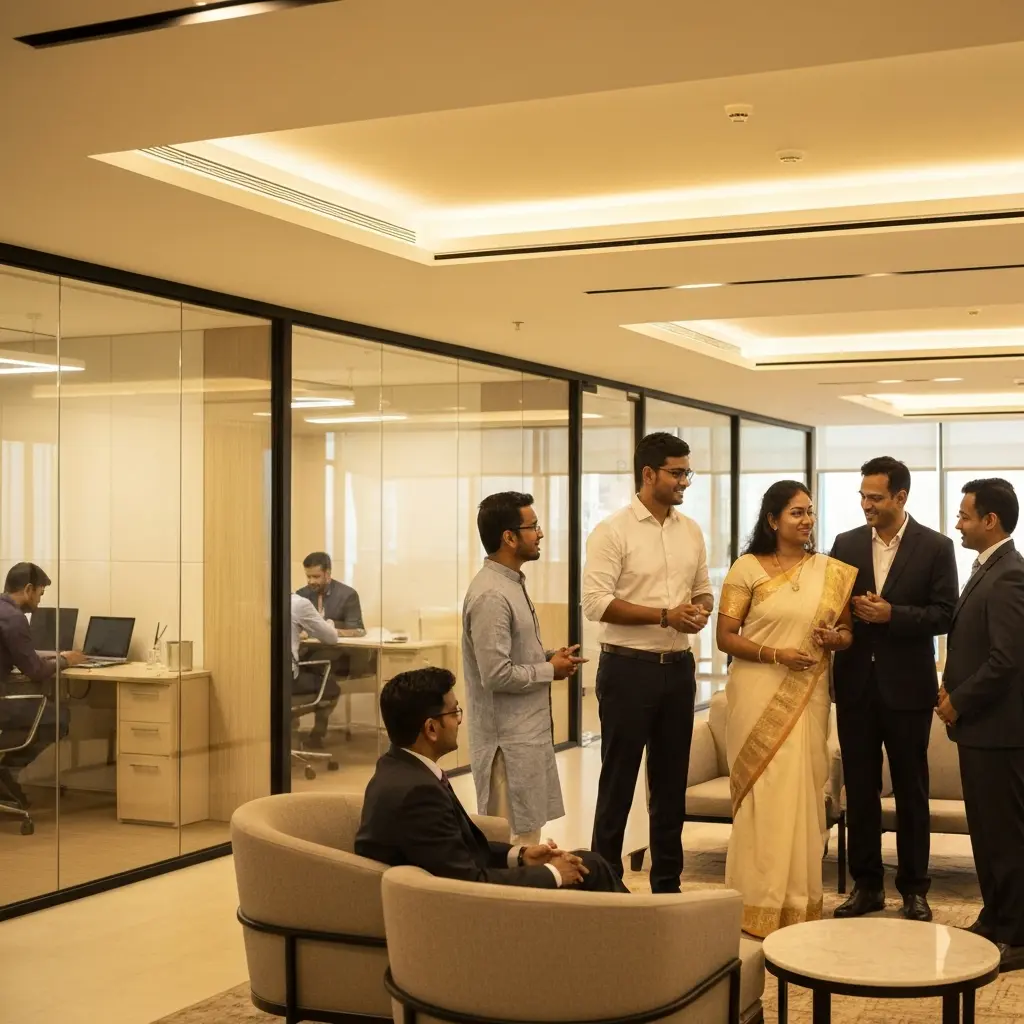
Corporate occupiers now drive nearly half of global flexible workspace demand, a trend mirrored in India’s IT and service sectors. This has catalysed the demand for ‘managed suites’—self-contained, branded offices within a larger vibrant centre. For an Indian SME, this offers the perfect balance: the autonomy and brand presence of a private office with the flexibility, networking, and amenity access of a coworking hub. It answers the need for a professional address for GST registration and client meetings, while providing space for the team to collaborate effectively, away from the distractions of home or coffee shops.
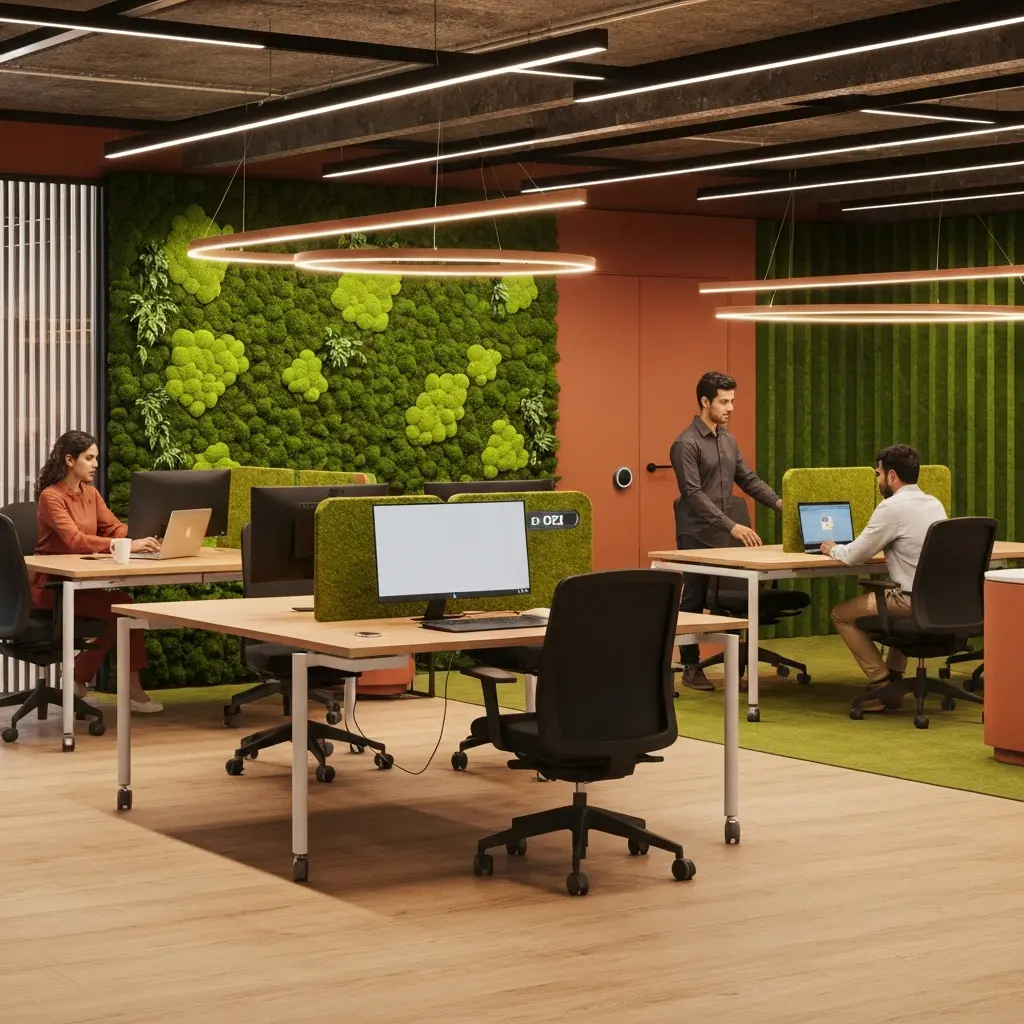
Crucially, the 2026 data shows demand has refined to ‘the basics’: reliable meeting rooms, quiet phone booths, and collaboration zones. This reflects a mature market where productivity tools trump peripheral luxuries. A centre designed with this focus, offering ample bookable spaces near metro connectivity in Chennai, directly supports business efficiency.
[Image of a revenue breakdown chart for a modern workspace] A visual breakdown showing revenue streams: Managed Suites (60%), Day Passes & Meeting Rooms (25%), Virtual Office & Ancillary Services (15%).
How Does Diversification Protect Your Business’s Bottom Line?
For workspace operators, diversifying revenue through high-margin ancillary services like virtual offices and digital memberships is a key profitability lever. For your business, this ecosystem provides critical optionality. A virtual office address at a prestigious location like Crizone can establish credibility for a lean startup or a freelancer at a fraction of the cost of a physical seat. It handles mail, provides a professional address for compliance, and includes access to meeting rooms on-demand—perfect for founders who network heavily or have client meetings during festive seasons when regular offices are closed.
Furthermore, dynamic pricing models and AI-driven yield management ensure you can access space when you need it most. Need a large training room for a quarterly review? The system can facilitate it efficiently. This operational sophistication ensures the provider’s margins are protected against inflation, leading to a more stable and sustainable partnership for your growing company, without the shock of steep annual rent hikes.
Is a Specialised or Generalist Workspace Right for Your Venture?
The market is polarising. Global ‘brandlords’ are consolidating, while niche operators cater to specific verticals like MedTech or content creation. For most Indian SMEs and growth-stage companies, a high-quality generalist centre like Crizone offers the ideal blend. It provides the professional infrastructure, reliability, and scalability needed for core operations, while its community and events can facilitate cross-industry connections that are invaluable in Chennai’s diverse business landscape. The focus should be on operational excellence, prime location, and a service culture that understands local business rhythms—from TDS filing deadlines to managing expectations during the monsoon season.
The 2026 Outlook for the Indian Flexible Workspace Market
The coming year will see these global trends solidify in India. We will see accelerated expansion into suburban hubs and Tier-II cities like Coimbatore and Kochi, following the ‘Work-Near-Home’ mandate. Sustainable, energy-efficient buildings will become a non-negotiable for corporates, influencing all providers. Most importantly, the relationship between business and workspace will deepen from transactional to strategic. Your workspace partner will increasingly function as an extension of your operations team, leveraging data and flexible terms to support your growth phases, whether you’re scaling from 5 to 50 team members or establishing a new branch office with minimal risk.
Key Takeaways for Business Leaders
- Seek Capital-Light Agility: Prioritise workspace solutions that minimise large deposits and long lock-ins, preserving capital for core business investment.
- Demand Professional Basics: Ensure your chosen centre excels in the fundamentals: reliable IT, abundant meeting rooms, and quiet focus zones over gimmicky amenities.
- Leverage the Service Layer: Utilise virtual office plans to establish a professional footprint and use pay-per-use meeting rooms to extend your operational reach cost-effectively.
- Think Strategic Partnership: Choose a provider whose success is linked to yours, indicated by management agreements and flexible, scalable terms.
- Future-Proof with Flexibility: Opt for spaces that offer clear pathways to scale up or down, protecting your business from market volatility and seasonal demand shifts.
Conclusion
The evolution of flexible workspaces into a sophisticated, service-driven industry is a significant opportunity for Indian businesses. The focus on RevPAM optimization and managed suites translates directly into more resilient, scalable, and professionally supportive environments for teams to thrive. It represents a move away from the rigid, capital-intensive office lease towards a dynamic partnership that adapts to your business cycle. For founders and managers in Chennai looking to navigate growth efficiently, the solution lies in partnering with a centre built on these modern principles. Discover how a Crizone Business Centre managed suite can become the strategic foundation for your next phase of growth, combining calm efficiency with the flexibility today’s market demands.
Continue your workspace search
Explore the most relevant Crizone pages next
If this article is part of your Chennai workspace research, these pages help you move from reading into comparing live plans, locations, and fit.
Explore coworking plans in Chennai
Compare day passes, dedicated desks, private offices, meeting rooms, and virtual office options from one commercial hub page.
Book a day pass in Chennai
Best fit if you need occasional workspace access, a short productive break from home, or a flexible desk for a single day.
Compare dedicated desk options
A stronger fit for regular monthly use when you want a fixed seat, better routine, and predictable workspace costs.