
· Business Growth & Workspace · 6 min read
LEED v5 Decarbonization: A 2026 Workspace Mandate for Indian Growth
LEED v5's asset-level carbon mandates are moving from corporate pledges to an operational necessity for Indian businesses, directly impacting costs, talent, and corporate partnerships in 2026.
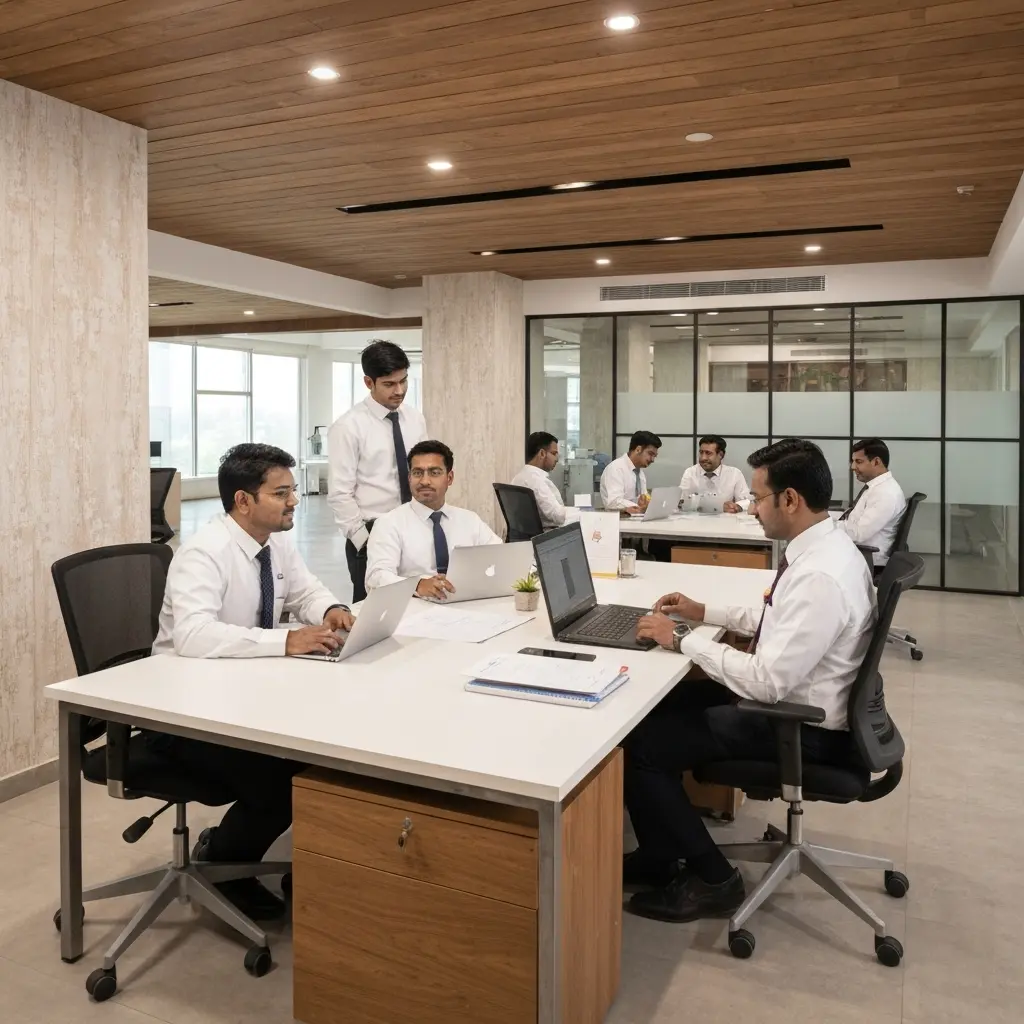
TL;DR: LEED v5 shifts sustainability from broad promises to verifiable, asset-level performance. For Indian businesses in 2026, this isn’t just about being green—it’s a strategic imperative for cost control, attracting top talent, and securing enterprise clients who demand transparent carbon data for their own compliance.
Introduction
For the Indian entrepreneur or branch manager, operational excellence has always been about managing tight margins, navigating complex regulations like GST, and retaining skilled talent in a competitive market. The traditional office lease, with its fixed costs and inflexibility, often feels like a necessary anchor rather than a growth engine. As corporations globally, including their Indian offices and partners, now mandate granular environmental, social, and governance (ESG) data for disclosure, the very workspace you operate from becomes a critical component of your business credibility and resilience. The forthcoming LEED v5 certification framework crystallises this shift, transforming sustainability from a nice-to-have amenity into a measurable business requirement that will define competitive advantage from 2026 onward.
What is the LEED v5 Decarbonization Mandate?
LEED v5 is the latest version of the Leadership in Energy and Environmental Design (LEED) green building rating system, set for release in 2025. It moves decisively from encouraging portfolio-level climate pledges to mandating asset-level proof of decarbonisation. Its core metric shifts from ‘energy efficiency’ to ‘Whole-Life Carbon’, requiring detailed reporting on both the ongoing operational energy use of a building and the embodied carbon from its construction, fit-outs, and materials. For a coworking operator or any business procuring space, this means verifiable, building-specific data is now essential.
Why Should an Indian Business Owner Care About Asset-Level Data?
This trend is driven by your future clients and partners. A 2026 market mandate reveals that over half of corporations using flexible workspace require detailed carbon data to satisfy their own reporting under frameworks like the EU’s Corporate Sustainability Reporting Directive (CSRD). For an Indian SME serving global clients or a startup seeking venture funding, your office’s environmental footprint is becoming part of your operational due diligence. Large investors and Real Estate Investment Trusts (REITs), guided by GRESB benchmarks, are pivoting to bottom-up decarbonisation plans. Choosing a workspace that cannot provide this asset-level proof may soon limit your business opportunities and access to capital.
Crizone Business Centre Insight: “We see enterprise clients in Chennai now requesting quarterly energy and waste reports before signing. Their procurement teams need this data to compile their own annual sustainability disclosures. A LEED-aligned workspace isn’t just a perk; it’s becoming a clause in the contract.”
The Tangible Business Benefits: Cost, Talent, and Valuation
The mandate translates into direct financial and operational advantages. Smart building technology, identified by 55% of CRE professionals as the top trend for 2026 cost reduction, uses occupancy sensors to optimise HVAC and lighting—critical in Chennai’s climate to manage soaring electricity bills without sacrificing comfort. Furthermore, data shows employees in LEED-certified, wellness-focused environments report a 56% increase in job performance and a 50% lower turnover risk. In India’s competitive talent market, this directly boosts your retention metrics and reduces hiring costs.
The financial risk of inaction is also stark. The ‘Green Premium’ is evolving into a ‘Brown Discount’; buildings failing on decarbonisation may face a significant valuation drop. For a business, associating with such an asset could impact your own brand perception and the long-term value of your operational base.
| Cost Factor | Traditional Chennai Office (1,000 sq. ft.) | LEED v5-Aligned Flexible Workspace (10 Dedicated Desks) |
|---|---|---|
| Fit-Out Capital | ₹ 15-20 Lakhs (one-time, high embodied carbon) | ₹ 0 (included, using circular economy principles) |
| Monthly Operational Energy | ₹ 40,000 - 60,000 (fixed, often inefficient) | ₹ 12,000 - 18,000 (pro-rated, smart & optimised) |
| Compliance & Reporting Overhead | High (internal management required) | Low (provided by operator as a service) |
| Talent Attraction Cost Implication | Higher churn risk, more recruitment spend | Lower churn, higher productivity from day one |
[Image of a side-by-side comparison chart titled ‘The Sustainability Premium: Operational Cost & Value Impact 2026’. One side shows declining curves for ‘Energy Cost’ and ‘Recruitment Cost’ in a green-themed workspace. The other shows rising curves for ‘Compliance Risk’ and ‘Valuation Discount’ in a brown-themed traditional space.]
Is Your Workspace Future-Proofed for 2026 Compliance?
Future-proofing involves three key pillars now embedded in LEED v5. First, Circular Economy Procurement reduces the carbon impact of frequent space reconfigurations by up to 40% through second-life furniture and modular systems. Second, Green Leasing has matured into standard clauses for energy transparency and shared waste management goals between operator and tenant. Third, Resilience Planning is now mandatory, requiring proof a workspace can maintain operations during climate-related energy disruptions—a critical consideration for business continuity during Chennai’s seasonal challenges.
Real-time air quality and noise monitoring have transitioned from amenities to ‘table stakes’, with sensors automating environment adjustments. This creates a consistently healthy workspace, supporting the wellbeing metrics that drive employee performance. As noted in JLL’s 2025 India Workplace Report, “the alignment of occupant health with building performance data is the new frontier of corporate real estate strategy.”
Growth Tip for Founders: When evaluating a workspace, ask the operator for their asset-level carbon roadmap and how they track Whole-Life Carbon. Their answer will reveal their long-term operational stability and their alignment with the partners you wish to attract.
The 2026 Outlook for the Indian Workspace Market
By 2026, the Indian flexible workspace market will be sharply divided between operators who can provide verified, asset-level sustainability data and those who cannot. High-value enterprise tenants, particularly multinational corporations and large Indian firms with ESG commitments, will consolidate their partnerships with the former. We will see the rise of the ‘sustainability-as-a-service’ model, where operators provide tenants with packaged monthly ESG reports for their own compliance. Buildings without credible decarbonisation pathways will face occupancy and valuation pressures, making them a riskier long-term base for growth-focused businesses.
Key Takeaways
- LEED v5 is a Data Game: From 2026, robust, asset-level carbon and energy data will be as critical as the rent invoice for corporate tenants.
- Mitigate ‘Brown Discount’ Risk: Aligning your business with a non-compliant workspace could indirectly impact your valuation and brand reputation.
- Turn Sustainability into Savings: Smart, occupancy-driven building systems directly cut operational costs, especially for energy-intensive climate control.
- Retain Top Talent: A verified healthy, high-performance workspace is a powerful, data-backed tool for reducing attrition and boosting productivity.
- Future-Proof Your Operations: Choose spaces that demonstrate resilience planning and circular design to ensure business continuity and adaptability.
Conclusion
The transition from portfolio pledges to asset-level proof represents a fundamental maturing of the commercial real estate market. For the Indian business leader, this is not a distant global trend but an imminent operational reality that touches cost, talent, compliance, and growth partnerships. The workspace you choose is increasingly a declaration of your business’s efficiency, resilience, and forward-thinking ethos. At Crizone Business Centre, we are architecting our spaces and services around these precise LEED v5 principles, ensuring that businesses in Chennai have a verified, sustainable, and strategically advantageous foundation from which to grow. Let’s discuss how your business can be prepared.
Continue your workspace search
Explore the most relevant Crizone pages next
If this article is part of your Chennai workspace research, these pages help you move from reading into comparing live plans, locations, and fit.
Explore coworking plans in Chennai
Compare day passes, dedicated desks, private offices, meeting rooms, and virtual office options from one commercial hub page.
Book a day pass in Chennai
Best fit if you need occasional workspace access, a short productive break from home, or a flexible desk for a single day.
Compare dedicated desk options
A stronger fit for regular monthly use when you want a fixed seat, better routine, and predictable workspace costs.