· Business Growth & Workspace · 7 min read
2026 Coworking Market Report: Why Private Offices Drive Growth
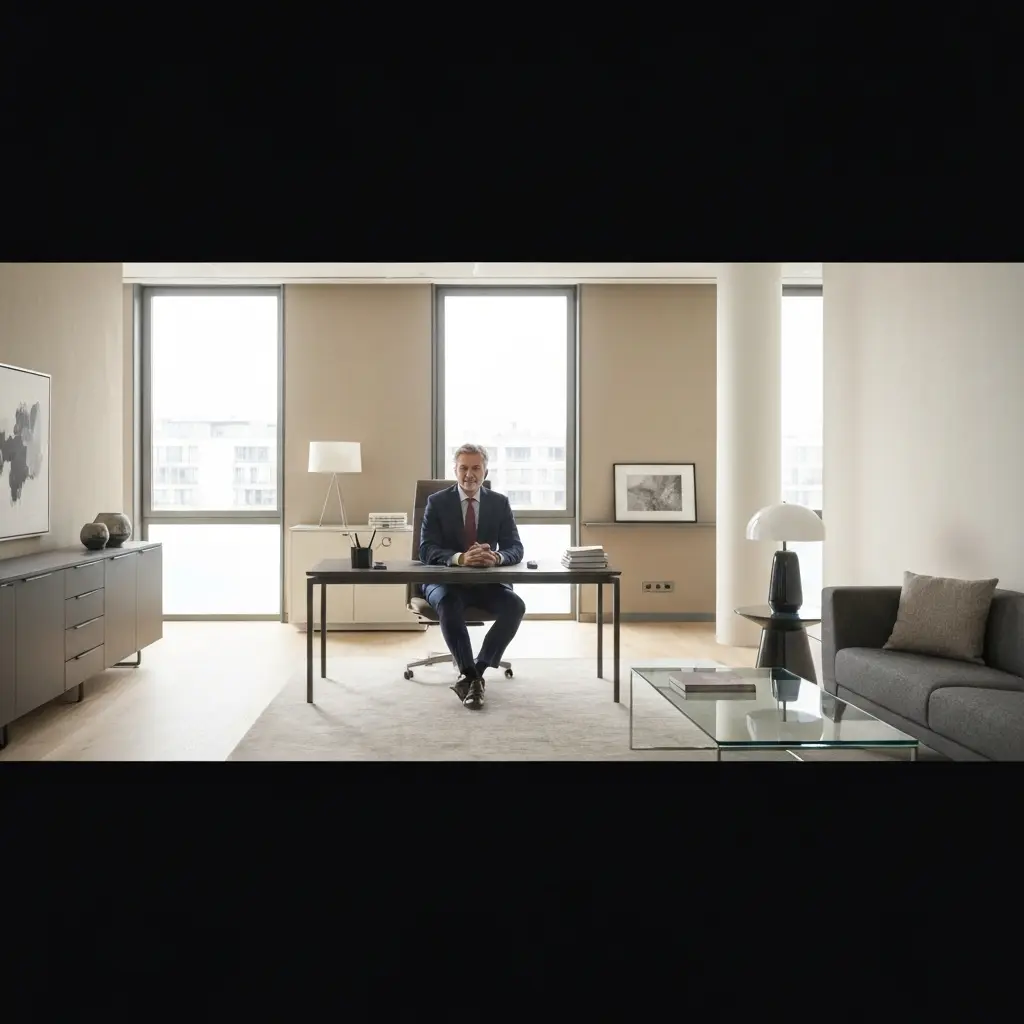
The coworking market is shifting towards privacy and focus. Enclosed private suites now generate 60% of revenue for operators, driven by hybrid mandates and demand for deep-work environments in India.
TL;DR: The workspace market is shifting decisively towards privacy and focus. Driven by formal Return-to-Office mandates and employee demands for a ‘Third Workplace’, enclosed private suites are becoming the dominant and most profitable segment. For Indian businesses, this translates into a strategic opportunity to boost productivity, retain talent, and access premium infrastructure without the capital lock-in of a traditional lease.
Introduction: The Chennai Entrepreneur’s Workspace Dilemma
Navigating the demands of a growing business in Chennai presents a classic challenge: balancing the need for a professional, productive environment with the realities of capital expenditure, GST compliance, and Chennai’s infamous OMR traffic. The traditional 3-year office lease, with its upfront deposit and inflexible terms, often becomes a barrier to agility. Simultaneously, the global shift towards hybrid work has created a new demand among your team. They seek a ‘Third Workplace’—a local, flexible space that offers the quiet and privacy needed for deep work, distinct from their home and the corporate headquarters. This convergence of business necessity and employee preference defines the new workspace equation.
The 2026 Coworking Market Report indicates this is not a fringe trend but a structural shift in how companies operate. As hybrid mandates intensify and talent retention becomes paramount, the workspace itself evolves from a mere location to a critical growth infrastructure. For the Indian SME founder, freelancer, or branch manager, understanding this shift is key to making a strategic decision that supports scaling efficiently.
What is the 2026 Coworking Market Report?
The 2026 Coworking Market Report refers to the analysis of key global trends shaping the flexible workspace industry as it matures into a mainstream commercial real estate asset class by 2026. It highlights a decisive pivot away from open-plan communal models towards enclosed, private office suites and focus-driven designs. This shift is driven by corporate requirements for data security, employee demand for acoustic privacy and deep-focus capabilities, and the economic reality that private suites generate the highest revenue yield for operators. The report provides the data framework for businesses to make informed decisions about their physical workspace strategy in a hybrid era.
Why are Private Offices Now the Profitability Engine?
The data is clear: private office suites currently generate 60% of total revenue for the average coworking operator, despite occupying less than half the floor area. This high yield is driven by two primary forces evident in India. First, corporate clients, including SME branches and startups requiring secure client meetings or dedicated R&D, are increasingly mandating enclosed spaces for data security and distraction-free environments. Second, the ‘Hybrid Creep’—where policies quietly expand office attendance requirements—means more professionals need a reliable, local workspace for 4 days a week. A private suite at a premium business centre like Crizone offers this consistency without the commute to a distant corporate HQ.
Crizone Pro Tip: For Indian SMEs managing sensitive client data or developing proprietary software, a private suite provides the controlled environment necessary for compliance and IP protection, while the business centre handles all infrastructure, security, and maintenance.
This demand translates into tangible business advantages:
| Cost Factor | Traditional Office Lease in Chennai (1000 sq. ft) | Flexible Private Suite at a Business Centre |
|---|---|---|
| Monthly Commitment | ₹ 1.2 - 1.8 Lakh (Rent + Maintenance) | ₹ 70,000 - 1.1 Lakh (All-inclusive Membership) |
| Capital Lock-in | 10-12 Months Deposit (₹ 12-20 Lakh) | Minimal Security Deposit (Often 1-2 Months) |
| Operational Overheads | Separate costs for IT, Admin, AC, Pantry | Typically all-inclusive; one invoice simplifies GST accounting. |
| Flexibility | 3-Year Lock-in; scaling is difficult | Can scale team size or upgrade/downgrade space every 6-12 months. |
How Does a “Third Workplace” Strategy Retain Talent?
With 29% of employees indicating they would consider leaving a role if it became 100% in-person, offering a flexible local workspace is a powerful retention tool. In Chennai, where a daily commute from Adyar to an OMR corporate park can consume hours, providing access to a premium business centre nearer to an employee’s residence addresses this friction directly. The ‘Third Workplace’ strategy gives your team the best of both worlds: the structure and focus of a professional office without the burnout of a long commute. It signals that you are investing in their productivity and well-being.
Furthermore, wellness-centric designs—including movement zones, ergonomic furniture, and biophilic elements—are showing measurable ROI. Spaces that integrate these features report a 32% decrease in absenteeism and a 23% increase in member job satisfaction. In a humid climate like Chennai’s, a workspace with consistent, high-quality air conditioning and natural light contributes significantly to daily comfort and focus.
[Image of a Venn diagram showing “Home”, “Corporate HQ”, and “Third Workplace (Flex Space)” overlapping, with the benefits of each listed.]
Manager Insight: For a Branch Manager overseeing a Chennai team for a multinational, using a local business centre as the official branch address can fulfil corporate RTO mandates while dramatically improving local team morale and attendance, especially during the festive season when travel becomes hectic.
Is Focus-Driven Design Just a Luxury or a Necessity?
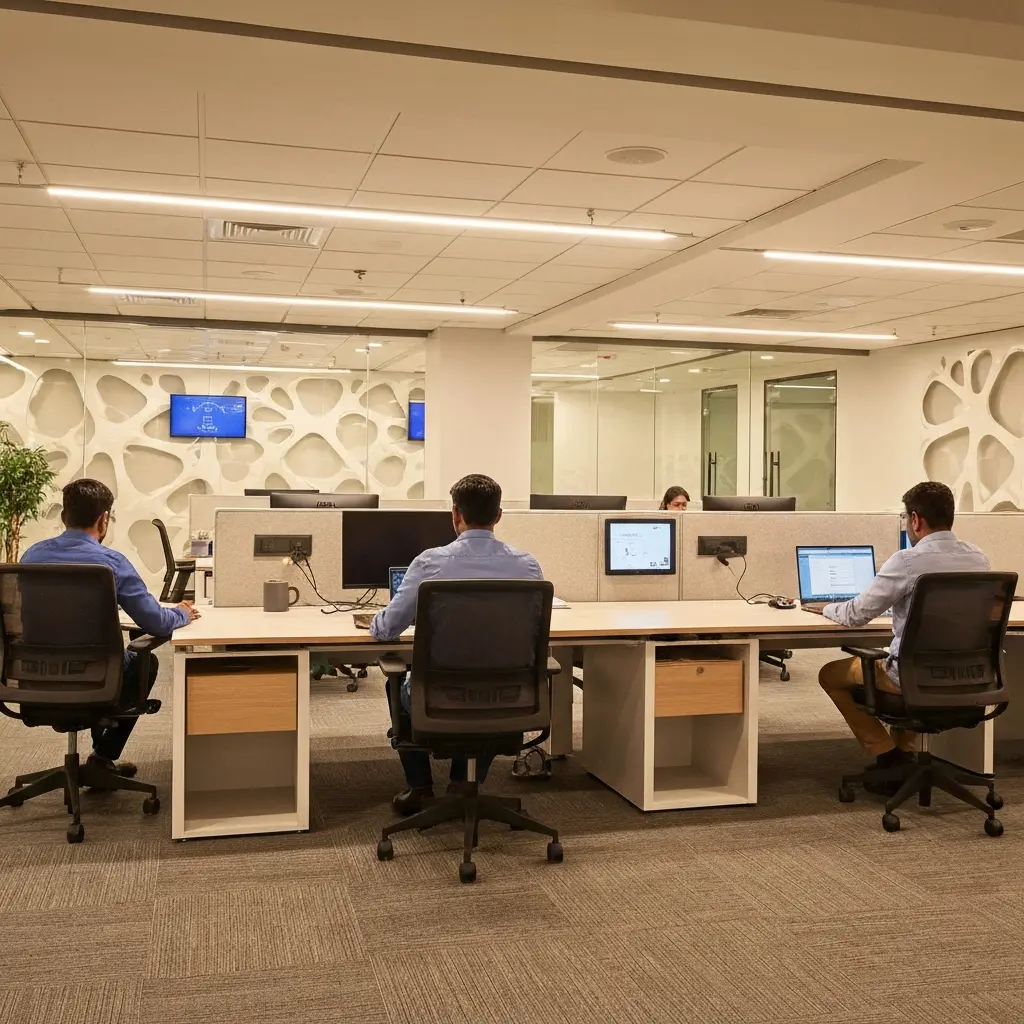
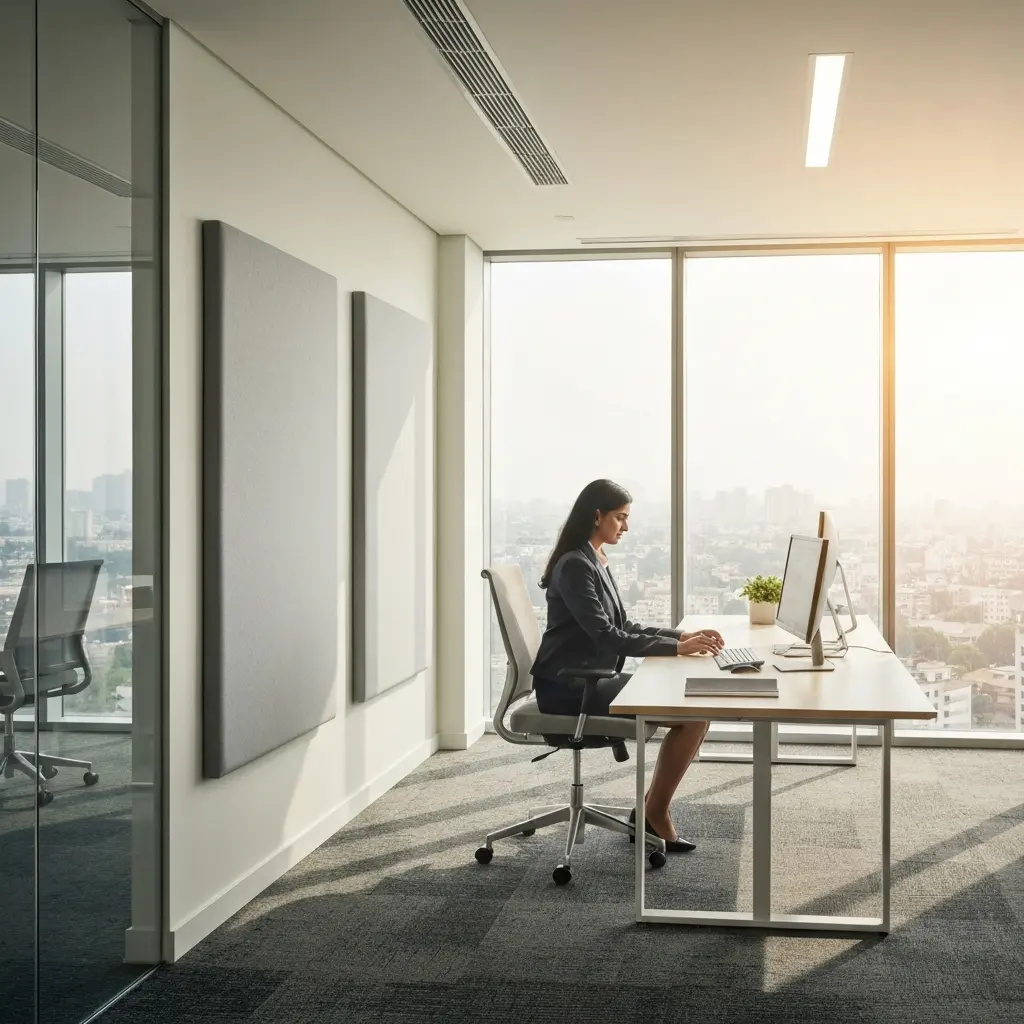
The record 78% ‘Tuesday Peak’ attendance across hybrid workforces creates a new operational challenge: managing mid-week capacity and ensuring every attendee can actually work deeply. Open-plan cafes are insufficient for tasks requiring concentration, like financial modelling or coding. Focus-driven design—incorporating reservable focus booths, sound-masking systems, and acoustic panelling in private suites—is becoming a baseline requirement for productivity. This is not a luxury; it is the infrastructure needed for output in a knowledge economy.
For the Indian entrepreneur, this means the choice of workspace directly impacts your team’s output velocity. A well-designed private suite minimises interruptions, allowing for complex problem-solving and innovation. It turns real estate into a performance tool. As highlighted in JLL India’s Future of Work reports, the quality of the work environment is now a direct input into business performance metrics, not just an overhead cost.
The 2026 Outlook for the Indian Workspace Market
The aggressive growth in the Asia-Pacific region noted in the global report will be mirrored in India’s metro cities, including Chennai. We anticipate a continued rise in ‘Management Agreements’ where landlords partner with expert operators like Crizone to deliver premium flexible spaces, reducing risk for both parties. Demand will be intensely local, driven by the 65% of users who choose spaces within a 15-minute commute. This will fuel the development of high-quality business centres in key residential and commercial hubs across Chennai, near Metro connectivity.
The market will bifurcate: generic open-plan coworking will serve a niche, while premium business centres offering private suites, focus zones, and full business support services will become the preferred solution for growth-stage SMEs, founders, and corporate branches. The workspace decision will increasingly be framed as a strategic growth investment rather than a real estate transaction.
Key Takeaways
- Private suites are the high-yield core: They offer the best balance of privacy, productivity, and cost-efficiency for growing businesses.
- Workspace is a talent tool: Offering a local ‘Third Workplace’ can be a decisive factor in retaining key employees in a competitive market.
- Design drives output: Focus-driven features like acoustic privacy are necessary for deep work, directly impacting business results.
- Flexibility fuels agility: The ability to scale your space commitment every 6-12 months provides crucial operational agility compared to a traditional lease.
- Think local, act strategic: Choose a workspace based on your team’s commute proximity and the quality of its business infrastructure, not just its rent.
Conclusion
The evolution of the workspace market towards private, focus-oriented environments is a response to the fundamental needs of modern business: security, productivity, and talent retention. For the Indian entrepreneur, this shift presents an opportunity to access premium, scalable infrastructure that directly supports growth, without the capital intensity and long-term risk of a conventional lease. It allows you to invest in what truly matters—your team’s output and your company’s innovation—while the business centre manages the physical complexities.
Crizone Business Centre, with its portfolio of private suites, dedicated focus zones, and comprehensive business support services, is designed to be this precise growth partner for businesses in Chennai. We invite you to experience how a strategically chosen workspace can become a catalyst for your next phase of growth.
Continue your workspace search
Explore the most relevant Crizone pages next
If this article is part of your Chennai workspace research, these pages help you move from reading into comparing live plans, locations, and fit.
See private offices for growing teams
Useful when your team needs privacy, more focused calls, a stronger client-facing setup, or room to scale beyond shared seating.
Explore coworking plans in Chennai
Compare day passes, dedicated desks, private offices, meeting rooms, and virtual office options from one commercial hub page.
Book a day pass in Chennai
Best fit if you need occasional workspace access, a short productive break from home, or a flexible desk for a single day.