· Business Growth & Workspace · 8 min read
LEED v5 Decarbonization Dividend: Boosting Indian SME Valuation with Green Leases
Explore how LEED v5's focus on decarbonisation and performance-based green leasing creates a tangible 'Decarbonisation Dividend', directly impacting asset valuation and operational efficiency for Indian businesses.

TL;DR: The new LEED v5 framework prioritises decarbonisation, mandating energy modelling for interiors. This, combined with the rise of performance-based green leases, creates a measurable ‘Decarbonisation Dividend’—higher asset valuation and lower operational costs. For Indian SMEs and corporates, partnering with certified flexible workspaces is now a strategic growth lever, not just a cost-saving tactic.
Introduction: The New Workspace Imperative for Indian Growth
For an Indian entrepreneur or a branch manager in Chennai, the core challenge remains constant: how to maximise growth while meticulously managing costs and operational complexity. The traditional model—a fixed lease on Mount Road, grappling with peak-hour OMR traffic, managing separate utility contracts, and navigating GST compliance for office upkeep—is increasingly seen as a drag on agility. Today’s growth demands flexibility, foresight, and a firm commitment to future-proofing your operations. This is where the global conversation on sustainable workspaces directly intersects with Indian business realities. The recent launch of LEED v5 has fundamentally recalibrated the standards for green buildings, placing decarbonisation at the very heart of certification. Concurrently, major occupiers are demanding concrete Environmental, Social, and Governance (ESG) data, leading to a surge in performance-based green leasing. This convergence is creating a tangible ‘Decarbonisation Dividend’—a direct financial and reputational return on investing in sustainable, intelligent workspace solutions. For businesses aiming to scale efficiently in India’s dynamic market, understanding this dividend is no longer optional; it’s a critical component of strategic planning.
What is the “Decarbonisation Dividend”?
The Decarbonisation Dividend refers to the concrete financial and strategic advantages gained by a business when it actively reduces the carbon emissions associated with its operational footprint, particularly its workspace. Under frameworks like LEED v5, this is no longer a vague environmental goal but a quantified metric integrated into building certification and lease agreements. The dividend manifests as reduced energy costs via efficient systems, enhanced asset valuation attracting premium tenants and investors, lower risk profile for compliance, and a stronger brand reputation that appeals to modern talent and clients. It is the measurable return on choosing a workspace partner committed to verifiable decarbonisation.
The LEED v5 Mandate: From Design to Daily Operations
The April 2025 update to the LEED framework represents a seismic shift. Decarbonisation now accounts for 50% of the total possible points, making it the dominant factor in achieving certification. This isn’t just about installing solar panels; it demands a holistic, data-driven approach from the very outset.
The Non-Negotiable Blueprint
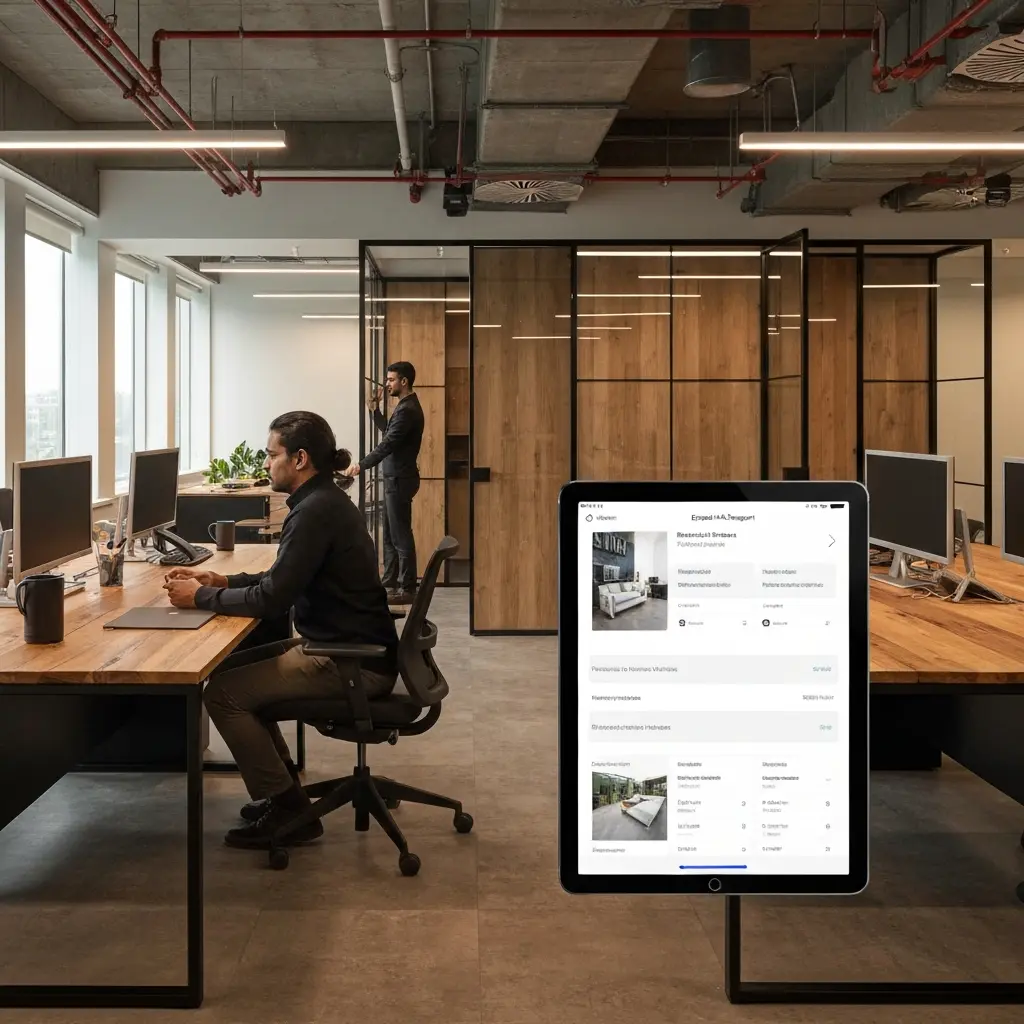
For any new workspace fit-out, including those within flexible business centres, LEED v5 for Interior Design and Construction (ID+C) introduces a crucial prerequisite: an ‘Estimated Energy Use and Operational Carbon Projection’. This mandates detailed energy modelling before construction even begins, ensuring efficiency is baked into the design. This means operators like Crizone must integrate advanced HVAC planning, smart lighting systems, and sustainable material choices at the architectural stage to meet these rigorous benchmarks.
Business Growth Tip: When evaluating a workspace, ask for their project’s LEED v5 scorecard, specifically the Decarbonisation category. A provider that has planned for efficiency from the ground up will offer you inherently lower operational overheads.
Balancing Efficiency with Well-being
A significant advancement in LEED v5 is the mandatory ‘Human Impact Assessment’. This ensures that sustainability measures, such as reduced airflow for energy savings, do not compromise occupant health, comfort, or productivity. In a context like Chennai’s humid climate, this is vital—it guarantees that a workspace’s air quality and thermal comfort are scientifically maintained, creating an environment where your team can thrive physically and mentally.
The Rise of the Performance-Based Green Lease
Parallel to the evolution of building standards is a transformation in the very contract that binds occupiers to space: the lease. Green leasing has moved from aspirational clauses to binding, performance-based agreements.
Shared Accountability for Shared Savings
Performance-based green leases formalise the collaboration between workspace provider and occupant to achieve specific ESG targets, often linked to energy consumption, waste reduction, and carbon emissions. With 22% of Green Lease Leaders achieving ‘Platinum’ status in 2025, these agreements are becoming mainstream. For an Indian SME, this translates into a partnership where your provider is actively invested in helping you lower your utility bills and meet your own corporate sustainability goals, with clear metrics and shared data.
The Data-Driven Foundation for Enterprise Contracts
Over 65% of the world’s largest companies have set Net Zero targets encompassing their entire supply chain (Scope 3 emissions). This means when a large corporate evaluates a flexible workspace for their Chennai branch or team, they require granular, auditable ESG data from the operator.
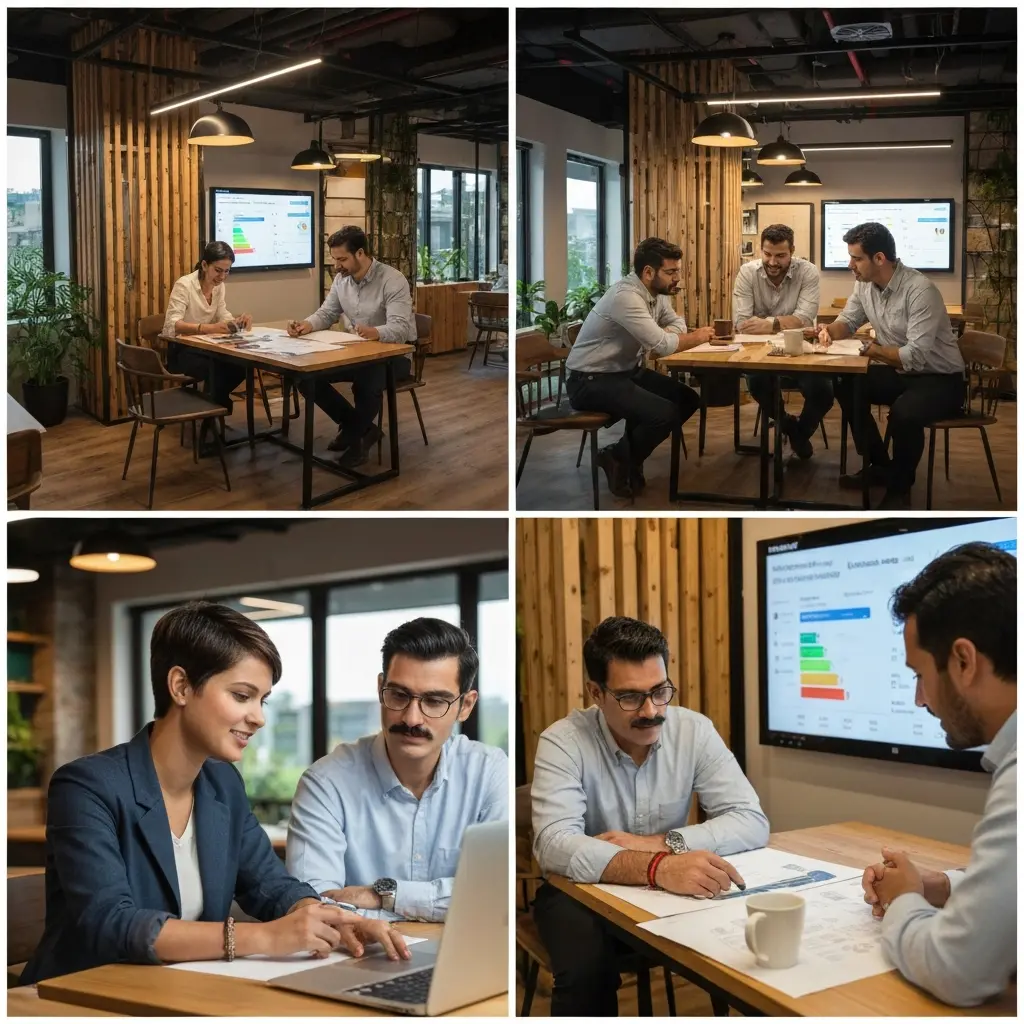
Manager Insight: “Securing a contract with a multinational often hinges on our ability to provide monthly reports on energy consumption per workstation, water usage, and carbon footprint. This transparency, driven by our LEED v5 aligned infrastructure, is a key competitive advantage.”
A workspace that can provide this data not only wins the contract but also directly contributes to the client’s global sustainability reporting, enhancing their valuation.
The Direct Impact on Your Business: The Dividend Breakdown
How does this global shift translate into tangible benefits for an Indian startup, freelancer, or growing company? The Decarbonisation Dividend can be broken down into three core areas: Cost, Valuation, and Talent.
1. The Operational Cost Advantage
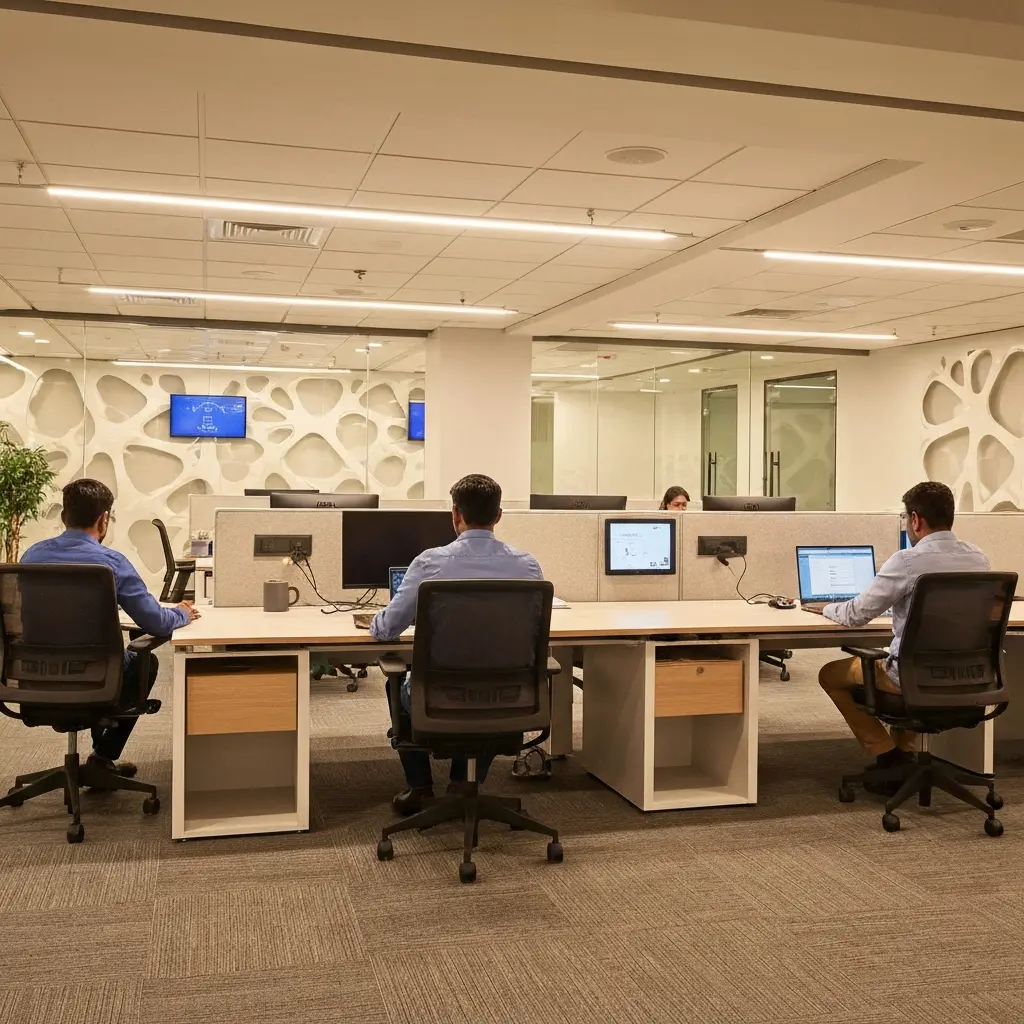
Advanced, AI-powered building management systems are now central to LEED v5 compliance. These systems optimise HVAC and lighting based on real-time occupancy, weather forecasts (anticipating Chennai’s heat), and peak utility pricing. This directly slashes the energy component of your operational overhead. Consider the comparative cost structure:
| Cost Component | Traditional Chennai Office Lease | LEED v5 Aligned Flexible Workspace |
|---|---|---|
| Base Rent (per workstation) | ₹ 15,000 - ₹ 25,000/month | Included in membership fee (often lower net cost) |
| AC/Electricity Charges | Separate metering, high consumption (~₹ 5,000-₹ 8,000/workstation) | Optimised, shared systems reduce per-head cost |
| Maintenance & Upkeep | Direct responsibility & cost | Fully managed by operator |
| Compliance & Reporting | Manual effort for GST, audits | Provider-led, streamlined processes |
The financial benefit is clear, but the dividend extends beyond monthly savings.
2. Enhanced Asset & Brand Valuation
Sustainable properties command a premium. Investors and discerning clients are increasingly treating energy efficiency as a core risk-mitigation strategy. By operating from a LEED v5 certified space, your business associates itself with that premium standard. This enhances your brand’s reputation for responsibility and modern thinking, making you more attractive to partners, investors, and top-tier talent who prioritise ESG values. Your workspace becomes an asset that actively contributes to your company’s perceived valuation.
3. Winning in a Selective Market
The market itself is creating a ‘survivorship bias’. Moody’s Analytics projects rising office vacancy rates, suggesting a flight to quality. The global flexible space market is growing at 17.7% CAGR, driven by corporate demand for high-performance solutions. In this climate, workspaces that offer proven decarbonisation and green lease options will maintain high occupancy and loyalty. Choosing such a space positions your business within a ecosystem designed for resilience and long-term relevance.
[Image of a graph comparing occupancy rates between standard and green-certified offices in India]
Is a Green-Certified Flexible Workspace Right for Your Growth Phase?
This depends on your ambitions. If you are a freelancer seeking a productive, cost-effective environment without administrative burdens, the operational savings and professional setting are a direct dividend. For an SME founder, the combination of reduced overhead, enhanced brand value, and the ability to meet larger client’s ESG due diligence requirements is a powerful growth catalyst. For a corporate branch manager, it offers a scalable, compliant, and strategically aligned solution that satisfies both head office mandates and local team needs for a superior work environment.
The 2026 Outlook for Indian Workspaces
As we approach 2026, the trends will intensify. The demand for LEED v5 or similarly certified spaces will become a baseline expectation for many enterprise contracts. Green leasing components will become standard in flexible workspace agreements, moving from premium to commonplace. AI-driven optimisation of building operations will further widen the cost gap between conventional and smart buildings. In India, particularly in hubs like Chennai, this will accelerate the transition towards premium, asset-light workspace solutions that offer not just a desk, but a verifiable Decarbonisation Dividend. The workspace you choose will be increasingly seen as a direct reflection of your business’s operational efficiency and strategic foresight.
Key Takeaways for Indian Business Leaders
- Decarbonisation is Now Central: Under LEED v5, reducing operational carbon is the primary path to certification, affecting both design and daily operations.
- Leases are Becoming Performance Contracts: Green leases now tie workspace costs to achieving mutual ESG targets, creating shared accountability for savings.
- The Dividend is Multifaceted: It delivers lower direct costs, enhanced brand and asset valuation, and a competitive edge in talent and client acquisition.
- Data Transparency is Key: Providing granular ESG data is crucial for securing contracts with large, sustainability-focused corporates.
- Actionable Step: Evaluate your current or prospective workspace not just on rent, but on its LEED v5 alignment, green lease options, and ability to provide your business with a measurable Decarbonisation Dividend.
Conclusion
The integration of deep decarbonisation into building standards and the evolution of leases into performance-based partnerships marks a definitive shift. For the Indian business leader, this is not a distant global trend but a present-day opportunity. The Decarbonisation Dividend offers a clear pathway to streamline costs, bolster reputation, and align with the future of corporate responsibility. It turns your choice of workspace into a strategic growth decision. At Crizone Business Centre, we are integrating these principles at the core of our design and operations, aiming to provide Chennai’s entrepreneurs, freelancers, and corporates with a workspace that actively contributes to this dividend—offering not just a place to work, but a partner in sustainable growth.
Continue your workspace search
Explore the most relevant Crizone pages next
If this article is part of your Chennai workspace research, these pages help you move from reading into comparing live plans, locations, and fit.
Explore coworking plans in Chennai
Compare day passes, dedicated desks, private offices, meeting rooms, and virtual office options from one commercial hub page.
Book a day pass in Chennai
Best fit if you need occasional workspace access, a short productive break from home, or a flexible desk for a single day.
Compare dedicated desk options
A stronger fit for regular monthly use when you want a fixed seat, better routine, and predictable workspace costs.