· Business Growth & Workspace · 7 min read
Executive Hybrid Work in 2026: The Growth Engine for Indian Businesses
By 2026, flexible workspaces are evolving into 'Executive Hubs.' Learn how this strategic shift reduces turnover, optimises real estate costs, and drives growth for Indian SMEs and leaders.

TL;DR: The 2026 workspace is defined by a hierarchy of flexibility. While junior staff return to headquarters, experienced talent demands hybrid models. This creates high-value ‘Executive Hubs’ in flexible workspaces, which are now critical for retaining senior talent, optimising real estate costs, and serving as strategic synchronization points for growing Indian businesses.
Introduction
The challenge for Indian business leaders in 2026 is no longer simply getting teams back to an office. It is about strategically deploying talent where they are most effective and engaged. With real estate costs in Chennai’s business corridors remaining significant and the daily drain of OMR traffic unchanged, a rigid, one-size-fits-all office mandate is a proven growth inhibitor. Data shows firms enforcing such mandates face 13–14% higher turnover. Meanwhile, a new class of member is defining demand: the experienced professional requiring a blend of deep-focus privacy and high-calibre networking. This is the core of the 2026 hybrid work trends 2026, transforming premium flexible workspaces from general-purpose desks into targeted growth engines for mature businesses.
What Are the 2026 Hybrid Work Trends?
The 2026 hybrid work trends describe a market maturation where flexibility is no longer universal but strategic. It is a hierarchy where experienced, senior-level roles (5+ years+) are 50% more likely to retain hybrid options compared to entry-level positions. This demographic shift is turning quality coworking spaces into ‘Executive Hubs’—professional environments designed for focus, confidentiality, and strategic relationship-building. For Indian SMEs, this trend represents an opportunity to access premium infrastructure and a curated peer network without the capital lock-in of a traditional lease, directly supporting scalable growth.
The Executive Shift: From Cost-Center to Growth Partner
A startling 77% of new job postings in early 2026 are for fully on-site roles, largely targeting junior talent. This recalibration by corporate HQs has a direct effect: the flexible workspace demographic is becoming more mature and executive-led. For a growing company, this evolution is beneficial. It means your leadership team can operate from a professional hub designed for their needs—reliable power, high-speed connectivity, and meeting rooms that impress clients—while junior teams are cultivated in a centralised culture hub.
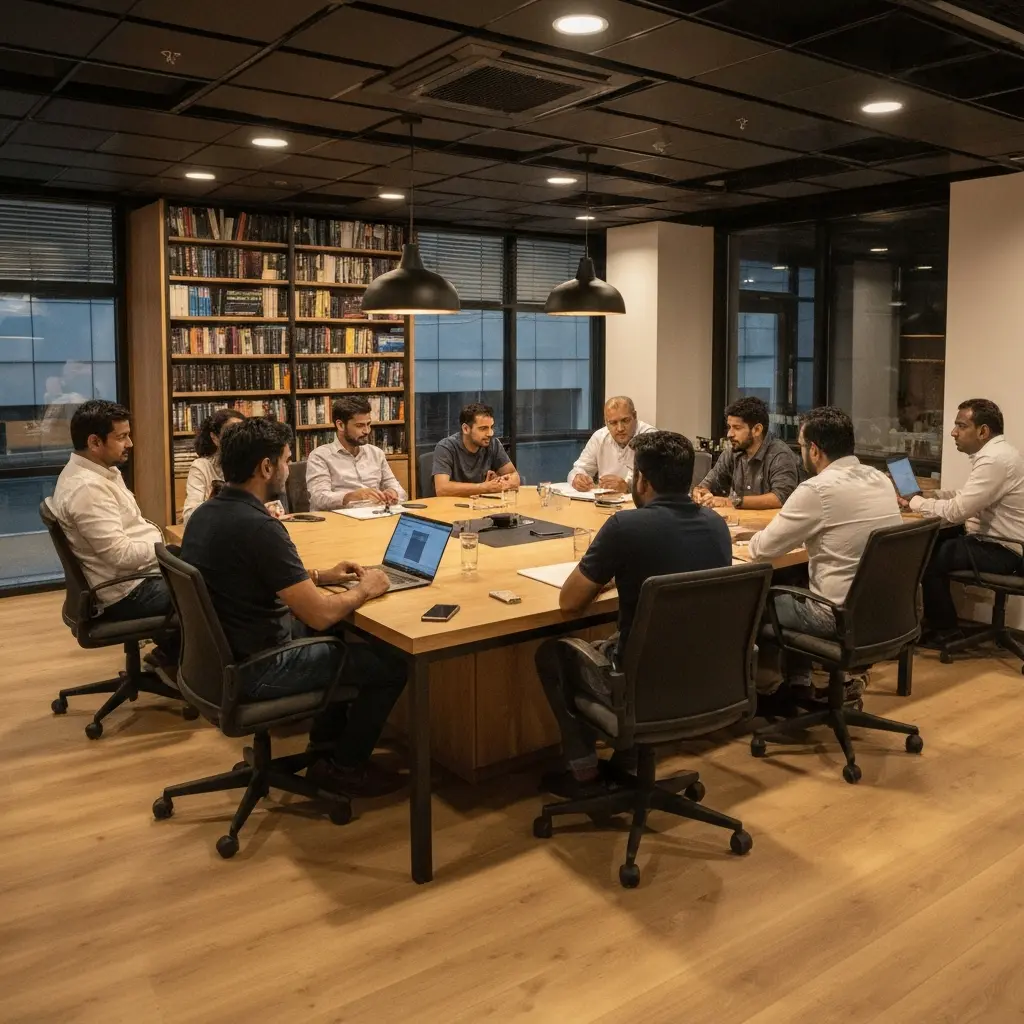
This is not about remote work in isolation. 46% of hybrid employees cite ‘building relationships’ as a top concern. Executive-focused flex spaces solve this by becoming intentional ‘synchronization points.’ A monthly leadership offsite at a premium centre, for instance, aligns distributed teams far more effectively than a crowded corporate cafeteria. It turns mandated attendance into valuable strategy time.
Crizone Pro Tip: Use a flexible private cabin as your leadership team’s monthly ‘war room.’ The change of environment and professional setting in Chennai fosters strategic thinking away from daily operational fires, turning coordination into a growth-oriented ritual.
The Financial Logic: Hedging Real Estate Risk
The economic argument for integrating flexible workspace into your portfolio is now irrefutable. Globally, 60% of Fortune 500 companies do so to hedge against the significant cost of underutilised traditional office seats. In the Indian context, the financial risk of a long-term lease is even more pronounced for an SME. A traditional office requires a large capital outlay before your first employee sits down, locking you into a space that may not fit your team in six months.
Consider the cost dynamics for a Chennai-based team of 10, including 3 senior executives best suited to a hybrid model:
| Cost Factor | Traditional Office (Anna Nagar/OMR) | Flexible Executive Solution |
|---|---|---|
| Security Deposit | ₹ 5-10 Lakhs (locked capital) | ₹ 50,000 - 1 Lakh (minimal lock-in) |
| Monthly Rent | ₹ 2-3 Lakhs + Maintenance | ₹ 1.5-c. 2 Lakhs (all-inclusive) |
| Fit-Out & Furniture | ₹ I5.20 Lakhs (capex) | ₹ 0 (fully equipped) |
| Operational Headache | High (vendor management, repairs) | Low (managed services) |
| Scalability | Inflexible (3-5 year lock-in) | Month-to-month or quarterly terms |
This model directly addresses the ₹ 11,000 annual cost per underutilised seat cited in global data. You pay only for the space and seats you actively use. The saved capital and operational bandwidth can be redirected into sales, marketing, or product development.
Is a Hybrid Strategy Right for Your Indian Team?
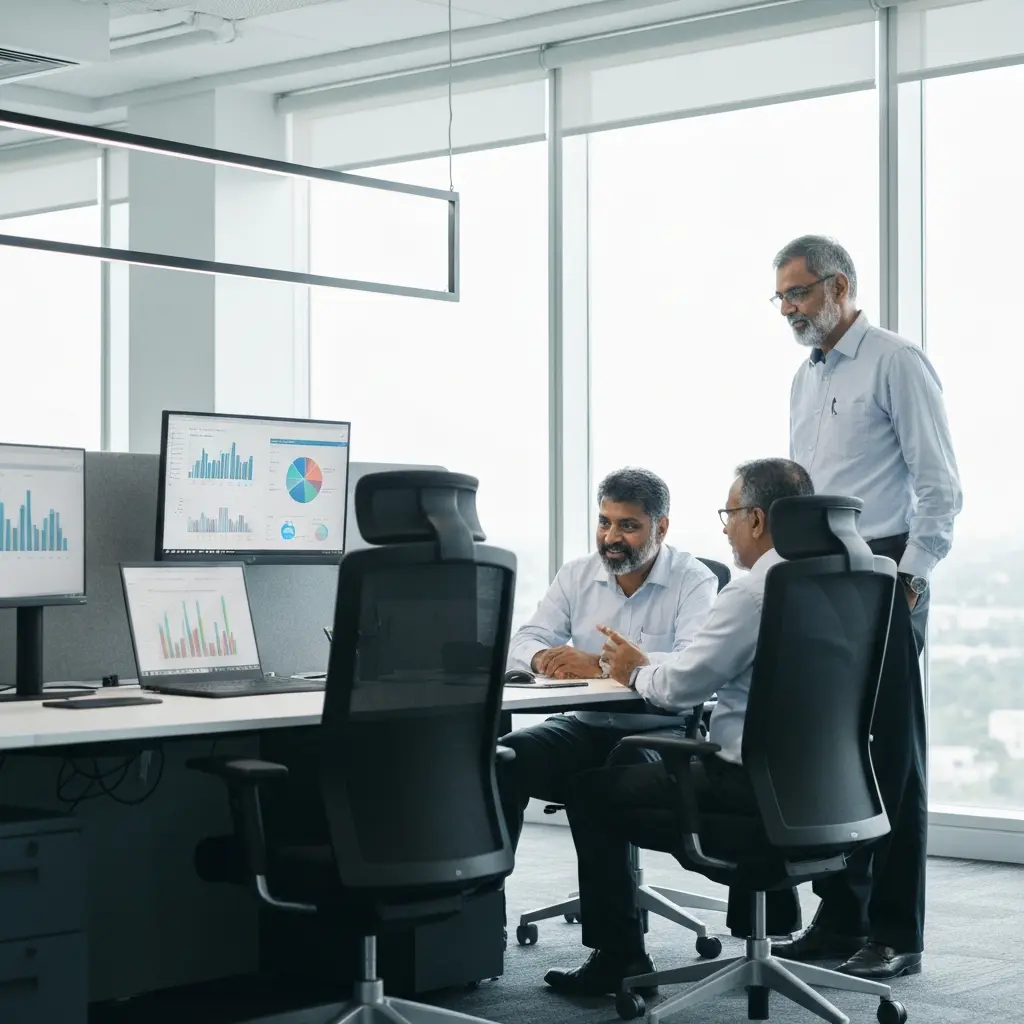
The data provides a clear warning: 64% of hybrid workers would seek new employment if their flexibility was revoked. For Indian companies competing for scarce senior talent, offering a thoughtful hybrid model with access to a premium third-party workspace is a powerful retention tool. It demonstrates trust and values output over presence.
This strategy is particularly potent for roles requiring deep concentration—such as strategy, complex coding, or financial modelling—which are often hindered by the open-plan chaos of a main office. Providing a dedicated, professional environment for this work signals investment in your top performers’ success. A report by JLL India on future workplaces emphasises that ‘choice and flexibility’ are now key components of employee value propositions, especially for experienced professionals.
[Image of The 2026 Flexibility Hierarchy]
Manager Insight: The goal isn’t to have everyone remote. It’s to design attendance with purpose. Have junior teams on-site for mentorship and culture absorption. Let your senior engineers or strategists use a focused private cabin at a flex centre two days a week. This intentional design boosts productivity across all levels.
The 2026 Outlook for India’s Workspace Market
The trends point to a continued rise of boutique, premium ‘neighbourhood hubs’ over massive city-centre floors (the average site size is now below 18,000 sq. ft.). In Chennai, expect high-quality centres in key residential and commercial corridors like Anna Nagar, Adyar, and along OMR to thrive as executive hubs. Operators will deepen revenue streams beyond desks, with virtual office services and event rentals becoming significant. For Indian businesses, this means more tailored, professional options closer to where your talent lives, reducing commute stress and increasing adoption. The flexible workspace will solidify its role not as a backup, but as a strategic, permanent part of the corporate real estate portfolio for growth-focused firms.
Key Takeaways for Indian Business Leaders
- Target Flexibility Strategically: Implement a tiered approach. Use hybrid models with premium flex space access as a key benefit for retaining and attracting critical senior talent.
- Convert Real Estate to Capex: Shift from a large, fixed lease to a variable, operational expense for executive workspaces. This protects capital and allows for agile scaling.
- Design for Synchronization: Use premium meeting and event spaces in flex centres for purposeful team gatherings, leadership offsites, and client meetings to build relationships effectively.
- Prioritise Experience: Choose an executive-focused hub that offers privacy, reliability, and a professional network, not just a desk. The quality of the environment reflects on your brand.
- Act as a Hedge: Integrating flex space is a smart financial hedge against the high cost of vacant seats in a traditional office, a risk that increases during market shifts or team restructuring.
Conclusion
The 2026 hierarchy of flexibility is a data-driven reality, creating a clear distinction between where different levels of talent work best. For the Indian entrepreneur or branch manager, this is a strategic opportunity. By adopting an executive hybrid model, you directly address the top concerns of cost control, talent retention, and operational agility. It allows you to provide a superior work environment for your most valuable players without the burden of a full-scale lease. Ultimately, it’s about choosing a workspace partner that evolves with your ambition.
For businesses in Chennai looking to harness this 2026 growth engine, the solution is built on this exact philosophy. At Crizone Business Centre, our premium private cabins and business facilities are designed to be the strategic hub for your leadership team, providing the calm efficiency and professional ecosystem that turns flexible work into a measurable competitive advantage.
Continue your workspace search
Explore the most relevant Crizone pages next
If this article is part of your Chennai workspace research, these pages help you move from reading into comparing live plans, locations, and fit.
Explore coworking plans in Chennai
Compare day passes, dedicated desks, private offices, meeting rooms, and virtual office options from one commercial hub page.
Book a day pass in Chennai
Best fit if you need occasional workspace access, a short productive break from home, or a flexible desk for a single day.
Compare dedicated desk options
A stronger fit for regular monthly use when you want a fixed seat, better routine, and predictable workspace costs.