· Business Growth & Workspace · 6 min read
2026 Office Design Trends for Indian SME Growth
Explore how the 2026 biological workspace, featuring active biophilia and circular furniture ecosystems, drives measurable productivity and ESG compliance for Indian businesses.
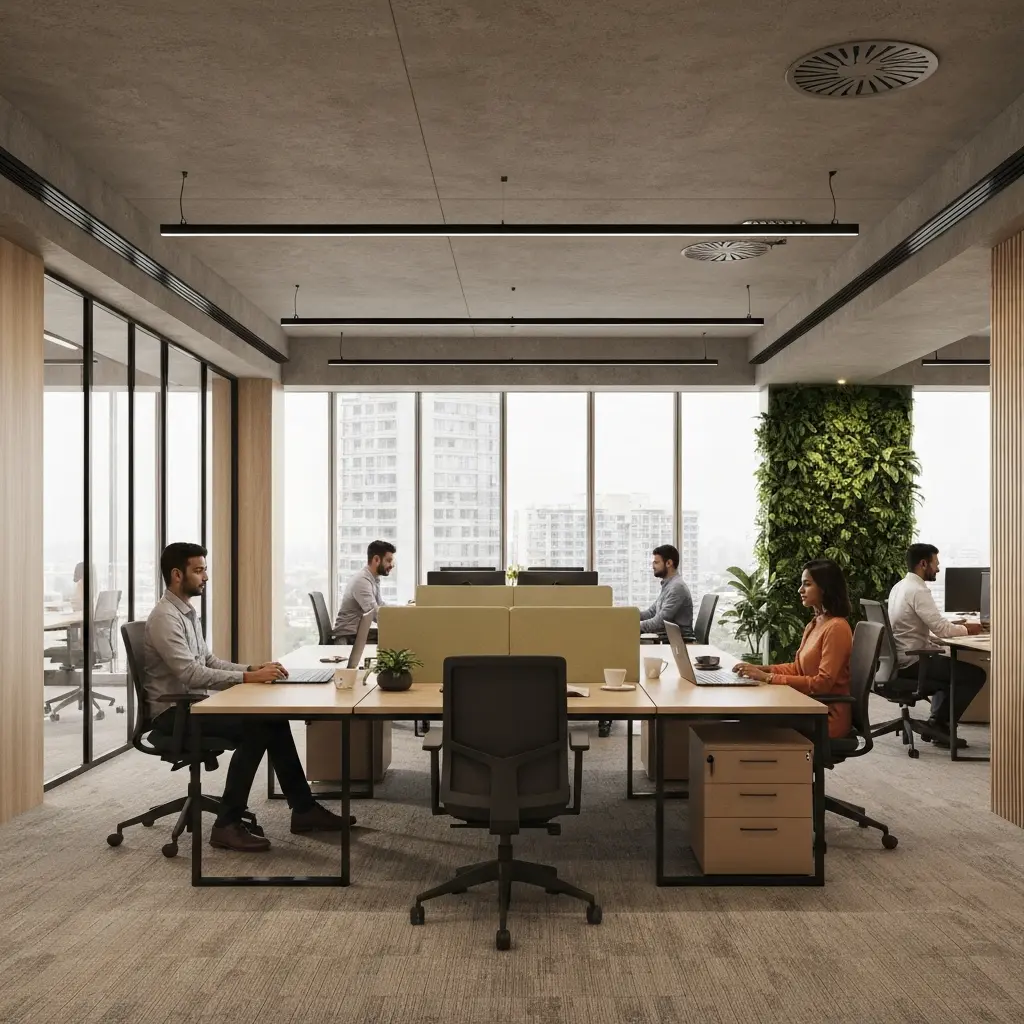
TL;DR: The 2026 biological workspace integrates nature for a 15% wellbeing boost and 6% productivity gain, while circular, modular furniture ensures agility and audit-ready sustainability. This evidence-based design is essential for Indian businesses seeking talent retention and cost-effective growth.
For the Indian entrepreneur, the workspace equation has fundamentally changed. The challenge is no longer simply securing a prestigious address on a tight budget. It is about creating a high-performance environment that actively recruits talent, reduces operational friction—from GST compliance to managing Chennai’s humidity—and directly fuels business growth. Traditional long-term leases lock you into static, costly layouts, while the demand for extreme flexibility is peaking. The 2026 office design trends represent a decisive shift from aesthetic experimentation to an evidence-based operational strategy, transforming your office from a cost centre into a growth engine.
What are the 2026 Office Design Trends?
In 2026, workspace design has evolved into a functional science called the “Biological Workspace.” It is defined by two core, interconnected principles: ‘Active Biophilia’, which strategically uses living elements like plants and natural materials to measurably improve air quality, acoustics, and cognitive function; and ‘Circular Furniture Ecosystems’, where all furnishings are modular, refurbishable assets designed for disassembly and redeployment, supporting carbon neutrality and on-demand floorplan changes. This approach turns the physical office into a dynamic, health-positive tool for business performance.
Why is a ‘Biological’ Workspace a Strategic Investment for Indian Businesses?
The metrics are clear: businesses cannot afford to view office design as mere decoration. For an Indian SME, the direct link between employee wellbeing, productivity, and the bottom line is paramount, especially in competitive talent markets like Chennai or Bengaluru. A workspace that demonstrably cares for its people becomes a powerful recruitment and retention tool.
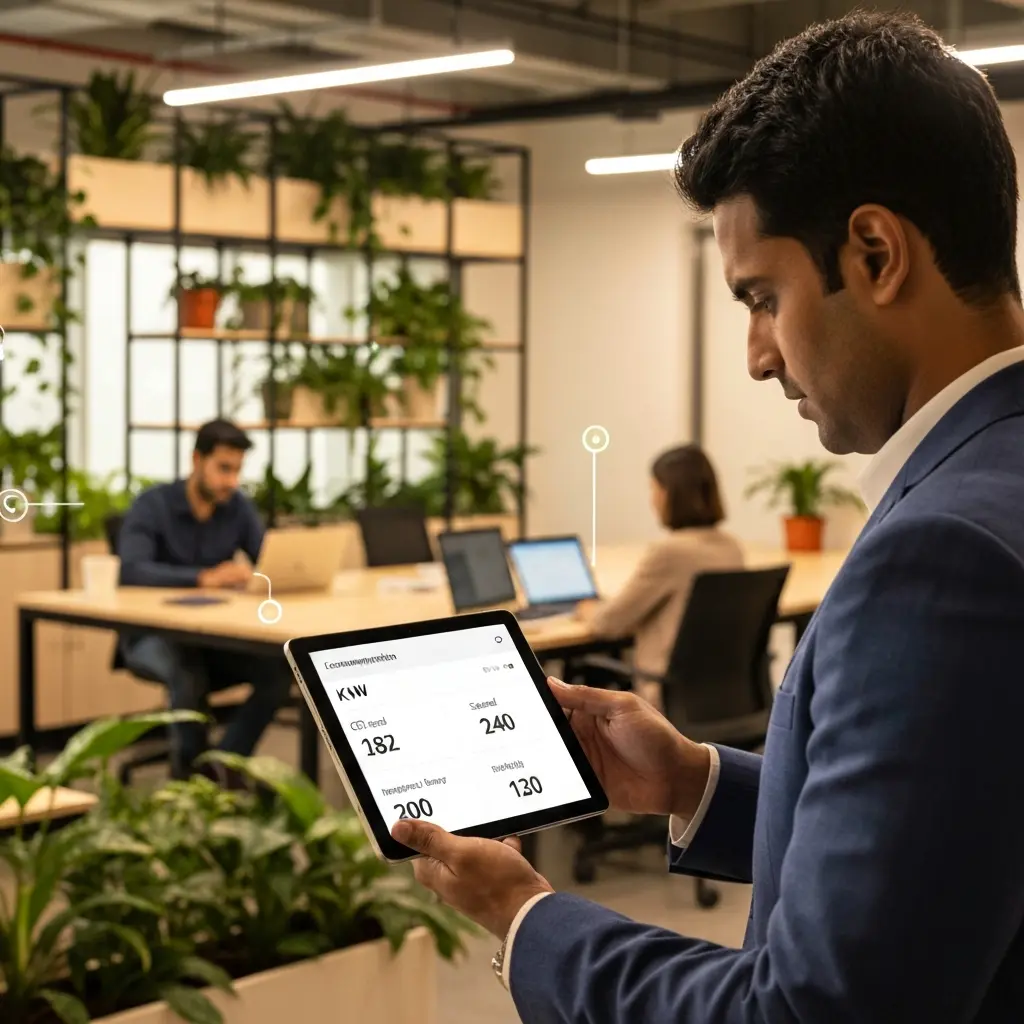
A 2026 study shows that ‘Tactile Naturalism’—proximate, touchable natural elements—correlates with a 15% increase in reported wellbeing and a 6% boost in productivity. In practical terms, this means fewer sick days, higher quality output, and a more resilient team during demanding project cycles or festive season crunches. Furthermore, ‘lighting recipes’ that mimic natural circadian rhythms help combat afternoon fatigue, a common challenge in our work culture, keeping teams energised during peak collaboration hours.
Manager Insight: “Think of air-purifying plants not as décor, but as silent HR partners. They work 24/7 to reduce cognitive stress and absenteeism, paying for themselves in sustained team output.”
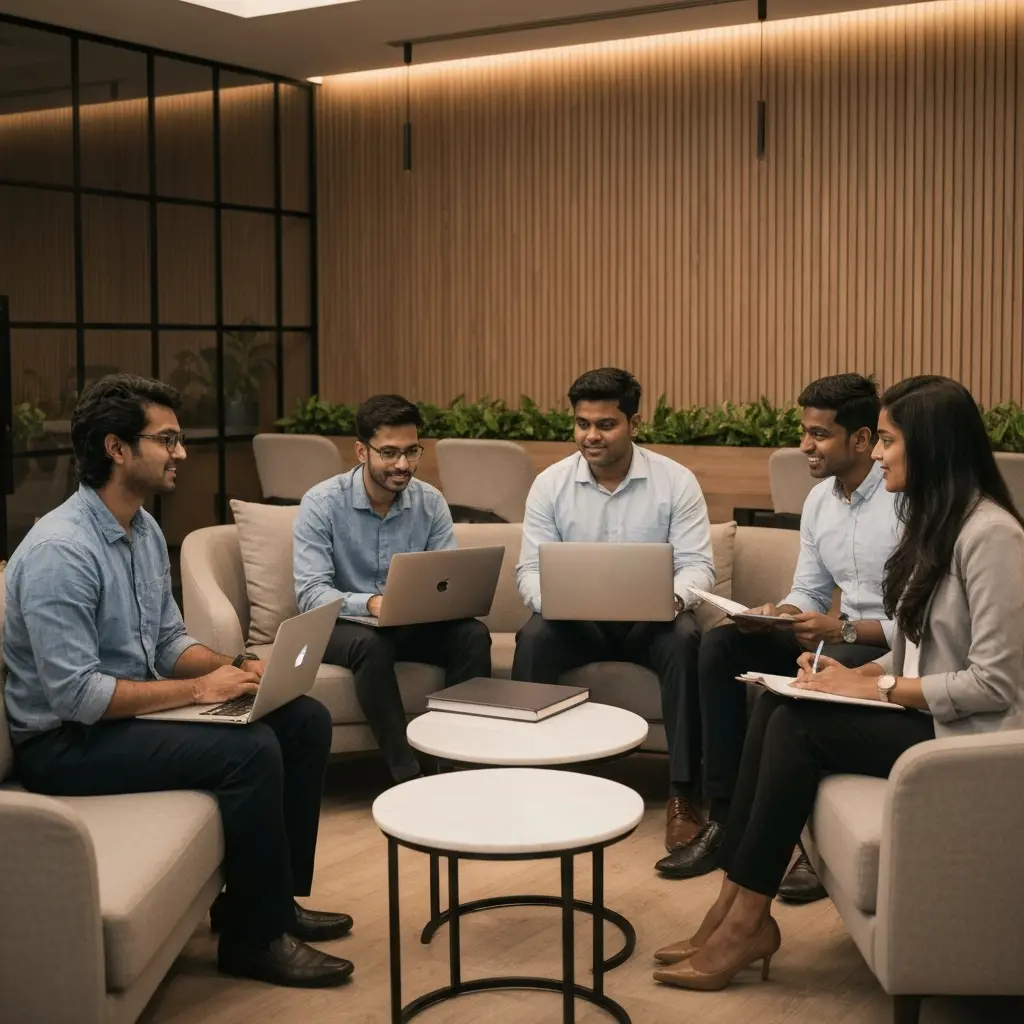
This human-centric focus directly counters the drain of long commutes on OMR or in Delhi-NCR. By offering a sanctuary that actively restores employees, you increase the tangible value of their in-office time, making the commute worthwhile and strengthening company culture.
[Image of a cost comparison table for traditional vs. modular office setups in Chennai]
How Do Circular Furniture Ecosystems Drive Agility and ESG Compliance?
The era of buying static, monolithic desks is over. For growth-focused Indian companies, capital preservation and operational agility are critical. The 2026 standard is the ‘Modular Ecosystem’—reconfigurable frames, shared storage units, and plug-and-play panels that allow a layout to be transformed in minutes. This is the physical answer to enterprise demand for flexibility, where 59% of companies expanding their footprint choose flexible workspace models.
Consider the financial implication. A traditional office fit-out for a 10-person team in Chennai represents a significant sunk capital cost. If your team grows to 15 or shifts to a hybrid model, you face costly renovation or wasted space. A modular ecosystem eliminates this risk, allowing you to pivot without capital expenditure on new furniture.
| Cost Factor | Traditional Chennai Office Lease | 2026 Flexible/Modular Ecosystem |
|---|---|---|
| Upfront Furniture Cost | ₹ 5-8 Lakhs (sunk cost) | Minimal to None (inclusive in membership) |
| Layout Change Cost | ₹ 1-2 Lakhs + downtime | ₹ 0 (reconfigured in-house) |
| Asset Depreciation | High (obsolete in 5-7 years) | Near Zero (refurbished & redeployed) |
| Sustainability Audit | Complex, often non-compliant | Inherently Compliant (take-back schemes, low-VOC) |
Sustainability has shifted from marketing to mandatory. ‘Audit-ready’ specifications now require verified embodied carbon data and manufacturer take-back schemes. For Indian businesses facing increasing scrutiny from global partners and investors, sourcing refurbished, high-quality furniture is a primary ESG strategy, not a cost-saving niche. It demonstrates fiscal and environmental responsibility in a single decision.
Is Your Current Workspace Designed for ‘Active Ergonomics’ and ‘Resimercial 2.0’?
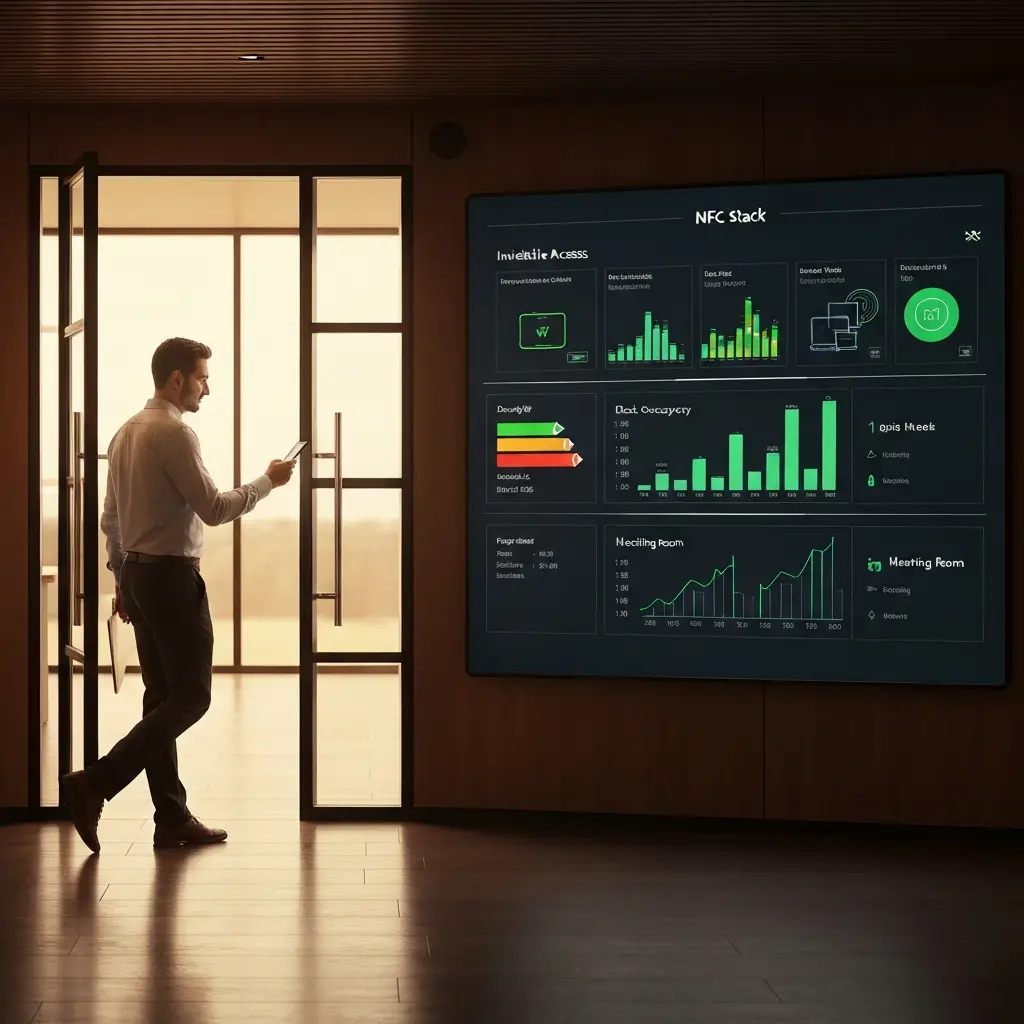
The baseline for furniture has been raised. ‘Active Ergonomics’ means chairs with posture sensors and workstations with integrated power/data modules that eliminate the cable clutter and tripping hazards common in high-traffic areas. This isn’t a luxury; it reduces physical strain and maintains a professional, safe environment for your team and clients.
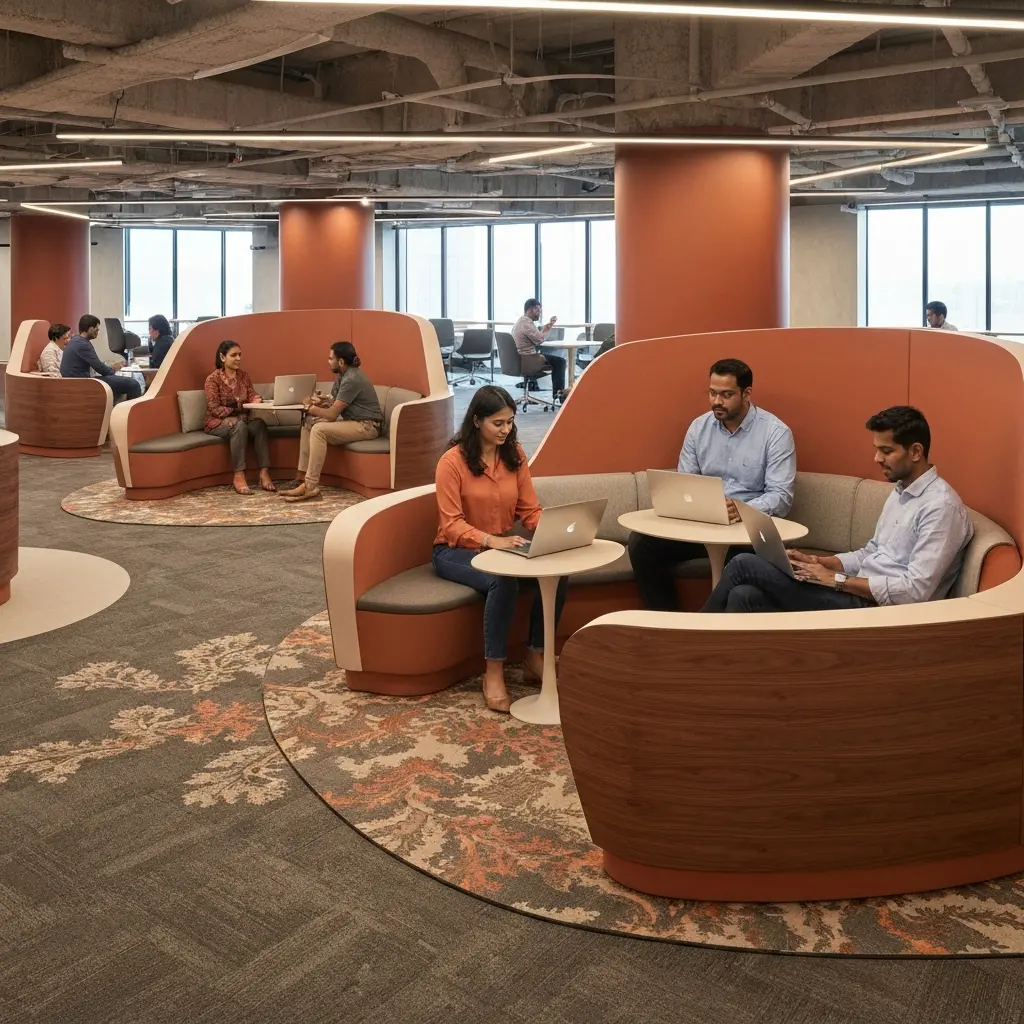
This functionality is wrapped in the ‘Resimercial 2.0’ aesthetic. Cold, corporate glass and steel are out, replaced by warm, high-performance materials. Think wood grains, durable upholstery in moss green and terracotta tones—colours proven to reduce cognitive stress. This creates a welcoming, calm, yet highly professional atmosphere that makes a strong impression on visiting clients and helps your team focus deeply, moving beyond the sterile environments of the past.
Crizone Pro Tip: When evaluating a workspace, don’t just sit on the chair—ask about its ergonomic philosophy and the sustainability credentials of the furniture. The right partner will have clear answers on embodied carbon and product lifecycles.
Globally, the commercial furniture sector is surging towards $110 billion by 2033, driven precisely by this demand for ergonomic and sustainable solutions. Indian businesses adopting these principles are aligning with a global standard of operational excellence.
The 2026 Outlook for the Indian Workspace Market
The Indian flexible workspace market will continue its rapid consolidation around quality and proven outcomes. We predict that by late 2026, premium operators will prominently market third-party verified data on indoor air quality, acoustic performance, and wellbeing metrics, much like a SEBI filing. The ‘amenities war’ will end, replaced by a ‘performance guarantee’ on the workspace environment itself. Furthermore, with the push for ESG compliance, furniture and fit-out specifications that include embodied carbon labels and certified circular sourcing will become a standard clause in corporate real estate RFPs, even for SMEs seeking Grade-A spaces in Chennai, Mumbai, and Bangalore.
Key Takeaways for Indian Business Leaders
- The 2026 biological workspace delivers measurable returns: target a 6% productivity lift and 15% wellbeing improvement through evidence-based biophilic design.
- Adopt modular furniture ecosystems to convert capital expenditure (CapEx) into operational expenditure (OpEx), ensuring your office can scale and pivot with zero asset risk.
- Prioritise ‘audit-ready’ sustainability by choosing workspaces with verified circular economy practices; this is now a core component of corporate governance.
- ‘Active Ergonomics’ and ‘Resimercial 2.0’ design are non-negotiable for talent retention and creating a professional, stress-reducing client-facing environment.
- Your choice of workspace is a direct strategic investment in growth, agility, and competitive advantage, not merely a real estate decision.
Conclusion
The evolution of the office into a biological, circular system is the most significant shift in workplace strategy since the advent of the open plan. For the Indian entrepreneur, freelancer, or branch manager, this isn’t about following a trend—it’s about adopting a superior operational model that reduces cost, future-proofs your investment, and actively enhances your most valuable asset: your people. The workspace has become a strategic growth partner.
We invite you to experience this future at Crizone Business Centre in Chennai. Our spaces are designed from the ground up with these 2026 principles, offering the high-performance, sustainable, and calmly efficient environment your business needs to thrive. Let’s discuss how your workspace can become your growth partner.
Continue your workspace search
Explore the most relevant Crizone pages next
If this article is part of your Chennai workspace research, these pages help you move from reading into comparing live plans, locations, and fit.
Explore coworking plans in Chennai
Compare day passes, dedicated desks, private offices, meeting rooms, and virtual office options from one commercial hub page.
Book a day pass in Chennai
Best fit if you need occasional workspace access, a short productive break from home, or a flexible desk for a single day.
Compare dedicated desk options
A stronger fit for regular monthly use when you want a fixed seat, better routine, and predictable workspace costs.