· Business Growth & Workspace · 6 min read
Matter 1.4 Smart Office: The Invisible Tech Stack Driving 2026 Growth
Explore how universal interoperability, NFC keyless entry, and AI-powered facility management are redefining the premium coworking experience in 2026 for Indian businesses.
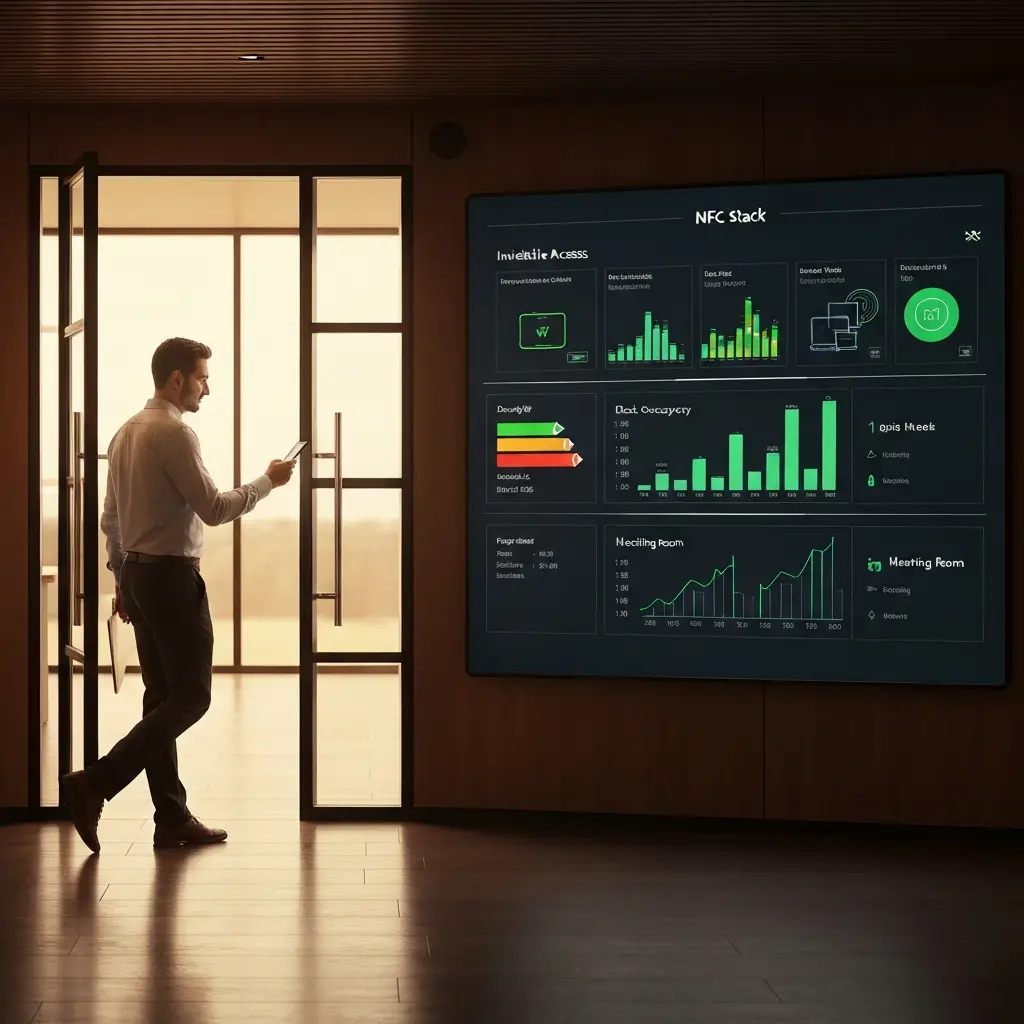
TL;DR: By 2026, the premium coworking standard shifts from disparate apps to an ‘invisible’ interoperable tech stack. This ecosystem, powered by standards like Matter 1.4, delivers seamless access via NFC, AI-driven predictive maintenance, and automated compliance, letting Indian founders focus purely on business growth.
Introduction: The New Growth Imperative
For the modern Indian founder, growth is increasingly tied to operational efficiency and talent attraction. The traditional office lease, with its fixed costs and manual management, has become a significant bottleneck. Businesses now demand flexibility not just in space, but in the very technology that powers their workday. The premium flexible workspace sector is responding by moving beyond simple Wi-Fi and coffee to a new gold standard: a seamlessly integrated, Matter 1.4 smart office environment. This shift from clunky proprietary apps to universal interoperability is fundamentally changing how businesses experience and leverage their workspace.
What is a ‘Matter 1.4 Smart Office’ Ecosystem?
It is a unified, interoperable technology environment within a workspace where all smart devices—from lights and AC to door locks and sensors—communicate seamlessly across brands. This is enabled by the Matter 1.4 protocol, which acts as a universal language. For a member, this means control and automation happen effortlessly, often invisibly, through their native phone wallet or a single intuitive app, eliminating the frustration of multiple disconnected systems.
From Friction to Flow: The User Experience Revolution
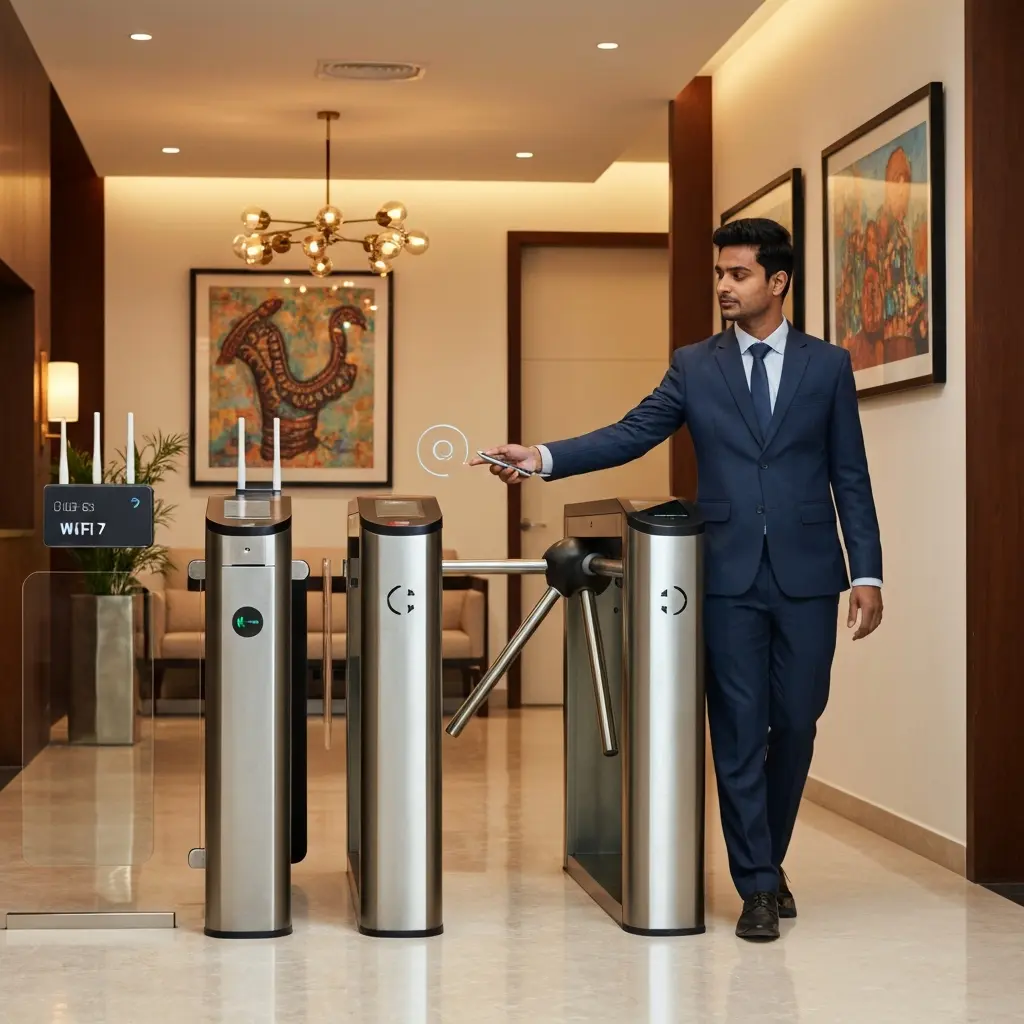
The most immediate impact for Chennai’s professionals is the death of the clunky door-unlocking app. With 70% of premium spaces adopting ‘Invisible Access’, entry is now a simple tap of a phone or smartwatch using native NFC in Apple or Google Wallet. This extends to meeting rooms, printers, and secure lockers. The underlying Matter 1.4 standard ensures this works reliably, whether the building’s hardware is from one brand or ten.
Crizone Insight: This invisible tech layer is about reclaiming time. Skipping the search for a proprietary app or a physical keycard translates directly into a calmer, more productive start to the day for every team member.
For operators, this shift is equally transformative. Multi-Admin Handover, a feature of Matter 1.4, allows a workspace’s custom app to control devices for bookings without interfering with a member’s personal smart home setup. This creates a cohesive, branded experience without walling users into a closed ecosystem.
AI, Predictability, and The End of Surprise Downtime
Beyond access, the integrated tech stack brings unprecedented operational intelligence. AI-powered systems now analyse real-time data from a network of IoT sensors to predict failures before they happen. This leads to a documented 35–45% reduction in unplanned equipment downtime. In a Chennai summer, a predictive alert for AC filter maintenance is not just a convenience; it’s a direct safeguard against productivity loss.
Furthermore, this data uncovers ‘hidden revenue’. Automated sensor-to-billing systems have identified that an average of 15% of actual meeting room or desk usage previously went unbilled due to manual tracking errors. For a growing SME, this translates into more accurate cost recovery and operational insights.
| Traditional Office Tech Pain Point | 2026 Interoperable Tech Stack Solution | Impact for Indian Business |
|---|---|---|
| Multiple apps for entry, booking, & services | Single, native platform or wallet integration | Saves employee time, reduces onboarding friction. |
| Reactive facility maintenance (AC breaks) | AI-powered predictive maintenance alerts | Prevents operational disruption, especially critical in humid climates. |
| Manual usage logging & billing errors | Automated sensor-to-invoice triggers | Ensures accurate billing, uncovers 15%+ previously lost revenue. |
| Manual ESG/compliance data collection | Automated real-time energy & occupancy reporting | Meets corporate client mandates (72% of Fortune 500 require it). |
How Does This Directly Fuel an Indian SME’s Growth?
This technological leap is not an IT luxury; it’s a strategic growth lever. First, it drastically reduces the administrative burden on founders and office managers. Next-generation coworking management software trends show platforms automating localized billing reconciliation across GST codes and tax jurisdictions, saving operators over 15 hours per week—time that can be reinvested in core business activities.
Second, it future-proofs your workspace choice. With 55% of the smart office market’s growth driven by retrofitting older buildings, the plug-and-play nature of Matter-certified devices means your chosen centre can continuously upgrade without disruptive renovations. Finally, it directly addresses enterprise client requirements. The mandate for real-time ESG and carbon data is now a standard clause for large corporates taking flex space.
Growth Tip for Founders: When evaluating a workspace, ask not just about the square footage, but about the tech stack’s interoperability. Can you control your environment from your phone? Does the operator provide data on your team’s space utilization? This data is invaluable for planning your next growth phase.
A report by JLL India on Future of Work consistently highlights that tenant decision-making is increasingly driven by digital experience and wellness, with smart, responsive environments being a key differentiator for talent attraction and retention.
The 2026 Outlook for Chennai’s Workspace Market
By the end of 2026, the divide between ‘smart’ and ‘standard’ workspaces will be stark. The coworking management software market, a ₹18,000+ crore industry globally, will see its advanced features—like AI-powered churn prediction flagging disengaged members 30 days early—become table stakes for premium operators. In Chennai, centres that offer this seamless, data-driven environment will attract the most dynamic growth-stage companies and established corporate branches, turning real-time building performance into a competitive lease driver.
Key Takeaways
- Seamless Access is Non-Negotiable: Prioritize spaces offering NFC/keyless entry via your phone’s native wallet, eliminating app clutter.
- Demand Predictive Intelligence: Choose a provider whose AI predictive maintenance facility management system proactively prevents issues, ensuring operational continuity.
- Value Data Transparency: Your workspace should provide insights into utilization and environmental impact, aiding your own ESG reporting and planning.
- Think Beyond the Lease: The right interoperable workplace tech stack is a productivity tool that scales with your team, reducing administrative overhead.
- Future-Proof Your Choice: Opt for centres built on open standards like Matter 1.4, guaranteeing easier upgrades and integration with your own devices.
Conclusion
The era of tolerating fragmented, proprietary workplace technology is over. The 2026 gold standard is an invisible, interoperable ecosystem that removes friction, provides predictive intelligence, and delivers tangible business intelligence. This allows leaders to focus entirely on their core mission, not on managing their office. For businesses in Chennai seeking a partner in this new paradigm, Crizone Business Centre is architecting workspaces where this seamless, intelligent technology is thoughtfully integrated, empowering you to grow without the overhead.
Continue your workspace search
Explore the most relevant Crizone pages next
If this article is part of your Chennai workspace research, these pages help you move from reading into comparing live plans, locations, and fit.
Explore coworking plans in Chennai
Compare day passes, dedicated desks, private offices, meeting rooms, and virtual office options from one commercial hub page.
Book a day pass in Chennai
Best fit if you need occasional workspace access, a short productive break from home, or a flexible desk for a single day.
Compare dedicated desk options
A stronger fit for regular monthly use when you want a fixed seat, better routine, and predictable workspace costs.