· Business Growth & Workspace · 6 min read
Coworking Management Software 2026 Drives Indian Business Growth
Explore how AI-orchestrated IoT, frictionless access, and predictive systems are transforming flexible workspaces into strategic growth assets for Indian businesses.
TL;DR: By 2026, flexible workspaces will be AI-orchestrated environments. Smart IoT systems automate costs and comfort, while frictionless identity management via mobile wallets streamlines access. This tech stack is no longer a luxury but a core growth lever for Indian businesses seeking efficiency, security, and scalability.
Introduction
The modern Indian business leader faces a complex calculus: balancing the mandate for a physical presence with relentless pressure on operational costs and talent satisfaction. Traditional office leases, with their inflexible terms and significant capex, lock capital that could fuel growth. Simultaneously, as global firms enforce hybrid return-to-office policies, the demand for efficient, tech-enabled satellite offices in India has surged. This creates a unique opportunity. The workspace itself is transforming from a passive cost centre into an active, intelligent platform for business performance. The catalyst for this shift is advanced Coworking Management Software 2026, which integrates AI, IoT, and seamless user experience to create what industry leaders now call ‘orchestrated environments.‘
What is Coworking Management Software 2026?
Coworking Management Software in 2026 represents the evolution from basic booking tools to an AI-driven operational layer that orchestrates every aspect of a smart workspace. It integrates IoT sensors, building systems, and user identity platforms to create a responsive, efficient, and secure environment. This software automates facility management, optimises space utilisation in real-time, enables frictionless access via smartphones, and provides personalised data dashboards, all while ensuring enterprise-grade security for sensitive corporate data in shared settings.
How Hyper-Automation Unlocks Capital for Growth
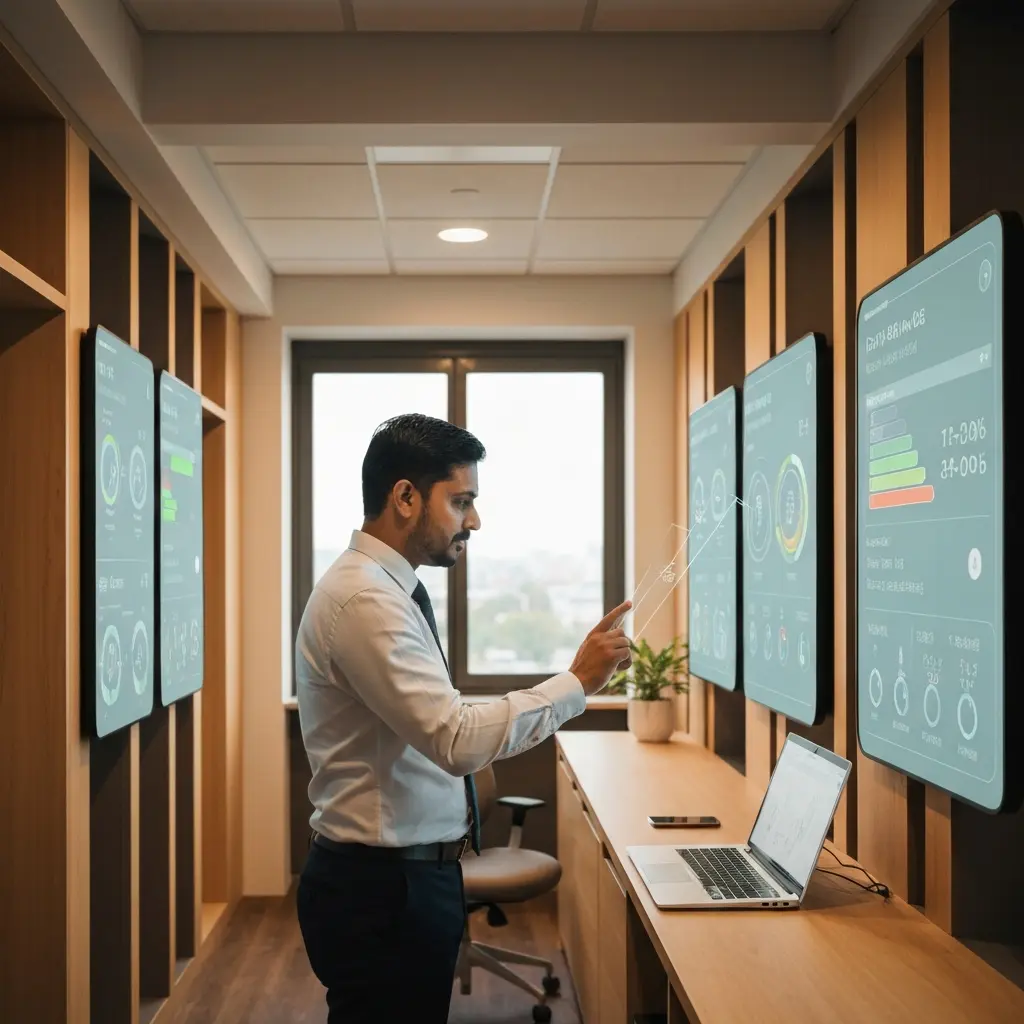
For an Indian SME, every rupee saved on overhead is capital reinvested into product development, marketing, or talent. Hyper-automated workspaces directly impact the bottom line through intelligent resource management. AI-powered occupancy platforms identify underutilised areas, allowing operators to design spaces 32% more efficiently—savings often passed on through competitive pricing. Predictive maintenance algorithms reduce equipment downtime by 35%, eliminating the productivity drain and repair costs of a failed AC unit during Chennai’s peak summer.
Most significantly, smart building automation, which syncs HVAC and lighting with real-time occupancy, delivers tangible savings. While global data points to $0.50 per sq. ft., in the Indian context, this translates to direct reductions in soaring commercial electricity tariffs.
Crizone Pro Tip: When evaluating a workspace, ask about their building management system. True efficiency comes from IoT sensors that adjust climate control per room, not a centralised switch for the entire floor.
| Cost Factor | Traditional Chennai Office (1,000 sq. ft.) | Hyper-Automated Flexible Workspace (10 Dedicated Desks) |
|---|---|---|
| Monthly Rent + Maintenance | ₹ 2.5 - 3.5 Lakhs (fixed) | ₹ 1.8 - 2.5 Lakhs (all-inclusive, scalable) |
| Security Deposit | ₹ 10 - 15 Lakhs (locked capital) | ₹ 1 - 2 Lakhs (often refundable) |
| IT/Infrastructure Capex | High (servers, routers, cabling) | Near Zero (enterprise-grade provided) |
| Operational Overhead (Utilities, FM) | Variable, management intensive | Predictable, managed by AI systems |
Is “Frictionless Identity” the New Standard for Productivity?
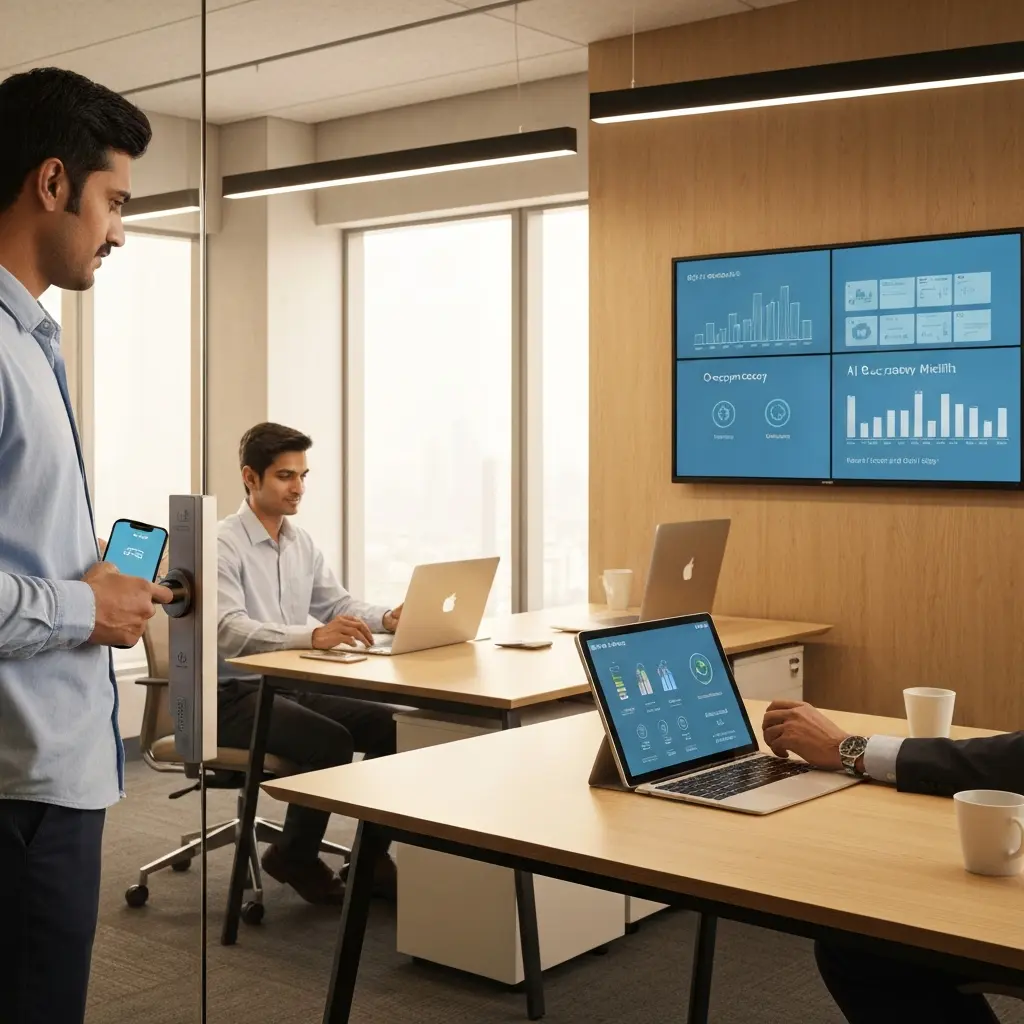
The daily friction of locating a keycard, swiping a turnstile, or booking a meeting room through a clunky app cumulatively erodes focus. By 2026, the standard has moved beyond keycards to true frictionless identity. Access credentials now live securely in Apple or Google Wallets, and the latest systems use Ultra-Wideband (UWB) for hands-free, proximity-based entry. This eliminates app-toggling and physical tokens, creating a seamless flow from the metro station to your workstation.
For a team, this means no more administrative hassle managing access for new hires or clients. For branch managers of large corporates using flex spaces, it enables secure, audit-ready access control for teams of 100+, integrating with corporate IT policies. This shift is foundational to the ‘orchestrated environment,’ where the workspace anticipates and adapts to the member, not the other way around.
Manager Insight: “The five minutes saved per employee on access and booking friction translates to hundreds of productive hours annually for a midsize team. In a growth phase, that focus is invaluable.”
[Image of a professional’s smartphone screen showing a digital access pass in Apple Wallet, hovering near a sleek door reader in a Chennai office lobby.]
Why is Enterprise-Grade Security Non-Negotiable in Flexible Space?
As reported by JLL, the adoption of flex spaces by Fortune 100 firms for satellite teams has made robust security paramount. When a financial services firm or a pharma research team operates from a shared environment, the network and IoT infrastructure must meet corporate compliance standards. PropTech Automation in 2026 mandates Zero-Trust Architecture for Wi-Fi and IoT devices. This security model assumes no implicit trust, verifying every device and user request regardless of location.
For an Indian startup handling sensitive customer data or a freelancer working with international clients, this provides critical peace of mind. It ensures that smart locks, occupancy sensors, and building systems cannot become vectors for a data breach. The workspace provider’s investment in this architecture signals a commitment to professional-grade operations, making it a viable extension of your corporate HQ.
The 2026 Outlook for India’s Workspace Market
The Indian flexible workspace market will rapidly absorb these global trends, with local nuances. We anticipate a sharp rise in ‘hub-and-spoke’ models by large Indian corporates, using automated satellite offices on strategic corridors like Chennai’s OMR or Delhi’s Gurugram to cut commute times. Niche, industry-specific spaces (e.g., for deep-tech or creative media) will grow, requiring specialised IoT integrations. Furthermore, AI-driven dynamic pricing will become more prevalent, offering cost advantages for off-peak usage, which can benefit startups with flexible schedules. The clear winner will be the business that treats its workspace not as real estate, but as a dynamic technology platform for its team.
Key Takeaways
- View workspace as a tech platform: Prioritise providers whose Smart Office IoT Trends and AI management directly reduce your operational burden and cost.
- Demand seamless access: Frictionless entry via mobile wallets is now a baseline productivity tool, not a futuristic feature.
- Verify security protocols: Ensure any flexible workspace employs Zero-Trust security principles to protect your business data.
- Leverage data for decisions: Choose spaces that provide you with utilisation insights, helping you right-size your team’s footprint.
- Plan for enterprise needs: Even if you’re an SME today, select a workspace partner whose systems can scale with you to support larger, security-conscious teams.
Conclusion
The hyper-automated workspace of 2026 is defined by intelligence, efficiency, and seamless experience. It represents a fundamental shift from managing space to orchestrating an environment that actively supports business objectives. For the ambitious Indian entrepreneur, freelancer, or branch manager, this evolution offers a powerful tool to optimise costs, enhance productivity, and scale with agility. This is precisely the future we are building at Crizone Business Centre, where our integrated systems and calm efficiency are designed to be the growth partner for Chennai’s most forward-thinking businesses.
Continue your workspace search
Explore the most relevant Crizone pages next
If this article is part of your Chennai workspace research, these pages help you move from reading into comparing live plans, locations, and fit.
Explore coworking plans in Chennai
Compare day passes, dedicated desks, private offices, meeting rooms, and virtual office options from one commercial hub page.
Book a day pass in Chennai
Best fit if you need occasional workspace access, a short productive break from home, or a flexible desk for a single day.
Compare dedicated desk options
A stronger fit for regular monthly use when you want a fixed seat, better routine, and predictable workspace costs.