· Business Growth & Workspace · 6 min read
Bio-Circular Design: A Strategic Guide for 2026 Workspace ROI
Bio-Circular Design merges systemic biophilia with circular economy principles to create healthier, cost-effective workspaces. Learn how this 2026 paradigm shift benefits Indian SMEs.
TL;DR: By 2026, a workspace is a growth tool, not just an address. Bio-Circular Design strategically merges living systems (systemic biophilia) with waste-free resource loops (circular economy) to cut operational costs, boost team well-being, and future-proof your business. It’s the new benchmark for smart, sustainable growth in India.
For the Indian entrepreneur, the traditional office is a complex liability. Beyond the fixed rent of ₹2-5 lakhs per month on Chennai’s OMR, it locks you into long-term commitments, inflexible layouts, and spiraling operational costs for AC, maintenance, and furniture that depreciates rapidly. Meanwhile, a permanent hybrid model demands a ‘destination’ workspace that attracts talent and fosters collaboration—a difficult balance for an SME managing cash flow. The 2026 solution is not just flexible space, but intelligent, adaptive infrastructure. This is where Bio-Circular Design emerges as a critical operational strategy, transforming your workspace from a cost centre into a resilient engine for growth.
What is Bio-Circular Design?
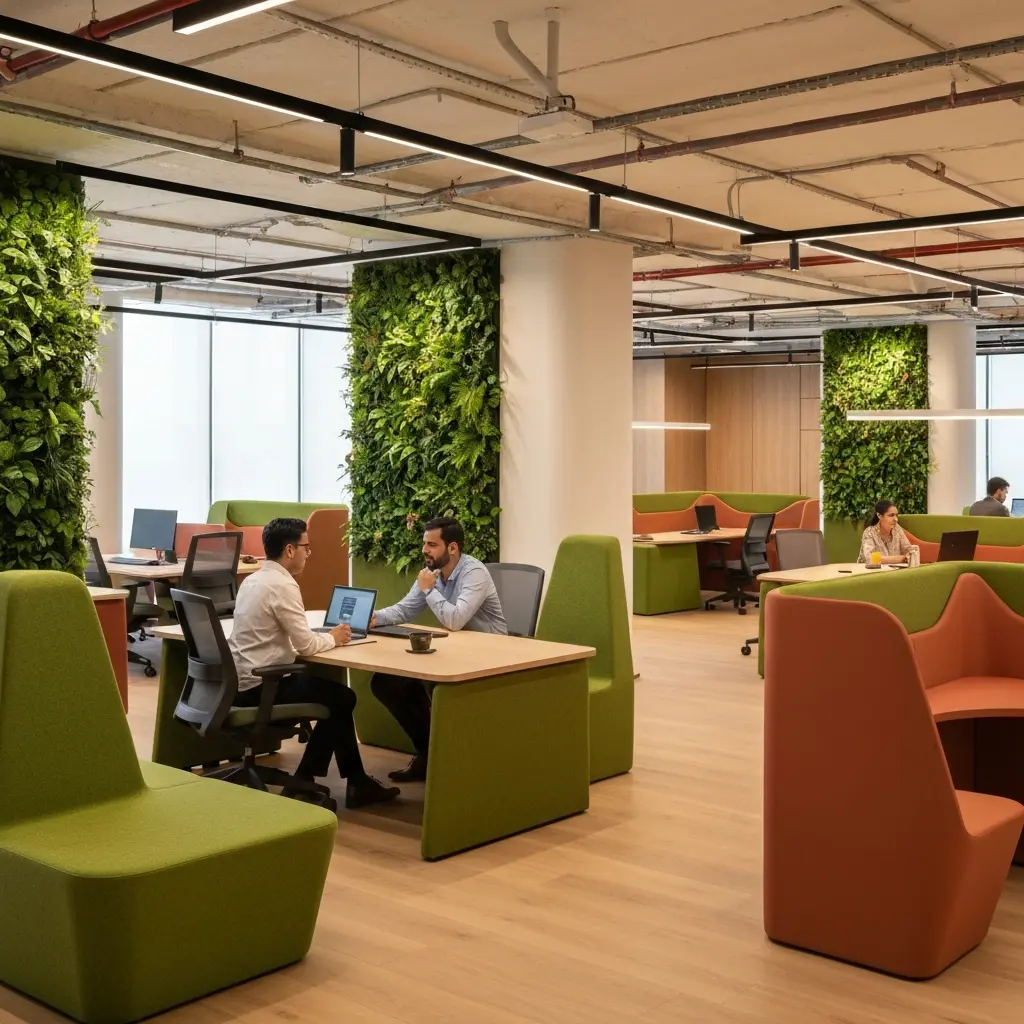
Bio-Circular Design is the integrated application of two core principles to workspace strategy. First, Systemic Biophilia: the deep integration of nature into a building’s operational systems for air purification, acoustics, and well-being, not just decoration. Second, the Circular Economy: a resource model where all materials, especially office furniture and fit-outs, are designed for disassembly, reuse, or safe return to the biosphere, eliminating waste. Together, they create a workspace that is actively restorative for both people and the planet while being financially prudent.
How Does Bio-Circular Design Directly Impact Your Bottom Line?
For an Indian SME, every rupee saved on non-core operations is capital for innovation and scaling. Bio-Circular Design addresses the largest fixed costs: fit-out (CAPEX) and utilities (OPEX). The global sustainable office furniture market, valued at over ₹4.5 lakh crore, is driven by circular systems where manufacturers offer take-back programs. This turns a depreciating asset—traditional laminate desks—into a service, dramatically lowering your long-term capital expenditure.
Crizone Pro Tip: When evaluating a workspace, ask about their furniture procurement policy. A partner invested in circular systems demonstrates lower long-term membership fees and a commitment to your financial sustainability.
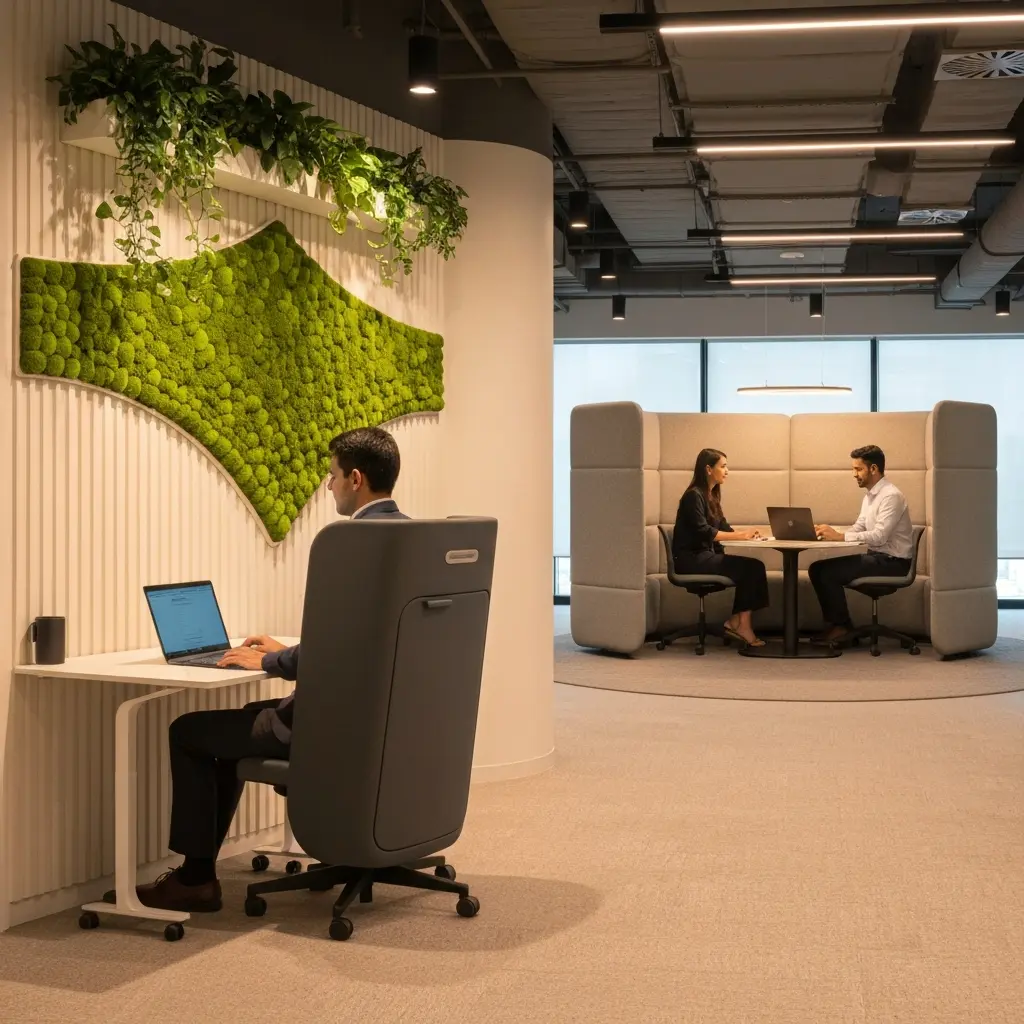
Operational savings are equally significant. Systemic biophilia uses living green walls as natural air filters and humidifiers, which can reduce the load on energy-intensive HVAC systems, a critical factor in Chennai’s climate. Combined with smart, sensor-driven environments that adjust lighting and AC based on real-time occupancy—reducing energy costs by up to 30%—the model creates a predictable, lower operational overhead.
| Cost Factor | Traditional Chennai Office | Bio-Circular Coworking Space |
|---|---|---|
| Fit-out CAPEX | High upfront cost (₹15-30 Lakhs for 10 desks), depreciates to zero. | Low/No upfront cost. Furniture-as-a-service model with refurbishment cycles. |
| Monthly OPEX (Utilities) | High & volatile (₹50k-₹1.5 Lakhs), subject to AC usage and tariff hikes. | Predictable, often inclusive cost. Smart systems & biophilia reduce base consumption. |
| Compliance & Maintenance | Owner’s responsibility (GST, TDS, repairs). Time and resource intensive. | Managed by the operator. Frees your team to focus on core business. |
Is Your Workspace Designed for the 2026 Hybrid Workforce?
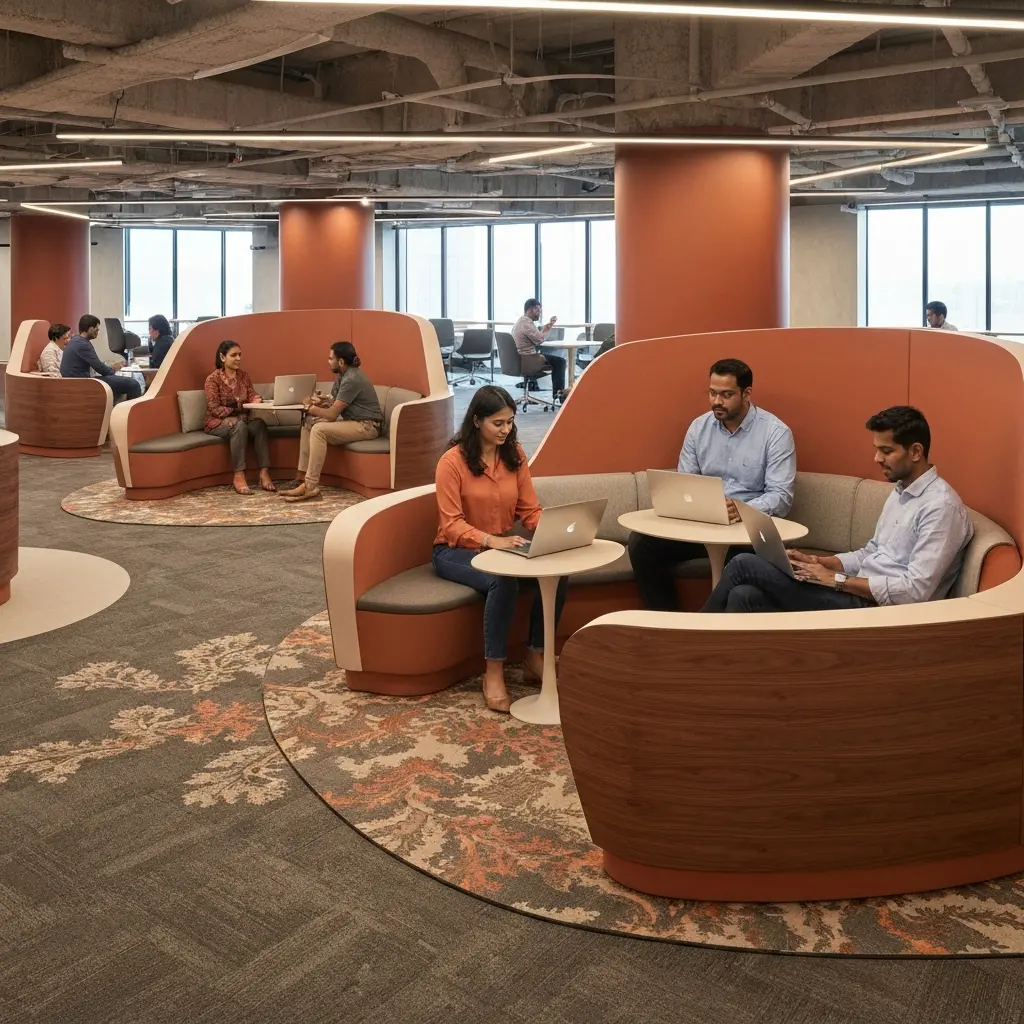
With over 28% of the global workforce in a stable hybrid model, the 2026 floor plan has fundamentally shifted to a 60/40 ratio favouring collaboration. This isn’t about adding a beanbag; it’s a strategic rebalancing for productivity. The mature trend of ‘Workspitality’ hides ergonomic support within soft, sculptural furniture that increases spontaneous interaction by 15-20%. This design actively counters the isolation of remote work, making the office a destination for the culture and connection that drives innovation.
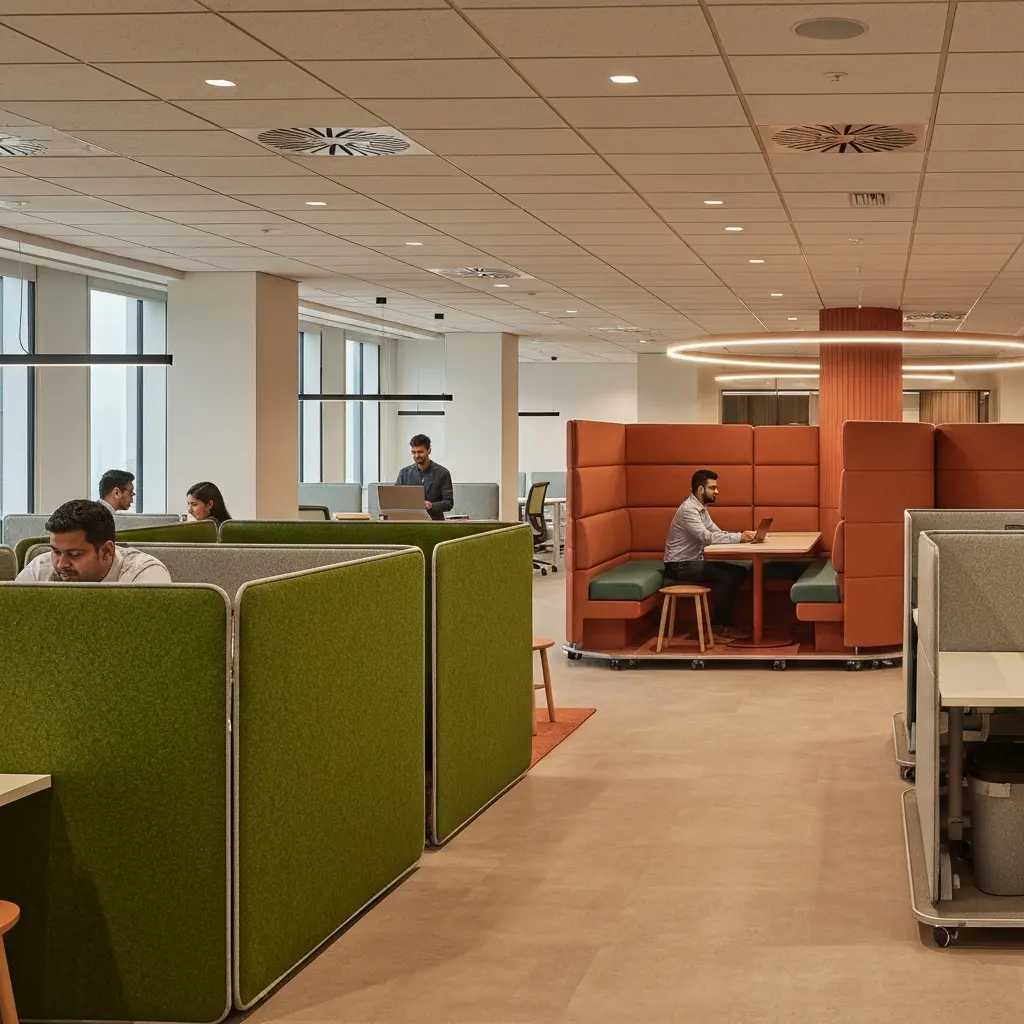
Furthermore, to support this mix of focus and collaboration, leading spaces now allocate up to 15% of their area to integrated acoustic pods and quiet zones. This is essential for the rise of ‘virtual-first’ meetings, ensuring one video call doesn’t disrupt an entire open-plan area. For an Indian team balancing deep-work tasks with client calls across time zones, this acoustic infrastructure is not a luxury—it’s a baseline requirement for professional output.
[Image of a 2026 Hybrid Workspace Floor Plan] Diagram: A sample 2026 workspace floor plan showing a 60/40 split between collaborative ‘third spaces’ (huddle rooms, lounge cafes) and focus areas (acoustic pods, quiet zones), with amenities strategically placed to encourage movement.
Why Material Innovation and Aesthetic Are Now Strategic Choices?
The materials surrounding your team have a direct impact on their health and cognitive performance. In 2026, high-performance composites from rice husk and sugarcane bagasse are replacing standard laminates. These bio-based materials are low-VOC (improving indoor air quality) and are carbon-sequestering, turning your fit-out into a climate-positive choice.
This innovation dovetails with a profound shift in colour psychology. Moss greens, terracottas, and clay tones have replaced corporate greys as the new neutral. Research indicates this palette reduces cognitive load and stress in high-density environments. When you combine this with ‘Active Design’—strategically placing coffee bars or printers to encourage incidental movement—you create a workspace that actively supports employee well-being and reduces fatigue, leading to sustained productivity through a long Chennai workday.
Manager Insight: The colour and material of your workspace subconsciously signal your company’s values. A bio-circular aesthetic communicates modern, responsible, and employee-centric leadership to both your team and visiting clients.
The 2026 Outlook for Indian Workspaces
In the coming year, we predict a clear bifurcation in the Indian commercial real estate market. Generic office space will compete solely on price, while premium flexible workspace will compete on experiential and environmental intelligence. For Indian SMEs, the pressure from top talent seeking healthy, purposeful workplaces will make Bio-Circular Design a key differentiator in hiring and retention. We will also see the rise of verified sustainability credentials—like embodied carbon ratings for fit-outs—becoming a standard request in corporate RFPs, even for smaller enterprises. Operators who have invested in these systemic principles will offer not just space, but a demonstrably superior operational platform for growth.
Key Takeaways
- Evaluate Total Cost of Occupancy: Look beyond rent. Factor in the hidden CAPEX of furniture depreciation and the volatile OPEX of utilities in a traditional lease.
- Prioritise Circular Systems: Choose workspace partners who participate in furniture take-back programs, turning a capital expense into a manageable operational cost.
- Demand Systemic Wellness: Seek integrated biophilia (green walls for air/acoustics) and bio-based materials that improve air quality and team cognition, not just potted plants.
- Plan for Hybrid Realities: Ensure your chosen space allocates significant square footage to both collaborative zones and acoustically private areas for focused work and calls.
- View Design as Strategy: Understand that the 2026 aesthetic—calming colours and movement-centric layouts—is a direct investment in reducing team stress and boosting productivity.
Conclusion
The 2026 workspace is a dynamic asset that can either drain resources or accelerate growth. Bio-Circular Design represents a paradigm shift from passive consumption to intelligent, regenerative operation. It offers Indian businesses a practical path to reduce fixed costs, future-proof their operations against regulatory shifts, and build a compelling company culture that attracts the best talent. It’s the logical next step for leaders who see their workspace as a key component of their business strategy. This is precisely the philosophy embedded within Crizone Business Centre. We invite you to experience a workspace designed not just for today, but for the sustainable growth of your Chennai-based enterprise.
Continue your workspace search
Explore the most relevant Crizone pages next
If this article is part of your Chennai workspace research, these pages help you move from reading into comparing live plans, locations, and fit.
Explore coworking plans in Chennai
Compare day passes, dedicated desks, private offices, meeting rooms, and virtual office options from one commercial hub page.
Book a day pass in Chennai
Best fit if you need occasional workspace access, a short productive break from home, or a flexible desk for a single day.
Compare dedicated desk options
A stronger fit for regular monthly use when you want a fixed seat, better routine, and predictable workspace costs.