· Business Growth & Workspace · 6 min read
How 2026's Premium Coliving Trend Impacts Indian Business Growth
The 2026 shift to high-income visa gating in Asia is redefining premium coliving. This institutional trend offers key lessons for Indian SMEs on talent, costs, and scalable growth.
TL;DR: The 2026 workspace landscape is defined by high-income professionals seeking premium, compliant, and family-inclusive spaces. This institutional shift in global coliving offers a blueprint for Indian businesses to attract talent, optimise real estate costs, and build scalable, future-ready operations.
For the Indian entrepreneur, the core challenge remains constant: how to grow a business efficiently while managing escalating fixed costs and attracting top talent. The traditional long-term office lease in a city like Chennai represents a significant capital commitment, often locking in resources before product-market fit is proven. Simultaneously, the demand for flexibility from a new generation of professionals is undeniable. The global evolution of the Premium Coliving Market provides a strategic lens through which to view this challenge, revealing that the future of work is not just about remote flexibility, but about curated, high-value ecosystems that support serious business growth.
What is the Premium Coliving Market?
The Premium Coliving Market refers to the institutional-grade, service-led residential and workspace ecosystems designed for high-earning professionals, often facilitated by specific visa programmes. Unlike budget-oriented shared housing, this model prioritises luxury amenities, legal compliance, family-friendly configurations, and stable, long-term occupancy. It is characterised by significant capital investment, professional management, and a focus on community and wellness, catering to a demographic that views their living and working environment as a critical component of their professional success and personal well-being.
How Global Visa Trends Are Shaping Workspace Demand
The institutionalization of 2026 is being driven by policy. Japan’s remote work visa mandates a minimum annual income of approximately ¥10 million (roughly ₹55-60 Lakhs), deliberately filtering for established tech, finance, and e-commerce experts. Thailand’s Destination Thailand Visa (DTV) offers five-year access, transforming nomadic behaviour from short stays to stable 180-day residencies. This creates a predictable, high-value tenant base for operators.
For an Indian SME, this signals a crucial shift: the most valuable talent, including returning Indian professionals or inbound experts, will increasingly expect world-class, hassle-free environments. The lesson is to move beyond basic infrastructure. Providing a seamless, professionally managed workspace—with robust legal frameworks for agreements, transparent billing without hidden markups (a nod to Thailand’s new OCPB regulations), and premium amenities—becomes a competitive advantage in talent acquisition and retention.
Crizone Pro Tip: Attracting top-tier consultants or foreign clients? Your workspace is your first credential. A premium, compliant, and efficiently run business centre signals stability and professionalism, reducing friction in high-stakes partnerships.
The Family-Flex Imperative and Scalable Design
Demographic data reveals a profound change: 26% of U.S. digital nomads now travel with children. This has catalysed demand for ‘family-flex’ units over compact studios. Concurrently, the average size of new coliving developments has jumped from 37 units in 2025 to over 60 for 2026 projects, indicating institutional scaling.
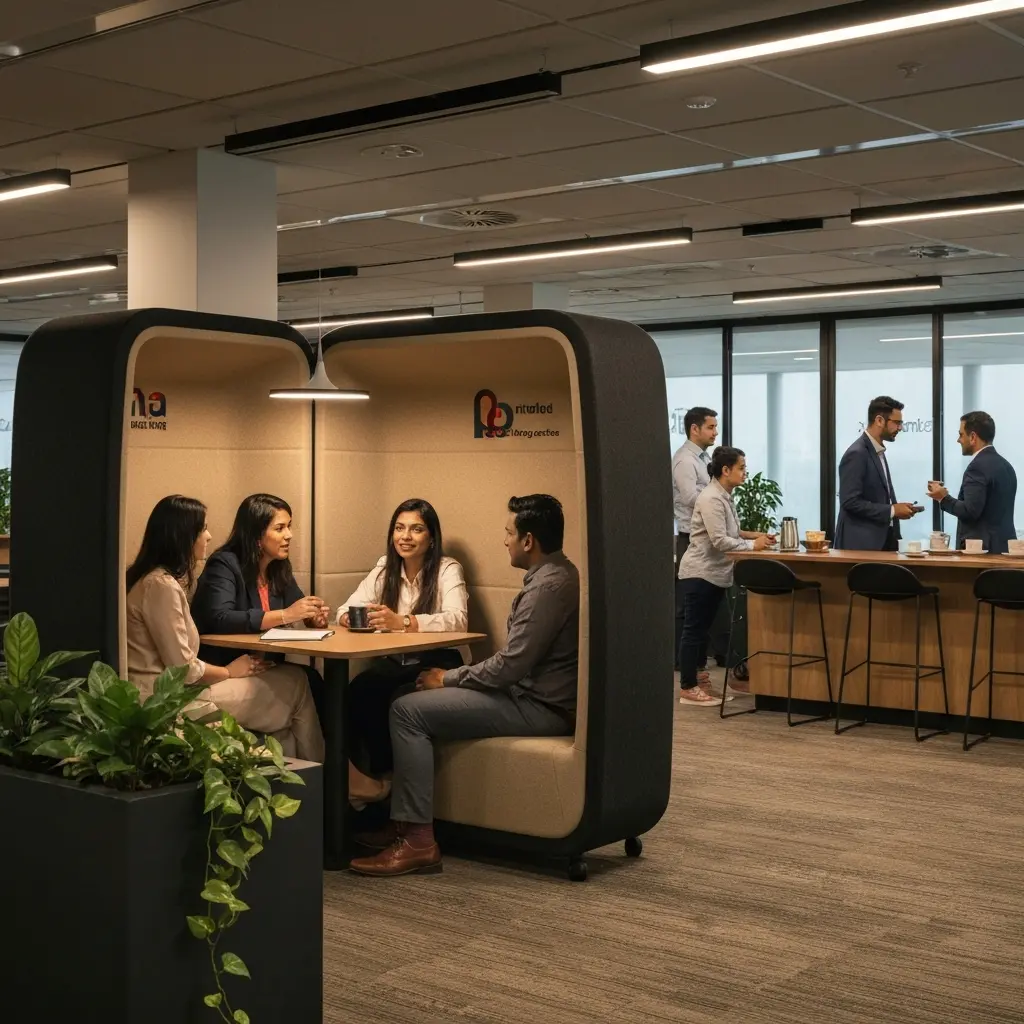
This translates directly to the Indian corporate context. As your core team grows and matures, their needs evolve. A founder in their 30s may need to balance client calls with school runs. Offering flexibility and understanding these life-stage needs—be it through quiet pods for focused work, meeting rooms for client calls, or simply a professional address that impresses—fosters immense loyalty. Furthermore, the scalability of institutional models shows the importance of choosing a workspace partner that can grow with you, from a single dedicated desk to an entire team suite, without the logistical nightmare of relocation.
| Consideration | Traditional SME Office Lease (Chennai) | Flexible, Premium Workspace Solution |
|---|---|---|
| Commitment | 3-5 years lock-in | Monthly or quarterly terms |
| Capital Outlay | High security deposit (₹5-10 Lakhs+), furniture CAPEX | Minimal deposit, fully furnished & equipped |
| Operational Hassle | Managing cleaners, AMC for AC, printer, utilities | All amenities & services bundled |
| Scalability | Difficult & costly to expand/reduce within lease | Easily add or reduce seats as needed |
| Talent Appeal | Fixed location; may involve long commutes (e.g., OMR) | Multiple centres or hybrid policies possible |
Connectivity, Wellness, and the Indian Growth Mindset
For the global premium nomad, site selection is filtered by ‘High-Tech City’ infrastructure: seamless 5G, cashless economies, and integrated transit. Meanwhile, 58% plan ‘Wellness Workcations,’ blending productivity with mindfulness. These are not mere luxuries; they are productivity drivers.
The Indian application is clear. Does your workspace foster peak productivity? Reliable, high-speed internet is non-negotiable. Is it located to minimise your team’s commute, saving them hours each week otherwise spent in Chennai’s traffic? Does the environment—through natural light, calming design, or breakout spaces—support mental well-being and reduce burnout? Investing in these aspects is an investment in your team’s output and innovation. A report by JLL India consistently highlights that well-designed, agile workspaces are key to enhancing employee satisfaction and performance, which directly impacts the bottom line.
Manager Insight: Employee productivity isn’t just about software. It’s about environment. A space that reduces daily friction—be it a slow network, an uncomfortable chair, or a stressful commute—frees up cognitive bandwidth for solving business problems.
[Image of a comparison diagram showing the ecosystem of a traditional office vs. a premium flexible workspace]
The 2026 Outlook for Indian Workspaces
The trends of 2026 point towards a continued maturation of India’s flexible workspace sector. We will see a sharper bifurcation between basic co-working and premium, full-service business centres that cater to established SMEs and corporates. Demand will grow for spaces that offer not just a desk, but comprehensive business support services—GST compliance guidance, secretarial services, and premium meeting facilities for client presentations. Furthermore, as Indian companies increasingly hire globally distributed talent, the ‘hub-and-spoke’ model will gain traction, with a premium central office in a city like Chennai supported by flexible memberships for satellite teams or remote employees in other cities, all requiring the same standard of professional infrastructure.
Key Takeaways
- Prioritise Talent Experience: Your workspace is a key tool for attracting and retaining the high-calibre professionals essential for growth, mirroring the global shift towards premium ecosystems.
- Embrace Operational Agility: Replace rigid, capital-intensive leases with flexible terms that allow you to scale your physical space up or down in line with business performance.
- Design for Productivity & Wellbeing: Choose environments that actively reduce friction—through prime location, flawless tech, and thoughtful design—to boost your team’s output.
- Seek a Growth Partner, Not a Landlord: Align with a workspace provider that offers scalability, professional services, and a community, transforming a cost centre into a strategic asset.
- Think Beyond Four Walls: Consider how a premium business address and on-demand meeting facilities in multiple cities can enhance your brand credibility and facilitate client meetings without the overhead of multiple offices.
Conclusion
The institutionalization of the global Premium Coliving Market underscores a universal business truth: high-value outcomes require high-quality foundations. For the ambitious Indian business, this means recognising that the workspace is no longer a passive overhead but a dynamic platform for growth, talent strategy, and operational excellence. By adopting the principles of flexibility, premium service, and strategic design, businesses can build a resilient and scalable operational core. For businesses in Chennai looking to operationalise this strategic advantage, Crizone Business Centre provides the precisely calibrated, professionally managed environment to support your next phase of growth.
Continue your workspace search
Explore the most relevant Crizone pages next
If this article is part of your Chennai workspace research, these pages help you move from reading into comparing live plans, locations, and fit.
Explore coworking plans in Chennai
Compare day passes, dedicated desks, private offices, meeting rooms, and virtual office options from one commercial hub page.
Book a day pass in Chennai
Best fit if you need occasional workspace access, a short productive break from home, or a flexible desk for a single day.
Compare dedicated desk options
A stronger fit for regular monthly use when you want a fixed seat, better routine, and predictable workspace costs.