· Business Growth & Workspace · 6 min read
The 2026 Agile Workspace: Modular Design & Biophilic Innovation
For Indian businesses in 2026, growth hinges on agile, experience-driven workspaces. Discover how modular furniture, biophilic design, and multisensory strategies boost productivity and capital efficiency.
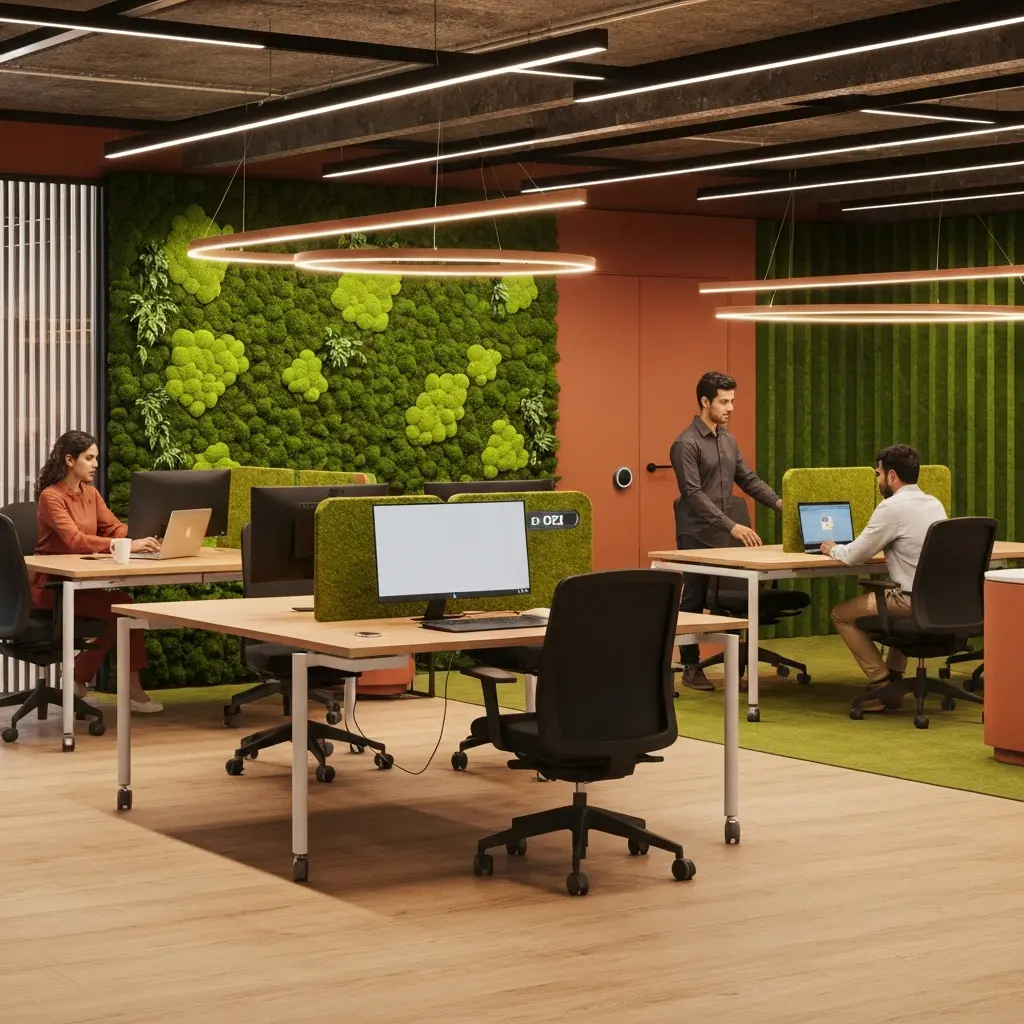
TL;DR: The 2026 office is an agile, growth-oriented destination. Indian businesses are shifting from rigid leases to flexible workspaces, prioritising modular furniture for quick reconfiguration and multisensory biophilic design to enhance focus and reduce cognitive stress by 20%, all while maintaining capital agility.
For an Indian entrepreneur or SME founder, the workspace is a major strategic decision. A traditional office lease on Mount Road or OMR represents a significant capital commitment, operational headache, and a fixed asset in an era demanding agility. With rising commercial rents, traffic congestion impacting employee commute, and the need to attract top talent, the old model is a constraint. The global trend is clear: 59% of companies expanding their footprint now prefer flexible coworking spaces over traditional leases. The focus has moved from merely providing desks to creating high-performance ecosystems that actively support business growth. In 2026, your hybrid workspace design must be an experience-driven destination, not just an address.
What is Hybrid Workspace Design in 2026?
Hybrid workspace design for 2026 is a holistic, agile strategy that creates a physical office optimised for variable team attendance and diverse work modes. It transcends basic “hot-desking” by integrating modular furniture for rapid reconfiguration, multisensory biophilic elements to enhance wellbeing, and “invisible” technology to eliminate friction. The goal is to build a calibrated environment that signals when to focus, collaborate, or network, directly supporting productivity and capital efficiency for modern Indian businesses.
How Modular Design Drives Operational Agility & ROI
In Chennai, where business needs can shift with market cycles or festive seasons, being locked into a fixed floor plan is a liability. The 2026 baseline is modular office furniture – desks on wheels, stackable partitions, and reconfigurable meeting pods. This allows a space to transform from a quiet focus zone for a development team into a collaborative event hub for a client workshop in under 15 minutes. This modularity is a direct financial lever.
Consider a growing SaaS startup. During a product launch, they need expansive collaborative areas. Post-launch, the core team may contract while a sales team scales up, requiring more private calling booths. A modular setup accommodates this without costly renovations or moving offices. The return on investment is measured in saved time, retained talent (by providing the right environment), and avoided capital expenditure on rigid furniture and fit-outs.
Crizone Pro Tip: For a Chennai-based team, modularity also means your workspace can be optimised for different times of the day. Convert a quiet zone into a networking lounge for evening industry meetups, maximising the utility of every square foot you pay for.
| Cost Factor | Traditional Chennai Office (1,000 sq. ft.) | Agile Flexible Workspace Solution |
|---|---|---|
| Security Deposit | ₹ 10-20 Lakhs (refundable but locked) | ₹ 50,000 - ₹ 2 Lakhs (often lower/no deposit) |
| Monthly Rent & CAM | ₹ 2.5 - ₹ 4 Lakhs + GST | All-inclusive membership from ₹ 15,000/seat/month |
| Furniture & Fit-Out Capex | ₹ 8-15 Lakhs (one-time, depreciating) | Zero. Provided, maintained, and upgraded by operator. |
| Agility to Scale | 6-12 month notice periods, penalties | Scale up/down with 1-month notice, aligning cash flow with growth. |
Why Multisensory & Biophilic Design Are Non-Negotiable for Productivity
The “Post-Gray” revolution is critical in India’s often chaotic urban environments. Replacing corporate grays with bio-inspired palettes—terracotta, moss green, deep walnut—isn’t just aesthetics; research indicates it can reduce cognitive stress by 20%. This is the foundation of a multisensory workplace strategy. Biophilic design has evolved into immersive ecosystems: floor-to-ceiling living walls and air-purifying moss panels that actively manage indoor CO2 levels, a significant benefit in Chennai’s humid climate where windows are often closed.
Acoustic comfort is equally vital. Standard 2026 layouts now integrate sound-absorbing materials and soundproof pods to resolve the noise distraction that plagues open-plan offices. When combined with “Zoned Mood Architecture”—where lighting temperature and tactile textures cue the brain for deep focus or casual brainstorming—you create an environment that actively manages employee energy and focus throughout the day. This directly impacts output quality and reduces the mental fatigue of compensating for a poor environment.
[Image of a serene focus zone in a Chennai workspace] A visual of a dedicated deep-work zone with warm, focused lighting, acoustically treated panels, and a terracotta-coloured accent wall, demonstrating zoned mood architecture.
Manager Insight: As highlighted in a recent JLL India report, employee expectations have permanently shifted. The office must now “earn the commute.” For an SME, offering a thoughtfully designed, calming, and productive environment is a powerful talent retention and attraction tool, often more compelling than a marginal salary increase.
Is Your Technology Integration Holding Your Team Back?
Technology in the 2026 workspace is becoming “invisible” to reduce friction. Furniture with built-in, high-wattage USB-C ports and wireless charging surfaces eliminates the cable clutter and frantic search for adapters that waste minutes every day—minutes that add up to significant productivity loss across a team. More advanced integrations, like posture sensors in chairs, provide gentle reminders, supporting long-term employee wellness.
This seamless integration is crucial for hybrid work. A team member joining a video conference from home should be able to connect as effortlessly as someone in a meeting pod. The infrastructure—high-speed, dedicated internet with backup, and enterprise-grade video conferencing systems—must be as reliable as the electricity. In a city like Chennai, where power fluctuations can occur, a workspace with guaranteed power backup and climate control ensures business continuity, something an SME might struggle to provision independently.
The 2026 Outlook for Indian Workspaces
In 2026, the Indian flexible workspace market will accelerate its “flight to quality.” As the global sector heads towards a ₹7.8 Lakh Crore (approx. $93.68B) valuation, demand in metropolitan hubs like Chennai, Bengaluru, and Delhi-NCR will consistently push occupancy beyond 70%. We will see wider adoption of sustainable innovations like agricultural-waste composites—using materials like rice husk for wall panels—as ESG compliance becomes important for attracting enterprise clients and investment. The workspace will solidify its role as a strategic growth partner for businesses, with operators offering not just space, but curated networking, business support services, and well-being programmes tailored to the Indian professional’s rhythm, including managing festive season workflows.
Key Takeaways
- Agility is Capital: Flexible terms preserve capital for core business investment versus locking it in deposits and fit-outs.
- Design Drives Output: Invest in a workspace that uses colour, light, sound, and biophilia to actively reduce stress and cue productive behaviours.
- Modularity is Mandatory: Your physical space must be as adaptable as your business plan to accommodate team growth and project cycles.
- Tech Must Be Frictionless: Invisible, integrated charging and connectivity are baseline expectations that protect your team’s flow state.
- The Office Must Earn the Commute: To attract and retain top talent in a hybrid world, your chosen workspace must offer a superior environment and experience that home cannot.
Conclusion
The evolution of the workplace into a multisensory, modular, and agile destination is not a fleeting trend but a fundamental recalibration for business efficiency. For the Indian entrepreneur, this shift represents a profound opportunity to align physical infrastructure with ambitious growth goals, turning a fixed cost centre into a dynamic growth engine. It’s about providing your team with the calibrated environment they need to do their best work, while you maintain the financial agility to seize new opportunities. At Crizone Business Centre in Chennai, we are curating this exact 2026-ready ecosystem—a calmly efficient, growth-oriented destination designed to be your strategic partner in Chennai’s competitive landscape.
Continue your workspace search
Explore the most relevant Crizone pages next
If this article is part of your Chennai workspace research, these pages help you move from reading into comparing live plans, locations, and fit.
Explore coworking plans in Chennai
Compare day passes, dedicated desks, private offices, meeting rooms, and virtual office options from one commercial hub page.
Book a day pass in Chennai
Best fit if you need occasional workspace access, a short productive break from home, or a flexible desk for a single day.
Compare dedicated desk options
A stronger fit for regular monthly use when you want a fixed seat, better routine, and predictable workspace costs.