· Business Growth & Workspace · 7 min read
Lease Compression 2026: Why the 10-Year Office is Dying in India
As hybrid work becomes the permanent equilibrium, the 10-year office lease is no longer viable. Learn why Indian businesses are pivoting to flexible, short-term solutions for growth.
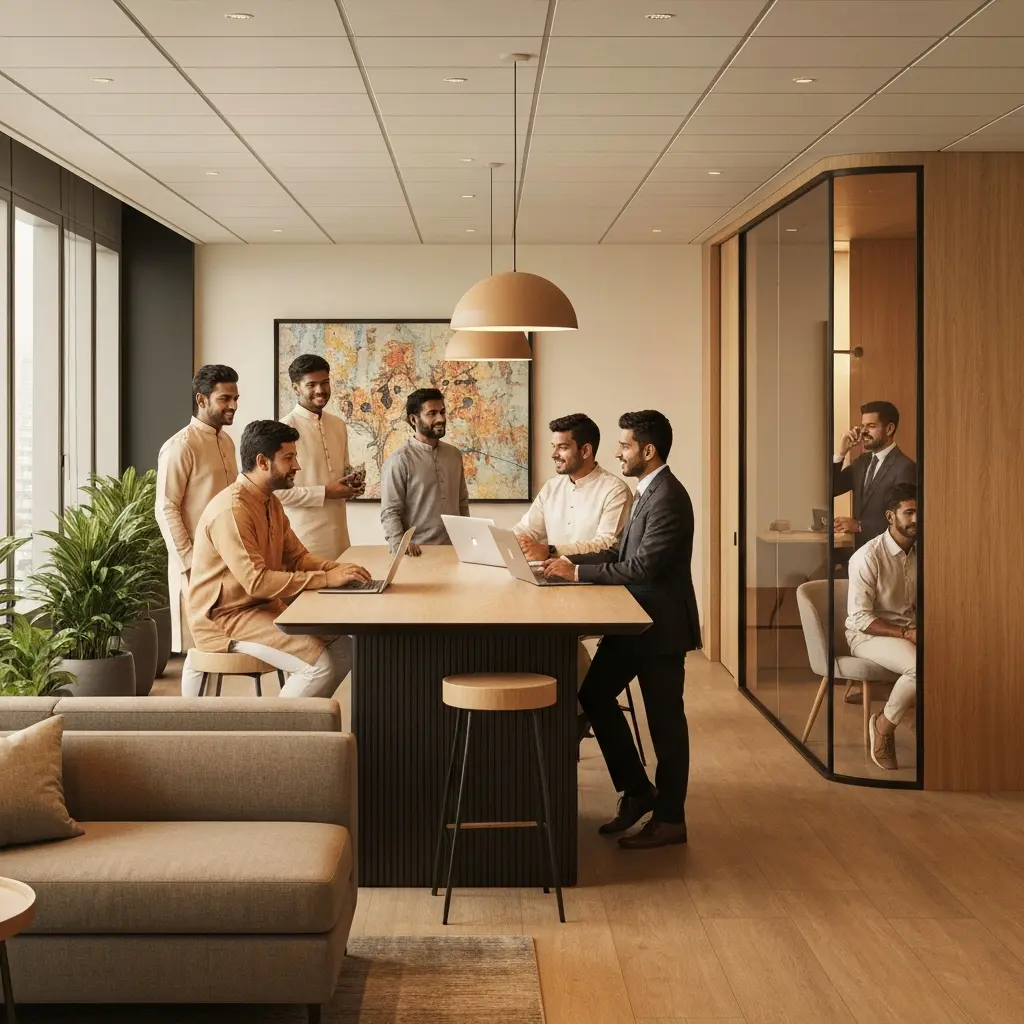
TL;DR: The era of the decade-long office lease is over. In 2026, hybrid work is the stable norm, compressing lease terms and driving a strategic pivot towards flexible, high-quality spaces. For Indian businesses, this shift unlocks capital, mitigates risk, and is key to attracting top talent in a competitive market.
Introduction
For Indian founders and managers, the traditional office lease has long been a double-edged sword. It demands a significant, fixed capital commitment—often for three to five years—tying up funds better spent on product development or market expansion. In a dynamic market like Chennai, where business conditions can shift with policy changes or festival season demands, this inflexibility is a major liability. This rigid model is now colliding with the permanent reality of hybrid work, creating what experts term the Lease Compression 2026. As global office utilisation stabilises at just over 50%, companies are rightsizing their real estate, aggressively moving away from long-term capital locks. The demand is now for agile, premium, and short-term solutions that support growth without the anchor of a decade-long contract.
What is Lease Compression 2026?
Lease Compression 2026 describes the strategic shrinking of corporate office lease terms driven by the permanent adoption of hybrid work models. As businesses accept that office utilisation will not return to pre-pandemic levels, they are abandoning the standard 10-year lease in favour of flexible, short-term commitments of 3 to 5 years, or even month-to-month Flex-as-a-Service (FaaS) arrangements. This compression allows companies to align real estate costs directly with actual usage, converting a fixed capital expense into a variable operational one that better matches the pace of modern business.
The K-Shaped Lease Economy: Who Wins and Who Loses?
A stark divide is emerging in commercial real estate. While traditional sectors once set a 10-year standard, the average lease for technology firms has shrunk to 5.3 years. AI-focused startups are leading the charge, averaging just 3.5-year terms. This ‘K-shaped’ lease economy signifies that growth-oriented businesses are opting for agility, while others remain locked in legacy commitments. For an Indian SME, a shorter lease term is a powerful risk mitigation tool. It allows you to scale your space up or down based on project cycles, client wins, or team expansion without facing crippling penalties or being stuck with empty, costly desks in a down cycle.
Crizone Business Growth Tip: Treat your workspace as a variable cost, not a fixed asset. A flexible term allows you to reinvest the capital saved from a large security deposit and fit-out costs into marketing or hiring your next key engineer.
| Cost Factor | Traditional 5-Year Lease (Chennai, Prime Location) | Flexible Workspace Solution |
|---|---|---|
| Security Deposit | ₹10-15 Lakhs (refundable after 5+ years) | ₹1-2 Lakhs or monthly deposit |
| Lock-in Period | 36-60 Months (strict) | 1-12 Months (scalable) |
| Fit-out & Furniture | ₹20-30 Lakhs (capital expenditure) | Included in membership (operational expense) |
| Monthly Overheads | Rent + Maintenance + Staff + AC/Electricity (₹2-4 Lakhs+) | Single, predictable invoice covering all utilities & services |
Is Hybrid Work a Productivity Crisis or a Strategic Opportunity?
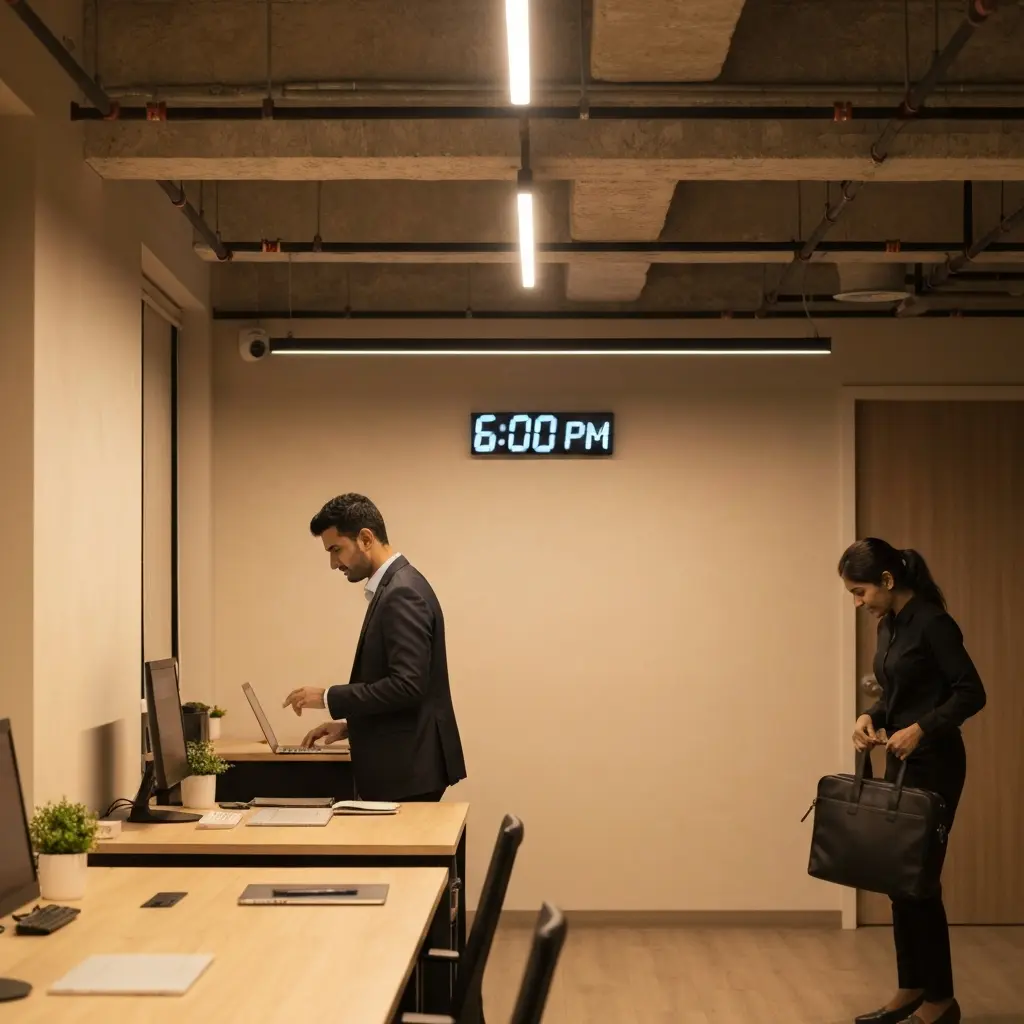
Despite 52% of firms mandating 3-4 office days, a ‘Mid-Week Peak’ creates operational chaos—70-80% occupancy on Tuesdays-Wednesdays crashes to under 20% on Fridays. Paying for a full-time office that sits empty for half the week is poor financial management. Sensor data from 2026 reveals 64% of assigned desks are used for less than three hours daily. The strategic response is not to force a full return, but to optimise for collaboration. Forward-thinking operators are converting 40% of individual desk areas into ‘High-Intensity Collaboration Zones.’ For a Chennai-based team, this means your office becomes a destination for brainstorming, client meetings, and team bonding—precisely the activities that suffer on video calls—while routine work happens remotely. Skipping the OMR traffic becomes a benefit, not a compromise.
[Image of a modern Indian office floor plan diagram showing dynamic zoning] Diagram: A visual shift from a floor plan dominated by fixed desks to one with dynamic zones: Collaboration Hubs, Phone Booths, Focus Lounges, and a reduced footprint of hot desks.
Why Are Premium Flexible Spaces Outperforming the Market?
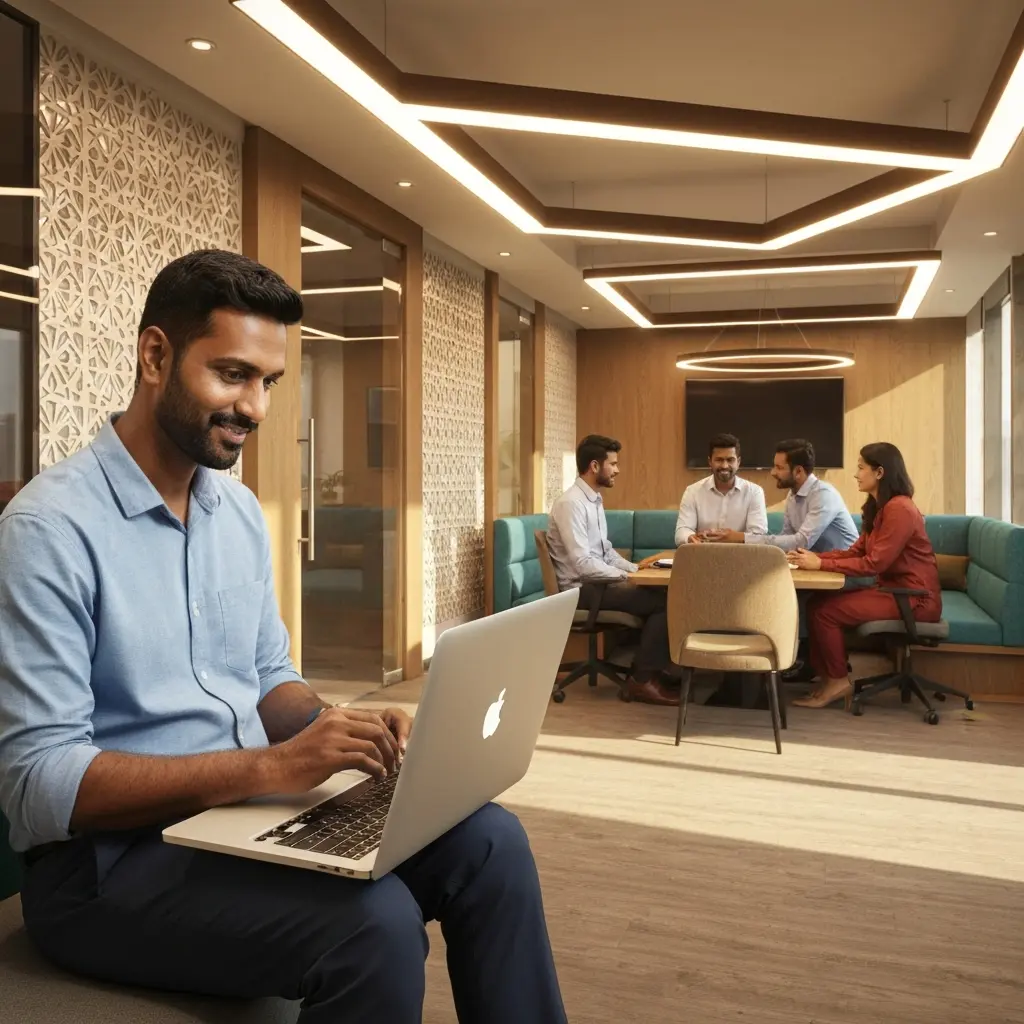
There is a decisive ‘Flight to Experience.’ In key global markets, demand for luxury office spaces over $100/sq. ft. surged 50% in 2025. Tenants are choosing to pay more for less, but higher-quality, space. This premiumisation is driven by talent. A 2026 industry survey found 65% of employees now rank location and workspace flexibility above salary as their primary reason for staying with an employer. For an Indian startup competing with global remote salaries, offering a prestigious, well-designed, and conveniently located office—like one with seamless metro connectivity—becomes a critical retention tool. It’s not just a desk; it’s a statement about your company’s culture and ambition.
How Does Flex-as-a-Service Future-Proof Your Business?
Flex-as-a-Service (FaaS) bundles workspace, technology, amenities, and risk management into one operational subscription. Two major factors make this essential for 2026 planning. First, 70% of corporate occupiers now mandate ESG (Environmental, Social, and Governance) compliance, allocating 5% of budgets to it. A quality flex provider manages sustainable operations, from energy-efficient AC to waste management, on your behalf. Second, with global office energy costs rising 20-50% in four years, FaaS transfers volatile utility risk from your balance sheet to the operator. You get predictable ‘Plug-and-Play’ costs, shielding your business from Chennai’s humid-weather-driven AC spikes and broader market volatility.
Manager Insight: “Adopting a flex model isn’t a cost centre shift; it’s a risk transfer. It lets our Chennai branch focus on client delivery while our workspace partner handles compliance, infrastructure headaches, and cost fluctuations.” – A perspective from a regional corporate branch head.
The 2026 Outlook for the Indian Workspace Market
As APAC leads in office utilisation (47%), India’s market will accelerate its own flex transformation. Expect a surge in enterprise-level partnerships between corporations and premium flex operators as companies formalise strategies to make 10% of their portfolio flexible. Chennai, with its thriving IT corridor and SME ecosystem, will see heightened demand for high-specification, short-term corporate leases in central and well-connected locations. The winners will be businesses that treat workspace as a dynamic tool for talent strategy and operational agility, not a static, depreciating asset on their books.
Key Takeaways
- Embrace Lease Agility: Shift from a 5-10 year capital lock-in to terms of 3 years or less to maintain strategic flexibility.
- Optimise for Hybrid Peaks: Design your office presence around in-person collaboration, not daily attendance for all.
- Prioritise Experience over Square Feet: Invest in premium, amenity-rich spaces to attract and retain top talent in a competitive market.
- Adopt a Risk-Managed Model: Use Flex-as-a-Service to hedge against rising energy costs and complex ESG compliance requirements.
- Align Real Estate with Business Cycles: Your workspace should be able to scale seamlessly with project wins, team growth, or market contractions.
Conclusion
The Great Lease Compression is not a temporary trend but a fundamental recalibration of how businesses use space. The 10-year lease is dying because it is antithetical to the needs of a modern, agile, and talent-centric company. For Indian entrepreneurs and branch managers, the path forward is clear: leverage flexible, high-quality workspace solutions to convert fixed real estate costs into a strategic advantage. This model frees capital, mitigates risk, and signals to your team that you are building a future-ready organisation. It’s time to move beyond the traditional lease and into a workspace partnership designed for growth. To experience how this future works in Chennai, consider how a solution like Crizone Business Centre can be your strategic growth partner, providing the premium, flexible foundation your business needs to thrive.
Continue your workspace search
Explore the most relevant Crizone pages next
If this article is part of your Chennai workspace research, these pages help you move from reading into comparing live plans, locations, and fit.
Explore coworking plans in Chennai
Compare day passes, dedicated desks, private offices, meeting rooms, and virtual office options from one commercial hub page.
Book a day pass in Chennai
Best fit if you need occasional workspace access, a short productive break from home, or a flexible desk for a single day.
Compare dedicated desk options
A stronger fit for regular monthly use when you want a fixed seat, better routine, and predictable workspace costs.