· Business Growth & Workspace · 6 min read
Master the 2026 Mid-Week Office Peak in Flexible Strategy
The Synchronization Crisis of 2026 demands a new strategy. Learn how Indian businesses can manage mid-week office peaks and optimise costs with a flexible workspace approach.
TL;DR: The 2026 synchronized attendance trend sees offices packed only mid-week, wasting 60% of a traditional lease. Indian businesses must adopt a multi-locale, flexible strategy to match this new pattern, turning a real estate crisis into a cost and talent advantage.
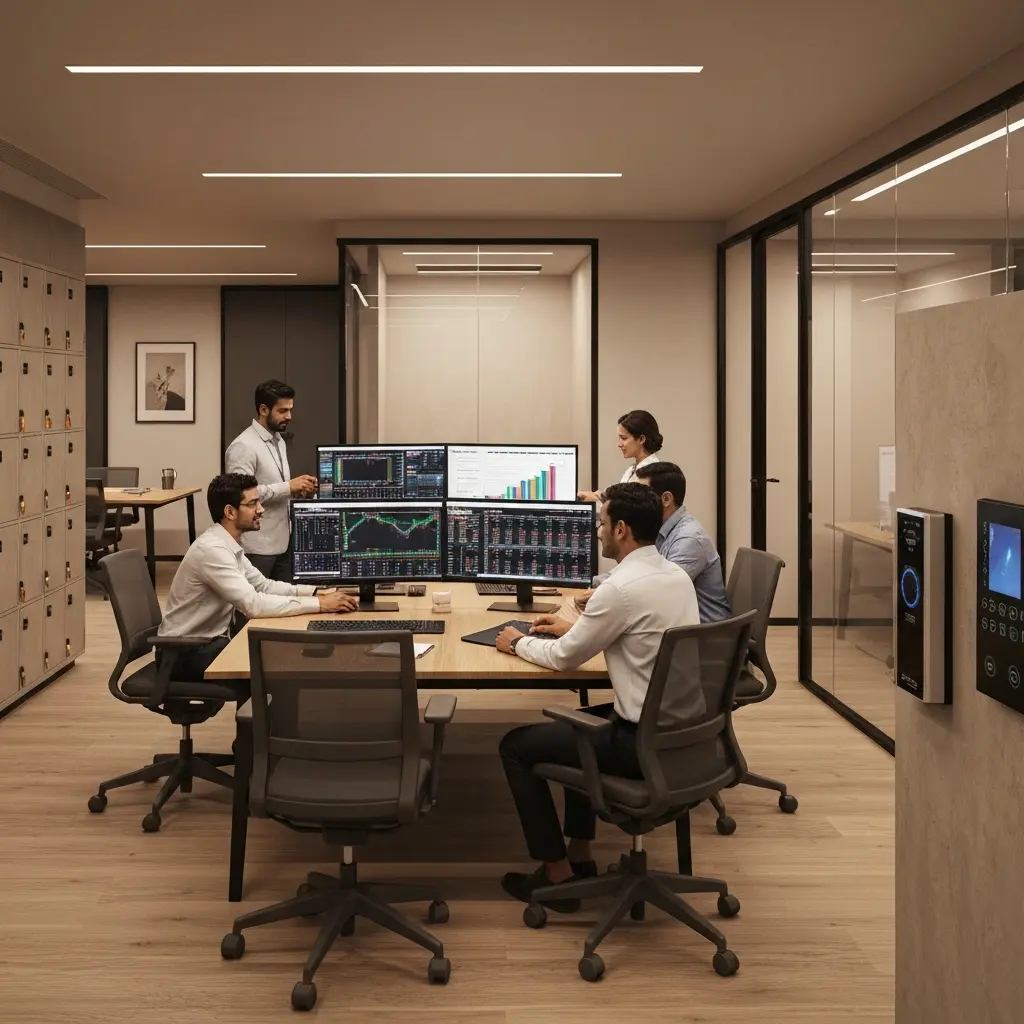
For a Founder in Chennai, a traditional 5-year lease on Old Mahabalipuram Road was once a milestone. Today, it’s a significant liability if the office sits empty three days a week. The global shift to hybrid work has settled, but it has birthed a new operational headache for businesses: the mid-week office peak. Instead of steady attendance, teams now synchronise their in-office days, predominantly on Tuesdays and Wednesdays.
This creates a ‘peak-load’ crisis, where expensive infrastructure is underutilised most of the time. For Indian SMEs and growing teams, this mismatch between rigid real estate costs and fluid occupancy is a direct threat to efficiency and growth. A flexible workspace strategy is no longer a perk; it is the essential framework to navigate this new reality, allowing you to scale your physical presence in lockstep with actual demand.
What is Synchronized Attendance?
Synchronized attendance is the 2026 phenomenon where employee office attendance is no longer spread across the workweek but is heavily concentrated on specific days, primarily Tuesdays and Wednesdays. This creates sharp peaks in office space and amenity usage, followed by significant troughs, leading to chronic underutilisation of a fixed-cost asset. It is the dominant operational challenge stemming from structured hybrid work policies, forcing a complete rethink of traditional capacity planning.
The New Financial Logic: Pay for Peak, Not for Empty Seats
The core inefficiency is stark. Your business pays a fixed monthly rent for a five or six-day utility, but receives value for only two. In Chennai’s commercial hubs, this translates to wasted capital that could fund marketing campaigns, new hires, or technology upgrades. The global data is clear: the market is polarising, and the ‘Squeezed Middle’—operators and businesses stuck with inflexible, mid-tier costs—are at risk.
For an Indian business, the financial advantage of flexible space is precise alignment. You secure access to premium meeting rooms and collaborative zones specifically for your high-activity mid-week periods without the fixed overhead for silent Fridays or Mondays. Consider the annual cost comparison for a 10-person team in Chennai.
| Cost Factor | Traditional Lease (OMR, 1000 sq. ft.) | Flexible Workspace Solution (Dedicated Desks) |
|---|---|---|
| Annual Base Rent | ₹ 12-18 Lakhs | ₹ 6-9 Lakhs (based on 10 desks) |
| Maintenance & AMC | ₹ 1.5-2 Lakhs | Typically Included |
| Furniture & Fit-Out Capex | ₹ 5-8 Lakhs (one-time) | ₹ 0 |
| Utilities (AC, Power) | ₹ 2-3 Lakhs | Included |
| Estimated Annual Total | ₹ 20.5-31 Lakhs | ₹ 6-9 Lakhs |
Crizone Pro Tip: Use the capital saved from avoiding a long-term lease to invest in high-ROI business areas. The flexibility also protects you from new financial regulations, like potential property surcharges, which flexible operators manage at the portfolio level.
Is a Multi-Locale Strategy Right for Your Chennai Team?
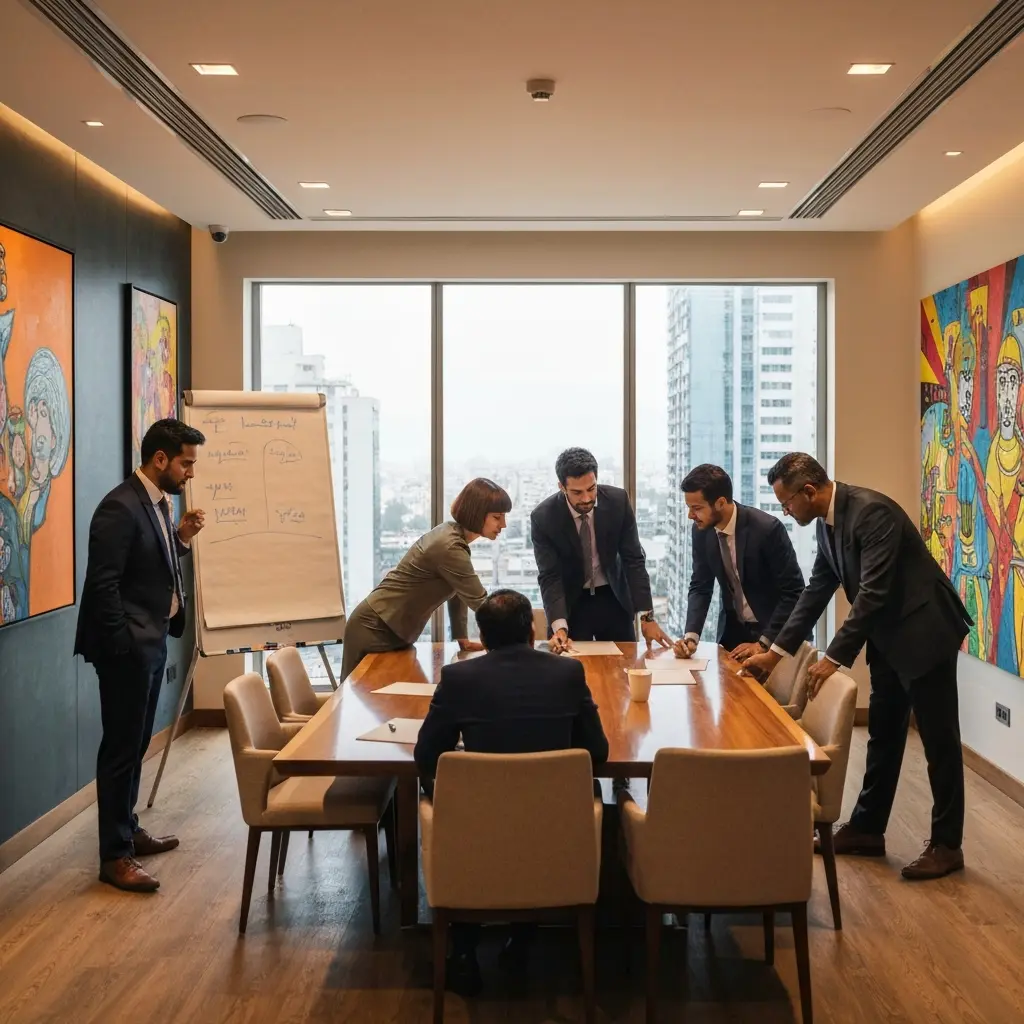
This is the critical strategic shift. The goal is no longer to force everyone to ‘the office’ (a single HQ), but to provide access to ‘an office’ near them. IWG data shows 83% of CEOs now support this. For a Chennai business, this could mean a developer in Velachery uses a space near the Metro, while the sales head in Anna Nagar hosts client meetings locally, all converging at a central hub like Crizone on key collaborative days.
This directly tackles urban challenges like OMR traffic, improving employee wellbeing and reclaiming productive hours. It also expands your talent pool beyond a commutable radius to a single location. The demand has shifted from luxury amenities to high-performance basics: reliable, high-speed internet, soundproof phone booths for client calls, and professionally equipped meeting rooms are the new premium.
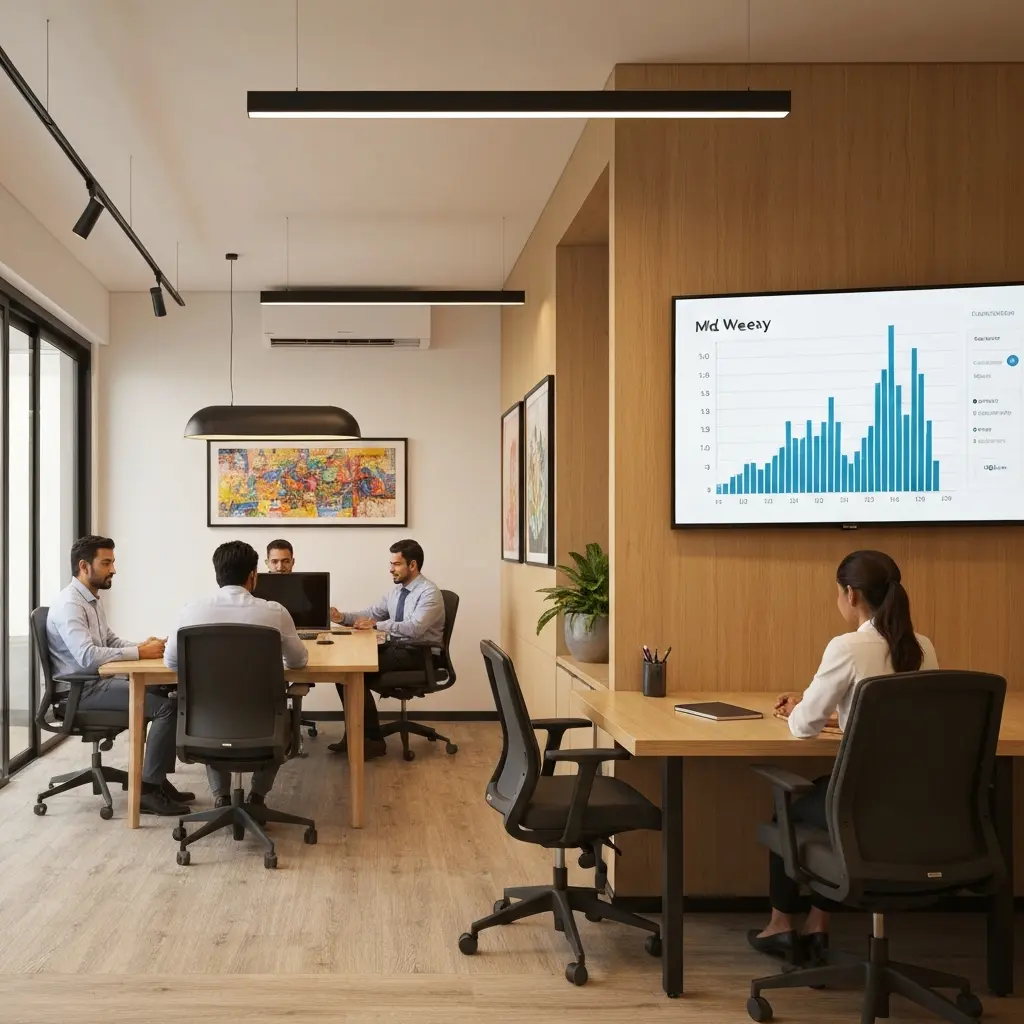
[Image of a data dashboard] A line graph showing a typical 2026 workweek. Monday and Friday show low occupancy (30%). Tuesday and Wednesday show a sharp peak (95%). Thursday shows a moderate decline (70%).
Manager Insight: “The leverage has shifted. With only 7% of workers now threatening to quit over RTO mandates (down from 51%), the focus for businesses is on providing purposeful, productive in-office experiences, not enforcement. A multi-locale strategy makes coming to an office a benefit, not a burden.”
Building an Agile Foundation for 2026 and Beyond
Agility is the cornerstone. The average lease term for flexible providers has dropped 37% to just over six years, reflecting the market’s need for shorter commitment cycles. Your business strategy should mirror this. Instead of a 5-year property lease, you can commit to a 12-month membership that allows you to scale seats up or down quarterly, aligning with project cycles and the 2026 office occupancy rhythm.
This agility is vital for navigating India’s business calendar, allowing you to easily scale down during festive season downturns or scale up for a critical product launch. It also future-proofs your operations against further market shifts. As noted by JLL India, the integration of flexible space into core real estate strategy is now a priority for occupiers seeking resilience.
The 2026 Outlook for the Indian Workspace Market
The Indian flexible workspace market will intensify its growth, moving deeper into secondary cities. The global supply gap—with flex space still a small fraction of total stock—indicates immense room for expansion in markets like Coimbatore, Kochi, and Chandigarh. In Chennai, we will see a sharper segmentation. Ultra-budget, hot-desking options will coexist with premium, full-service business centres catering to corporate teams and established SMEs.
The mid-week peak will become the accepted norm, and operators who successfully manage capacity and deliver consistent, high-spec professional environments on Tuesdays and Wednesdays will thrive. For businesses, the benchmark for real estate decision-making will permanently shift from cost-per-square-foot to value-per-occupied-day.
Key Takeaways
- Adopt a Peak-Centric Model: Structure your team’s in-office schedule around core collaborative days (Tue-Wed) and use flexible space to pay only for that peak capacity.
- Embrace Multi-Locale Work: Support employees working from ‘an office’ near home to reduce commute stress and widen your talent pool, converging at a central hub for key meetings.
- Prioritise Operational Amenities: Invest in workspace solutions that offer high-spec meeting rooms, phone booths, and reliable IT infrastructure over luxury perks with low ROI.
- Shorten Your Real Estate Commitments: Favour flexible terms that allow you to scale with business cycles, protecting you from market volatility and new regulations.
- Calculate Total Cost of Occupation: Move beyond rent. Factor in fit-out capex, maintenance, utilities, and management overhead when comparing traditional vs. flexible solutions.
Conclusion
The synchronized attendance trend of 2026 is not a temporary disruption; it is the new steady state for office occupancy. For the forward-thinking Indian business, this presents a clear opportunity. By decoupling your growth from fixed real estate costs, you can reallocate capital to strategic initiatives, attract and retain talent with better work-life integration, and build an organisation that is inherently resilient. The strategy is no longer about securing a single address, but about providing your team with seamless, professional access to workspaces that fit the rhythm of modern work.
Discover how a tailored flexible workspace strategy can help your business master the mid-week peak. Explore the calm efficiency and professional ecosystem at Crizone Business Centre, designed to be your growth partner in Chennai’s dynamic market.
Continue your workspace search
Explore the most relevant Crizone pages next
If this article is part of your Chennai workspace research, these pages help you move from reading into comparing live plans, locations, and fit.
Explore coworking plans in Chennai
Compare day passes, dedicated desks, private offices, meeting rooms, and virtual office options from one commercial hub page.
Book a day pass in Chennai
Best fit if you need occasional workspace access, a short productive break from home, or a flexible desk for a single day.
Compare dedicated desk options
A stronger fit for regular monthly use when you want a fixed seat, better routine, and predictable workspace costs.