· Business Growth & Workspace · 6 min read
Flex Space Management Software & Biometrics Power the 2026 Workplace
Discover how biometric access control and unified flex space management software are transforming Indian workspaces, boosting efficiency and supporting growth for SMEs.
TL;DR: The 2026 workspace is movement-first, powered by unified flex space management software. Biometric access and computer vision eliminate friction, providing deep analytics for Indian businesses to optimise costs, enhance security, and justify their real estate footprint for strategic growth.
Indian businesses are navigating a complex trifecta: escalating commercial rents in city centres, relentless traffic congestion, and the imperative to attract and retain top talent. The traditional multi-year lease in a static location now feels like a strategic liability. The demand is for agility—spaces that flex with project cycles, seasonal hiring, and hybrid work models, all while projecting a premium, professional image.
The answer lies in the evolution of flexible workspaces themselves. They are no longer just about a desk. The industry’s 2026 trajectory, as highlighted in recent global reports, is shifting from a ‘desk-centric’ model to a ‘movement-first’ experience. This transformation is underpinned by sophisticated Flex Space Management Software that unifies operations, security, and data into a single platform, turning real estate from a fixed cost into a dynamic growth asset.
What is Flex Space Management Software?
Flex space management software is a unified, cloud-based operating system for modern workspaces. It integrates access control, space booking, member management, billing, and analytics onto a single platform, eliminating data silos. In 2026, its core function is to facilitate a ‘movement-first’ environment, using tools like biometric authentication and computer vision to let people and teams work seamlessly where they are most productive, rather than being anchored to a pre-booked desk.
Why ‘Unified Software’ is the Non-Negotiable for Growth
For an Indian SME founder, juggling multiple logins for door access, meeting room bookings, and printer codes is a distraction from core business. This fragmentation is the ‘deal-killer’ modern operators are eliminating. A 2026 ‘State of Digitalization’ report reveals that 33% of business leaders now rank ‘ease of integration’ as their top software requirement, surpassing even cost. Unified software means one credential—often your face or fingerprint—grants secure access, reserves a collaboration pod, and logs you into the network.
This isn’t just about convenience. For Branch Managers overseeing a Chennai satellite office, it means remote credential management. App-based systems have improved access authorisation efficiency by 41%, allowing you to onboard a new hire from headquarters instantly, without a physical key handover. It enables true portfolio agility, letting you scale your team’s presence up or down in real-time based on project demands, all managed from a central dashboard.
Crizone Pro Tip: When evaluating a flexible workspace, ask about their software stack. A unified platform is a sign of operational maturity. It means less downtime for your team and more reliable data for your own space optimisation decisions.
Biometric Access & Computer Vision: The Engines of the ‘Deskless’ Office
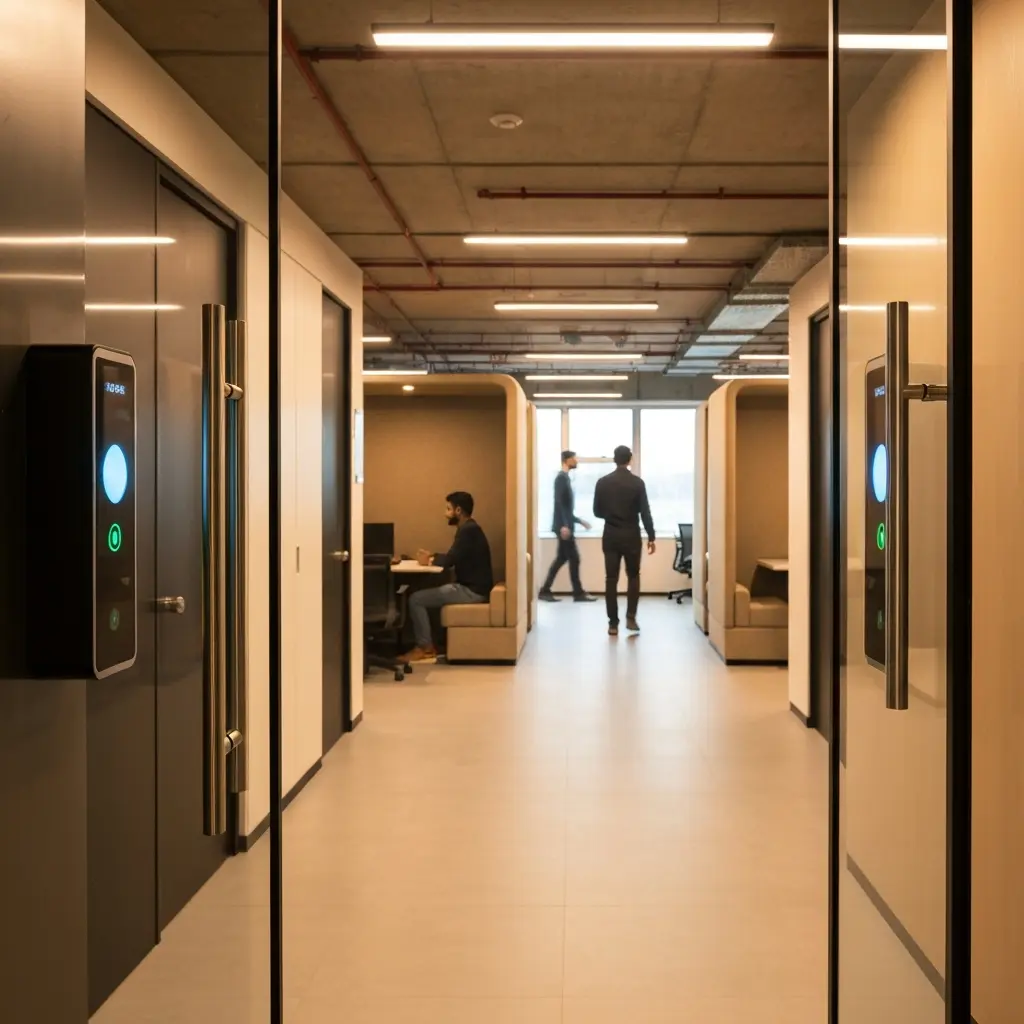
The ‘Deskless Office’ is gaining traction because the technology now supports it. Biometric smart locks, primarily using facial recognition, now dominate keyless entry with a 33.7% market share in commercial hubs. In a high-traffic Chennai centre, this technology reduces occupant throughput time by 52% compared to card-based systems. Your team spends less time fumbling for cards and more time being productive.
More critically, software is evolving beyond simple booking. It now tracks real-time spatial utilisation via computer vision in CRE. Instead of assuming a booked desk is occupied, the system anonymously detects actual usage of areas—collaboration zones, phone booths, lounge seating. This provides unparalleled data for space optimisation analytics.
| Metric | Traditional Chennai Office Lease (1,000 sq. ft) | Crizone ‘Movement-First’ Membership |
|---|---|---|
| Monthly Commitment | ₹ 2.5-3.5 Lakhs (Rent + Maintenance + Utilities) | Flexible plans from ₹ 15,000 per seat/month |
| Lock-in Period | 36-60 months | Monthly or Quarterly |
| Tech/ Security Capex | High upfront for biometrics, network, software | Fully integrated, zero upfront cost |
| Utilisation Insight | Manual headcounts or guesswork | Real-time, anonymous computer vision analytics |
| Scalability | Costly and slow (contract renegotiation) | Instant, within the same building or network |
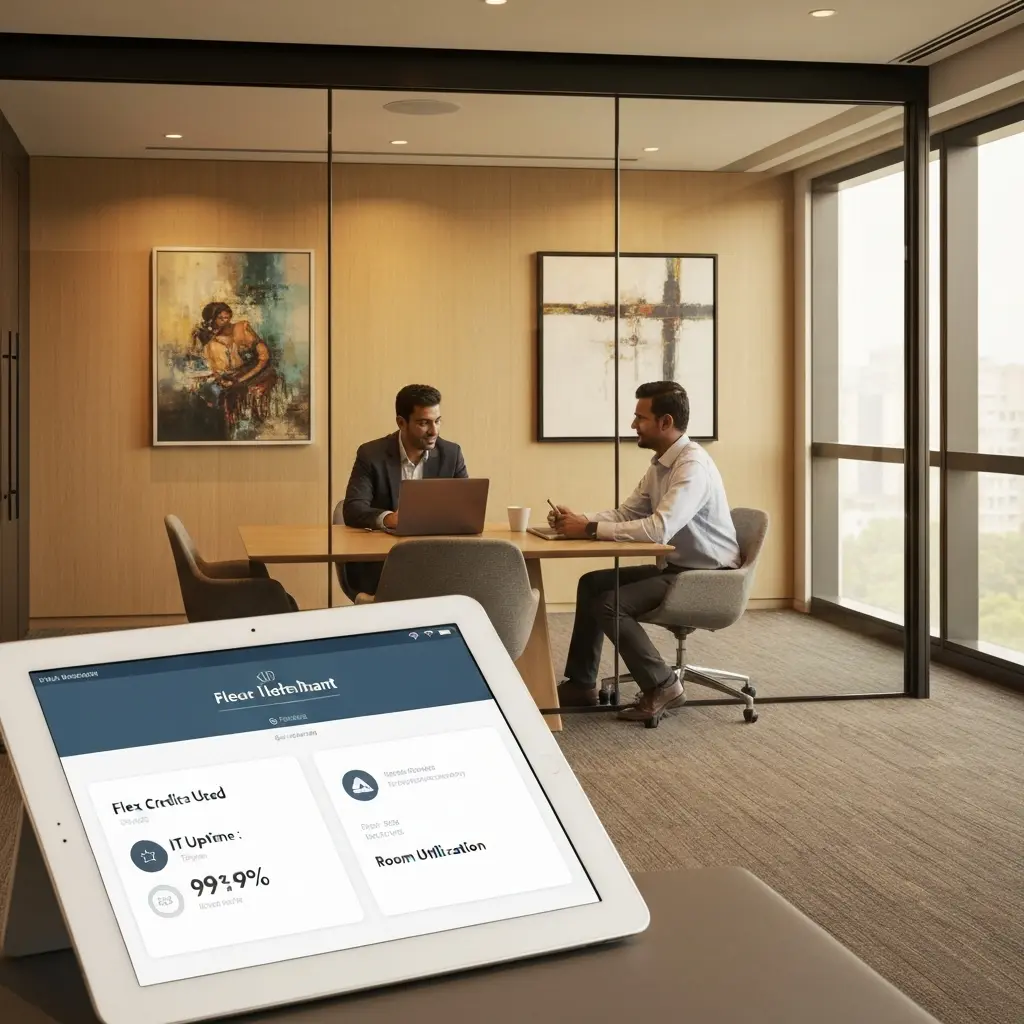
[Image of a data dashboard] Infographic: A dashboard from flex space management software showing real-time analytics: 78% occupancy in collaboration zones, 40% in quiet booths, with peak hours highlighted. This data helps a manager right-size their space commitment.
For a growth-oriented business, this means you pay for the space you actually use. You can justify every square foot based on data, not instinct, a crucial capability as 75% of organisations now prioritise space management tools to rationalise costs in a hospitality-first market.
Is Your Workspace Data Secure and Insurable?
The rise of connected technology brings valid concerns. Data quality and security have become leading barriers to scaling automation, with 22% of facility managers identifying cyberattack risk as a top threat. A premium provider invests in enterprise-grade security protocols for their biometric access control systems, ensuring member data is encrypted and protected.
Furthermore, asset valuation is entering an era of ‘Continuous Underwriting.’ Lenders and insurers are beginning to look at real-time IoT logs from management software to assess live performance metrics—security, occupancy, maintenance—instead of annual snapshots. Operating from a tech-forward, secure centre like Crizone can positively influence your own business’s risk profile and potentially, its cost of capital.
Manager Insight: Security is a mindset, not just a technology. We ensure our biometric data is processed locally where possible and never stored in a raw format. This commitment to privacy is as vital as the efficiency the technology provides.
The 2026 Outlook for Indian Workspaces
The Asia-Pacific region, led by rapid urbanisation in India and China, is the fastest-growing market for this keyless, integrated technology. In 2026 and beyond, we will see these trends accelerate in Chennai and other Indian metro hubs. The workspace will become an ambient service layer—intelligent, responsive, and secure.
The competitive edge will belong to businesses that leverage these spaces not just for cost savings, but for talent attraction, operational resilience, and data-driven decision-making. The workspace itself becomes a statement of your company’s modernity and strategic acumen.
Key Takeaways for Indian Business Leaders
- Prioritise unified flex space management software when choosing a workspace; integration ease saves more time and money than any single flashy feature.
- Embrace biometric and keyless entry systems. They are more secure, far more efficient for teams, and are becoming the standard in premium commercial environments.
- Demand data-driven space optimisation analytics. Computer vision utilisation reports allow you to make precise, cost-effective decisions about your real estate footprint.
- Treat workspace technology as a core component of your operational risk management, considering both cyber security and how it impacts your business’s insurability.
- Leverage the flexibility to align your workspace costs directly with business cycles—scale up for a new project launch or during the festive season, and scale down during quieter periods.
Conclusion: Your Workspace as a Growth Partner
The evolution from a desk-centric to a movement-first model represents a fundamental shift. It’s about empowering your team to work in the way that best suits their task, unhindered by technological or spatial friction, while providing you with the clarity and control to manage a significant operational cost. The right workspace is no longer a static address; it is a dynamic, intelligent platform for growth.
For businesses in Chennai looking to harness this 2026 model—combining seamless biometric access control with data-rich space optimisation analytics within a unified system—exploring a solution designed around these principles is the next logical step. We invite you to experience how Crizone Business Centre integrates these technologies to support your calm, efficient, and strategic growth.
Continue your workspace search
Explore the most relevant Crizone pages next
If this article is part of your Chennai workspace research, these pages help you move from reading into comparing live plans, locations, and fit.
Explore coworking plans in Chennai
Compare day passes, dedicated desks, private offices, meeting rooms, and virtual office options from one commercial hub page.
Book a day pass in Chennai
Best fit if you need occasional workspace access, a short productive break from home, or a flexible desk for a single day.
Compare dedicated desk options
A stronger fit for regular monthly use when you want a fixed seat, better routine, and predictable workspace costs.