· Business Growth & Workspace · 6 min read
Matter 1.4 & Coworking Tech Redefine Indian Workspaces for Growth
The proprietary tech stack era is over. Learn how the Matter 1.4 standard and Multi-Admin protocols empower Indian businesses with smarter, more efficient, and interoperable workspaces.

TL;DR: The 2026 workspace market has shifted from locked tech systems to open standards like the Matter 1.4 Standard. This move towards Multi-Admin protocols ensures interoperability, cutting costs and boosting efficiency. For Indian businesses, it translates to smarter operations, lower overheads, and premium workspaces without vendor lock-in.
The Real Estate Puzzle for Indian Businesses
Indian entrepreneurs and SME founders face a perennial challenge: optimising overheads while scaling operations. The traditional ₹15-₹25 Lakh annual lease for a Chennai office, plus maintenance, security, and compliance burdens, consumes capital vital for growth. Simultaneously, the demand for flexible, agile workspaces that attract talent and facilitate collaboration is rising sharply. This demand is no longer just about a desk and Wi-Fi; it’s about the intelligence of the space itself. The fundamental shift in 2026, driven by the Matter 1.4 Standard and Multi-Admin protocols, solves this puzzle by making smart, efficient workspace technology accessible and cost-effective, breaking free from expensive, proprietary ‘walled gardens’.
What is the Matter 1.4 Standard?
The Matter 1.4 Standard is a universal, open-source interoperability protocol for smart devices. It ensures that IoT products like smart locks, thermostats, and lighting from different manufacturers can communicate seamlessly on a single network. In 2026, with over 3,000 certified products, it has become the baseline requirement, allowing workspace operators to build intelligent environments using the best hardware without being locked into one vendor’s ecosystem. This creates a foundation for truly agile and cost-efficient smart offices.
How Does Interoperability Cut Your Operational Costs?
For an Indian SME, every rupee saved on overhead is a rupee invested in marketing, R&D, or hiring. Proprietary tech stacks often meant expensive, bundled contracts and inflexible upgrades. The new paradigm of software agnosticism and Multi-Admin functionality changes the economics. You can now have a high-security biometric lock that your facility manager controls via one platform, while your IT team monitors it via another for integration with your internal systems—all without conflict. This eliminates redundant systems and vendor-specific upgrade costs.
The financial impact is direct and significant. Property valuation premiums of 12% for ‘Interoperable Buildings’ reflect long-term asset value. More immediately, ‘Per-Resource’ pricing models are replacing per-user fees. Instead of paying for software seats, you pay for the actual meeting rooms or desks you use, aligning costs perfectly with inventory. This is crucial during India’s festive seasons or project cycles when utilisation fluctuates.
Business Growth Tip: When evaluating a workspace, ask about its tech stack’s openness. Can its smart devices integrate with your preferred booking or CRM tools? This flexibility prevents future cost bloat and technical debt.
| Cost Factor | Traditional Chennai Office | Interoperable Smart Workspace |
|---|---|---|
| Annual Lease Commitment | ₹15 Lakh - ₹25 Lakh (Fixed) | Flexible, scalable membership (₹5K - ₹25K/month) |
| HVAC & Energy Management | Manual, fixed schedules; high consumption | Matter-certified systems sync with bookings, saving ~25% |
| Security & Access Tech | Proprietary system with high upgrade fees | Multi-vendor, Multi-Admin; easy to upgrade/replace |
| Software Licensing | Per-user fees, regardless of space use | ’Per-Resource’ models based on actual usage |
Is “Invisible Infrastructure” the Key to Calm Productivity?
The Indian work ethic is strong, but friction—be it a faulty AC unit during humid summer or a keycard that fails—erodes focus and morale. The 2026 trend of ‘Invisible Infrastructure’ directly addresses this. It involves 5G-enabled sensors using vibration and acoustic AI to predict equipment failure days in advance. Imagine a printer in your Chennai office being serviced silently before it jams during a critical client proposal print.
Furthermore, privacy-centric ‘Edge-AI’ processing, where 80% of sensors process data locally on-device, ensures compliance with India’s evolving data sovereignty considerations. This builds member trust. Keyless entry onboarding has also evolved; using Passkey standards, new team members can gain full-building access in an average of 15 seconds, skipping the tedious paperwork common in traditional office setups. This ‘calmly efficient’ environment, as noted in NASSCOM’s 2025 Future of Workspaces report, is a significant talent retention tool.
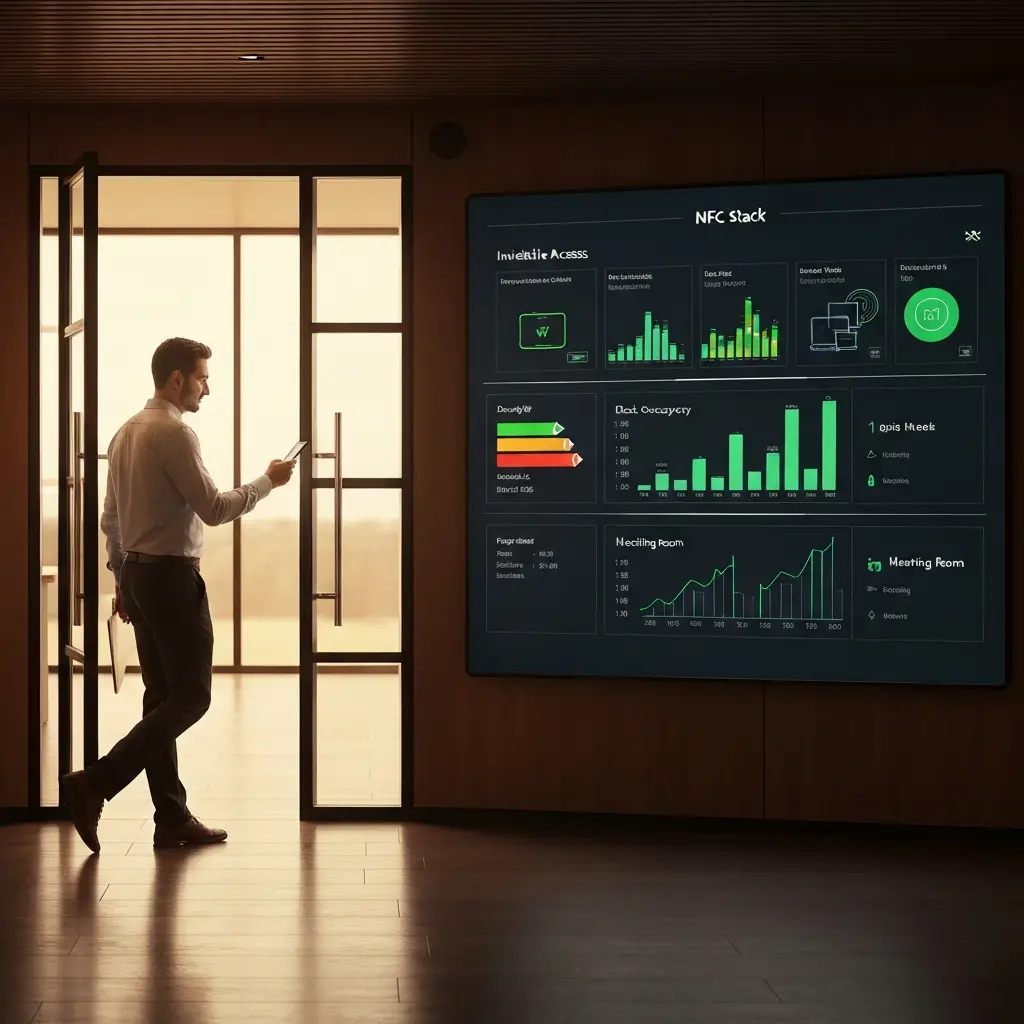
[Image of Invisible Infrastructure] Caption: Diagram showing how Edge-AI sensors, Matter-certified devices, and Multi-Admin software layers create a seamless, proactive, and private workspace environment.
Can a “Workspace Passport” Unlock Global Opportunities?
For a growing Indian startup, networking and client meetings are not confined to Chennai. The rise of Multi-vendor ‘Workspace Passports’ means your digital access credentials can work across 15,000+ independent locations globally. This turns every business trip to Delhi, Bangalore, or even Singapore into an opportunity to use a professional, instantly accessible workspace. It eliminates the hassle of finding ad-hoc meeting rooms and reinforces your brand’s professional image.
This interoperability extends to your daily operations. High-security biometrics like palm-vein scanning function in total darkness, reducing access friction to under two seconds—valuable for late-night working sessions common among founders. This ecosystem, built on open standards, ensures that the workspace serves your business’s mobility and security needs without imposing technological constraints.
Manager Insight: “For corporate branch managers, Multi-Admin control means deploying uniform security and comfort protocols across different city locations, while allowing local teams to use their preferred booking apps. It standardises experience and reduces central IT overhead.”
The 2026 Outlook for the Indian Workspace Market
In 2026, the Indian flexible workspace market will see accelerated adoption of these open standards. Providers locked into proprietary bundles will face pressure to upgrade or lose clients. For businesses, the choice will be clear: opt for spaces that offer interoperable, intelligent technology. This will drive down operational costs for operators, passing savings to members through more competitive pricing and superior services. We anticipate a surge in ‘smart-ready’ buildings across Chennai’s business corridors, with OMR and the CBD leading, offering members not just a location, but a growth-oriented technological partner.
Key Takeaways for Indian Business Leaders
- Audit Tech Openness: Prioritise workspaces that advertise Matter 1.4 Standard or Multi-Admin compatibility to avoid vendor lock-in.
- Calculate True Cost: Evaluate membership costs against ‘Per-Resource’ pricing and energy savings (~25%), not just the monthly fee.
- Demand Silent Reliability: Seek operators investing in ‘Invisible Infrastructure’ for proactive maintenance, ensuring uninterrupted productivity.
- Plan for Mobility: Utilise ‘Workspace Passport’ networks to extend your professional presence beyond your primary city efficiently.
- Prioritise Privacy: Ensure the space uses Edge-AI and local data processing to comply with data security norms and build team trust.
Conclusion: Choosing Your Growth Partner
The era of the walled garden in coworking technology is conclusively over. The shift to the Matter 1.4 Standard and Multi-Admin protocols represents a fundamental upgrade in how workspaces function—they become seamless, efficient, and adaptable partners in your business growth. This is not merely a tech trend; it’s a business efficiency revolution. For the Indian entrepreneur seeking to optimise overheads, empower teams, and scale intelligently, the workspace choice is now a strategic one. At Crizone Business Centre, we are integrating this philosophy of open, intelligent, and calmly efficient technology to provide Chennai’s businesses with the foundational advantage they need to grow.
Continue your workspace search
Explore the most relevant Crizone pages next
If this article is part of your Chennai workspace research, these pages help you move from reading into comparing live plans, locations, and fit.
Explore coworking plans in Chennai
Compare day passes, dedicated desks, private offices, meeting rooms, and virtual office options from one commercial hub page.
Book a day pass in Chennai
Best fit if you need occasional workspace access, a short productive break from home, or a flexible desk for a single day.
Compare dedicated desk options
A stronger fit for regular monthly use when you want a fixed seat, better routine, and predictable workspace costs.