· Business Growth & Workspace · 6 min read
The Composable Tech Stack: A 2026 Blueprint for Indian Business Growth
By 2026, a unified, API-first tech stack will be essential for business efficiency. Learn how a composable tech stack drives growth for Indian SMEs and startups.

TL;DR: The future of efficient workspaces lies in a unified, API-first composable tech stack. By 2026, integrating booking, security, billing, and facilities into one interoperable system will be non-negotiable for Indian businesses seeking to cut costs, boost productivity, and scale intelligently.
For the Indian entrepreneur, the core challenge remains constant: how to grow the business without being bogged down by operational overhead. Rising commercial rents in hubs like Chennai’s OMR, persistent traffic draining productive hours, and the complex web of GST and compliance paperwork consume valuable bandwidth. The traditional long-term lease is a rigid, capital-intensive model ill-suited for agile growth. Today’s demand is for flexibility, but also for seamless, professional operation. The solution emerging by 2026 isn’t just a better physical space, but a smarter digital backbone—an integrated, composable tech stack that turns your workspace into a true growth partner.
What is a Composable Tech Stack?
A composable tech stack is an architectural approach where core business systems—like access control, billing, room booking, and facility management—are built as independent, best-in-class modules. These modules communicate seamlessly through Open APIs, allowing them to be combined, swapped, or scaled as needed. Unlike fragmented point solutions, this creates a unified, interoperable ecosystem. For a business, this means all digital touchpoints, from granting a new hire virtual access to automating monthly invoices, work from a single, intelligent platform.
Why Interoperability is the New Competitive Edge for Indian SMEs
In India, where business agility can mean the difference between capturing a market opportunity and missing it, operational friction is a silent profit-killer. A 2026 workspace is judged not just by its location or design, but by its digital fluency. With 72% of modern occupiers preferring digitally enabled experiences, the expectation is for virtual access, real-time service updates, and a single app interface. A composable stack meets this demand by normalising data from various sources—IoT sensors, access readers, booking systems—into actionable intelligence.
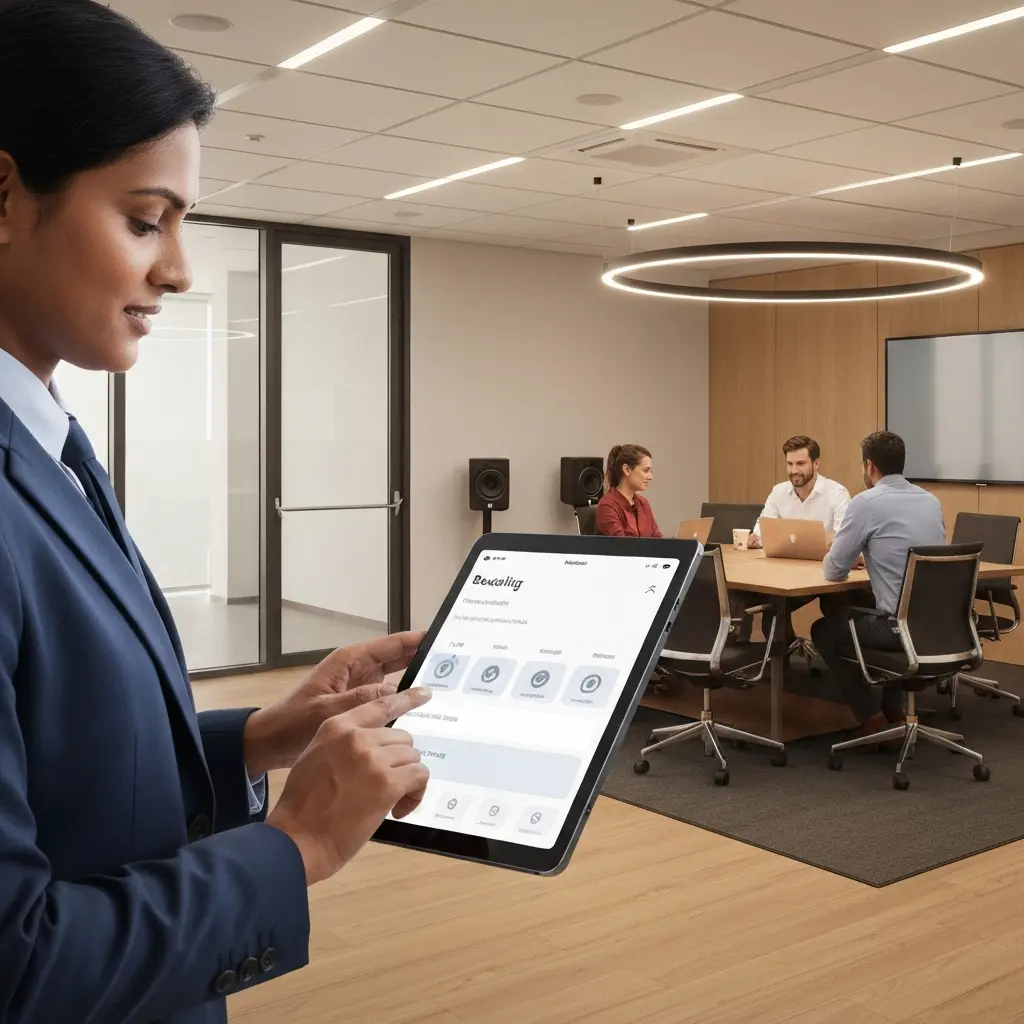
For an SME founder, this translates to profound efficiency gains. Imagine a system where a client’s meeting room booking automatically triggers the HVAC to cool the space 15 minutes before arrival, saving energy costs during Chennai’s humid afternoons. Or where your finance team saves over 15 hours a week because member invoices are auto-generated with local GST compliance and TDS calculations. This isn’t futuristic; it’s the operational baseline for scalable growth in 2026.
Crizone Pro Tip: When evaluating a workspace, ask about API integration capabilities. Can their billing system talk to your accounting software? Can access be granted remotely? This interoperability is what turns a static office into a dynamic business tool.
From Fixed Costs to Fluid Operations: The Hardware & Security Shift
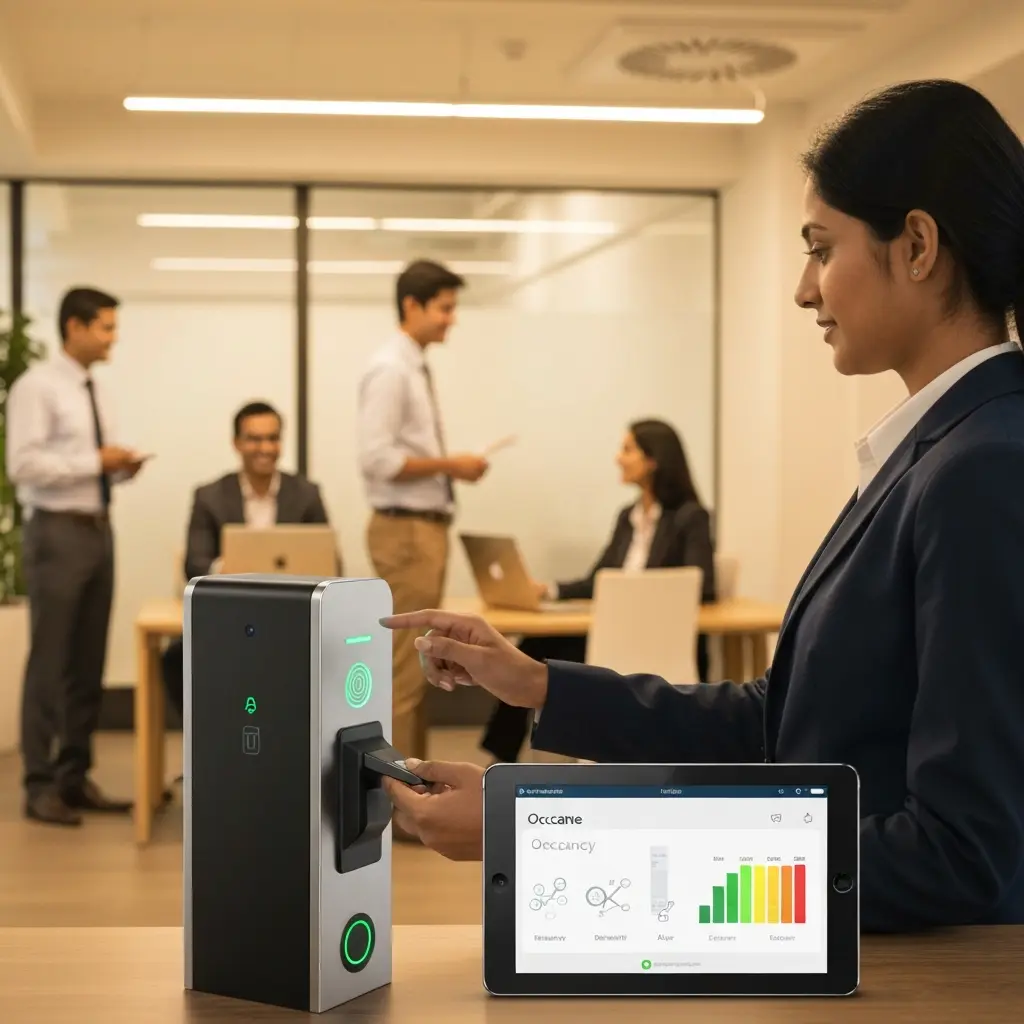
The move to cloud-managed, interoperable systems is revolutionising security and hardware, areas traditionally associated with high upfront costs and complex maintenance. Access Control as a Service (ACaaS) is surging with an 18% CAGR, moving security from local servers to the cloud. For a branch manager in Chennai, this means you can issue mobile credentials to a visiting corporate team via an app, bypassing the need for physical key cards and the logistical headache of retrieving them.
Hardware is also consolidating. The market is shifting toward ‘all-in-one’ devices that merge cameras, intercoms, and readers, reducing cabling, infrastructure costs, and maintenance complexity. This is crucial in the Indian context, where managing multiple vendors for repairs can be time-consuming. Furthermore, with the biometric authentication market growing, high-touch environments are adopting facial recognition for secure, touchless entry—a feature that adds a layer of premium security and convenience.
| Operational Aspect | Traditional, Fragmented Setup | Integrated, Composable Stack (2026 Standard) |
|---|---|---|
| Member Onboarding | Manual form filling, physical key card issuance, separate IT setup. | Digital contract signing, instant mobile credential provisioning via app, automated Wi-Fi access. |
| Monthly Billing & Reconciliation | Manual invoice generation, chasing payments, reconciling spreadsheets (15+ hours/week). | Automated invoicing with GST compliance, integrated payment gateway, real-time financial dashboard. |
| Facility Management | Reactive maintenance calls, manual AC/lighting controls, spreadsheets for asset tracking. | Predictive maintenance alerts, HVAC/lighting automated per booking schedules, IoT-driven energy savings. |
| Security & Access | Physical keys or standalone card systems, no remote management, multiple logins. | Cloud-based ACaaS, mobile credentials, remote access grant/revoke, unified audit logs. |
Is Your Workspace Software Delivering Meaningful ROI or Just “AI-Washed”?
The PropTech landscape is maturing. As analysts note a decline in superficial ‘AI-washed’ tools, the focus for 2026 is on systems that deliver tangible Return on Investment (ROI) through operational intelligence. The true value of a composable stack lies in its ability to translate data into decisions. Approximately 68% of commercial portfolios are deploying systems that use IoT sensor data to generate occupancy intelligence.
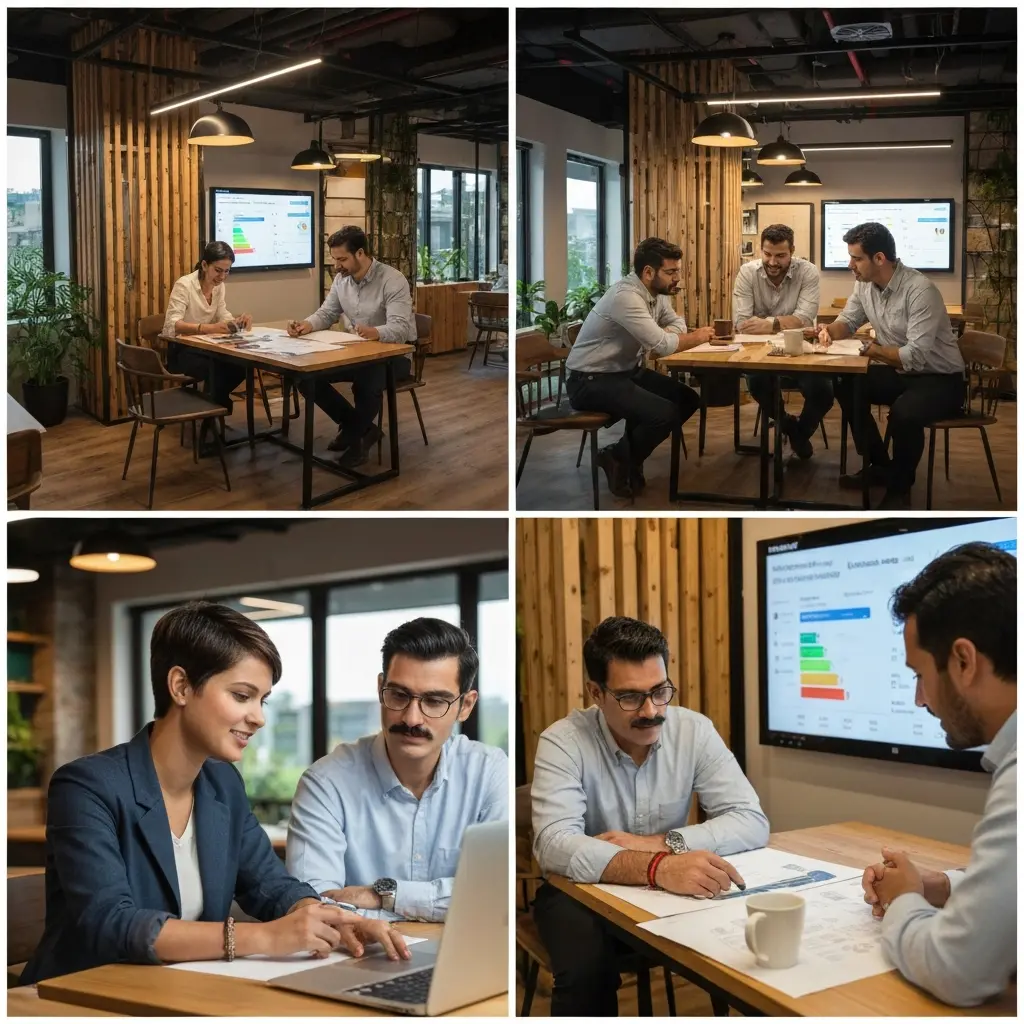
For an Indian business, this means you can analyse which meeting rooms are used most, optimise cleaning schedules based on actual footfall, and right-size your space commitment based on real usage patterns—especially valuable during festive seasons when staff may be on leave. Predictive maintenance, a key ROI driver, can alert operators to a potential AC filter failure before it happens, preventing uncomfortable downtime during a critical client pitch. This data-driven approach protects your operational continuity and directly impacts your bottom line.
[Image of a modern dashboard on a tablet showing real-time analytics for a workspace: live occupancy heatmap, energy consumption metrics, upcoming bookings, and maintenance alerts.]
Manager Insight: The metric that matters is reduction in unplanned capital loss and OPEX. A smart system should pay for itself by preventing revenue loss from downtime and reducing manual labour costs.
The 2026 Outlook for India’s Workspace Market
By 2026, the Indian flexible workspace market will be defined by digital sophistication. The benchmark will no longer be Wi-Fi and coffee, but deep smart building integration. Leading operators will have seamlessly connected their environmental controls (HVAC, lighting) directly to their booking software to automate sustainability and cost savings. We will see the full maturation of the ‘office-as-a-service’ model, where the physical space is just one component of a broader, technology-enabled business productivity platform. For Chennai, this means spaces that not only offer escape from OMR traffic but also provide a fully integrated digital command centre to run your business more efficiently than a traditional lease ever could.
Key Takeaways
- Prioritise Integration Over Isolation: Choose workspace solutions where systems communicate via Open APIs, creating a single source of truth for all operations.
- Demand Mobile-First Access: Mobile credentials are becoming the standard; ensure your workspace offers secure, app-based entry for ultimate flexibility.
- Seek Actionable Intelligence: Opt for platforms that transform IoT data into usable insights on space utilisation, helping you make informed growth decisions.
- Evaluate True ROI: Look beyond buzzwords; the right tech should demonstrably save admin time, reduce energy costs, and prevent operational disruptions.
- Think Scalability: Your workspace technology should be able to add new features or integrate with other business tools (e.g., CRM, accounting software) as your company evolves.
Conclusion
The trajectory is clear: the most productive and cost-effective businesses of 2026 will be those leveraging interoperable, composable technology ecosystems. This stack removes friction, automates complexity, and provides the intelligence needed to scale with confidence. It turns the workspace from a fixed cost centre into a dynamic asset that actively supports your growth. For businesses in Chennai looking to operationalise this future, the path forward is integrated.
Explore how Crizone Business Centre is architecting this seamless, technology-forward environment, designed to be the calmly efficient growth partner your business needs.
Continue your workspace search
Explore the most relevant Crizone pages next
If this article is part of your Chennai workspace research, these pages help you move from reading into comparing live plans, locations, and fit.
Explore coworking plans in Chennai
Compare day passes, dedicated desks, private offices, meeting rooms, and virtual office options from one commercial hub page.
Book a day pass in Chennai
Best fit if you need occasional workspace access, a short productive break from home, or a flexible desk for a single day.
Compare dedicated desk options
A stronger fit for regular monthly use when you want a fixed seat, better routine, and predictable workspace costs.