· Business Growth & Workspace · 6 min read
Member Retention 2026: How Workspace Strategy Drives 22-Month Tenure
The Indian flex workspace market has shifted from social density to social infrastructure. The key to 22-month member tenure lies in 'Belonging-as-a-Service' and hybrid community design.
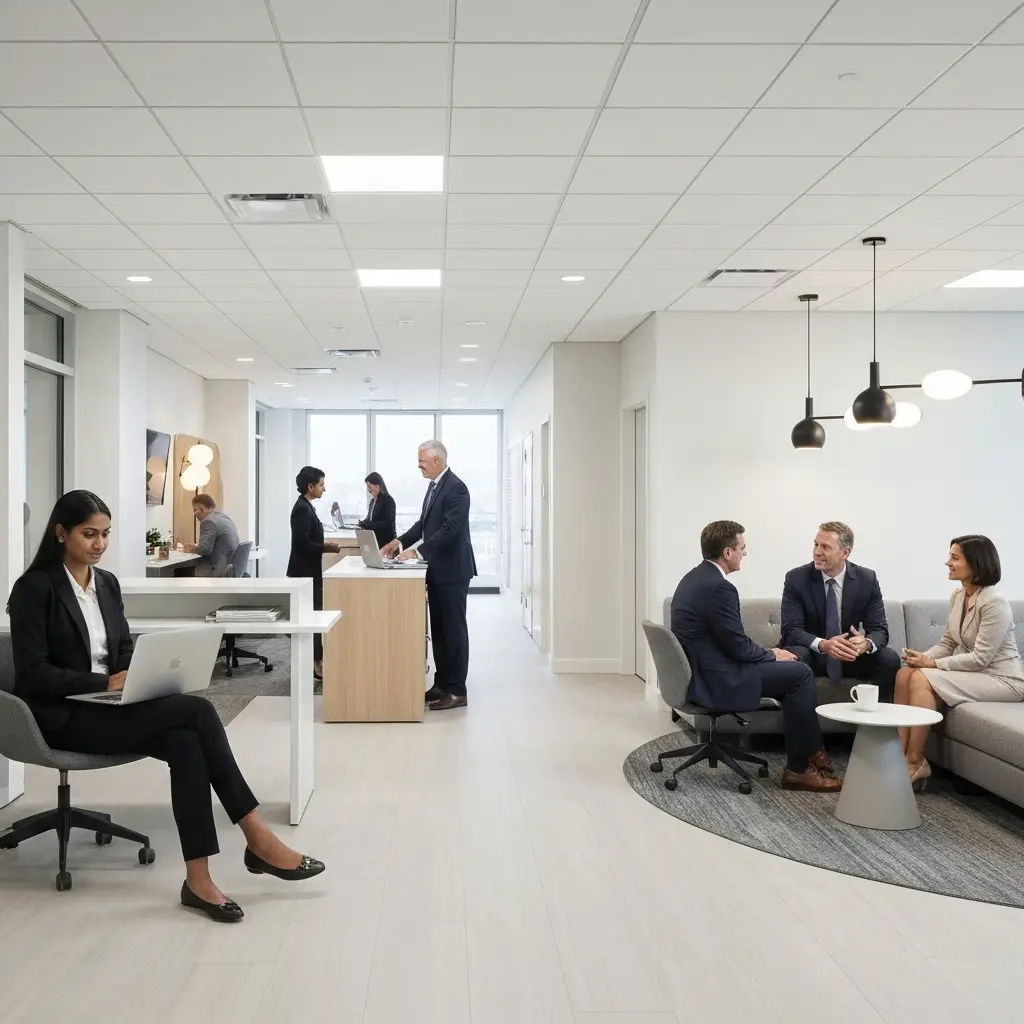
TL;DR: Modern workspace strategy is no longer about desks; it’s about delivering ‘Belonging-as-a-Service.’ By 2026, leading coworking spaces have achieved a 22-month average member tenure by focusing on social health, frictionless infrastructure, and high-trust clusters. This ‘Third Workplace’ model is critical for Indian businesses scaling efficiently and retaining talent.
For the Indian SME founder or branch manager, the perennial question persists: how to secure a productive, cost-effective base that attracts talent and fosters growth? The traditional five-year lease in an IT corridor is fraught with risk—lock-in capital, unpredictable maintenance, and a rigid structure at odds with hybrid work. The market has decisively shifted, demanding flexibility, but the 2026 data reveals a more profound evolution. It’s not merely about flexible real estate; it’s about investing in a ‘Third Workplace’ that directly contributes to employee well-being and business resilience. The new benchmark is Member Retention 2026, where the average tenure has surged to 22 months, signalling a move from transactional space rental to strategic partnership.
What is the ‘Third Workplace Strategy’?
The ‘Third Workplace Strategy’ is a business model where a flexible workspace operator moves beyond providing desks and Wi-Fi to become an essential, trusted extension of a company’s operations. It focuses on creating a high-functioning ‘social infrastructure’ that supports mental well-being, seamless collaboration for distributed teams, and professional community. This strategy, key to achieving a 22-month member tenure, delivers ‘Belonging-as-a-Service’ by integrating focus-oriented design, proactive community curation, and enterprise-grade services into the physical environment.
The Economics of Loyalty: Why Member Tenure Surpassed 22 Months
The leap from an 8-month to a 22-month average tenure is not accidental. It’s the result of operators mastering the economics of member loyalty. For an Indian business, this translates to significant stability and predictable operational costs. Small, independent centres (under 50 seats) are leading this charge, achieving 18-month tenures by offering hyper-localised, personalised service that large chains struggle to match. This ‘15-Minute City’ effect is powerful in Chennai; a workspace near your home in Adyar or within a short drive from OMR eliminates hours of unproductive commute, directly improving quality of life and reducing burnout.
Crizone Pro Tip: Evaluate a workspace not just on price-per-desk, but on the potential tenure of your team. A location within a 15-minute commute can reduce employee churn and increase daily productivity by over 20%.
The financial logic is clear when compared to the traditional model. Consider the hidden costs and rigid commitments of a conventional lease, especially for a growing team.
| Cost Factor | Traditional Office (Chennai, 1,000 sq. ft) | Flexible ‘Third Workplace’ Solution |
|---|---|---|
| Monthly Base Cost | ₹ 1.2 Lakhs - ₹ 2 Lakhs + GST | ₹ 65,000 - ₹ 1.5 Lakhs (scalable seats) |
| Security Deposit | 10-12 months’ rent (₹ 12-24 Lakhs locked) | Typically 1-2 months’ deposit |
| Maintenance & AMC | Owner’s responsibility, unpredictable spikes | Fully managed and included |
| Fit-out & Furniture | Capital expenditure of ₹ 8-15 Lakhs | Professionally designed, zero Capex |
| Administrative Overhead | Dedicated office staff for upkeep | Full front-desk and operations support included |
From Networking to Nurturing: Building Social Health KPIs
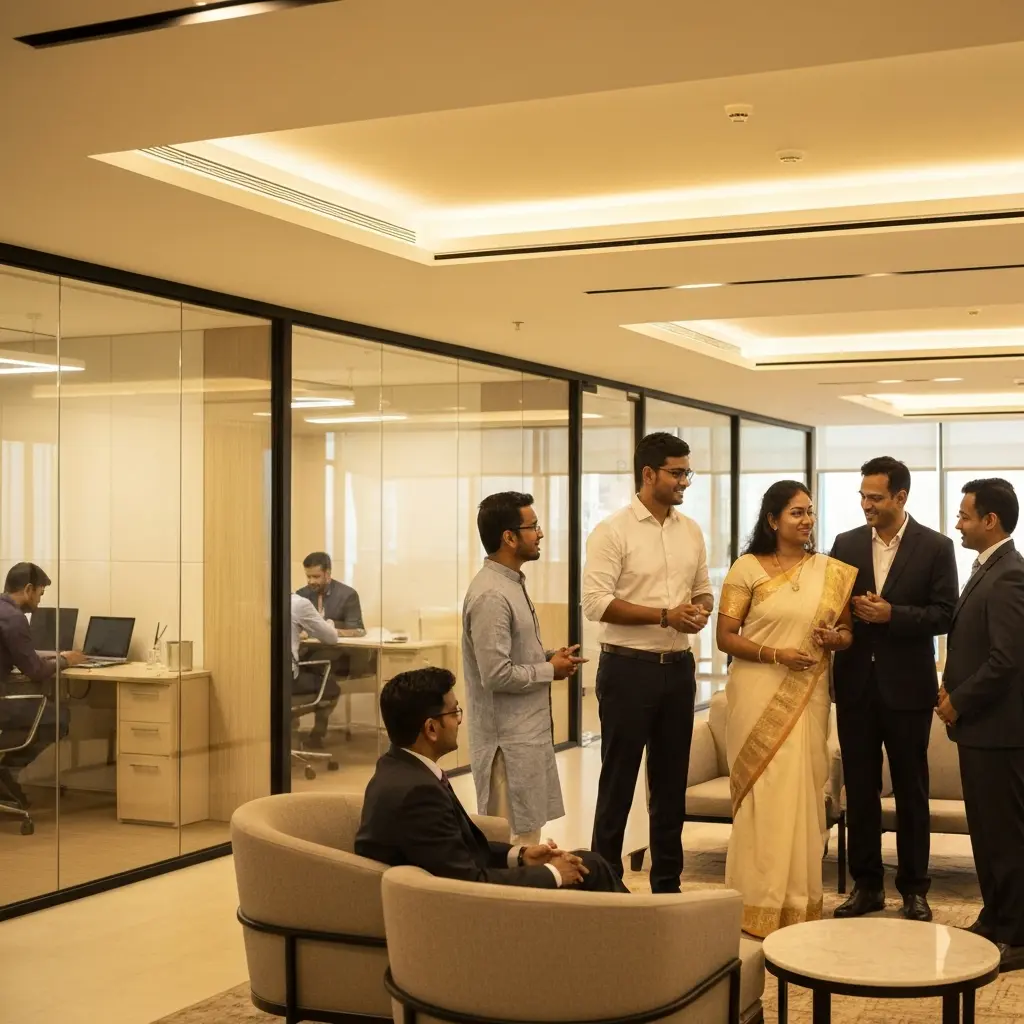
The early coworking promise of passive networking has matured into a deliberate focus on ‘social health.’ This is measured through KPIs like community engagement scores, collaboration frequency, and the mitigation of ‘Quiet Drift’—a detectable decline in a member’s physical or digital presence that now serves as the leading predictor of cancellation. Proactive community managers use these signals for timely, personal intervention. For an Indian company, this external community infrastructure is invaluable. It provides teams with a professional ecosystem beyond their immediate colleagues, fostering innovation and reducing the isolation common in remote work, especially during extended periods like the festive season or monsoon.
Manager Insight: “Community is no longer an optional add-on. It’s a core utility, like electricity. We curate high-trust clusters—groups of non-competing professionals—who become informal advisory boards for each other, solving problems from GST compliance to UI/UX design.”
A recent adaptation of a global JLL report on hybrid work confirms that 68% of flex space members report better mental health, primarily due to the clear separation between work and home environments—a critical factor in India’s often compact urban living situations.
Focus and Synchronization: The Hybrid Community Infrastructure
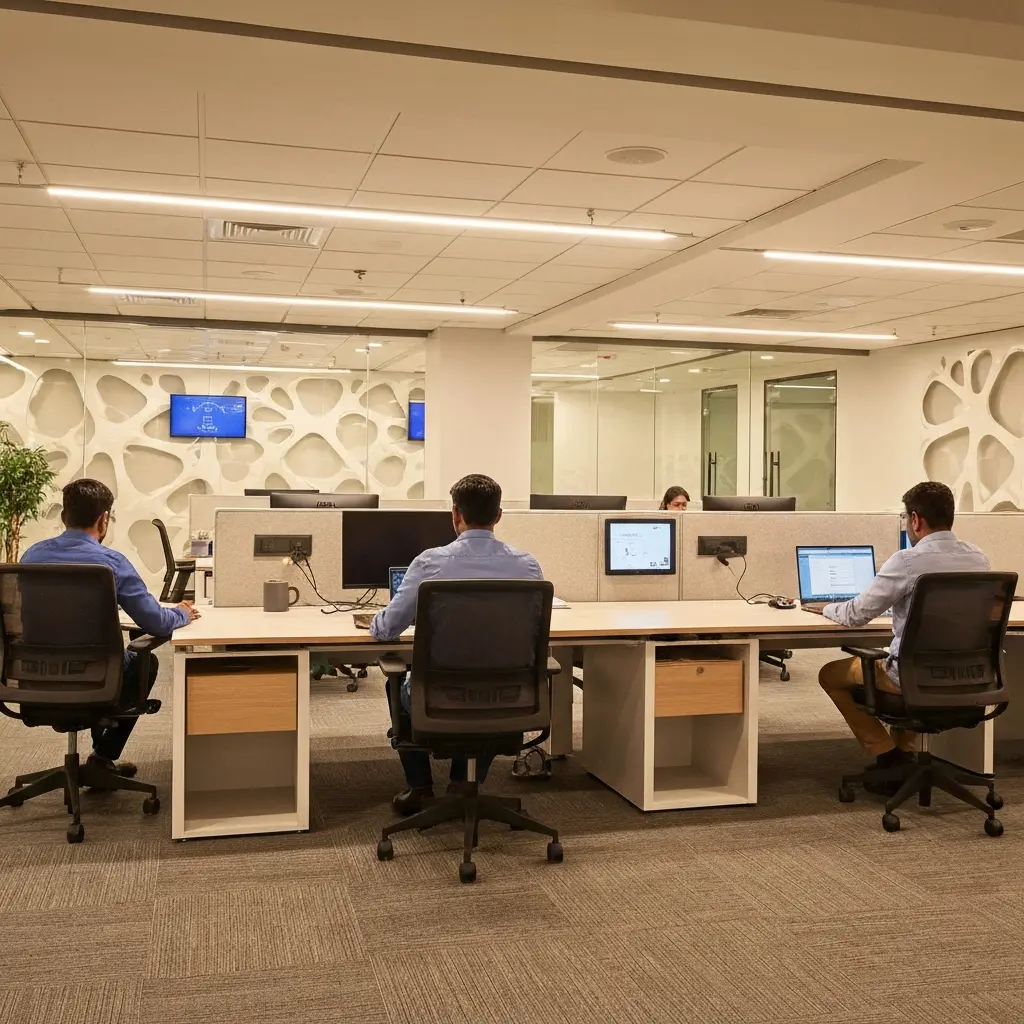
Retention is paradoxically tied to providing both community and solitude. While 59% of expanding companies now choose flex spaces over leases, their need for ‘Enterprise-Ready’ social programs is balanced by an equal demand for acoustic privacy, the number one member complaint. The successful ‘Third Workplace’ provides what we term ‘Hybrid Community Infrastructure’: zones engineered for deep, focused work alongside vibrant areas designed for ‘physical synchronization.’ Meeting room occupancy has hit 65%, not for daily use, but for scheduled, high-value team integrations, client pitches, and workshops. This allows a head office in Mumbai to synchronise seamlessly with its Chennai branch team in a professional, branded environment.
[Image of a Venn diagram showing the intersection of ‘Focus Infrastructure’, ‘Social Infrastructure’, and ‘Enterprise Services’, labelled ‘The Third Workplace Core’.]
This infrastructure directly supports business growth. A founder can secure a prestigious Virtual Office address for correspondence and GST compliance, maintain a stable 14-15 month tenure for remote team members, and book dedicated private offices or meeting rooms on-demand for core teams or project sprints. This modular approach aligns perfectly with the Indian business cycle, allowing for scaling up before Diwali launches or down during quieter periods without financial penalty.
The 2026 Outlook for India’s Workspace Market
The trajectory for 2026 is one of segmentation and sophistication. The market will bifurcate further: high-volume, low-touch spaces competing on price, and premium operators like Crizone competing on delivering ‘Belonging-as-a-Service.’ We predict a surge in demand for private offices within flex settings, as their proven 12+ month tenure offers the ideal blend of privacy and community. Non-membership revenue, from curated industry events to wellness programming, will become a standard expectation, not a novelty. In Chennai, locations with superior Metro connectivity and climate-resilient infrastructure (reliable power and AC) will command the highest loyalty, as professionals prioritise predictable, frictionless workdays over all else.
Key Takeaways for Your Business
- Prioritise Proximity: Choose a workspace within a 15-minute commute for your core team to directly combat burnout and improve retention.
- Demand Data-Driven Community: Partner with operators who measure social health KPIs and proactively engage to prevent ‘Quiet Drift’ among your staff.
- Value Focus as Much as Networking: Ensure the space offers acoustically private zones for deep work, addressing the top complaint of flex space users.
- Think Modular: Use a mix of virtual, dedicated desk, and private office solutions to match your team’s hybrid structure, optimising for both cost and cohesion.
- Look Beyond the Desk: Evaluate the full ‘Third Workplace’ offering—event spaces, wellness amenities, and administrative support—as these services increasingly drive member loyalty and business value.
In conclusion, the workspace has evolved from a cost centre to a strategic growth partner. The record 22-month member tenure underscores a simple truth: businesses stay where their people thrive. By adopting a ‘Third Workplace Strategy,’ Indian companies gain more than flexibility; they gain a competitive advantage in talent well-being, operational agility, and community-driven innovation. This is the new foundation for scaling sustainably. To experience a workspace designed around these 2026 principles of belonging, focus, and growth, we invite you to explore how Crizone Business Centre serves as Chennai’s partner for this new era of work.
Continue your workspace search
Explore the most relevant Crizone pages next
If this article is part of your Chennai workspace research, these pages help you move from reading into comparing live plans, locations, and fit.
Explore coworking plans in Chennai
Compare day passes, dedicated desks, private offices, meeting rooms, and virtual office options from one commercial hub page.
Book a day pass in Chennai
Best fit if you need occasional workspace access, a short productive break from home, or a flexible desk for a single day.
Compare dedicated desk options
A stronger fit for regular monthly use when you want a fixed seat, better routine, and predictable workspace costs.