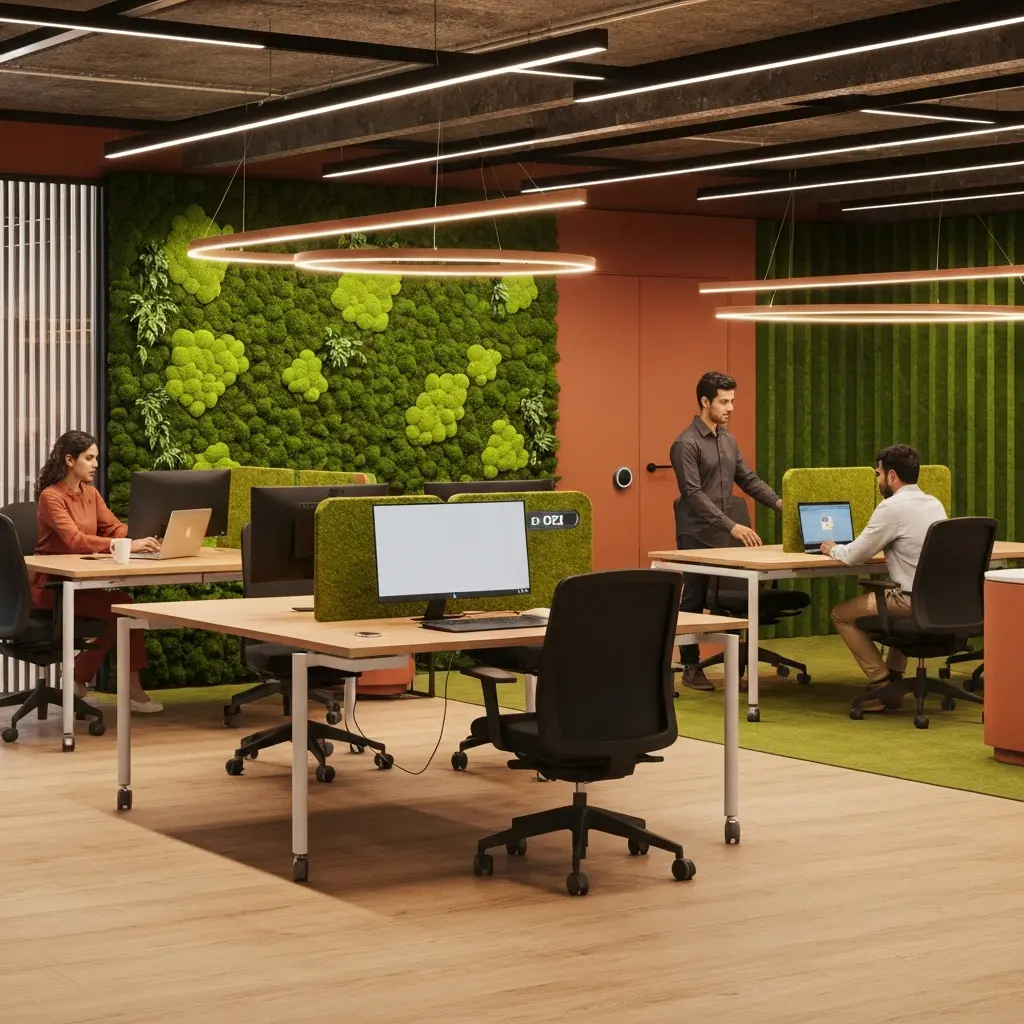
· Business Growth & Workspace · 6 min read
Predictive Coworking Software & IoT Are the Future of Offices
Explore how AI, biometric security, and smart IoT are transforming flexible workspaces into intelligent business growth platforms for Indian companies in 2026.
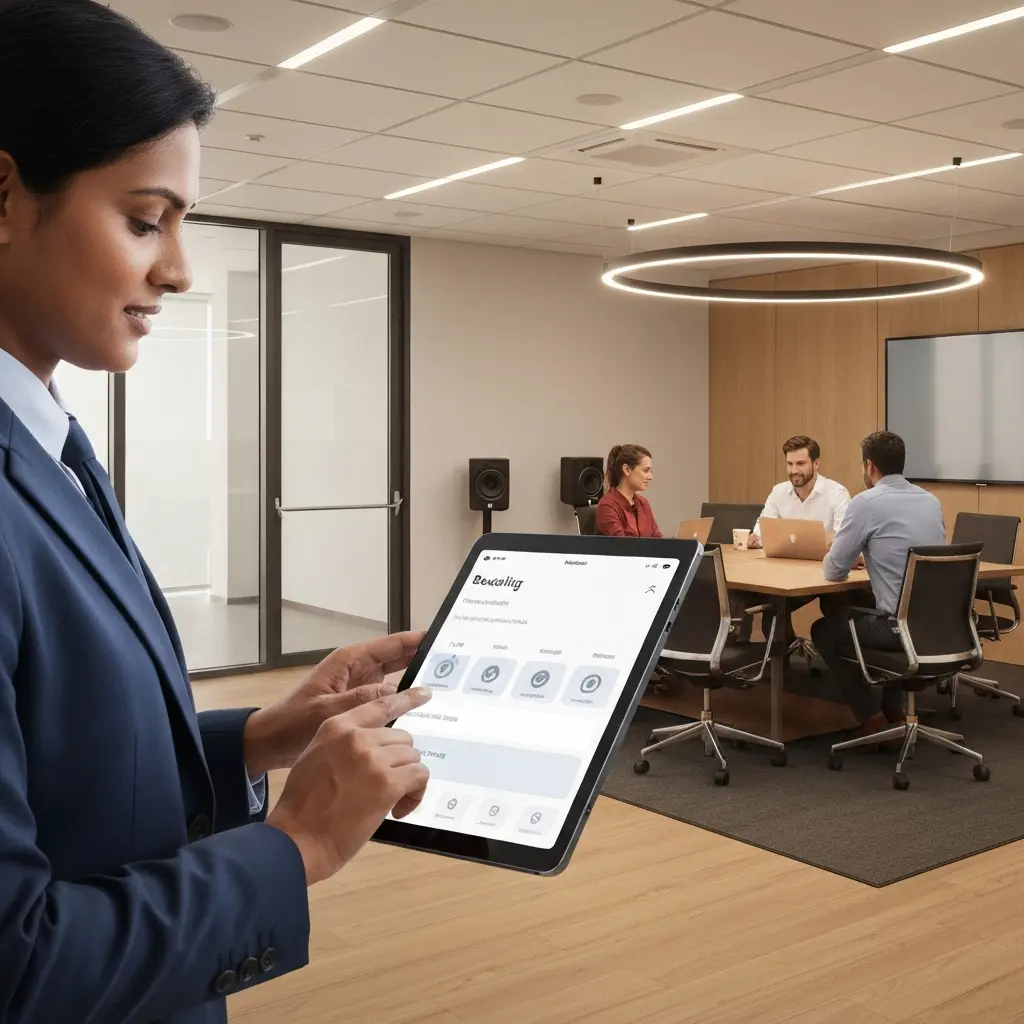
TL;DR: In 2026, flexible workspaces are evolving from real estate solutions into intelligent business platforms. Powered by Predictive CMS and Zero-Trust IoT, they solve critical issues like wasted space, energy costs, and enterprise security. For Indian SMEs, this translates to a smarter, more scalable operational model that directly supports business growth.
For Indian entrepreneurs and SME founders, the office is more than a physical address—it’s a crucial lever for growth, talent retention, and brand perception. Yet, navigating traditional real estate with its rigid leases, escalating rents in corridors like OMR, and the administrative overhead can stifle momentum. The demand has decisively shifted towards agility. As highlighted in the 2026 GCUC report, the global flexible workspace market is now a primary enterprise strategy, valued at $29 billion. The modern solution lies not just in flexible square footage, but in intelligent orchestration. The integration of advanced Coworking Management Software 2026 with smart infrastructure is transforming how businesses operate, turning workspace from a fixed cost into a dynamic growth partner.
What is Predictive Workspace Orchestration?
Predictive Workspace Orchestration is the intelligent, data-driven management of a flexible workspace ecosystem. It involves unified software platforms that integrate AI, IoT sensors, and biometric security to automate operations, optimise space utilisation, and enhance member experience. These systems move beyond basic booking to predict demand, manage energy autonomously, and ensure enterprise-grade security, creating a seamless, efficient, and productive environment. This evolution is critical for a market where operational margins and member satisfaction are paramount.
How Does Smart OpTech Solve Real Business Problems in India?
For an Indian SME, growth is often hampered by unpredictable cash flow and inefficient resource allocation. Traditional office leases lock you into fixed costs for years, while managing a remote team can fragment company culture. Smart Operational Technology (OpTech) directly addresses these pain points.
Take the pervasive issue of wasted resources. AI-driven systems now combat ‘Ghost Booking’ by integrating motion sensors and Wi-Fi data to auto-release unused desks within 15 minutes. For a business, this means paying only for space you actively use, reclaiming an estimated 10-15% of locked inventory costs. Similarly, smart sensors for lighting and HVAC are reducing energy waste by an average of 20%, a critical saving given Chennai’s climate and rising commercial electricity tariffs. This data is also invaluable for meeting the growing emphasis on ESG reporting.
Crizone Pro Tip: When evaluating a flexible workspace, ask about their CMS capabilities. Can it provide real-time occupancy analytics? This data helps you right-size your team’s space requirements and budget more accurately, avoiding the common pitfall of over-committing on square footage during a growth phase.
Is Your Office Security Holding You Back from Enterprise Clients?
As Indian SMEs scale and pursue larger contracts, demonstrating robust security and compliance becomes non-negotiable. Clients, especially in BFSI or tech, audit vendor premises. Traditional keycard systems are insufficient. The 2026 standard is ‘Zero-Trust’ decentralized biometrics—think 3D facial or vein recognition processed on the device itself for privacy. These systems offer 99.9% accuracy and sub-second entry, meeting global data protection norms.
This level of security, typically only affordable for large corporates, is now accessible through premium flexible workspaces. It allows a growing tech startup in Chennai to host sensitive client workshops without security concerns, levelling the playing field. Furthermore, unified access logs simplify compliance for audits, a frequent requirement for companies dealing with GST and TDS regulations.
| Security Consideration | Traditional SME Office | Orchestrated Smart Workspace |
|---|---|---|
| Access Control | Metal keys or basic keycards | Zero-Trust biometrics (Facial/Vein) |
| Audit Trail | Manual register or none | Automated, digital logs for all entry/exit |
| Compliance | High administrative burden | Built-in systems aid GST/ISO audit readiness |
| Perceived Brand Value | Basic | Enterprise-grade, inspires client confidence |
Can Your Workspace Model Adapt to Market Shifts?
The Indian business landscape is dynamic, with demand fluctuating around festivals, project cycles, and funding rounds. Asset-light models are becoming the strategic norm, with 40% of new 2026 locations operating on Management Agreements. This allows operators to be agile, and benefits members by aligning the operator’s success with their own satisfaction.
For the member business, this translates to a partner invested in their growth. Revenue models are also diversifying; top operators now derive only 70% from desks, with the rest from virtual offices, event rentals, and value-added services. This stability protects members from sudden price hikes due to vacancy pressures elsewhere in the building. It also means your workspace provider can offer a true ecosystem—from a prestigious Chennai business address for your virtual office to a high-end boardroom for that crucial investor pitch.
[Image of a dynamic revenue model pie chart for a 2026 coworking space] A pie chart showing a diversified 2026 workspace revenue model: 70% Desk & Private Office Memberships, 12% Virtual Office Services, 10% Event & Meeting Space Rentals, 8% Ancillary Services (Mail, Concierge, F&B).
The 2026 Outlook for Indian Workspaces
Looking ahead, the trend is clear: intelligence and experience will define premium workspaces. The ‘Home Barrier’ is real, with 78% of companies having hybrid policies. To compete, spaces will invest in ‘experiential infrastructure’—spatial audio for focus, 360-degree ‘Zoom-ready’ cameras for hybrid meetings, and ambient environments that boost cognitive comfort through Agentic IoT. Expect growth to accelerate in suburban and Tier 2 cities (25% YoY), aligning with the ‘15-minute city’ trend, as professionals in India prioritise commute reduction. Workspaces in hubs like Chennai will evolve into interconnected networks, offering seamless access across locations. The future office is not a cost centre, but a curated platform for productivity and growth.
Key Takeaways for Indian Business Leaders
- Demand Intelligent Systems: Prioritise spaces using Predictive CMS that actively manage inventory and energy. This technology directly lowers your operational overhead.
- Security is a Growth Enabler: Zero-Trust biometric access is no longer a luxury. It is essential for attracting enterprise clients and simplifying your own compliance processes.
- Seek a Growth Partner, Not a Landlord: Choose workspace providers with asset-light, diversified revenue models. Their success becomes intrinsically linked to supporting your business journey.
- Plan for Hybrid Excellence: Ensure your chosen space has the experiential tech (professional AV, acoustic zoning) to make hybrid collaboration with your dispersed team seamless and effective.
- Look Beyond CBDs: Consider spaces in emerging suburban nodes. They offer future-proof convenience for your team, often with premium amenities at a competitive value.
The orchestrated office of 2026 represents a fundamental shift from passive space rental to active business enablement. For the Indian entrepreneur, freelancer, or branch manager, this means your workspace can finally be as agile, secure, and data-driven as your business aims to be. The right environment does more than host your team; it amplifies their output, safeguards your operations, and projects a professional image that wins trust.
In Chennai’s dynamic market, this future is already taking shape. At Crizone Business Centre, we integrate these very principles of predictive orchestration and secure, member-centric design into our fabric. We provide the intelligent infrastructure and calm, efficient environment that allows your business to focus on what it does best—growing. Let your workspace be the strategic partner your next phase of growth deserves.
Continue your workspace search
Explore the most relevant Crizone pages next
If this article is part of your Chennai workspace research, these pages help you move from reading into comparing live plans, locations, and fit.
Explore coworking plans in Chennai
Compare day passes, dedicated desks, private offices, meeting rooms, and virtual office options from one commercial hub page.
Book a day pass in Chennai
Best fit if you need occasional workspace access, a short productive break from home, or a flexible desk for a single day.
Compare dedicated desk options
A stronger fit for regular monthly use when you want a fixed seat, better routine, and predictable workspace costs.