· Business Growth & Workspace · 6 min read
The 15-Minute Enterprise: Third Workplaces Redefine CRE 2026
The 'Third Workplace' is now a structural requirement for enterprise growth, driven by commute reduction and hyper-local flex networks. Learn how Indian businesses can leverage this trend.
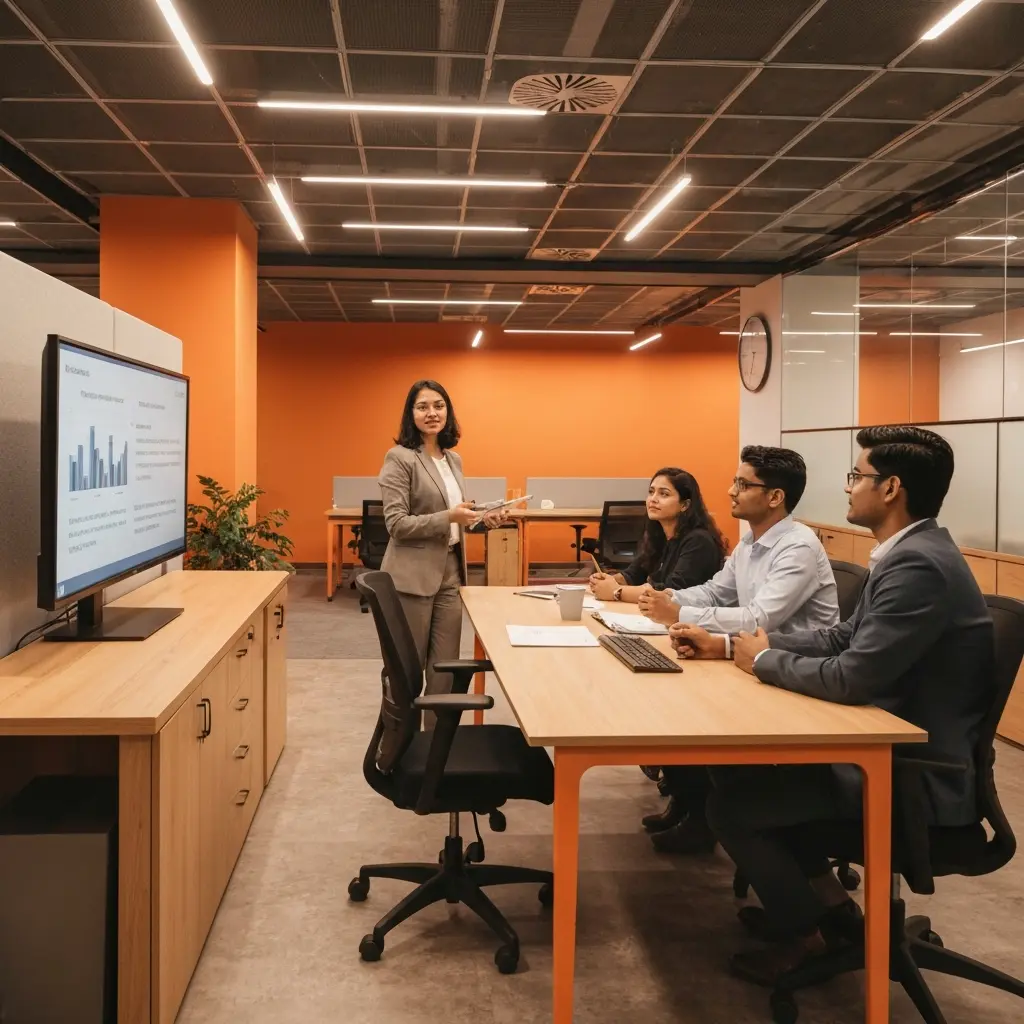
TL;DR: In 2026, the Third Workplace—a hyper-local, flexible office within a 15-minute commute—is a core portfolio strategy. It cuts real estate costs by ~25%, boosts productivity by reducing travel, and allows Indian enterprises to build agile, distributed teams focused on growth.
For the Indian enterprise leader, the traditional office lease has become an anchor. It ties up capital in long-term liabilities, fixes your talent pool to a single, congested geography, and creates immense operational overhead. Simultaneously, employee demand for better work-life integration, especially in cities like Chennai with its notorious corridor traffic, is non-negotiable. The solution emerging in 2026 is not merely hybrid work policy, but a fundamental restructuring of corporate real estate (CRE) strategy around the Third Workplace.
What is a Third Workplace?
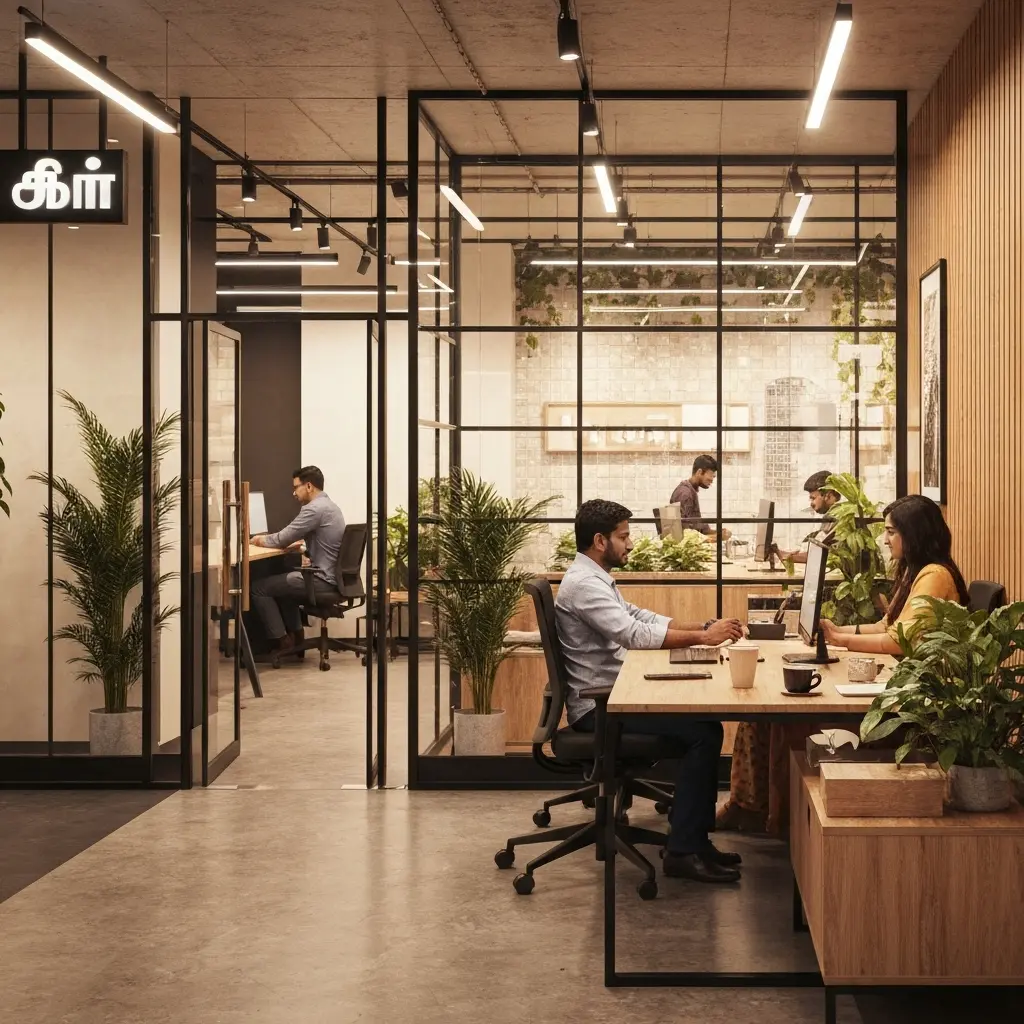
A Third Workplace is a professionally managed, flexible office space located within a 15-minute commute (walk, cycle, or short drive) from an employee’s home. It is distinct from the corporate headquarters (first workplace) and the home office (second workplace). This model creates a hyper-local network of satellite offices, allowing enterprises to decentralise operations, reduce employee burnout from commuting, and access talent pools across a metro area like Chennai without the cost of a full branch setup.
From Perk to Portfolio Pillar: The Data-Driven Shift
Hybrid work is no longer experimental. With 78% of global corporations enforcing formal policies, the focus has sharpened on execution—specifically, minimising the friction of coming into an office. The 2026 data is clear: 65% of new enterprise flex memberships are chosen based on that critical 15-minute proximity. For an Indian SME, this translates to a powerful growth lever. You can hire the best product manager living in Adyar, a brilliant designer in Velachery, and a sales lead in Anna Nagar, providing each with a professional workspace near their home without forcing a cross-city relocation.
Crizone Pro Tip: Your workspace strategy is now a talent acquisition tool. Offering a premium, local Third Workplace can make your offer stand out in competitive Indian job markets like Chennai’s IT corridor.
This is not just about employee preference; it’s a bottom-line decision. Corporations report average savings of 25% on total occupancy costs by replacing decade-long leases with flexible terms. For an Indian company, this frees up crucial lakhs in working capital that can be redirected towards R&D, marketing, or team expansion.
| Cost Factor | Traditional Chennai Office (5-yr Lease) | Flexible Third Workplace Network |
|---|---|---|
| Monthly Rent (for 10 desks) | ₹ 1.5 Lakh + ₹ 50,000 Deposit | ₹ 1.2 Lakh (all-inclusive, no deposit) |
| Fit-out & Furniture | ₹ 15-20 Lakhs (CAPEX) | ₹0 (Included in membership) |
| Maintenance & Utilities | ₹ 25,000/month + management overhead | ₹0 (Fully managed) |
| Long-Term Liability | High (5-year lock-in) | Low (Monthly or quarterly commitments) |
| Table: Simplified cost comparison illustrating the financial agility of a flexible workspace strategy. Figures are indicative for the Chennai market. |
Is a Distributed Network Right for Your Indian Business?
The shift to hyper-local workspaces aligns perfectly with the growth trajectory of Indian SMEs and startups. The core question is about agility. Can your business benefit from being present in multiple micro-markets? For sales teams, this means shorter client travel times across Chennai. For founders, it means the ability to scale up or down desk space within a month, not a year, responding to project wins or market shifts without penalty. The extreme rightsizing seen globally—where firms slash footprints by 60-80%—highlights a move from fixed cost to variable, managed expense.
As noted in recent JLL India research, the demand for flexible spaces in India is significantly outpacing the broader commercial real estate market, driven by this enterprise need for agility. The design shift towards 3:1 ratio of private offices and focus pods over open-plan seating, as seen in 2026 layouts, directly supports the Indian work culture that often values concentrated, private work for deep focus phases.
[Image of a network map] A visual map showing a central business district in Chennai (e.g., Guindy) connected via spokes to multiple hyper-local flexible workspace nodes in residential and commercial suburbs like Adyar, OMR, and Anna Nagar.
The Synchronisation Hub: Culture in a Distributed Model
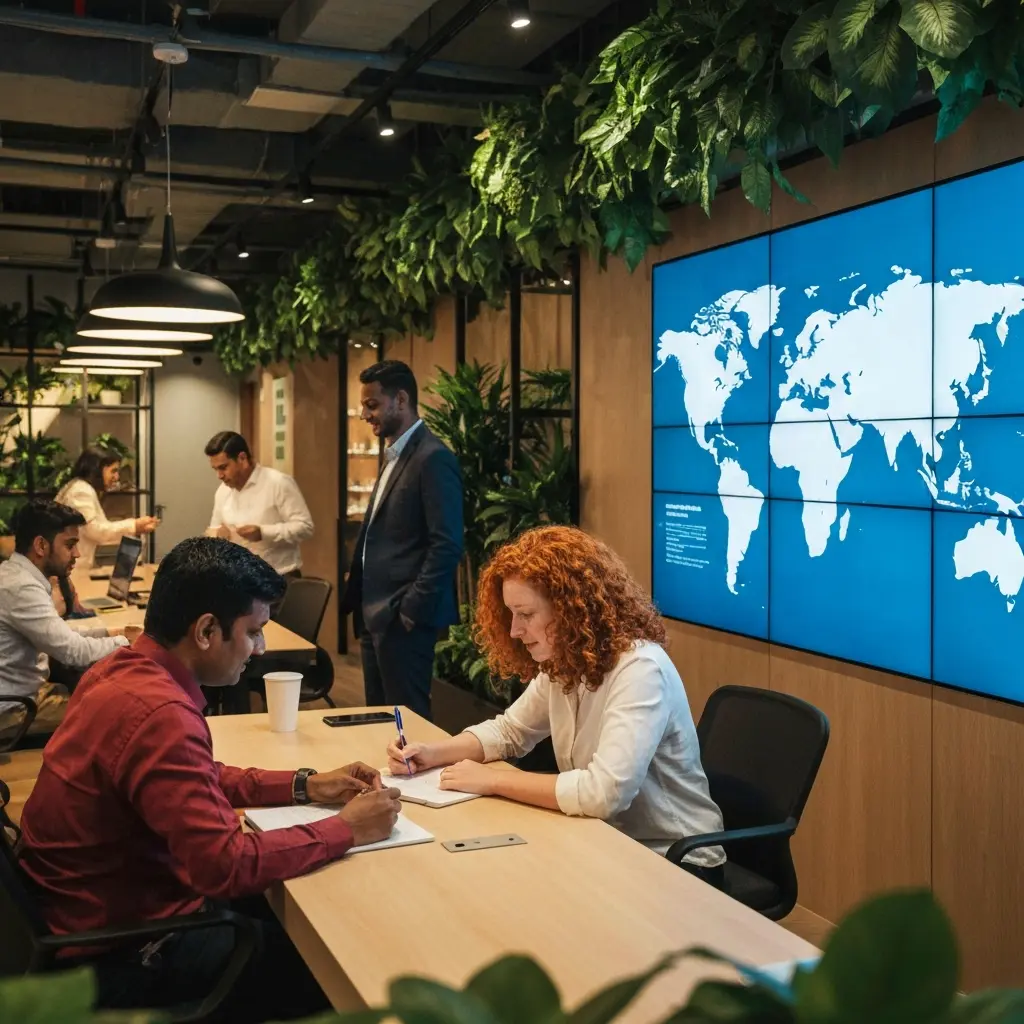
A critical finding for 2026 is the 65% occupancy rate in flex-based meeting rooms. This indicates that these Third Workplaces are not just silent workstations; they are becoming vital “synchronisation hubs.” Distributed teams use these professionally equipped spaces for planned collaboration, client meetings, and team-building—the social and cultural glue that remote work can lack. For an Indian manager, this means you can mandate “in-office” days for collaboration without subjecting your team to a punitive 90-minute commute each way. The office becomes a destination for purposeful connection, not daily drudgery.
Manager Insight: Schedule all-team meetings at a central, well-equipped Third Workplace like Crizone. Use the time for strategic workshops and relationship-building, maximising the value of the physical gathering while respecting personal commute time.
The 2026 Outlook for Indian Enterprises
By 2026, we predict that flexible workspace will move from its current niche to become a standard component of the Indian corporate real estate portfolio. Expect managed workspace providers to offer deeper enterprise integrations, including customised branding, dedicated community management, and analytics on space utilisation. The 15-minute city concept, adapted for Indian metropolises, will see business centres thriving in suburban hubs, catering to the post-pandemic workforce that has relocated. In Chennai, this means growth in locations beyond the traditional core, offering professionals in areas like Porur or Medavakkam a world-class workplace minutes from home.
Key Takeaways
- Adopt an Agile Portfolio: Treat workspace as a variable, managed service, not a fixed asset. This rightsizes cost and aligns with business cycles.
- Prioritise Proximity: Choose workspace locations based on a 15-minute employee commute to boost adoption of office days and improve well-being.
- Design for Purpose: Utilise Third Workplaces as collaboration hubs. Invest meeting time in high-value activities that require face-to-face interaction.
- Leverage for Talent: Use access to a network of local, premium workspaces as a competitive advantage in hiring and retaining top talent across a city.
- Start with a Pilot: Engage a premium provider like Crizone for a 3-month pilot for one team. Measure the impact on productivity, cost, and team satisfaction.
Conclusion
The era of the monolithic headquarters is giving way to the dynamic, hyper-local network. The Third Workplace strategy is a direct response to the demands of modern talent and the financial pragmatism required for growth. It represents a shift from managing real estate to curating productive experiences for your team. For forward-looking businesses in Chennai, the infrastructure to build this agile network already exists, designed to support your enterprise’s next phase of growth with calm efficiency.
Explore how Crizone Business Centre’s network of premium workspaces across Chennai can serve as the core of your 2026 portfolio strategy.
Continue your workspace search
Explore the most relevant Crizone pages next
If this article is part of your Chennai workspace research, these pages help you move from reading into comparing live plans, locations, and fit.
Explore coworking plans in Chennai
Compare day passes, dedicated desks, private offices, meeting rooms, and virtual office options from one commercial hub page.
Book a day pass in Chennai
Best fit if you need occasional workspace access, a short productive break from home, or a flexible desk for a single day.
Compare dedicated desk options
A stronger fit for regular monthly use when you want a fixed seat, better routine, and predictable workspace costs.