· Business Growth & Workspace · 6 min read
Retail-to-Flex: How Chennai's Workspace is Changing for 2026
The workspace market is decentralising. Learn how the retail-to-flex pivot creates growth opportunities for Indian SMEs and startups in secondary markets like Chennai.
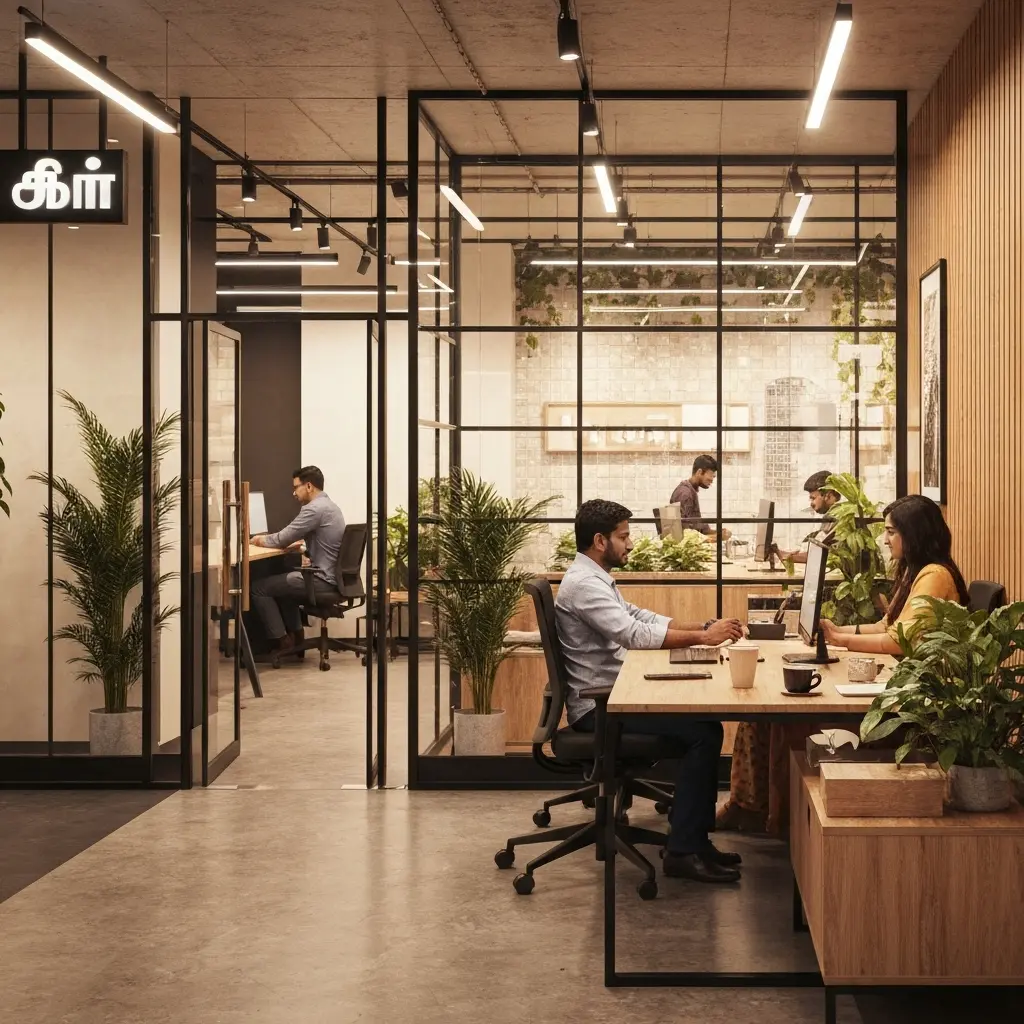
TL;DR: The workspace market is pivoting. By 2026, demand is decentralising into high-street retail and suburban clusters, driven by shorter leases and the 15-minute city. This retail-to-flex trend offers Indian businesses cheaper, agile spaces closer to home, fostering hyper-local networks and faster growth.
Introduction
The challenge for modern Indian businesses is twofold: escalating fixed real estate costs and the daily drain of long commutes. Traditional five-year leases lock capital and limit agility, while traffic on Chennai’s OMR or in Mumbai’s BKC impacts productivity and talent retention. Contrast this with the new flexible demand. A significant 37% contraction in corporate lease lengths signals a shift towards agility.
This aligns with the global trend where 58% of corporate occupiers now use flexible workspace as a permanent, intentional strategy. The primary keyword, retail-to-flex, encapsulates this structural shift. It represents the transformation of underutilised urban and suburban retail vacancies into dynamic, hyper-local work clusters, directly serving the needs of Indian SMEs, freelancers, and branch offices seeking efficient growth.
What is Retail-to-Flex?
Retail-to-flex is the strategic conversion of vacant or underperforming retail spaces on high-streets and in residential suburbs into professional flexible workspace hubs. Optimised for a Featured Snippet, it is a direct response to the ‘15-minute city’ urban model and shorter corporate lease terms. These hubs provide coworking, private offices, and meeting spaces within a short commute of members’ residences, creating hyper-local business ecosystems. This model decentralises workspace access from costly urban cores to more affordable, accessible secondary markets.
Why is This Pivot Accelerating in 2026?
The data points to a confluence of economic and social drivers making this shift inevitable for markets like India.
The Irreversible Demand for the 15-Minute Commute
A core driver is location. Fact 2 states 65% of new coworking memberships are for locations within a 15-minute commute of home. In Chennai, this translates to demand shifting from central business districts to nodes like Anna Nagar, Adyar, or even emerging suburbs. Skipping two-hour traffic saves productive hours and improves well-being.
For Indian SMEs, this means talent can work closer to home, aiding retention. For freelancers, it reduces overheads and time waste. The high occupancy rates in these clusters prove the model’s viability.
Crizone Pro Tip: When evaluating a workspace, map your core team’s residences. A hub within a 15-minute radius for most can significantly boost daily output and morale.
The Economic Calculus: Lower Costs, Faster Returns
The financial rationale is compelling. Fact 3 indicates conversion costs are significantly lower than traditional office build-outs. While the data is in USD, the principle translates to Indian Rupees. Converting a vacant retail space in a Chennai suburb involves less intensive construction than a Grade A office fit-out.
This lower capital expenditure allows for faster recovery. Fact 10 notes 75% of well-managed spaces achieve positive cash flow within 24 months. For a business considering its own office, the comparison is stark.
| Cost Factor | Traditional Office (Chennai Suburb) | Flexible Membership (Retail-to-Flex Hub) |
|---|---|---|
| Fit-out / Setup Cost | ₹15-25 Lakhs for 500 sq. ft. | ₹0 (Provider’s capital expenditure) |
| Monthly Rental Overheads | ₹50,000 - ₹80,000 + Maintenance | ₹15,000 - ₹40,000 (all-inclusive) |
| Lock-in Period | 3-5 Years Minimum | Month-to-month or 12-month plans |
| Administrative Burden | GST, TDS, Utilities, Vendor Management | Single invoice, managed services |
This table illustrates why flexible models, especially in affordable secondary market locations, are becoming the prudent choice for growth-focused businesses.
[Image of Graph: A bar chart showing Year-over-Year Growth Rates. One bar labeled “Tertiary/Secondary Markets” shows ~10% growth. Another bar labeled “Urban Core Markets” shows ~4% growth.]
From Stopgap to Strategic Intent
The corporate mindset has evolved. Fact 4 highlights that flexible workspace is now a permanent portfolio component for 58% of occupiers. In India, this is evident as companies use hubs for satellite teams, project bases, or as a buffer against festive season downtime in main offices.
This shift from experimental use to ‘intentional gathering’ means these spaces are designed for collaboration and community, not just desks. The Super-Hub model (Fact 9) where niche operators refer clients creates cross-functional ecosystems. A tech startup in a flex hub might easily connect with a legal consultant or design studio next door.
Manager Insight: “Our Chennai branch uses a flex hub for its sales team. It’s not a temporary fix; it’s a strategic node that gives us local presence and agility without the burden of a full lease.”
Is a Hyper-Local Workspace Right for Your Business?
Consider these questions. Does your team value time saved over commute prestige? Are you looking to test a new market area without long-term commitment? Is fostering local networks part of your growth strategy? If yes, the retail-to-flex model aligns with your goals.
The economic maturity of the sector supports this. Fact 7 shows RevPAD (Revenue per Available Desk) is rising in professional markets, indicating better yield management. For members, this means sustainably priced, high-quality offerings. Fact 6’s shorter lease terms for providers (down to ~77 months) mean they can be more agile, adapting hubs to local demand shifts.
The 2026 Outlook for India’s Workspace Market
The trajectory is clear. Fact 8 shows tertiary markets and secondary cities expanding at nearly 10% YoY, far outpacing urban core growth. In India, this will manifest in cities like Chennai, Pune, and Ahmedabad seeing new flex clusters emerge in suburban retail corridors and residential hubs.
We predict a rise in branded hyper-local hubs offering premium, calm efficiency outside traditional CBDs. Revenue models will diversify beyond membership (Fact 5), with hubs offering event spaces, specialised training, and concierge services tailored to local business needs. Operators will increasingly collaborate, creating linked ecosystems across a city rather than competing in isolation.
Key Takeaways
- Location is New Premium: Prioritise spaces within a 15-minute commute for your core team over prestigious, distant addresses.
- Capital Light Growth: Utilise flexible hubs to avoid large, locked capital in office fit-outs and long leases.
- Agility as Strategy: Use short-term, all-inclusive membership to scale teams or test new markets with minimal risk.
- Intentional Networking: Choose hubs that foster local ecosystems and intentional community, not just provide desks.
- Follow the Data: The sector’s maturity (rising RevPAD, shorter provider leases) indicates stable, professional options are available.
Conclusion
The 2026 pivot towards hyper-local, retail-born flex clusters is a rational response to economic and lifestyle demands. It offers Indian entrepreneurs, SMEs, and corporate branches a pathway to efficient, agile, and community-connected growth. By decentralising professional workspace, it puts productivity and well-being at the forefront.
For businesses in Chennai looking to navigate this shift, Crizone Business Centre embodies this forward-looking model, offering calmly efficient, premium workspace solutions designed to be your strategic growth partner in the evolving market.
Continue your workspace search
Explore the most relevant Crizone pages next
If this article is part of your Chennai workspace research, these pages help you move from reading into comparing live plans, locations, and fit.
Explore coworking plans in Chennai
Compare day passes, dedicated desks, private offices, meeting rooms, and virtual office options from one commercial hub page.
Book a day pass in Chennai
Best fit if you need occasional workspace access, a short productive break from home, or a flexible desk for a single day.
Compare dedicated desk options
A stronger fit for regular monthly use when you want a fixed seat, better routine, and predictable workspace costs.