· Business Growth & Workspace · 6 min read
PropTech 2026: How Smart Workspaces Drive Growth for Indian SMEs
The coworking landscape is transforming into a strategic asset. Learn how 2026's AI and biometric security create efficient, secure, and growth-oriented workspaces for Indian entrepreneurs.
TL;DR: By 2026, coworking is a precision operation. Integrated AI and biometric security slash operational costs, automate administration, and create secure, responsive environments. For Indian SMEs, this tech evolution turns workspace from a fixed cost into a dynamic growth partner.
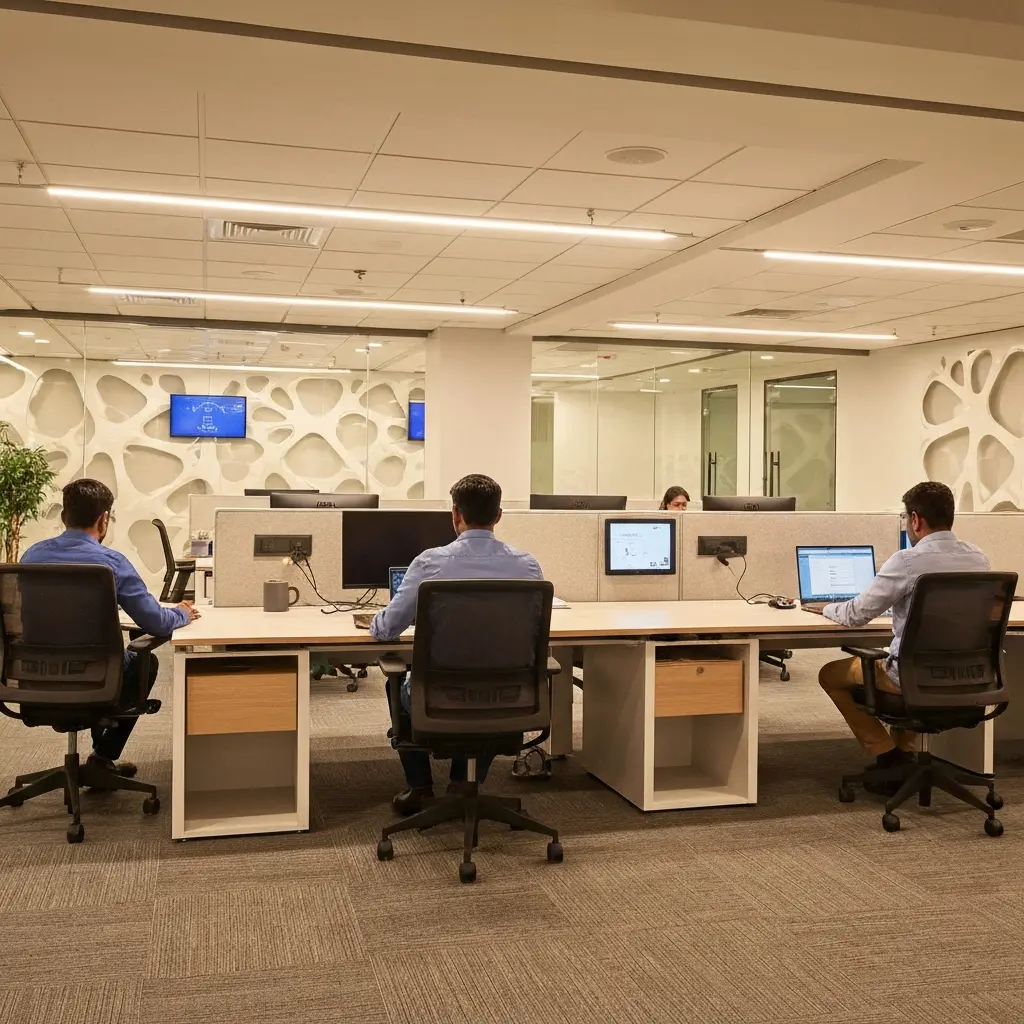
For the Indian entrepreneur, founder, or branch manager, the office has long been a complex equation of cost, location, and culture. Rising commercial rents in corridors like Chennai’s OMR, unpredictable operational overheads, and the constant pressure to attract and retain talent create a significant drag on growth. The traditional 3-year lease represents a rigid liability, not an agile asset. In 2026, the very infrastructure of work is undergoing a fundamental shift. PropTech 2026 is moving beyond providing mere space to delivering a seamlessly orchestrated, intelligent environment that actively supports business objectives. This evolution from ‘space-as-a-service’ to ‘precision operations’ is the new frontier for competitive advantage.
What is PropTech 2026 in Coworking?
PropTech 2026 refers to the mature integration of property technology—specifically AI, IoT, and biometric systems—into workspace infrastructure to achieve operational precision. It transforms a static office into a responsive, self-optimising asset that predicts maintenance needs, automates security and administration, and dynamically allocates resources like energy and space based on real-time human presence and behaviour. The goal is to eliminate operational friction, reduce costs, and elevate the human experience, making the workspace itself a strategic partner in business growth.
From Reactive to Predictive: The End of Downtime
For an SME, every hour of operational hiccup—a failed AC during Chennai’s humid summer, a network outage before a client call—directly impacts revenue and reputation. Legacy facility management is reactive, waiting for breakdowns. The 2026 standard is predictive. AI-driven systems now analyse data from IoT sensors in HVAC, lighting, and equipment to forecast failures before they occur. Deloitte data indicates such condition monitoring can reduce maintenance costs by up to 25% and increase system uptime by 20%. This is critical as a MaintainX report notes 40% of the skilled maintenance workforce nears retirement, creating a expertise gap that AI helps bridge.
For an Indian business, this means predictability. Your team works in a consistently comfortable environment, and your CFO benefits from transformed Capex. Instead of sudden, large repair bills, you have a predictable, optimised operational expense. The workspace reliably supports productivity, without the traditional headaches of facility management.
Crizone Pro Tip: When evaluating a workspace, inquire about their building management system. A centre leveraging predictive analytics doesn’t just promise reliability; its operational data proves it, leading to fewer disruptions for your team.
| Cost Factor | Traditional Chennai Office | 2026 Precision Workspace |
|---|---|---|
| Annual Maintenance Surprises | ₹ 2-5 Lakhs (unpredictable) | < ₹ 1 Lakh (predictable, optimised) |
| System Uptime Guarantee | Reactive (95-97%) | Predictive (99%+) |
| Administrative Overhead | 1-2 FTEs for admin/logistics | AI handles ~70-80% of routine tasks |
Security & Compliance: Beyond the Keycard
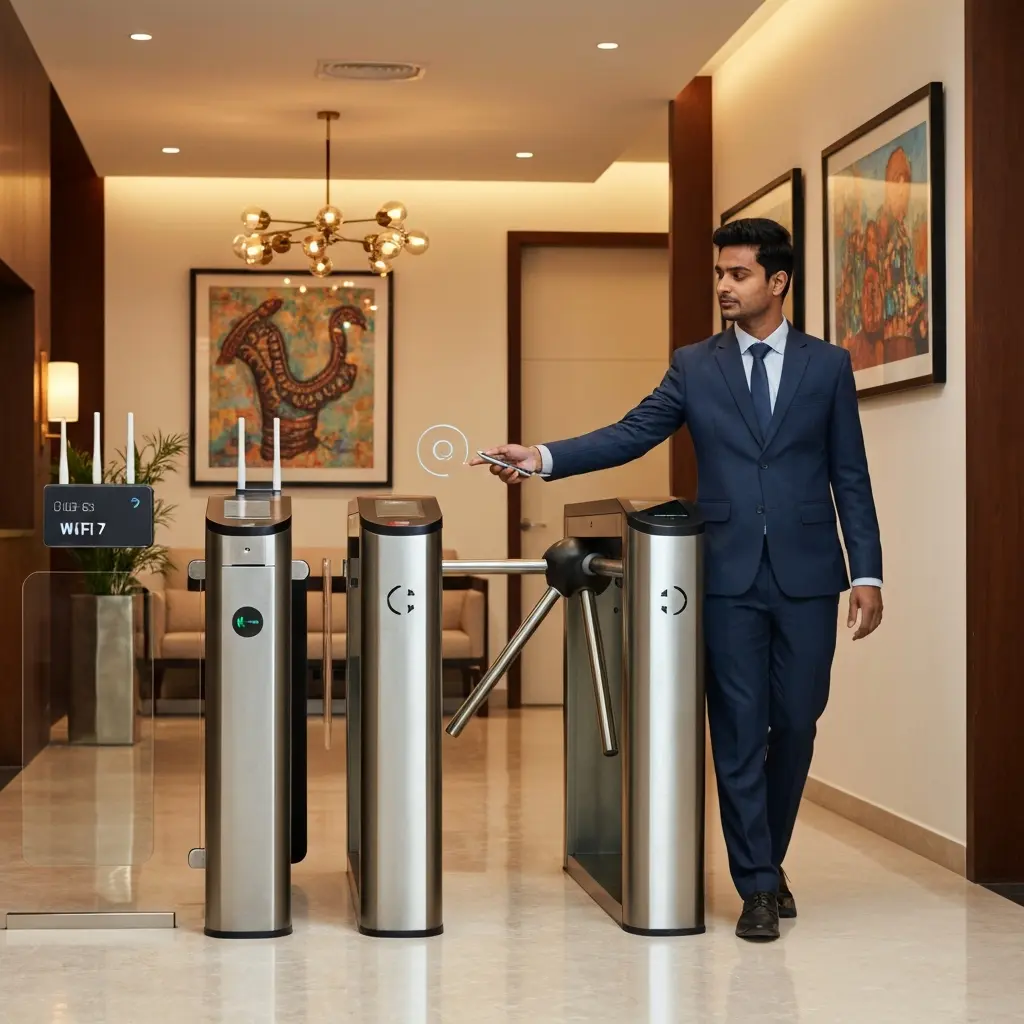
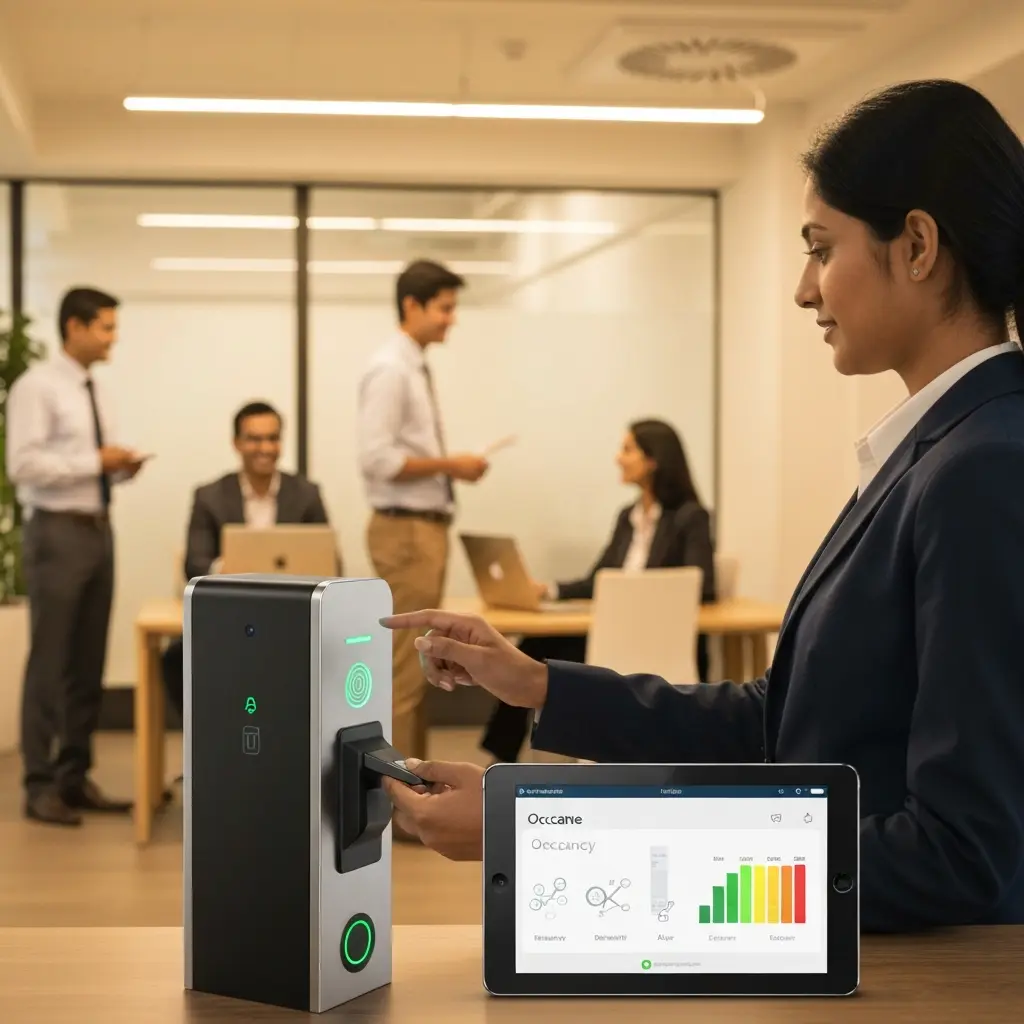
Security in 2026 is seamless yet supremely robust. Keyless entry has evolved into ‘Zero-Knowledge Biometrics,’ where bank-grade identity verification is embedded into the access flow. Modern terminals use on-device AI to process facial or fingerprint data locally, detecting deepfakes or masks in real-time. This eliminates the cybersecurity risk of transmitting biometric data to the cloud while providing frictionless access. For businesses, this enables secure, self-service onboarding for new team members or clients—a boon for fast-growing startups.
Compliance is a key strategic driver. With impending deadlines for frameworks like the EU AI Act, operators must ensure systems used for access control meet high-risk standards for accuracy and robustness. For an Indian company serving global clients or with overseas ambitions, choosing a workspace partner already adhering to these rigorous standards mitigates future compliance risk and signals professional maturity.
[Image of a modern biometric terminal with a local AI processing chip diagram]
Is Your Workspace a ‘Boring Stuff Killer’?
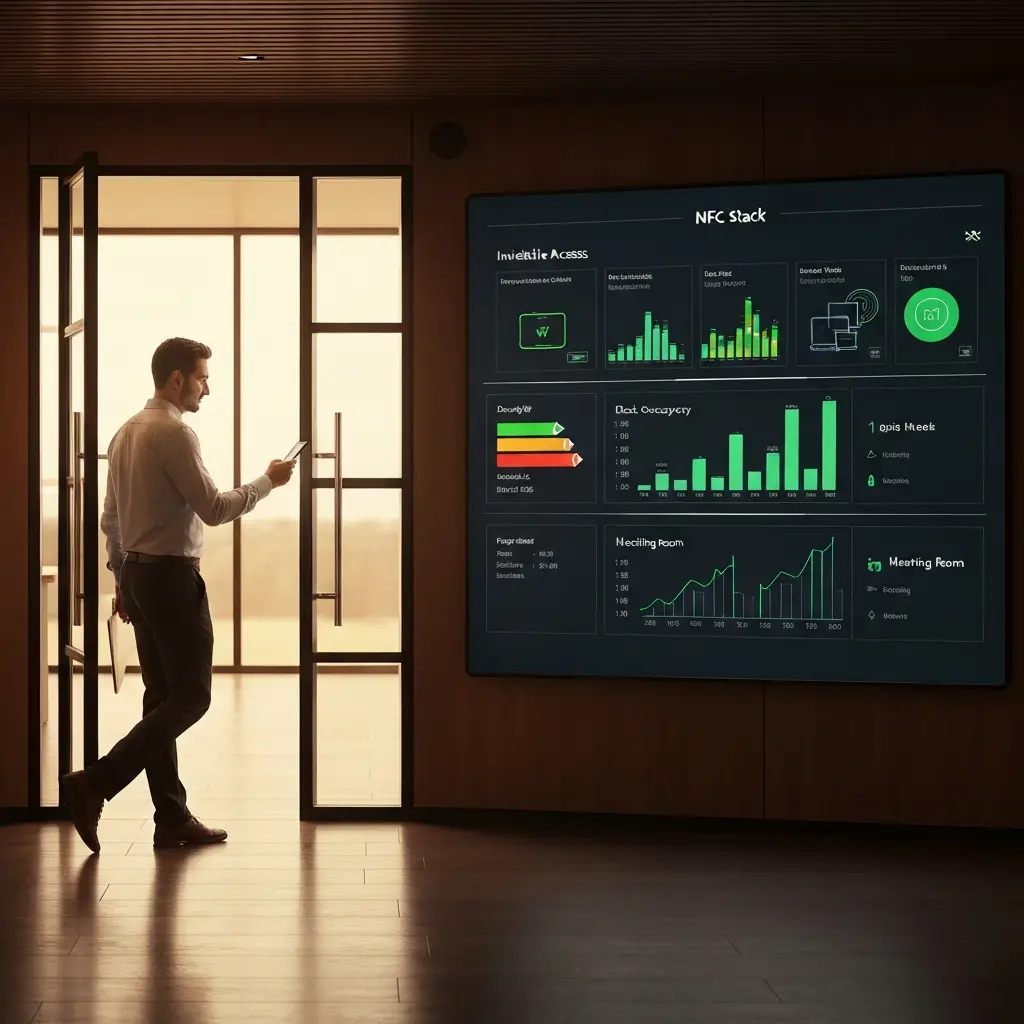
How much of your manager’s time is consumed reconciling utility bills, managing visitor logs, or booking meeting rooms? In 2026, AI agents act as ‘Boring Stuff Killers,’ autonomously handling an estimated 70-80% of these routine tasks. Unified ‘Phygital’ platforms combine booking, access, and environmental controls into one interface, ending app fatigue. More strategically, success metrics have shifted. As per Gensler’s 2026 forecast, forward-thinking centres now measure ‘Human Connection’ and well-being sentiment through amenity engagement, not just occupancy. This creates environments designed for serendipitous collaboration and reduced burnout.
For an SME founder, this means your team and you can focus purely on high-value work. The administrative tax of running an office vanishes. The community manager at your workspace, freed from transactional duties, can instead facilitate meaningful introductions between members, directly contributing to your business development. The space actively works to increase your network and your team’s morale.
The 2026 Outlook for Indian Workspaces
In the coming year, India’s workspace market will see a rapid acceleration of this precision model. Leaders will move from traditional leases to Management Agreements underpinned by Digital Twin data, sharing operational risk and reward with property owners. Resource Orchestration—using real-time IoT data to dynamically adjust HVAC and lighting, which consumes over 50% of a building’s energy—will become a standard expectation for cost and sustainability. The premium will no longer be on square footage alone, but on demonstrable operational intelligence, security resilience, and data-driven well-being that attracts top talent and supports scalable growth.
Key Takeaways
- Operational Cost Certainty: Seek workspaces with AI-driven predictive maintenance to convert unpredictable Capex on repairs into stable, optimised Opex.
- Security as an Enabler: Zero-knowledge biometric systems offer bank-grade security with seamless access, facilitating secure and swift scaling of your team.
- Reclaim Manager Bandwidth: Choose environments where AI automates 70-80% of administrative tasks, freeing your leadership for strategic growth.
- Measure Experience, Not Just Space: Prioritise centres that track human connection and amenity use, as these directly impact team well-being and innovation.
- Future-Proof Your Choice: Ensure your workspace partner adheres to global compliance standards (like the AI Act), safeguarding your business as you scale internationally.
Conclusion
The workspace of 2026 is no longer a passive container for business activity; it is an active, intelligent participant in your growth journey. For Indian SMEs navigating the complexities of scaling, managing costs, and attracting talent, this shift is transformative. It turns a significant overhead into a leveraged asset that works quietly in the background to ensure efficiency, security, and well-being. At Crizone Business Centre, we are integrating these principles of precision operations to provide Chennai’s ambitious businesses with more than space—a truly intelligent foundation for growth. Discover how a calibrated environment can sharpen your competitive edge.
Continue your workspace search
Explore the most relevant Crizone pages next
If this article is part of your Chennai workspace research, these pages help you move from reading into comparing live plans, locations, and fit.
Explore coworking plans in Chennai
Compare day passes, dedicated desks, private offices, meeting rooms, and virtual office options from one commercial hub page.
Book a day pass in Chennai
Best fit if you need occasional workspace access, a short productive break from home, or a flexible desk for a single day.
Compare dedicated desk options
A stronger fit for regular monthly use when you want a fixed seat, better routine, and predictable workspace costs.