· Business Growth & Workspace · 7 min read
2026 Coworking Design: Sensory-Adptive Neighbourhoods for Growth
Discover why the 2026 sensory-adaptive 'neighbourhood' office layout is crucial for Indian businesses, tackling noise and boosting productivity for sustainable growth.
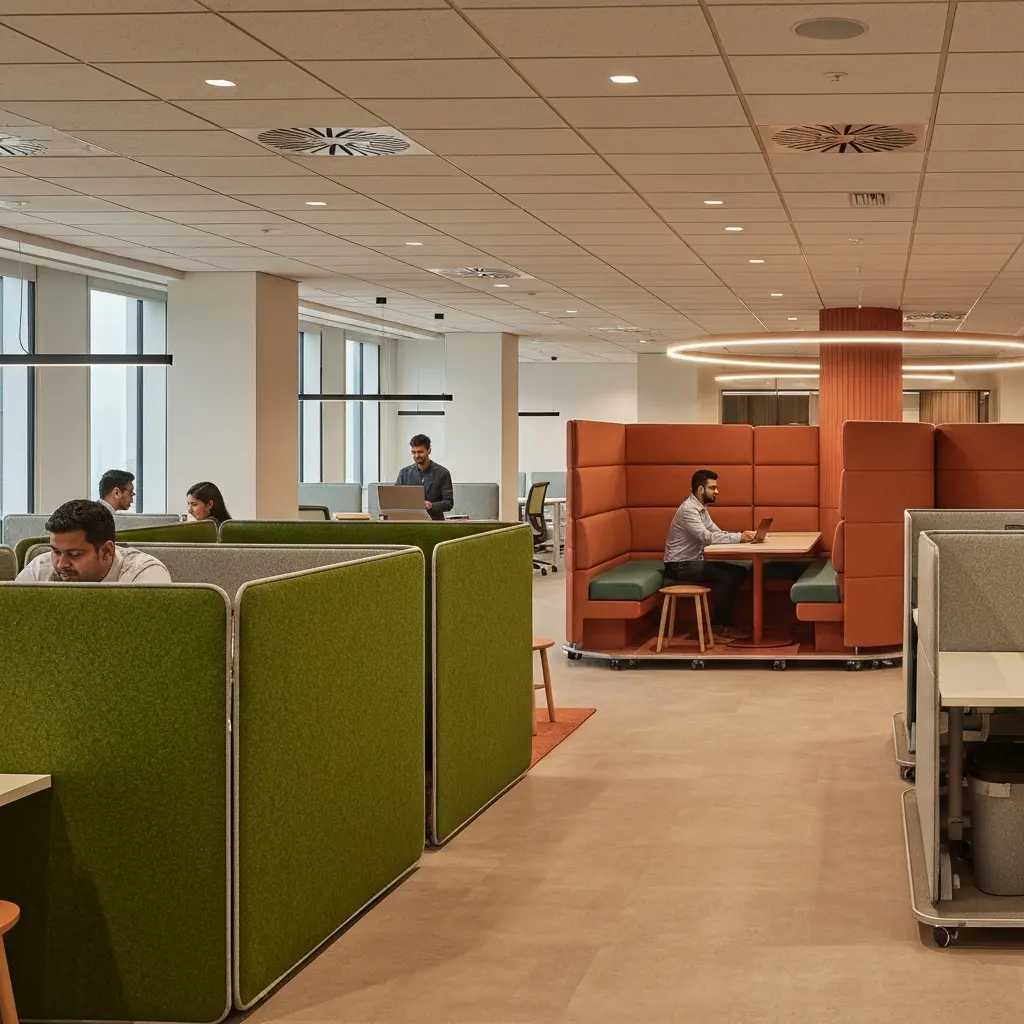
TL;DR: The shift from noisy ‘desk farms’ to specialised, sensory-adaptive ‘neighbourhood’ layouts in 2026 addresses the primary productivity drain for Indian teams: constant interruptions. This new design uses acoustic zoning and biophilic elements to support deep work and strategic collaboration, directly impacting business growth and talent retention in a competitive market.
Introduction
For Indian businesses in 2026, the single greatest threat to innovation and efficiency isn’t competition or market volatility—it’s the uncontrolled noise and distraction within their own four walls. Entrepreneurs and managers in Chennai grapple with rising commercial rents on OMR, the daily toll of traffic on employee morale, and the pressing need to attract top talent who demand better work environments. The traditional long-term lease feels increasingly rigid, while the early promise of basic open-plan coworking has revealed its flaw: an ‘interruption overload’ that stifles the deep work required for breakthrough growth. The modern workspace must be a strategic asset, not just a cost centre, actively shaping how a team thinks, creates, and collaborates. The evolution toward a sensory-adaptive workspace is a direct response to this urgent business need, moving beyond mere flexibility to intentional design that fuels productivity.
What is a Sensory-Adaptive Workspace?
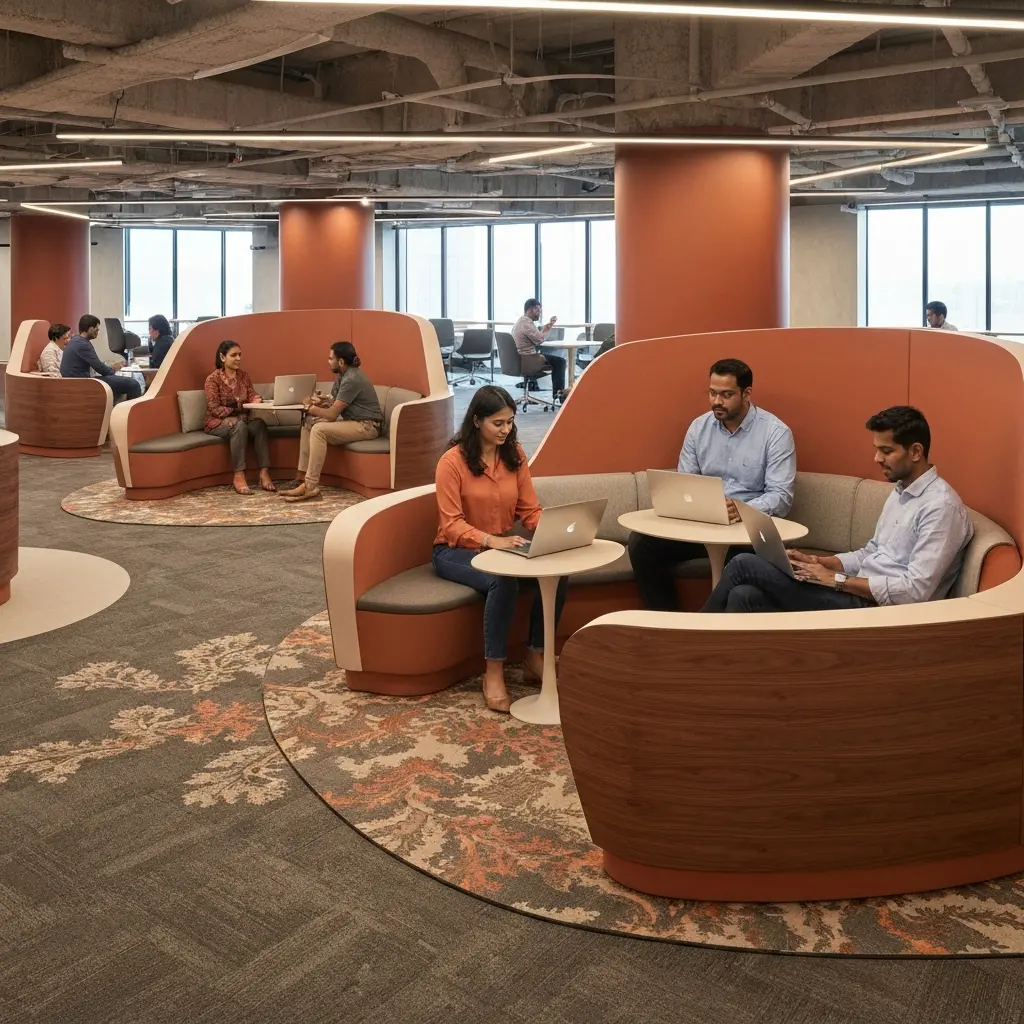
A sensory-adaptive workspace is an intentionally designed office environment that uses acoustic engineering, biophilic design, and modular furniture to create distinct, purpose-built ‘neighbourhoods’. Each zone is tailored to specific tasks—from library-quiet focus pods to vibrant collaboration lounges—and can adjust environmental factors like lighting and airflow to support cognitive performance. This design philosophy directly counters the one-size-fits-all open plan by recognising that different work modes require different sensory inputs, making the physical space a proactive partner in employee well-being and output.
The Productivity Crisis: Why Open Plans Are Failing Indian Businesses
The data is unequivocal. With the average professional facing up to 275 daily interruptions, the cost to Indian SMEs is measured in lost focus, delayed project timelines, and eroded competitive advantage. In a market where agility is paramount, a workspace that constantly disrupts flow is a liability. A 2026 report highlighted that 75% of office workers cite noise as their top productivity barrier. For a founder in Chennai managing a critical funding proposal or a developer debugging complex code, this isn’t a minor annoyance—it’s a direct impediment to business growth and client delivery.
This crisis is reshaping demand. Data shows member requests for private ‘focus pods’ now outpace open-desk requests 3:1. Businesses are no longer paying for square footage; they are investing in guaranteed conditions for high-value work. The workspace must provide sanctuary from distraction as reliably as it provides high-speed internet.
Crizone Pro Tip: Audit your team’s weekly tasks. If over 40% require uninterrupted concentration, a standard open-plan setup is actively costing you revenue. Seek spaces with dedicated, acoustically sealed zones for deep work.
Designing for Growth: The Three Pillars of the 2026 Neighbourhood
This new layout isn’t arbitrary decoration; it’s a growth strategy built on three core, evidence-based pillars.
1. Acoustic Zoning: The Foundation of Focus
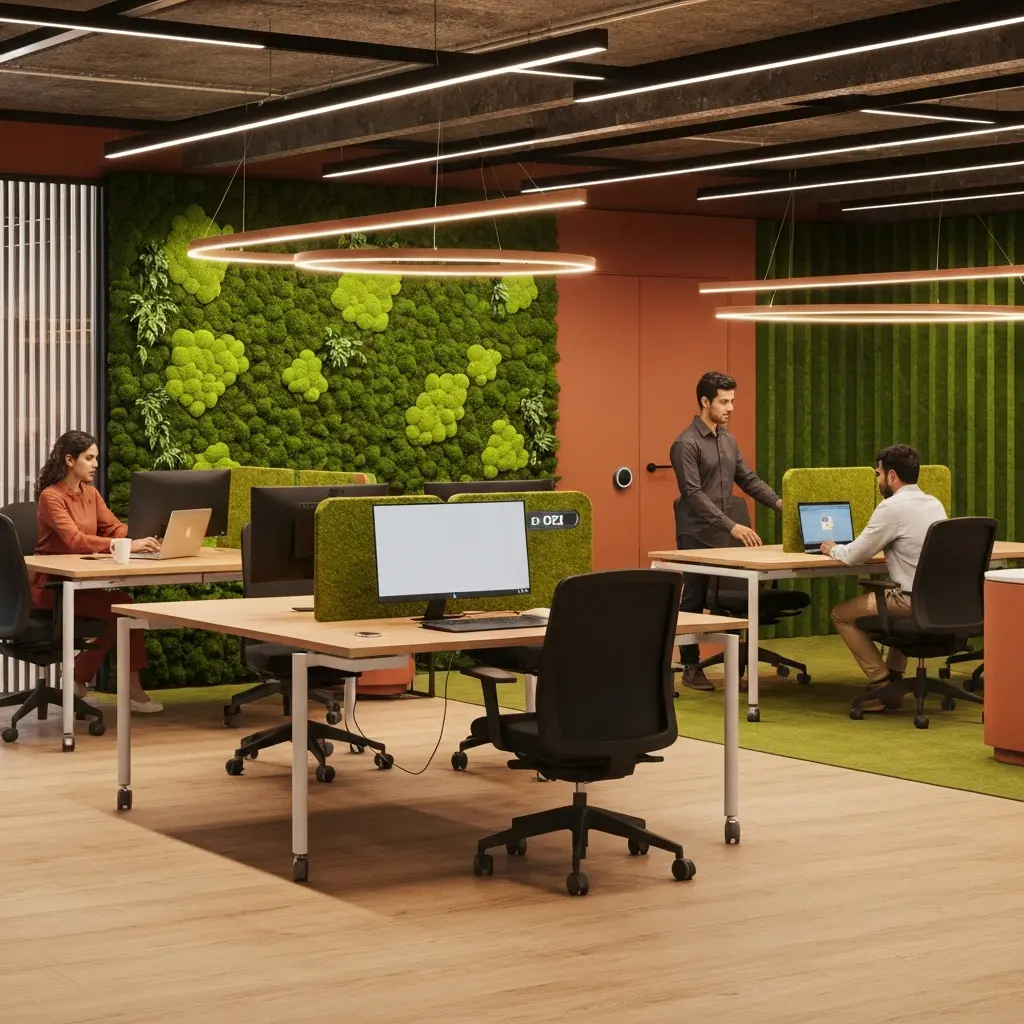
Acoustic zoning uses physical design—like floor-to-ceiling felt partitions, acoustic cladding, and sound-dampening materials—to create audibly separate areas within an open floor plan. It transforms a chaotic hall into a series of purposeful rooms without permanent walls. This is critical in India, where collaborative cultures can sometimes lead to cross-talk that derails individual contributors. A well-zoned space allows a sales team to energetically brainstorm in one ‘neighbourhood’ while a content team writes in pin-drop silence in another, ensuring both activities thrive simultaneously.
2. Sensory & Biophilic Design: Reducing Cognitive Load
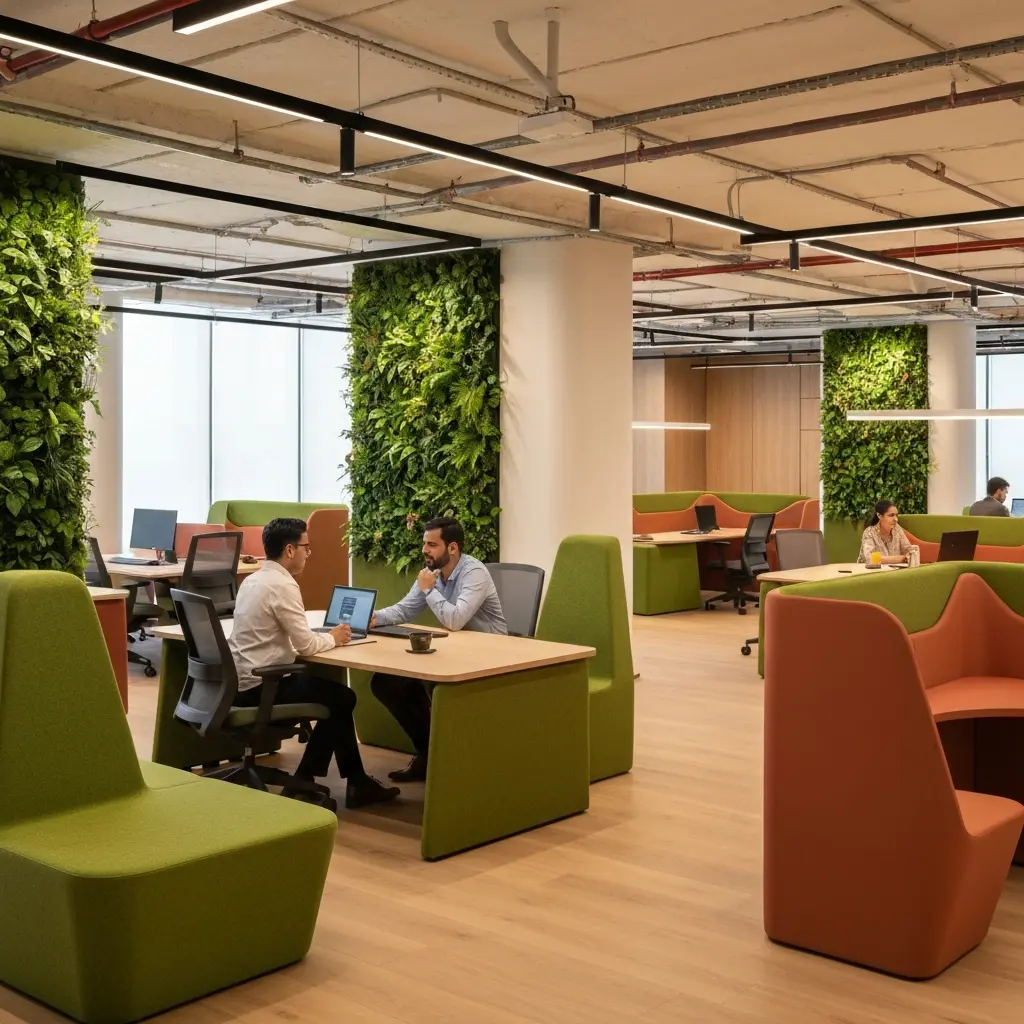
Beyond sound, sensory design addresses the full environmental experience. Research from 2026 shows bio-inspired colour palettes (moss greens, terracotta) can reduce cognitive stress by up to 15% compared to sterile white boxes. Integrating natural light, plant life, and textured materials creates a calmer, more restorative environment. For professionals enduring Chennai’s humid climate, a space that subconsciously lowers stress through thoughtful design means employees end the day less fatigued and more innovative.
3. Agile & Sustainable Infrastructure
The 2026 office must be as agile as the businesses it houses. With peak mid-week attendance hitting 80%, modular furniture on tracks allows a 500 sq ft area to reconfigure from a training session to a client workshop in under ten minutes. Furthermore, ESG mandates are now a hard business reality. Seventy per cent of major corporate clients require verifiable traceability for materials, making sustainable, circular furniture with take-back programs a necessity for compliance and brand reputation, not just a virtue.
[Image of an infographic showing the cost breakdown of a traditional office lease vs. a sensory-adaptive coworking membership for an Indian SME over 12 months.]
Is Your Team Ready for a Neighbourhood Layout?
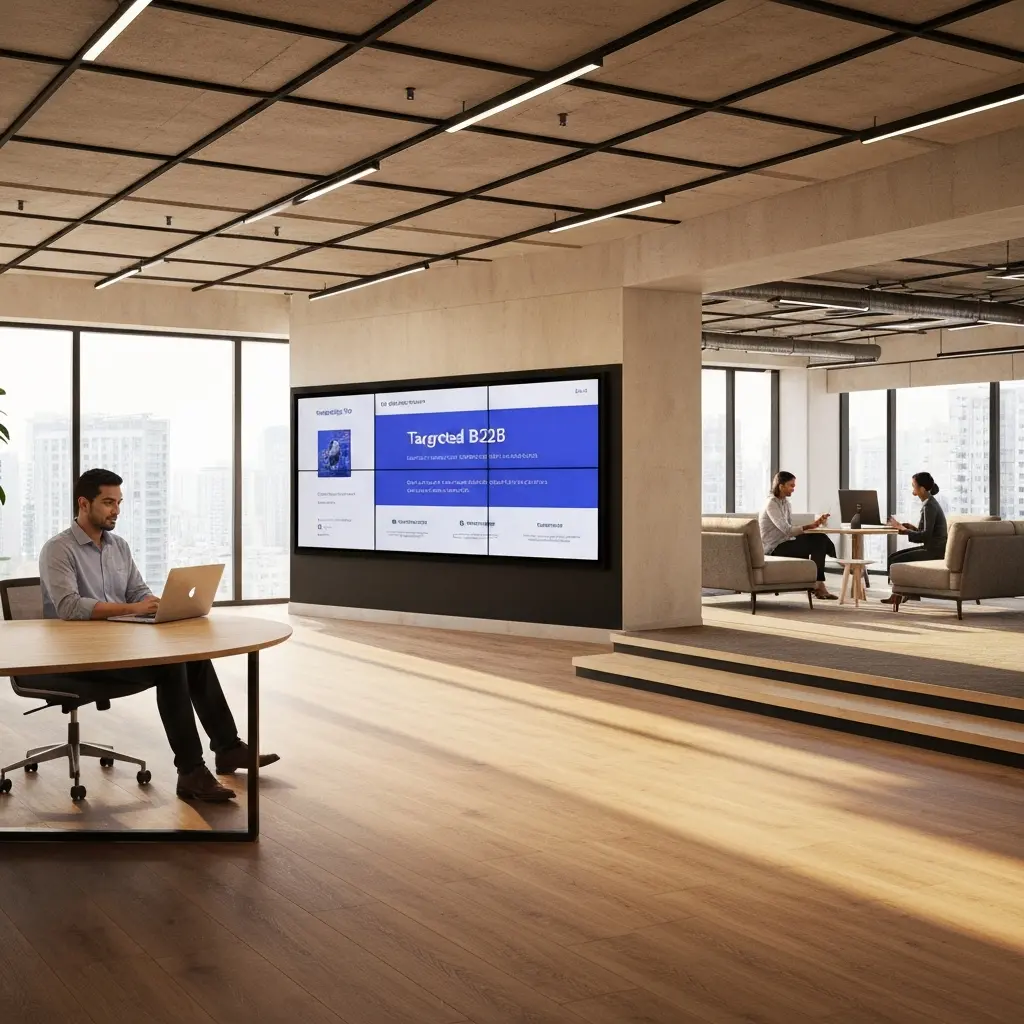
The shift to a neighbourhood model is not just about real estate; it’s about operational maturity. This layout serves businesses where work is clearly categorised into modes: Focus, Collaborate, Socialise, and Recharge. If your team’s week is a blend of client calls, solo analysis, team syncs, and informal networking, this design will amplify their effectiveness. It is particularly powerful for distributed teams who use the office as a primary sync point, explaining the 65% global utilisation of meeting rooms.
Consider the financial logic for an Indian SME. The capital outlay and maintenance for creating such a versatile, high-spec environment in a traditional lease is prohibitive.
| Cost Factor | Traditional Office Lease (Chennai, 1000 sq ft) | Sensory-Adaptive Coworking Membership |
|---|---|---|
| Monthly Base Cost | ₹ 1.5 - 2.5 Lakhs (rent + maintenance) | ₹ 25,000 - 75,000 (all-inclusive) |
| Fit-Out & Furniture | ₹ 15-25 Lakhs (one-time capex) | Included (premium, sustainable design) |
| Technology & IT | Separate contracts & costs for high-speed internet, security, printers | Included (enterprise-grade) |
| Operational Management | Dedicated staff for housekeeping, admin, reception | Included (professional management) |
| Agility & Risk | Locked into 3-5 year lease; difficult to scale up/down | Month-to-month flexibility; scale on demand |
Manager Insight: The real ROI isn’t just in cost savings, but in attraction and retention. Top talent in 2026 evaluates workspace quality as a key benefit. A neighbourhood layout signals that you invest in their success.
The 2026 Outlook for Indian Workspaces
In the coming year, the Indian flexible workspace market will deepen its segmentation. Basic hot-desking will become a commodity, while premium operators will compete on experiential design and well-being outcomes. We will see the rise of AI-driven personalisation, where upon entering a pre-booked neighbourhood, environmental settings auto-adjust to a member’s preference. Furthermore, with sustainable furniture accounting for 40% of fit-out growth, ‘green credentials’ will transition from a marketing claim to a verifiable, auditable standard demanded by clients and employees alike. The workspace will finally be recognised as a key lever in a firm’s ESG strategy.
Key Takeaways
- Productivity is Design-Led: Combat interruption overload by choosing workspaces with dedicated acoustic zones for focused work.
- Design for Modes, Not Just Roles: Map your team’s workflow to Focus, Collaborate, and Recharge zones to maximise output.
- Sustainability is Non-Negotiable: Future-proof your operations by ensuring your workspace partner has verifiable ESG and circular economy practices.
- Calculate Total Cost of Presence: Factor in capex, management overhead, and agility, not just per-desk rent, when comparing options.
- Prioritise Talent Experience: A sensory-adaptive environment is a powerful tool for attracting and retaining the skilled professionals crucial for growth.
Conclusion
The evolution from chaotic open plans to intentional, sensory-adaptive neighbourhoods represents a fundamental shift in how businesses view their workspace: from a passive container to an active growth engine. For the ambitious Indian entrepreneur, freelancer, or branch manager, this isn’t a fleeting trend but an operational imperative. It’s about creating an environment where your team can do their best work, free from the distractions that plague traditional setups. At Crizone Business Centre, we are pioneering this neighbourhood philosophy in Chennai, designing calm, efficient environments that act as true partners to your business ambitions. Discover how a workspace designed for how you actually work can become your greatest strategic advantage.
Continue your workspace search
Explore the most relevant Crizone pages next
If this article is part of your Chennai workspace research, these pages help you move from reading into comparing live plans, locations, and fit.
Explore coworking plans in Chennai
Compare day passes, dedicated desks, private offices, meeting rooms, and virtual office options from one commercial hub page.
Book a day pass in Chennai
Best fit if you need occasional workspace access, a short productive break from home, or a flexible desk for a single day.
Compare dedicated desk options
A stronger fit for regular monthly use when you want a fixed seat, better routine, and predictable workspace costs.