· Business Growth & Workspace · 7 min read
2026 Coworking Trends: Skill-Sharing & Intra-Community Hubs Boost Retention
By 2026, successful flex spaces are strategic knowledge hubs where members exchange skills and business leads, driving retention. Learn how this trend offers Indian SMEs a powerful growth edge.
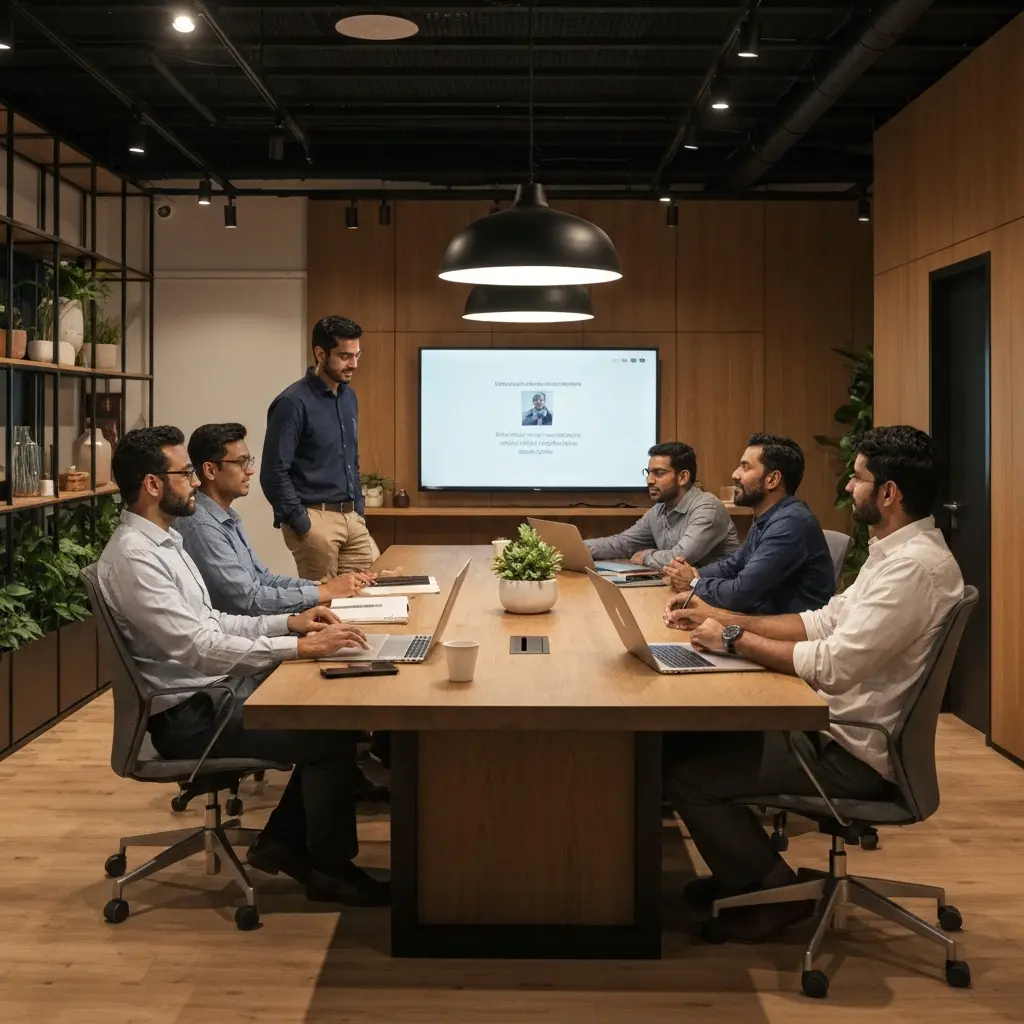
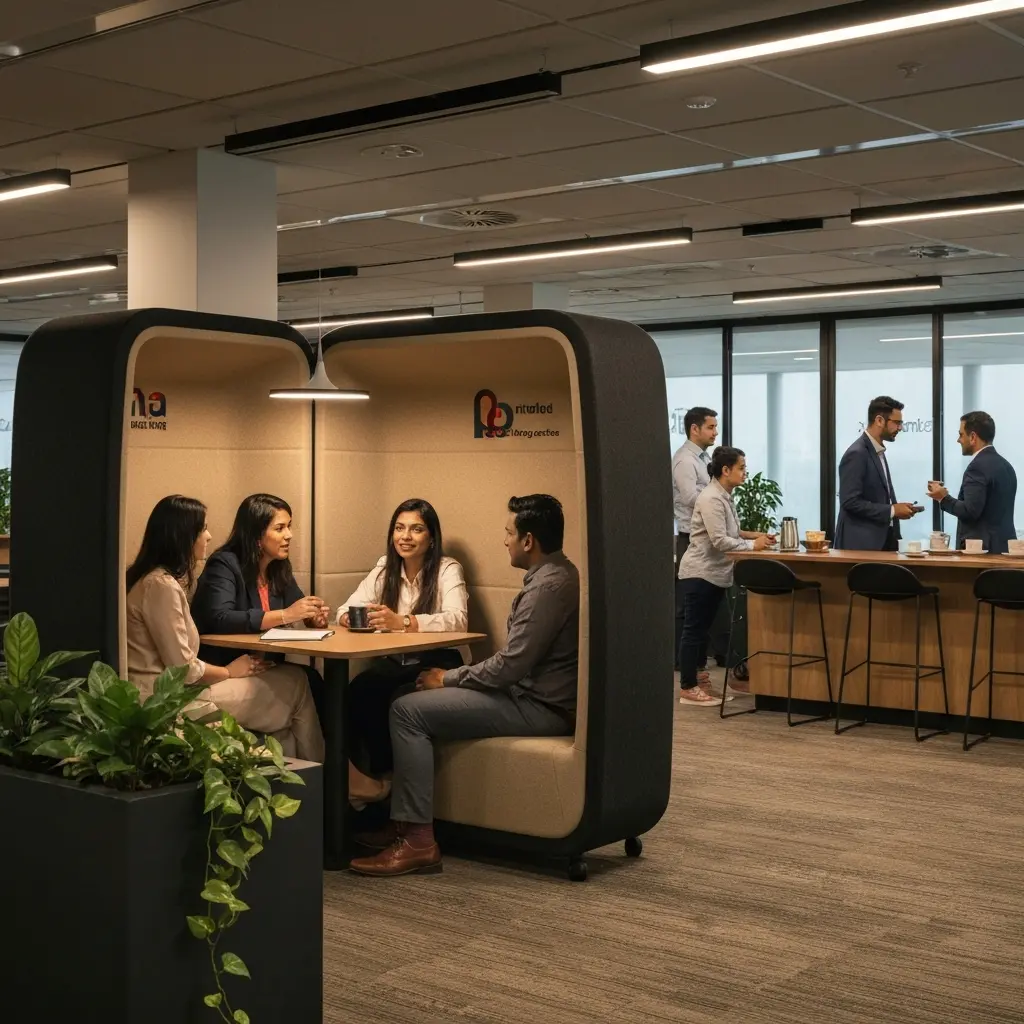
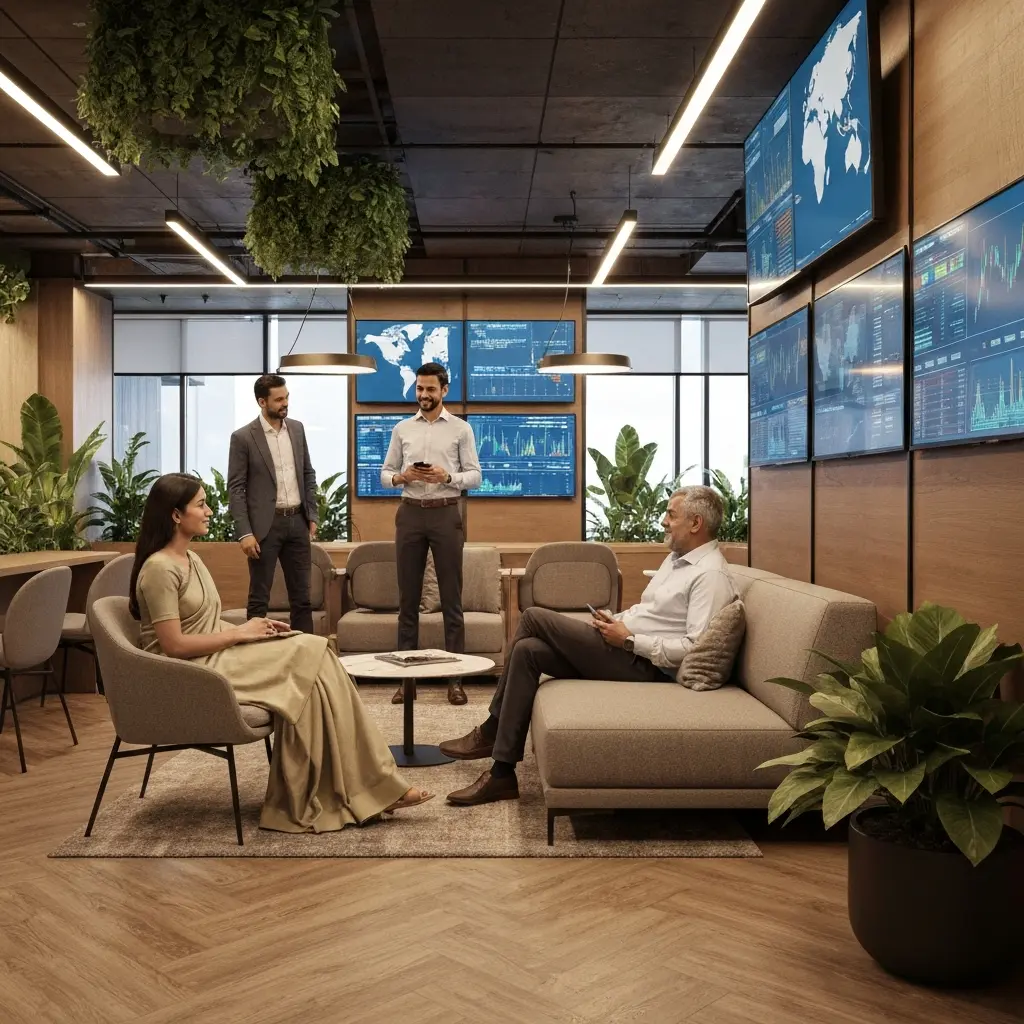
TL;DR: In 2026, the most successful flexible workspaces are strategic knowledge hubs, not just offices. With member tenure at a historic 22 months, the key to retention is fostering intra-community economies where skills and business leads are actively exchanged, offering Indian businesses a powerful platform for accelerated growth.\n\nFor Indian entrepreneurs and SME founders, the equation for growth has fundamentally changed. The challenge is no longer just managing rising real estate costs or navigating Chennai’s OMR traffic. It is about accessing a dynamic talent pool, combating professional isolation in a hybrid world, and finding efficient pathways to scale. The traditional long-term lease, with its fixed costs and static environment, struggles to meet these fluid demands. The modern solution, as evidenced by 2026 data, is a workspace that actively cultivates an intra-community economy. Here, coworking retention 2026 is driven not by amenities alone, but by the value generated between its members.\n\n## What is an Intra-Community Knowledge Hub?\n\nAn intra-community knowledge hub is a strategic evolution of the flexible workspace. It moves beyond providing a desk and internet to actively curating and facilitating the exchange of professional expertise, business opportunities, and skills among its members. Think of it as a private, high-trust business ecosystem where a freelance content strategist can barter services with a web developer, or an SME founder can find a critical CFO recommendation from a peer in the next private cabin. This model turns a physical location into a dynamic engine for professional growth, directly addressing the mature needs of today’s Indian business professional.\n\n## Why the 2026 Workspace is Your Strategic Growth Partner\n\nThe 2026 data reveals a clear shift: workspaces are now primary professional homes, with average member tenure reaching 22 months. This ‘stickiness’ is not accidental. It is engineered through value that transcends four walls. For an Indian business, this environment solves multiple growth constraints simultaneously. You gain access to an on-tap network for client referrals, skill development through peer mentorship, and a professional setting that impresses clients—all without the capital expenditure of a traditional office fit-out. The workspace becomes a low-friction extension of your business development team.\n\n### The Rise of Skill Arbitrage and Internal Economies\n\nThe most compelling statistic for growth-focused professionals is this: 70% of members in leading 2026 spaces report learning a new high-value skill directly from a peer. This skill-sharing coworking model represents a form of ‘skill arbitrage,’ where diverse expertise is traded within the community. Concurrently, 65% of members pass business leads or subcontract work to fellow coworkers. This creates a powerful, internal flywheel. A digital marketing agency based in the space might source a new client from a fellow member, then subcontract the web development portion to another. This internal economy keeps revenue circulating within a trusted network, reducing client acquisition costs and project delivery risks.\n\n> Crizone Manager Insight: “We’ve observed members forming informal mastermind groups. A Chartered Accountant might explain recent GST clarifications over coffee, while a tech founder demos a new SaaS tool. This organic, high-value exchange is what transforms a monthly membership from an overhead into a strategic investment.”\n\n### Catering to the Mature Professional: From Happy Hours to High-Value Exchange\n\nThe demographic within premium flexible workspaces has matured, with an average age of 38 and 80% holding advanced degrees. This cohort values depth over distraction. Their retention is won through ‘Sector Roundtables’ on fintech regulation or export compliance, not generic social mixers. Furthermore, the concept of ‘Social Privacy’ is critical—the ability to work in focused isolation in a soundproof cabin, yet network intentionally during breaks. This balance respects the need for deep work (demand for private spaces outpaces open-plan 3:1) while facilitating the serendipitous connections that drive the internal economy. For the Indian professional, skipping a stressful commute to work near home (a factor for 65% of new members) and then having access to this caliber of peer network is a powerful productivity and growth cocktail.\n\n## Is Your Workspace a Cost Centre or a Growth Accelerator?\n\nThis shift demands a new financial lens. In 2026, 40% of leading operators’ revenue comes from non-desk sources like business support services and specialised community programming. This mirrors the opportunity for members: your workspace cost should be evaluated not as mere rent, but as an investment in business development, talent upskilling, and operational agility. Consider the comparative costs and value outputs:\n\n| Cost Factor | Traditional Chennai Office (800 sq. ft, T. Nagar) | Flexible Workspace Membership (Premium Plan) |\n| :--- | :--- | :--- |\n| Monthly Base Cost | ₹ 1,20,000 - ₹ 1,80,000 (rent only) | ₹ 25,000 - ₹ 40,000 (all-inclusive) |\n| Security Deposit | 10-12 months rent (₹ 12-22 Lakhs locked) | Typically 1-2 months membership fee |\n| Maintenance & Utilities | ₹ 20,000 - ₹ 40,000 + unpredictable power costs | Included; predictable billing |\n| Networking/Lead Gen Value | Limited to company employees | Access to 65%+ members actively sharing leads |\n| Skill Development Access | Must organise/pay for externally | Integrated via 70% peer-to-peer skill exchange |\n\nThe financial logic is clear. The flexible model liberates capital (lakhs in deposit) for core business investment while providing a richer, growth-oriented environment. As reported by JLL India’s 2025 ‘Future of Work’ survey, Indian corporates are increasingly allocating real estate budgets to flexible solutions precisely for this agility and embedded value.\n\n## The 2026 Outlook for Indian Workspaces\n\nThe trajectory for India’s flexible workspace market is set toward deeper integration and measured value. We will see spaces formally curating their member mix to foster complementary intra-community economy loops—for instance, actively recruiting legal, marketing, and finance professionals to serve a core of tech startups. Corporate adoption will deepen, with 45% of memberships already sponsored. Workspaces will need to demonstrate ROI to both the individual user and corporate HR through metrics like skill acquisition and network strength, which feed into broader Corporate Sustainability (CSRD) goals around social health. The ‘Third Workplace’ will solidify as the ‘Primary Growth Workplace’ for distributed teams using these hubs as weekly ‘Physical Synchronization’ points, with meeting room utilisation reflecting this at 65% occupancy.\n\n## Key Takeaways for Indian Business Leaders\n\n- Evaluate for Ecosystem, Not Just Ergonomics: Choose a workspace that actively facilitates professional connections and has a mature, diverse member base aligned with your industry.\n- Budget for Access, Not Just Assets: Frame the cost as an investment in business development and talent upskilling, comparing the value of the network against traditional office overheads.\n- Prioritise ‘Social Privacy’: Seek spaces that offer a balance of private, focus-friendly environments and well-designed common areas that encourage intentional networking.\n- Engage to Extract Value: The intra-community economy rewards participation. Attend sector-specific events, offer your expertise, and be open to collaborative opportunities with peers.\n- Consider Corporate Partnerships: If you are a branch manager or SME with a team, explore flexible workspace providers that can deliver detailed usage and value reports to satisfy corporate HR and finance requirements.\n\nThe defining flexible office trends 2026 underscore a transition from shared infrastructure to shared intellect. For the ambitious Indian business, the right workspace is no longer a passive backdrop but an active catalyst. It is a strategic decision that directly influences your access to talent, clients, and new competencies. In a competitive market, growth is increasingly fuelled by the quality of your professional ecosystem.\n\nAt Crizone Business Centre, we are architecting this future for Chennai’s business community. Our spaces are designed to foster the ‘calmly efficient’ exchange of expertise that defines the 2026 knowledge hub. We invite you to experience an environment where your monthly membership actively contributes to your business growth. Visit our centres in Chennai to see how a strategic workspace partnership can become your most reliable growth lever.
Continue your workspace search
Explore the most relevant Crizone pages next
If this article is part of your Chennai workspace research, these pages help you move from reading into comparing live plans, locations, and fit.
Explore coworking plans in Chennai
Compare day passes, dedicated desks, private offices, meeting rooms, and virtual office options from one commercial hub page.
Book a day pass in Chennai
Best fit if you need occasional workspace access, a short productive break from home, or a flexible desk for a single day.
Compare dedicated desk options
A stronger fit for regular monthly use when you want a fixed seat, better routine, and predictable workspace costs.