· Business Growth & Workspace · 5 min read
BFSI Flex Space: 2026’s Growth Engine for Indian Business Strategy
Discover why the BFSI sector is leading the 2026 flexible workspace boom and how Indian entrepreneurs can leverage this trend for cost efficiency and talent retention.
TL;DR: A major 2026 trend reveals the Banking, Financial Services, and Insurance (BFSI) sector is now the fastest-growing adopter of flexible workspaces. Driven by cost control and the need to be closer to talent, this pivot offers a strategic blueprint for Indian SMEs to enhance agility, reduce capital lock-in, and improve employee retention in a competitive market.
For the Indian founder, the fixed office lease has long been a necessary anchor—and a significant financial risk. Between rising rents in business districts like Guindy or OMR, unpredictable operational costs, and the daily challenge of employee commutes in Chennai traffic, the traditional model feels increasingly rigid. The global demand for agility, however, is crystallising into a clear strategy for 2026. The BFSI flex space trend, led by banks and financial institutions seeking efficiency, provides a powerful model for any business looking to de-risk real estate and focus capital on growth.
What is the BFSI Flex Space Trend?
The BFSI flex space trend refers to the strategic adoption of flexible, serviced, and coworking offices by Banking, Financial Services, and Insurance firms. It moves beyond temporary satellite offices to become a core component of corporate real estate strategy. This involves replacing single, large headquarters with a network of smaller, premium-grade offices (a hub-and-spoke model) located closer to employee clusters or client hubs, all managed under agile, shorter-term contracts.
Why are Global Giants Choosing Flexibility? The Cost & Agility Imperative
Global financial institutions are not adopting flexible workspaces on a whim. This is a calculated response to macroeconomic pressures and a strategic play for talent. With interest rates stabilising yet capital expensive, reducing long-term property liabilities directly protects the balance sheet. The average corporate lease term has compressed by 37% since 2020, a stark indicator of this shift. For an Indian SME, the principle is identical: why lock ₹50 Lakhs in security deposit and fit-out for a five-year lease when that capital could fund marketing, R&D, or new hires?
Crizone Pro Tip: Treat your office as an operational expense, not a capital asset. This frees up crucial liquidity for business investments that generate direct ROI, from tech upgrades to sales team expansion.
Consider the comparative costs for a 10-person team in a prime Chennai micro-market like Nungambakkam or T. Nagar:
| Cost Factor | Traditional Lease Office (Annual) | Flexible Workspace Solution (Annual) |
|---|---|---|
| Base Rent & Deposit | ₹9-12 Lakhs + 10-month deposit (₹7.5-10 Lakhs locked) | ₹8-10 Lakhs (all-inclusive, no deposit) |
| Furniture & Fit-out | ₹3-5 Lakhs (one-time capex) | ₹0 (fully furnished) |
| Maintenance & Utilities | ₹1.5-2 Lakhs (variable) | ₹0 (included) |
| Administrative Staff | ₹3-4 Lakhs (Receptionist/Office boy) | ₹0 (managed services included) |
| Total Initial Outlay | ~₹20-28 Lakhs | ~₹8-10 Lakhs |
The table illustrates a dramatic reduction in both upfront capital commitment and operational complexity. This agility is precisely what allows large BFSI firms to execute their intra-metro hub-and-spoke models, a trend where 65% of new flex memberships are chosen for a sub-15-minute employee commute.
Is the Hybrid Work Model Now a Measurable Business KPI?
Absolutely. The debate on hybrid work has moved from philosophy to performance metrics. Usage has stabilised at a new ‘hybrid floor’, with the average member using a flex space 3 days a week. This predictable pattern allows operators to optimise energy, cleaning, and staffing costs—savings that are passed on through efficient pricing. For your business, this means you only pay for the space you actively use, not for empty chairs on Mondays and Fridays.
This ties directly to the ‘15-Minute City’ effect, now a formal talent retention KPI. An employee saving 90 minutes daily by avoiding OMR traffic has higher productivity, better well-being, and is far less likely to attrite. By choosing a workspace like Crizone, strategically located near metro hubs, you are directly investing in employee satisfaction and reducing recruitment costs, which can easily run into several lakhs per role in a competitive sector.
[Image of Hub-and-Spoke Office Model] Diagram showing a central headquarters (hub) connected to multiple smaller flexible offices (spokes) across a city map, closer to residential zones.
What Does This Mean for the Indian Market in 2026?
The Asia-Pacific region, led by India’s growth, now commands over 36% of global flex-space revenue. The 2026 outlook for India is one of accelerated adoption beyond metro cores into thriving secondary hubs. For Chennai, this means increased demand for premium flexible inventory in areas like Anna Nagar, Velachery, and Porur, decentralising from the traditional CBD. The BFSI sector’s move validates the model for all businesses, signalling that enterprise-grade, secure, and compliant flexible suites are the new standard. Expect more Indian corporates to make flex space a permanent portfolio pillar, a figure already at 58% globally.
Key Takeaways for Indian Business Leaders
- Convert Capex to Opex: Unlock capital tied in deposits and furniture; redirect it to core business growth activities.
- Adopt a Strategic Footprint: Consider a main office with smaller spokes to reduce employee commute time, a proven retention tool.
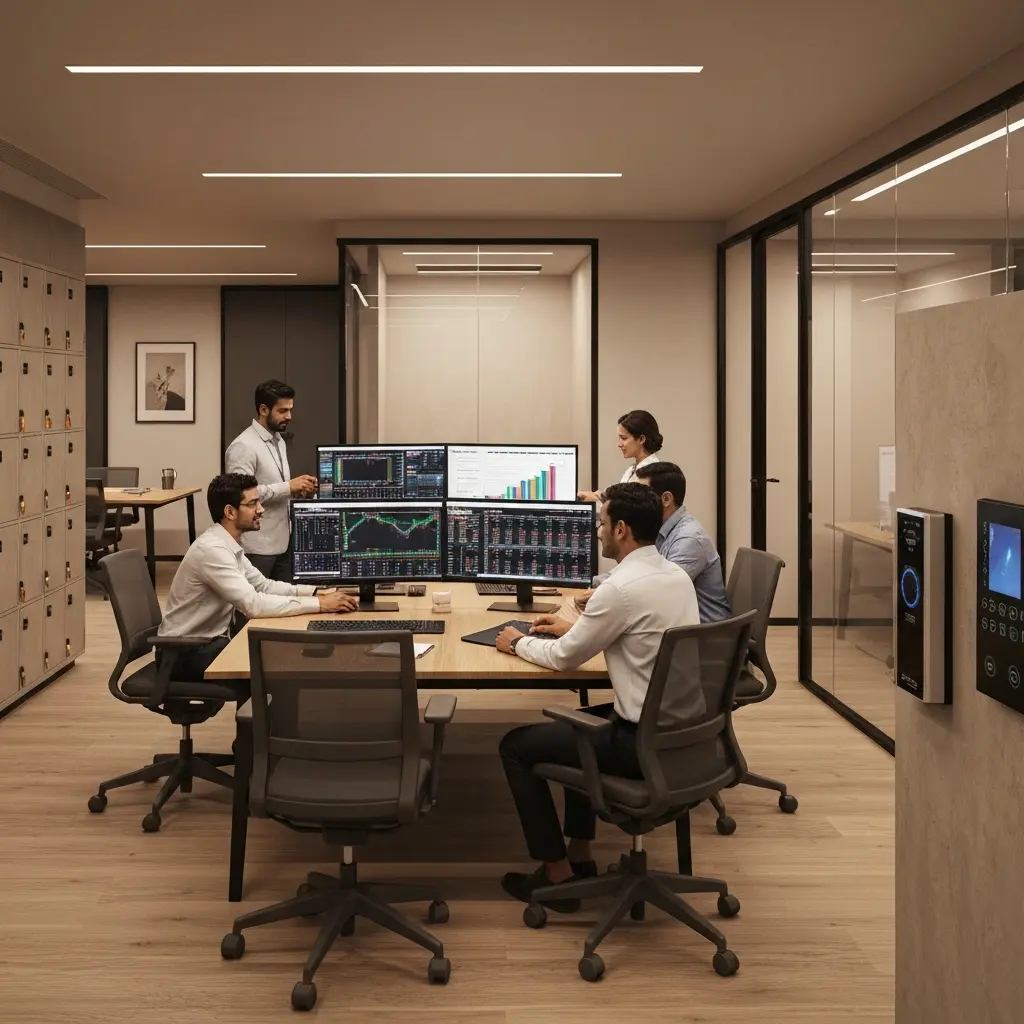
- Demand Enterprise-Grade Security: Follow the BFSI lead—choose providers with robust IT infrastructure, access controls, and compliance-ready environments.
- Build in Contractual Agility: Seek terms that allow you to scale up or down swiftly in response to market opportunities or team changes.
- Focus on Predictable Costs: An all-inclusive monthly fee eliminates the surprise of maintenance hikes or annual utility bill fluctuations.
Conclusion
The 2026 surge in BFSI sector adoption is not an isolated trend but a clear signal of modern business strategy. It prioritises financial agility, talent-centric location, and operational simplicity over the perceived prestige of a fixed address. For the ambitious Indian entrepreneur, freelancer, or branch manager, this global shift provides a ready-made blueprint for smarter growth. It demonstrates that the most competitive businesses are those that optimise every resource, starting with their workspace. To experience how a strategically flexible environment can become your growth partner, explore the premium, secure, and seamlessly managed solutions at Crizone Business Centre, designed for Chennai’s dynamic business landscape.
Continue your workspace search
Explore the most relevant Crizone pages next
If this article is part of your Chennai workspace research, these pages help you move from reading into comparing live plans, locations, and fit.
Explore coworking plans in Chennai
Compare day passes, dedicated desks, private offices, meeting rooms, and virtual office options from one commercial hub page.
Book a day pass in Chennai
Best fit if you need occasional workspace access, a short productive break from home, or a flexible desk for a single day.
Compare dedicated desk options
A stronger fit for regular monthly use when you want a fixed seat, better routine, and predictable workspace costs.
- BFSI
- Flexible Workspace
- Corporate Real Estate
- Hybrid Work