· Business Growth & Workspace · 6 min read
Workspitality & Biophilic 2.0: The 2026 Office Strategy for Indian SMEs
Learn how the 2026 'Workspitality' trend solves solo-work strain with Biophilic 2.0 design, boosting productivity and cutting costs for Indian entrepreneurs.
TL;DR: By 2026, office design is pivoting to ‘Workspitality’ to solve inefficiencies where solo work strains collaborative spaces. For Indian SMEs, this means workspaces blending hospitality comfort, Biophilic 2.0 wellness, and modular flexibility are key to boosting productivity and managing real estate costs effectively.
Introduction
Indian entrepreneurs and SME founders face a persistent dilemma: balancing the need for a professional address with the reality of fluctuating team sizes and hybrid work patterns. Traditional office leases in Chennai, locking businesses into fixed layouts and multi-year commitments, are increasingly misaligned with actual usage. Global data now pinpoints a specific ‘solo-work strain,’ where individuals occupy meeting rooms meant for teams, crippling space efficiency. This Workspitality evolution directly addresses this mismatch, transforming the office from a static cost centre into a dynamic growth partner that adapts to your business rhythm.
What is Workspitality?
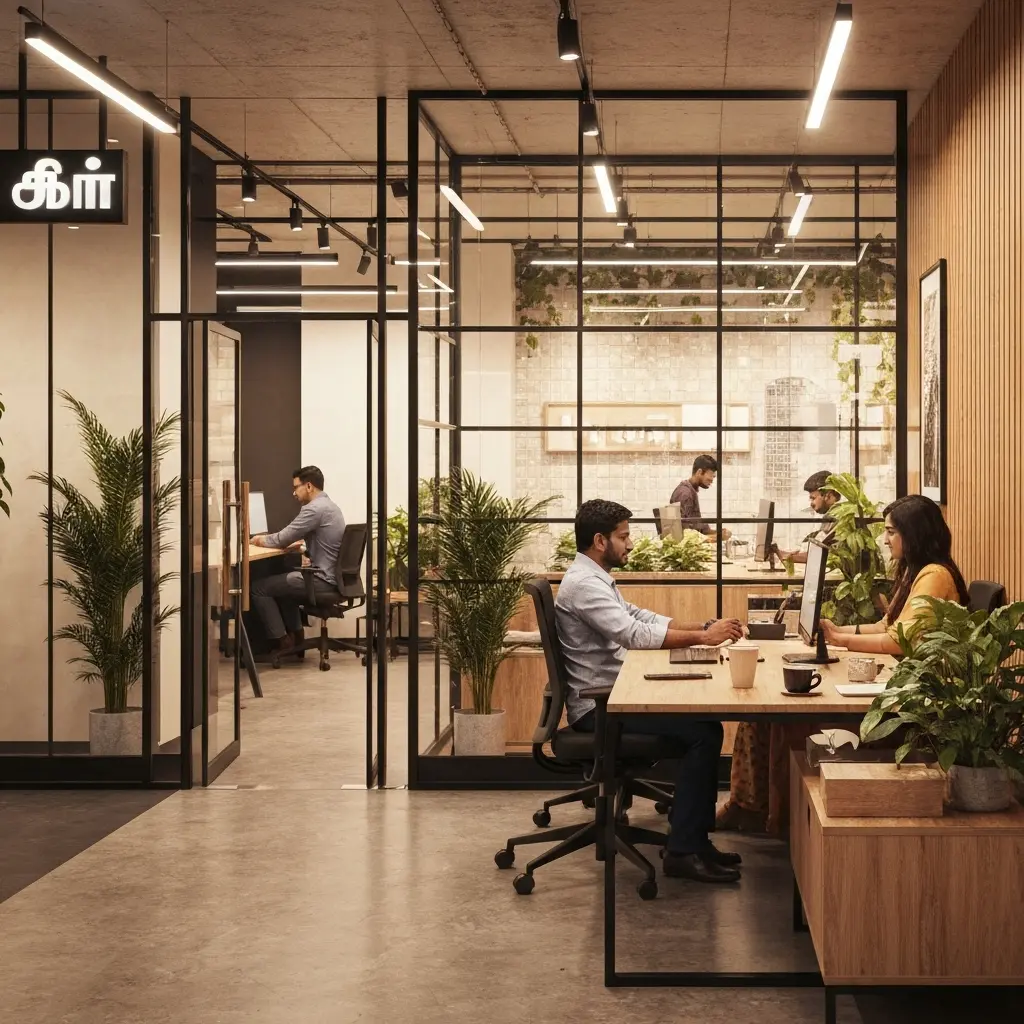
Workspitality is a 2026 office design philosophy that merges the high-touch comfort and service of premium hospitality with the robust, reconfigurable infrastructure required for modern hybrid work. It moves beyond basic amenities to solve operational inefficiencies, like solo workers using team rooms, by creating purpose-built zones. The goal is to ‘earn the commute’ by offering an environment that is not just functional but actively enhances well-being, focus, and collaboration, thereby directly supporting business output and talent retention.
The Solo-Work Capacity Crisis: A Cost for Indian Businesses
Recent data reveals a critical global office occupancy pattern, with peaks only reaching 59% on Tuesdays. This creates a ‘distribution crisis’ of mid-week overcrowding amidst overall 40-50% vacancy. For an Indian SME, this translates to paying for underutilised square footage year-round. The core issue is a severe capacity mismatch: 80% of meetings involve six or fewer people, yet large boardrooms sit largely empty. In Chennai, where commercial real estate on corridors like OMR commands a premium, such inefficiency directly impacts the bottom line.
A specific strain emerges from ‘solo-work devaluation,’ where 2-person meeting rooms operate at only 43% efficiency as they’re used for individual video calls. This forces teams to compete for collaboration space, stalling projects. The traditional office lease offers no recourse for this weekly fluctuation, making fixed costs a burden rather than an investment.
Crizone Pro Tip: Analyse your team’s weekly rhythm. If Tuesdays and Wednesdays are collaboration-heavy but Mondays and Fridays are for deep focus, your workspace should mirror this. A flexible plan allows you to pay for collaboration zones only when you need them.
| Cost Factor | Traditional Chennai Office (1,000 sq. ft.) | Flexible Workspitality Solution |
|---|---|---|
| Monthly Rent (Prime Location) | ₹1.5 - ₹2 Lakhs + GST | From ₹50,000 for dedicated desks + meeting room credits |
| Fit-out & Furniture (Capex) | ₹15-₹20 Lakhs one-time | Included in membership; Circular Office Furniture with take-back programs |
| Maintenance & AMC | ₹25,000 - ₹40,000 monthly | Fully managed, no hidden costs |
| Reconfiguration Cost | High (contractor fees, downtime) | On-demand, modular (often included) |
Biophilic 2.0: From Decorative Plants to Productivity Infrastructure
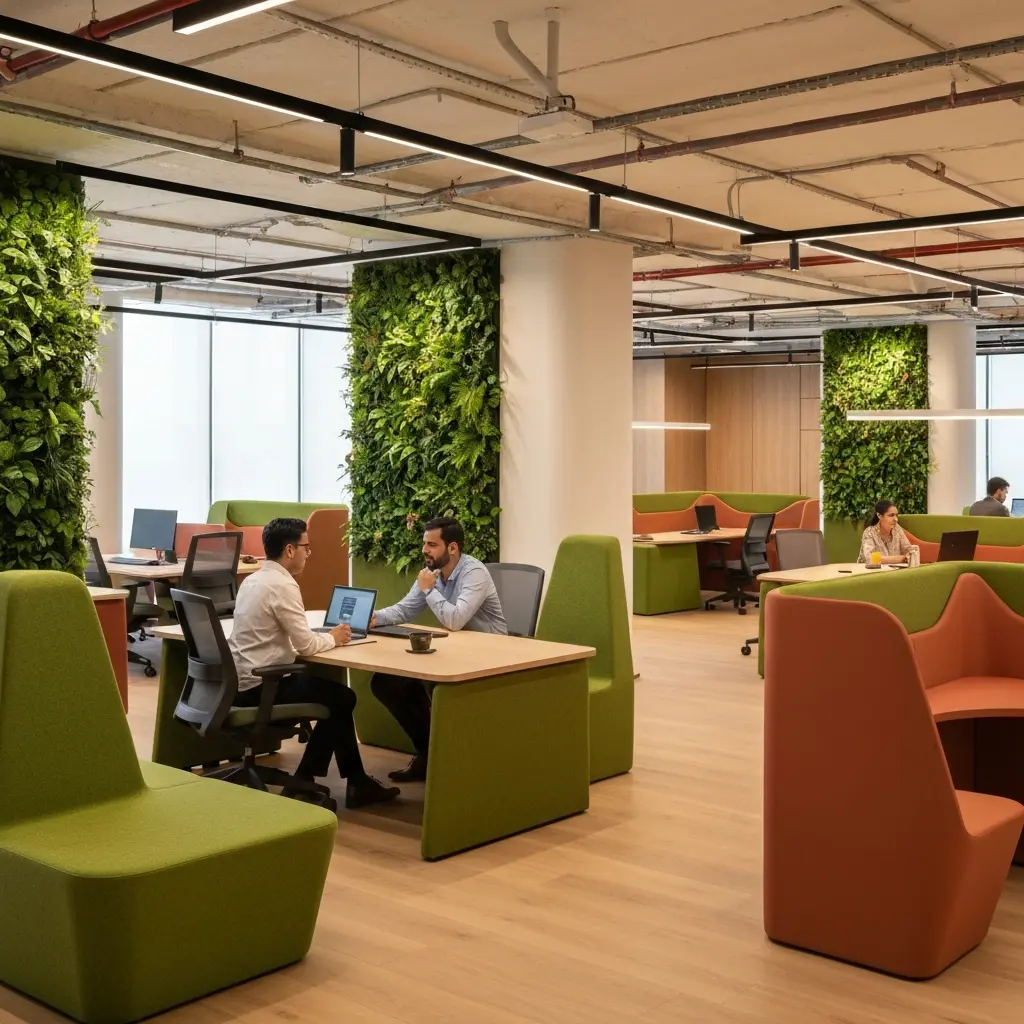
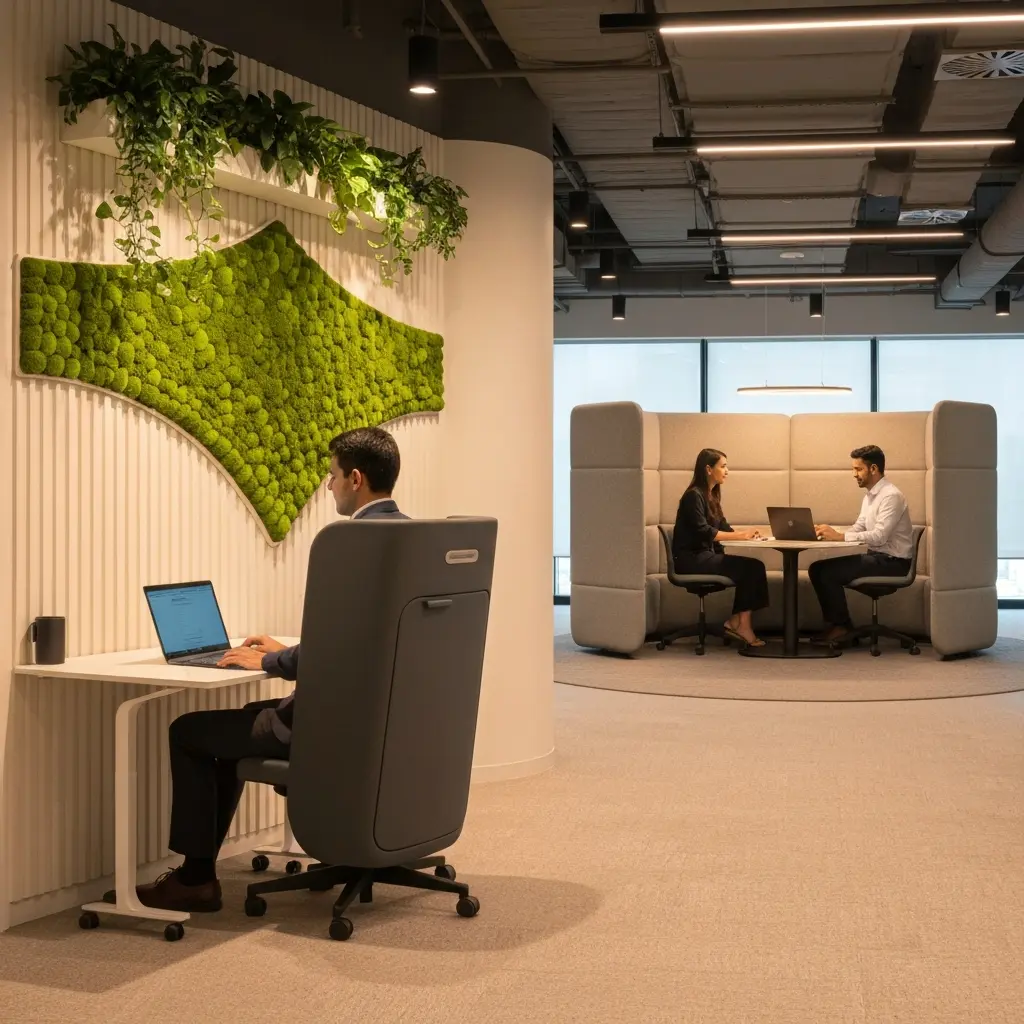
The concept of biophilic design has evolved decisively. Biophilic 2.0 is no longer about a few potted plants. It involves creating ‘immersive ecosystems’ with functional elements like air-purifying moss walls and indoor ‘airwells’ that manage Chennai’s humidity and purify urban air. This shift is driven by science: such interiors are proven to reduce stress hormones by 20% and boost creative output by 15%.
For the Indian business leader, this transforms greenery from an aesthetic extra into core productivity infrastructure. In a context where urban stress and long commutes can drain team energy, a workspace that actively lowers cortisol levels becomes a strategic asset for sustaining innovation and reducing burnout, especially during intense project cycles or the festive season crunch.
[Image of Biophilic 2.0 Workspace] A detailed cross-section diagram of a Biophilic 2.0 workspace wall, showing layers: 1) Air-purifying live moss panel, 2) Integrated irrigation & humidity control system, 3) Sound-absorbing recycled material backing, 4) Sensor for air quality monitoring. Arrows indicate airflow and toxin absorption process.
Designing for 2026: Modular Neighborhoods and Acoustic Privacy
The 2026 office is fundamentally reconfigurable. Mid-tier firms are now seeking ‘Modular Neighborhoods’—team zones that can be scaled up or down weekly. This agility is crucial for Indian SMEs that may ramp up hiring after a funding round or scale down a project team post-delivery. Fixed walls are replaced with flexible furniture systems built for disassembly, meeting new ‘audit-ready’ circularity and ESG mandates.
Acoustic privacy is solved through multi-layered ‘micro-zones.’ The open-plan anxiety is addressed by integrating mobile, soundproof Solo Pods for focused calls or deep work, preventing the distraction spillover that plagues traditional setups. This ensures that when a team does collaborate in a dedicated zone, they have the acoustic privacy to be effective, turning scheduled office days into high-output sessions.
Manager Insight: Your workspace should have a ‘portfolio of places’: silent pods for focused work, soft-seating nooks for quick chats, and bookable Modular Neighborhoods for team sprints. This variety caters to all work modes, making the office the default choice for the right task.
Is Your Current Office Design Holding Back Growth?
Consider if your workspace is passively consuming capital or actively enabling your business goals. The 2026 Hybrid Occupancy Index shows that positive net absorption is returning; companies are committing to office space, but only to spaces that work harder for them. A design that creates solo-work strain is devaluing your premium rent. In contrast, a Workspitality-led environment that blends well-being with efficiency directly supports talent attraction, retention, and ultimately, faster iteration and project delivery.
For the freelancer or solo entrepreneur, this evolution means access to a professional ecosystem without the burden of a full lease. You can work from a wellness-focused Solo Pod, host clients in a professionally designed meeting room, and network in a vibrant lounge—all within a single, cost-effective membership. It turns a overhead cost into a business development engine.
The 2026 Outlook for Indian Workspaces
The Indian flexible workspace market will accelerate its shift from mere seat provisioning to curated experience delivery. We will see a sharper focus on solving specific operational pain points like the Tuesday occupancy spike. Biophilic 2.0 elements will become a standard expectation for premium offerings, not a differentiator. Furthermore, with increased ESG disclosure pressures, demand for Circular Office Furniture and transparent sustainability practices will move from niche to mainstream, influencing procurement decisions for growing firms.
Key Takeaways
- The 2026 office must solve the ‘solo-work strain’ inefficiency to justify its cost and ‘earn the commute.’
- Biophilic 2.0 is a productivity tool, not décor; seek workspaces with immersive, wellness-engineered environments.
- Flexibility is financial wisdom: Modular Neighborhoods and on-demand spaces align costs with actual usage, preserving capital.
- Acoustic design is non-negotiable; ensure your space offers layered Solo Pods and collaborative micro-zones.
- Future-proof your operations by considering providers with Circular Office Furniture and clear ESG policies.
Conclusion
The future of work in India is not about choosing between home and office, but about accessing the right environment for the right task. The Workspitality evolution provides the blueprint: efficient, humane, and adaptable spaces that turn real estate from a fixed liability into a variable asset that grows with you. For businesses in Chennai looking to navigate this shift, the solution lies in partners who understand these nuanced demands. Crizone Business Centre is integrating these 2026 principles, offering Chennai’s entrepreneurs a workspace designed not just for occupancy, but for optimal performance and sustainable growth.
Continue your workspace search
Explore the most relevant Crizone pages next
If this article is part of your Chennai workspace research, these pages help you move from reading into comparing live plans, locations, and fit.
Explore coworking plans in Chennai
Compare day passes, dedicated desks, private offices, meeting rooms, and virtual office options from one commercial hub page.
Book a day pass in Chennai
Best fit if you need occasional workspace access, a short productive break from home, or a flexible desk for a single day.
Compare dedicated desk options
A stronger fit for regular monthly use when you want a fixed seat, better routine, and predictable workspace costs.