· Business Growth & Workspace · 6 min read
BREEAM V7 Mandate: Why Chennai Businesses Need Future-Proof Offices
The 2026 BREEAM V7 mandate ends ‘green-washing’ in workspaces. Learn how outcome-based sustainability impacts your talent, costs, and brand as a business leader in India.

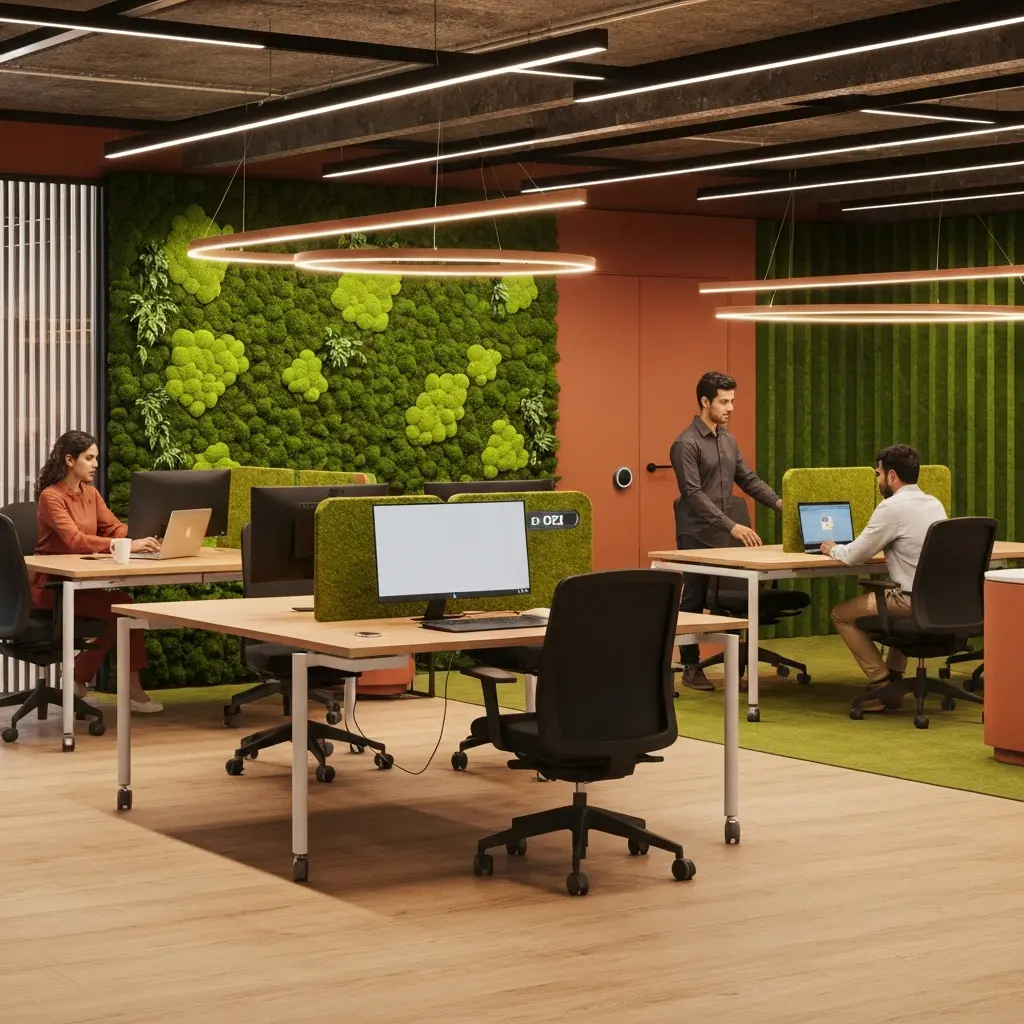
TL;DR: The 2026 BREEAM V7 mandate forces workspaces to deliver proven environmental and health outcomes, not just design promises. For Indian businesses, this shift directly impacts talent retention, operational costs, and corporate reputation, making a certified workspace a strategic asset for growth.\n\n## Introduction: The New Benchmark for Business Success\nFor an Indian founder, the core challenges are consistent: attracting top talent, managing escalating operational costs, and building a brand that stands for more than just profit. The physical workspace is no longer a passive overhead; it is a dynamic tool that can either amplify or hinder these growth objectives. As corporate ESG commitments tighten and employees prioritise well-being, the demand for authentic, high-performance environments has surged. This is where the global shift to outcome-based sustainability, crystallised by the BREEAM V7 mandate, becomes a critical business consideration, not just an architectural one. Choosing a workspace aligned with these principles is a direct investment in your company’s resilience and appeal.\n\n## What is BREEAM V7?\nBREEAM (Building Research Establishment Environmental Assessment Method) V7 is the latest and most rigorous global sustainability standard for buildings, effective from January 2026. It represents a fundamental pivot from assessing ‘design intent’ to verifying ‘actual performance’. The standard mandates continuous monitoring of energy use, indoor air quality, and material health, requiring third-party audits to prove a building performs as designed. For businesses, it means your office’s ‘green’ credentials are now data-driven and accountable, impacting everything from employee health to your company’s carbon footprint.\n\n### From Green Marketing to Growth Engineering\nThe closure of BREEAM V6 registrations marks the end of an era where sustainability was a marketing checkbox. V7’s core is the mandatory Whole Life Carbon assessment, auditing a building’s emissions from construction through to demolition. For a growing SME, this translates to long-term cost predictability and risk mitigation. A workspace built to these standards insulates you from future regulatory shifts and energy price volatility. The 2026 CBRE data showing a 5.9% lower vacancy rate for high-certified spaces is a clear market signal: quality talent and clients are voting with their feet, and they prefer proven, healthy environments.\n\n> Crizone Pro Tip: When evaluating a workspace, ask for the ‘As-Built’ performance data, not just the design-stage certificate. This verifies you are moving into a space that truly delivers on its promises, safeguarding your team’s productivity and your own ESG reporting.\n\n## The Tangible Benefits: Health, Wealth, and Brand\nFor the Indian business leader, the V7 standards break down into direct operational advantages. The restructured ‘Visual Comfort’ credits, for instance, reward designs aligning with human circadian rhythms. In practical terms, this means spaces flooded with natural light—a proven boost to employee mood and alertness, especially during long Chennai workdays. Similarly, the expanded acoustic performance standards address the critical need for privacy in hybrid work and client meetings, a common pain point in open-plan offices.\n\nThe financial logic is compelling. Consider the operational cost structure of a traditional office lease versus a premium, certified flexible workspace:\n\n| Cost Factor | Traditional Chennai Office (500 sq ft) | Certified Flex Space (5 Dedicated Desks) |\n| :--- | :--- | :--- |\n| Monthly Base Rent | ₹ 75,000 - ₹ 1,00,000 | ₹ 40,000 - ₹ 60,000 |\n| Maintenance & CAM* | ₹ 15,000 - ₹ 20,000 | Included |\n| HVAC/Electricity | ₹ 8,000 - ₹ 15,000 | Included |\n| Furniture Capex | ₹ 2-3 Lakhs (one-time) | Included (often via FaaS) |\n| Compliance Overheads | Managed by Tenant | Managed by Operator |\n\n*Common Area Maintenance. Based on approximate market rates for mid-level commercial spaces in areas like Guindy or OMR.\n\n### The Strategic Edge of Performance Data\nPerhaps the most significant shift is the move from promise to proof. Standards like RESET Air for continuous indoor air quality monitoring are now essential. The data is clear: optimal CO2 and VOC levels can improve cognitive function by up to 50%. For a tech startup or a financial services firm in Chennai, this isn’t an abstract benefit; it’s a direct lever on output quality and innovation speed. Furthermore, this verified data becomes a powerful tool for your own corporate storytelling, enhancing your brand’s credibility with clients and investors who increasingly scrutinise supply chain and operational sustainability.\n\n[Image of a diagram comparing Design-Only vs Outcome-Based Workspace Value]\n\n## Is Your Workspace a Liability or an Asset in 2026?\nThis question is urgent for branch managers and founders. BREEAM V7’s mandate to eliminate on-site fossil fuels and its predictive energy credits (Ene 02) mean buildings must perform efficiently in reality, not just on paper. A workspace failing this ‘performance gap’ test becomes a stranded asset—costly to operate and unattractive to lease. Conversely, spaces built to the Passive House standard (showing 90% lower HVAC demand) offer remarkable insulation from India’s power grid instability and soaring summer AC costs.\n\nThe circular economy also enters the workspace. The Furniture-as-a-Service (FaaS) model allows operators to provide high-quality, toxin-free furniture without the waste. For your business, it means a constantly refreshed, professional environment without capital expenditure or the headache of disposing of old assets, directly reducing your Scope 3 emissions.\n\n> Manager Insight: “Tenants now ask for monthly sustainability dashboards. They want to see their contribution to energy savings and clean air, which helps them meet their own corporate ESG goals. It’s a partnership.” – Adapted from JLL India’s 2026 Corporate Real Estate Report.\n\n## The 2026 Outlook for the Indian Workspace Market\nThe Indian flexible workspace market will bifurcate sharply. Commodity spaces competing solely on price will face pressure, while premium operators offering verified health, sustainability, and productivity outcomes will command a significant premium. We anticipate a surge in retrofit projects for Grade A buildings in hubs like Chennai, Mumbai, and Bengaluru to meet these new benchmarks. For tenants, the cost of not choosing a certified space will grow, measured in higher talent attrition, increased sick days, and potential non-compliance with future green lease regulations. The workspace will unequivocally become a key metric in a company’s overall health score.\n\n## Key Takeaways\n- Demand Proof, Not Promises: Audit your current or potential workspace for third-party performance data on air quality, energy use, and material health.\n- Calculate Total Cost & Value: Look beyond rent. Factor in included utilities, maintenance, quality furniture, and the productivity gains from a superior environment.\n- Leverage the Circular Economy: Prefer spaces that utilise models like Furniture-as-a-Service (FaaS) to reduce your indirect environmental footprint.\n- Future-Proof Your Operations: A BREEAM V7 or Passive House-aligned space protects your business from energy inflation and future regulatory changes.\n- Use Your Space as a Talent Tool: A certified, healthy workspace is a powerful recruitment and retention tool in a competitive talent market like Chennai’s.\n\n## Conclusion\nThe 2026 mandate for outcome-based sustainability transforms the workspace from a static cost centre into a dynamic platform for business growth. It aligns financial prudence with environmental responsibility and employee well-being in a single, strategic decision. For forward-thinking businesses in Chennai, the choice is clear: inhabit spaces that are engineered to perform, where every detail from the daylight to the desk chair is optimised for human and business potential. At Crizone Business Centre, we are integrating these very principles of performance, wellness, and calm efficiency, crafting environments where ambitious Indian businesses can truly thrive.
Continue your workspace search
Explore the most relevant Crizone pages next
If this article is part of your Chennai workspace research, these pages help you move from reading into comparing live plans, locations, and fit.
Explore coworking plans in Chennai
Compare day passes, dedicated desks, private offices, meeting rooms, and virtual office options from one commercial hub page.
Book a day pass in Chennai
Best fit if you need occasional workspace access, a short productive break from home, or a flexible desk for a single day.
Compare dedicated desk options
A stronger fit for regular monthly use when you want a fixed seat, better routine, and predictable workspace costs.