· Business Growth & Workspace · 6 min read
Coworking Management Software 2026: Consolidation for Growth
Explore how Indian businesses can scale in 2026 by leveraging unified Workspace OS platforms that automate operations, predict maintenance, and integrate finance.

TL;DR: A global labour shortage necessitates consolidation. In 2026, scalable growth for Indian businesses will depend on unified Workspace Operating Systems that automate maintenance, security, and finances, replacing fragmented point solutions.
For Indian entrepreneurs and branch managers, scaling a business often means wrestling with escalating operational overhead. Rising real estate costs in cities like Chennai, the logistical drain of managing a traditional office lease, and the constant effort to retain talent create a complex growth barrier. The flexible workspace model offers a clear alternative, but its efficiency hinges on the technology that manages it. As of 2026, this technology landscape is undergoing a critical, forced evolution due to a dual crisis: severe global labour shortages and tightening budgets. The old model of using separate apps for access, air conditioning, billing, and security is becoming untenable. The future for efficient, profitable scaling lies in integrated Coworking Management Software 2026 platforms.
What is a ‘Workspace Operating System’?
A Workspace Operating System (OS) is a unified software platform that consolidates all critical functions of managing a flexible workspace—from member access and space booking to predictive maintenance of HVAC systems and automated financial reconciliation. Unlike a collection of disconnected apps, a true Workspace OS provides a ‘single pane of glass’ for operators, integrating IoT sensor data, AI analytics, and business software (like accounting or HR tools) into one coherent system. This shift is essential to automate operations and maintain service quality amidst the 2026 labour shortages reported by 72% of facility teams.
Why Can’t Indian SMEs Afford a Fragmented Tech Stack?
For a growing SME or a corporate branch in Chennai, operational agility is non-negotiable. A fragmented tech stack—using one app for lighting, another for AC, a third for security, and manual spreadsheets for billing—creates hidden costs and risks. The April 2026 Johnson Controls report highlights that staffing shortages are significantly impacting operations, making manual processes a liability. An operator spending 10+ hours monthly on manual bookkeeping, as noted in industry trends, is losing time for core business development.
Crizone Insight: A consolidated system automates the mundane. It handles member check-ins via a mobile app, triggers cleaning schedules based on sensor data, and reconciles GST-compliant invoices automatically, freeing your team to focus on client relationships and growth strategies.
The financial drain is equally clear when comparing reactive versus predictive maintenance models. The traditional ‘run-it-till-it-breaks’ approach leads to costly emergency repairs, especially for critical systems like elevators and HVAC units, which suffer in Chennai’s humid climate. With 45% of organisations now deploying AI-driven predictive maintenance, the shift is evident. Vibration and acoustic AI sensors can extend the life of these mechanical assets by up to 40%, directly protecting your operational budget.
| Cost Factor | Traditional Office/Fragmented Stack | Integrated Workspace OS Solution |
|---|---|---|
| Monthly Admin Overhead | ~15-20 hours manual work (booking, billing, vendor calls) | ~2-5 hours for oversight & strategy |
| Emergency Repair Budget | High, unpredictable (e.g., ₹50,000+ for sudden AC failure) | Reduced by up to 40% via predictive alerts |
| Space Utilisation Efficiency | Static, based on guesswork; often 30% underused | Data-driven; typically reduces overhead costs by 20-35% |
| Security & Access Management | Multiple systems/keycards; higher risk/friction | Unified, mobile-first credentials; lower risk, better experience |
How Does a Unified Platform Directly Drive Business Growth?
Consolidation is not just about cost avoidance; it’s a growth engine. The primary themes are automation, insight, and security. First, automation reclaims time. By adopting mobile-first billing integrations, operators reclaim those 10+ hours of manual bookkeeping each month. This time translates directly into capacity for sales, marketing, or product development. Second, data-driven insight optimises your most expensive asset: space.
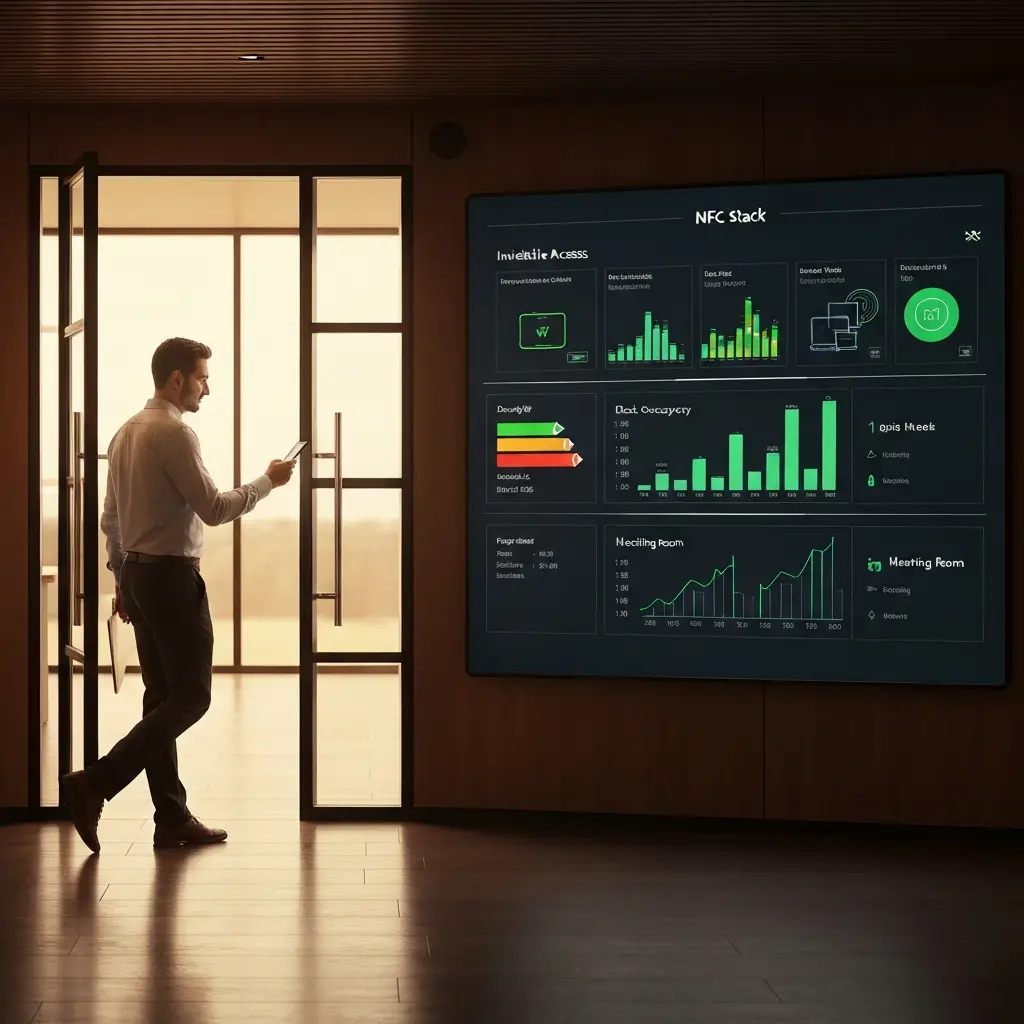
[Image of a dashboard showing real-time occupancy heatmaps, energy consumption per zone, and upcoming maintenance alerts]
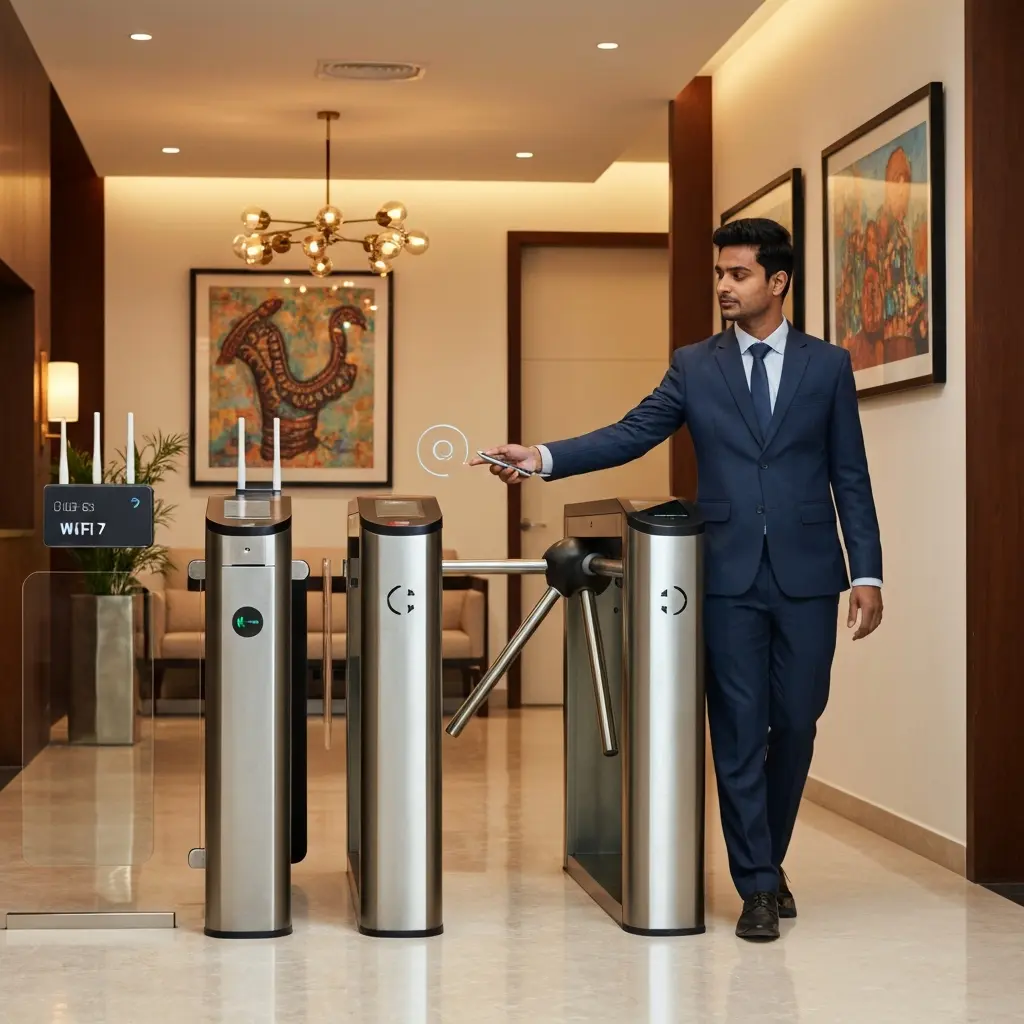
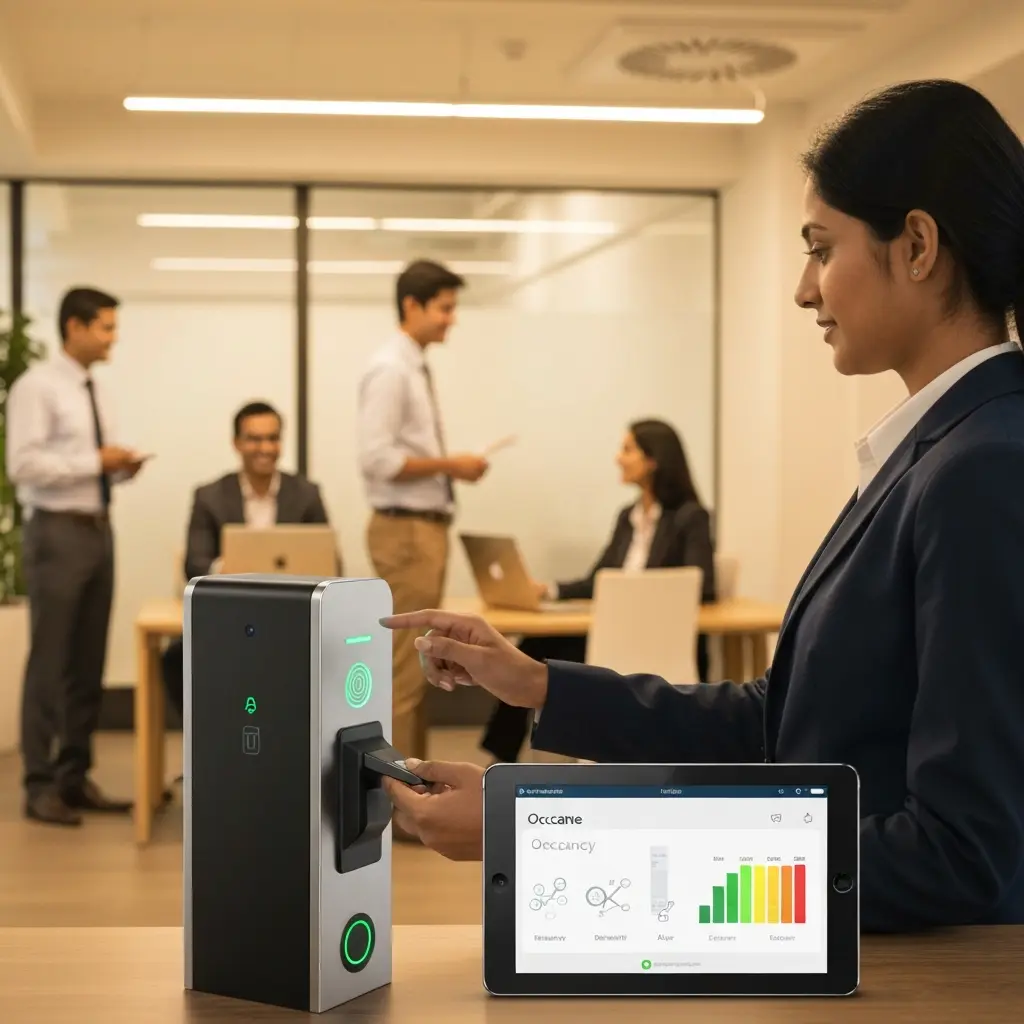
With 75% of organisations now utilising sensor-based space management, the ability to see which meeting rooms are used, which work zones are popular, and which areas are consistently vacant allows for intelligent layout changes. This can reduce your effective space cost by 20-35%, allowing you to host more members or services within the same footprint. Finally, security converges with facility management. In 2026, 22% of facility managers cite cyberattacks as the top threat to equipment uptime. A unified system with deterministic connectivity (like Wi-Fi 7) ensures that your access control, CCTV, and environmental systems are on a secure, zero-latency network, protecting both your physical assets and your data.
Is Your Workspace Ready for the Mobile-First, Connected Tenant?
The tenant expectation has fundamentally shifted. In 2026, 59% of corporate tenants prioritise spaces with touchless, app-based entry over traditional keycards. Smartphone-based credentials are the baseline. This isn’t merely a convenience; for an Indian business hosting clients or attracting top talent, it signals modernity, efficiency, and hygiene. Furthermore, the IoT infrastructure has evolved from simple data collection to ‘deterministic connectivity’. This ensures that autonomous facility robots (for cleaning or security patrols) and real-time response systems work flawlessly, creating a seamlessly managed environment that impresses every visitor.
Growth Tip: Evaluate your workspace not just by its location and design, but by its operational fluency. Can a prospective member book a room, pay, and access it entirely via a smartphone? This fluency directly impacts your conversion rates and member retention.
Adopting a unified platform also future-proofs your operations against the next wave of integration. Top-tier operators are collapsing their tech stacks to connect directly to HRIS platforms and collaboration tools like Slack or Teams. This means a new corporate member’s onboarding can be automated from the HR system to the workspace booking platform, saving days of administrative coordination.
The 2026 Outlook for Chennai’s Flexible Workspace Market
The Indian market, particularly in tech hubs like Chennai, will see accelerated adoption of these consolidated systems. The global workspace management software market’s projected surge from ₹3.02 billion in 2026 to ₹10.30 billion by 2035 will be mirrored here, driven by the need for operational resilience. We predict a clear bifurcation: spaces offering a fragmented, manual experience will struggle with profitability and member satisfaction, while those powered by a intelligent Workspace OS will see enhanced margins, member loyalty, and scalability. The emphasis will be on platforms that offer not just features, but a calm, efficient, and seamlessly integrated environment.
Key Takeaways for Indian Business Leaders
- Consolidate to Automate: Replace multiple point solutions with a single Workspace OS to reclaim crucial administrative time lost to manual processes.
- Adopt Predictive Maintenance: Implement AI-driven monitoring for key assets (HVAC, elevators) to extend their lifecycle by up to 40% and avoid costly emergency repairs.
- Optimise with Data: Use sensor-based insights on space utilisation to reduce overhead costs by 20-35%, making your footprint more profitable.
- Meet Mobile-First Expectations: Ensure smartphone-based, touchless access is standard to attract and retain the modern corporate tenant.
- Secure the Convergence: Prioritise unified systems with secure, deterministic connectivity to protect against the growing threat of cyberattacks on facility uptime.
For the Indian entrepreneur, freelancer, or branch manager, the workspace is more than a location; it is an operational platform. The 2026 imperative is to choose a platform that works intelligently for you. By consolidating your tech stack into a unified, AI-enhanced Workspace Operating System, you turn operational overhead into a streamlined growth advantage. This is the foundation for scaling sustainably amidst global challenges.
At Crizone Business Centre, we integrate these principles into our core operations. Our environments are designed to be not just aesthetically pleasing, but calm and efficiently managed through advanced systems, providing Chennai’s businesses with the integrated, growth-ready platform they need to scale without friction.
Continue your workspace search
Explore the most relevant Crizone pages next
If this article is part of your Chennai workspace research, these pages help you move from reading into comparing live plans, locations, and fit.
Explore coworking plans in Chennai
Compare day passes, dedicated desks, private offices, meeting rooms, and virtual office options from one commercial hub page.
Book a day pass in Chennai
Best fit if you need occasional workspace access, a short productive break from home, or a flexible desk for a single day.
Compare dedicated desk options
A stronger fit for regular monthly use when you want a fixed seat, better routine, and predictable workspace costs.