· Business Growth & Workspace · 6 min read
Coworking Market Growth Report 2026: The Flex Migration Trend
Explore why 2026's RTO mandate backlash is fuelling India's coworking surge, offering a strategic edge for talent retention and agile growth.
TL;DR: Stricter Return-to-Office mandates in 2026 are backfiring, causing a 41% talent attrition risk. This backlash fuels a global shift to flexible workspaces, now a $33.26B sector. For Indian businesses, it’s a strategic pivot to retain talent and access prime locations without long-term lease liabilities.
Introduction: The Chennai Founder’s Dilemma
By early 2026, the flexibility experiment has reached a decisive point. Across India’s metro corridors, from Gurugram’s cyber hubs to Chennai’s OMR, a silent friction is reshaping business fundamentals. On one hand, escalating commercial rents and a 25-year low in new construction starts squeeze expansion plans. On the other, a direct talent crisis emerges: 80% of firms globally report losing top performers due to rigid mandates. This conflict has matured a powerful alternative. The Coworking Market Growth Report for 2026 highlights a pivotal migration from costly, inflexible leases to agile, employee-centric solutions that stabilise operations and fuel growth.
What are the 2026 Hybrid Work Trends?
The 2026 hybrid work trends represent a strategic evolution from ad-hoc flexibility to structured, performance-driven workspace models. It is defined by enterprises consciously decoupling their talent strategy from rigid real estate leases. Instead, they are adopting a ‘Flex-First’ policy, leveraging a network of high-quality, managed workspaces to provide employees with location autonomy while maintaining organisational cohesion. This model is less about remote work and more about optimising ‘Time ROI,’ ensuring productivity hubs are within a 15-minute commute, thus directly countering the talent drain from forced office returns.
The Financial Anatomy of the Flex-First Pivot
For an Indian SME, the financial logic is compelling. Traditional office leases in Chennai’s prime corridors like OMR or Guindy demand significant capital lock-in, with fit-outs, security deposits, and maintenance adding 20-25% to the base rent. In contrast, flexible workspace solutions convert this capex into a predictable operational expense. The ‘burst capacity’ model is particularly savvy; with peak office attendance stabilising at 56%, why pay for 100% permanent space? A flexible membership allows you to scale seats up for monthly reviews or project sprints and down during festive or travel seasons, optimising every rupee.
Crizone Pro Tip: Model your workspace cost not just as rent, but as Cost Per Productive Employee Hour. Factor in Bengaluru’s traffic or Chennai’s humidity impacting AC bills in a leased office. A premium flex space includes utilities, maintenance, and high-speed internet in one invoice, simplifying GST compliance and freeing your finance team for strategic work.
| Cost Factor | Traditional Chennai Office (₹ 2 Lakh/month, 10-seater) | Flexible Workspace Solution (10 Dedicated Desks) |
|---|---|---|
| Base Rent & Deposit | ₹ 2,00,000 + 10-month deposit (₹ 20 Lakhs locked) | ₹ 1,80,000 - ₹ 2,20,000 (No security deposit) |
| Fit-out & Furniture | ₹ 8-10 Lakhs (One-time Capex) | ₹ 0 (Included) |
| Maintenance & AMC | ₹ 15,000 - ₹ 25,000/month | ₹ 0 (Included) |
| Utilities (Power/Water) | ₹ 30,000 - ₹ 50,000/month | ₹ 0 (Included) |
| Admin & Reception | ₹ 40,000 - ₹ 60,000/month | ₹ 0 (Included) |
| Total Monthly Overhead | ~₹ 3 Lakhs + Capex | ~₹ 1.8 - ₹ 2.2 Lakhs (All-inclusive) |
Is Your RTO Policy Your Biggest Talent Risk?
The data is unequivocal: 8 in 10 companies have lost talent due to strict Return-to-Office mandates. In India’s competitive tech and startup landscape, where skill shortages persist, this is an existential risk. The 2026 professional treats time as their primary currency; a mandated, congested commute is seen as a direct value subtraction. Flexible workspaces mitigate this by becoming distributed hubs. A sales team in Mumbai can use a Worli coworking space, while the tech team operates from a managed office in Pune’s Hinjewadi, all under one corporate agreement. This isn’t just a perk—it’s a retention strategy that has seen flexible firms outperform rigid peers by 16% in revenue growth.
Manager Insight: “The war for talent is won at the margins. Offering a premium, professional workspace near an employee’s home—be it in Anna Nagar or Velachery—signals respect for their time and well-being. It’s more effective than a counter-offer.”
How Are Workspace Design and ESG Shaping Choices?
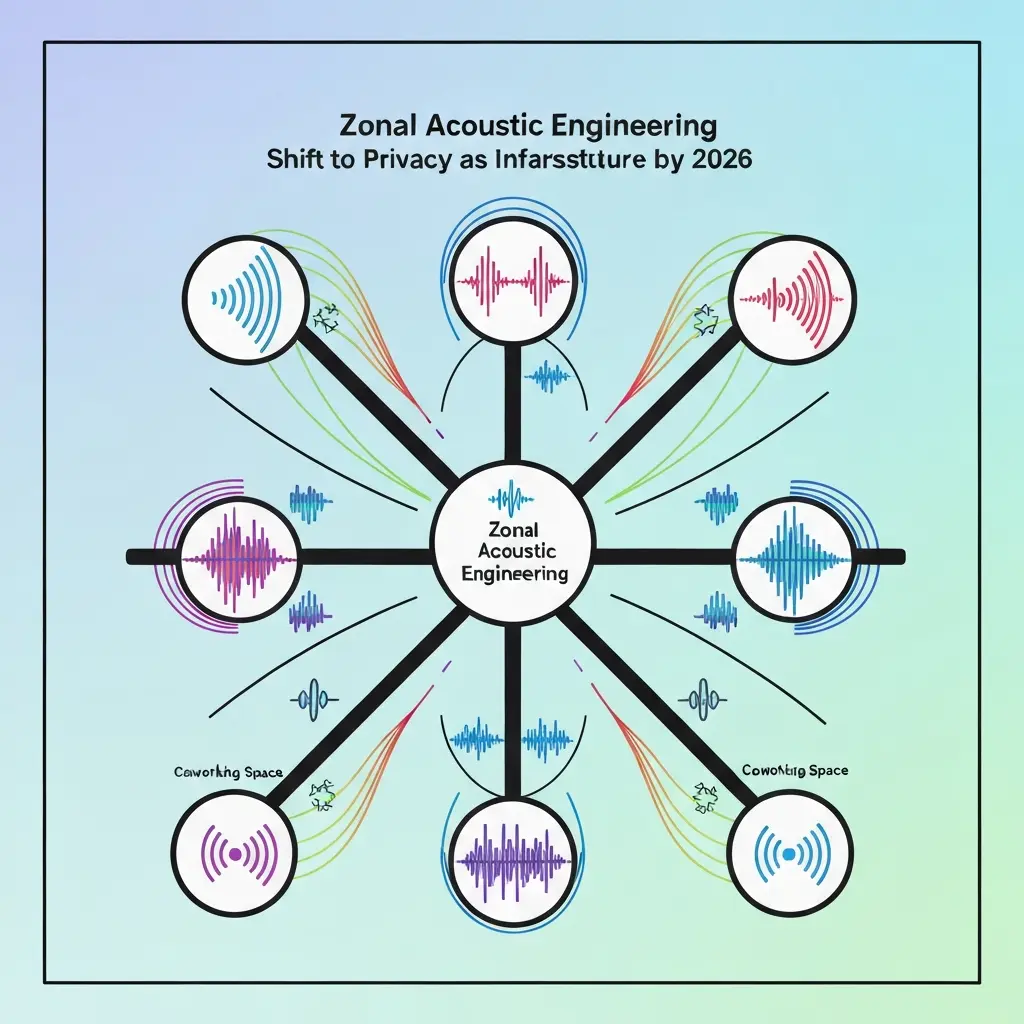
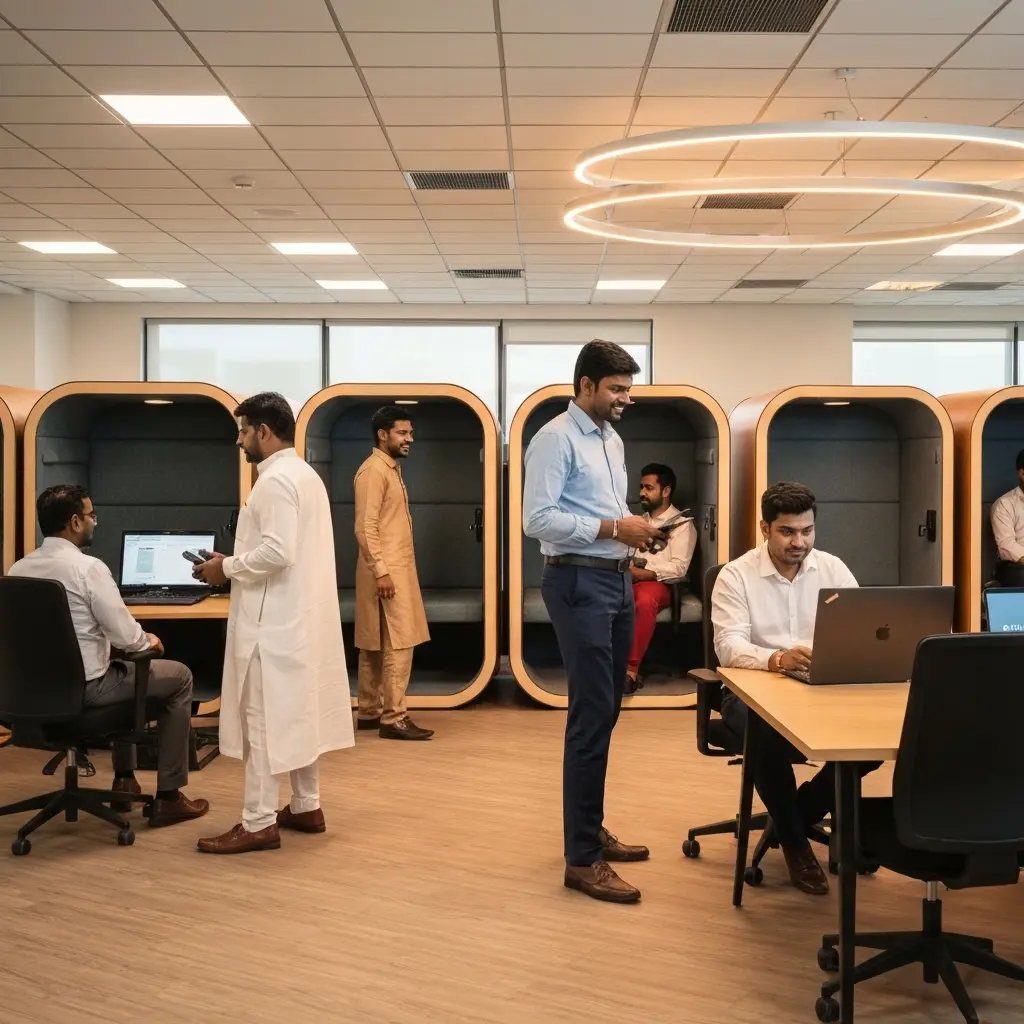
The 2026 flex space is engineered for deep work, not just aesthetics. With 75% of professionals citing noise as the top productivity killer, acoustic engineering takes precedence. Look for sound-insulated focus pods, phone booths, and designated quiet zones over vast, echoey floors. Furthermore, corporate ESG mandates have trickled down. LEED-certified green buildings are no longer a luxury but a compliance and branding necessity for attracting top-tier enterprise clients and talent. These spaces, which command a 7-10% premium, offer better air quality and natural light, directly impacting cognitive function and reducing sick days—a critical advantage in India’s urban centres.
[Image of a detailed diagram comparing Traditional vs. Flex-First Workspace Strategy] A flowchart showing the decision tree: Start with “Business Goal (Growth/Retention)”. The “Traditional Lease” path leads to “High Capex,” “Long Commitment,” “Management Overhead,” and ends at “Inflexible to Market Changes.” The “Flex-First Strategy” path leads to “OpEx Model,” “Agile Scaling,” “Included Services,” and ends at “Talent-Centric Growth.”
The 2026 Outlook for the Indian Workspace Market
The coming year will see the Indian flex market mature beyond metro generalists. Niche, industry-specific hubs for legal, med-tech, and deep-tech firms will emerge, catering to specialised infrastructure and compliance needs. As noted in JLL India’s latest reports, demand will polarise: vacant, low-grade offices will struggle, while premium, well-located flexible assets will see occupancy soar. The winning operator will provide a ‘hotel-like’ experience—impeccable service, curated communities, and tech-enabled convenience—making the workspace a tool for recruitment and client confidence, not just a cost centre.
Key Takeaways
- Treat Flexibility as a Retention Tool: Mandating a full-time office return risks losing 41% of your workforce. Structured flexibility through quality flex spaces is a strategic antidote.
- Calculate Total Occupancy Cost: Move beyond square-footage rates. Factor in fit-out capex, maintenance, utilities, and administrative labour when comparing a lease to a flex solution.
- Prioritise Acoustics and Sustainability: Your team’s ability to focus is paramount. Choose spaces designed for quiet, and leverage LEED-certified buildings to meet ESG goals and attract talent.
- Adopt a Hub-and-Spoke Model: Use flex spaces to create a network of satellite offices, reducing employee commute stress and tapping into talent pools across different city zones.
- Plan for ‘Burst Capacity’: Match your physical space to actual usage. Use flex memberships to accommodate weekly team gatherings without the overhead of permanent, under-utilised space.
Conclusion
The ‘Great Flex Migration’ of 2026 is not a transient trend but a fundamental recalibration of how businesses operate. It merges financial pragmatism with human-centric design, turning the workspace from a fixed liability into a dynamic growth lever. For the ambitious Indian business, the choice is clear: cling to the old model of lease-led rigidity and face talent drain, or adopt a Flex-First strategy that attracts talent, enables agility, and sharpens your competitive edge. At Crizone Business Centre, we provide this exact, calmly efficient solution—offering Chennai’s entrepreneurs and growing enterprises premium, strategically located workspaces designed for the nuanced demands of 2026 and beyond.
Continue your workspace search
Explore the most relevant Crizone pages next
If this article is part of your Chennai workspace research, these pages help you move from reading into comparing live plans, locations, and fit.
Explore coworking plans in Chennai
Compare day passes, dedicated desks, private offices, meeting rooms, and virtual office options from one commercial hub page.
Book a day pass in Chennai
Best fit if you need occasional workspace access, a short productive break from home, or a flexible desk for a single day.
Compare dedicated desk options
A stronger fit for regular monthly use when you want a fixed seat, better routine, and predictable workspace costs.