· Business Growth & Workspace · 7 min read
Digital Nomad Visa 2026: How Managed Coliving is Reshaping Work for Indian Firms
In 2026, new remote work visas and managed coliving create a 'resident-nomad' class. We explore what this global trend means for cost control, talent strategy, and growth for Indian entrepreneurs and SMEs.
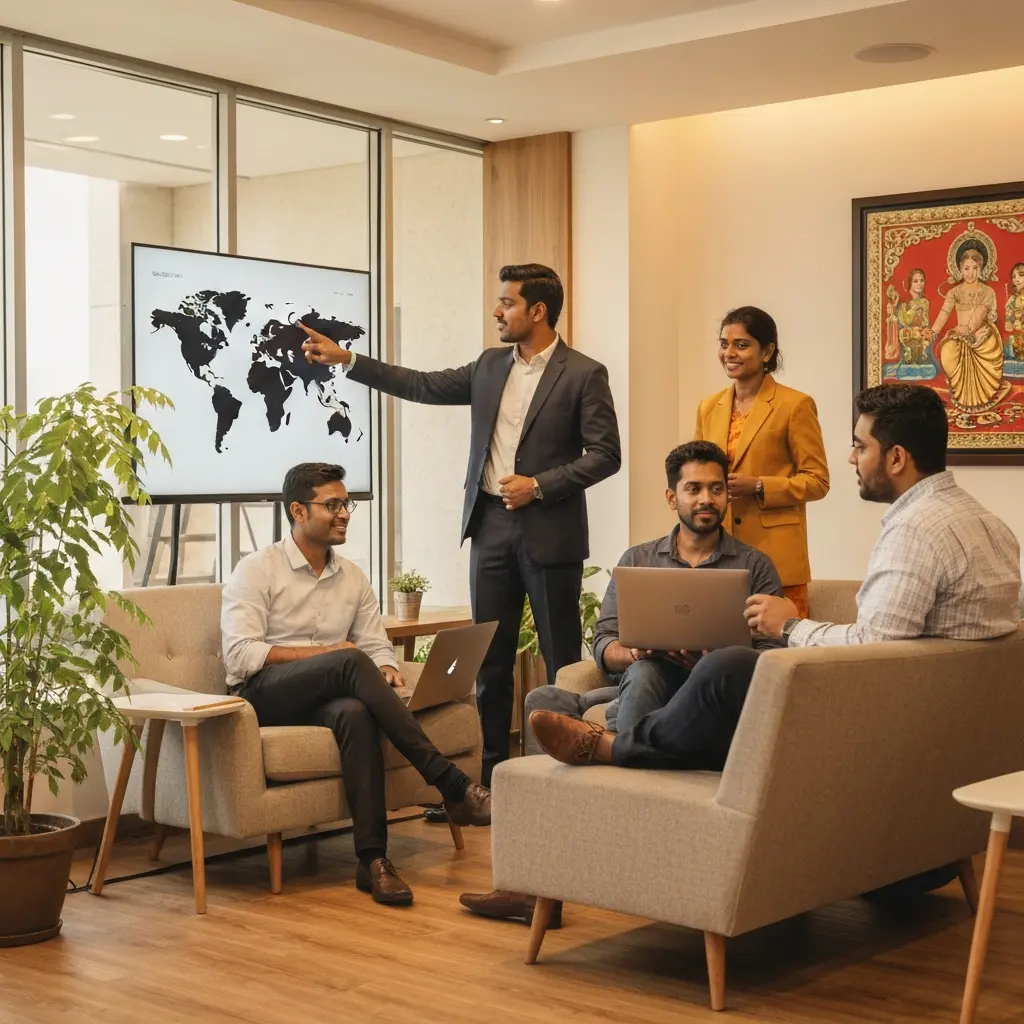
TL;DR: The 2026 digital nomad landscape has matured, with 70+ countries offering structured residency visas and a booming managed coliving market. This creates a new ‘resident-nomad’ class, offering Indian businesses powerful models for cost-saving, global talent access, and operational agility, moving beyond simple work-from-home.
For the Indian entrepreneur or SME founder, managing growth often feels like solving a complex equation with too many variables. The rigid, capital-intensive traditional office lease is one of the biggest. It locks in significant monthly rent—whether in Chennai’s prime CBD or on OMR—alongside hefty deposits, maintenance headaches, and long-term liability. This model strains cash flow and lacks the agility required in today’s dynamic market. Concurrently, the post-pandemic expectation for flexible, hybrid, or even fully remote roles is a reality, complicating talent retention and team cohesion.
The global workspace conversation, however, has evolved beyond ‘work-from-home’ into a sophisticated infrastructure play. As of early 2026, the concept of the ‘digital nomad’ has transformed from a backpacker with a laptop to a ‘resident-nomad’ leveraging official visas and managed coliving. This global shift towards structured flexibility offers a powerful blueprint for Indian businesses seeking smarter, more resilient growth models that prioritise people and profitability.
What is the Digital Nomad Visa 2026 & Managed Coliving Trend?
This trend represents the formalisation and institutionalisation of remote work. A Digital Nomad Visa 2026 refers to a specific residency permit offered by over 70 countries, allowing qualified professionals to live and work remotely within their borders for extended periods, often with access to local services. Managed coliving is the parallel housing model: fully-serviced, community-oriented apartments with flexible leases, high-speed internet, and shared amenities. Together, they create a turnkey ‘resident-nomad’ infrastructure, converting transient remote work into stable, mid-to-long-term living and working arrangements.
How Does This Global Trend Translate to Indian Business Growth?
For an Indian SME, the core value of this trend is not about sending your team to Albania. It’s about adopting the underlying principles of operational flexibility, reduced fixed costs, and talent-centric models to fuel growth here in India.
1. The Financial Model: Converting Fixed Costs into Variable Growth Levers
The most immediate impact is on the balance sheet. The traditional office is a significant fixed cost. Managed workspaces and hybrid models convert this into a variable, scalable expense. This mirrors the global coliving data showing 18-32% cost savings. For a growing company, every rupee saved on overhead is a rupee invested in marketing, R&D, or new hires.
Consider the cash flow impact for a Chennai-based startup:
| Expense Head | Traditional OMR Office (₹) | Flexible Coworking Solution (₹) |
|---|---|---|
| Monthly Rent (500 sq. ft.) | ₹ 75,000 - ₹ 1,00,000 | ₹ 20,000 - ₹ 40,000 (for 5 dedicated desks + meeting room credits) |
| Security Deposit | ₹ 3,00,000 - ₹ 6,00,000 (4-6 months) | ₹ 50,000 - ₹ 1,00,000 (often refundable) |
| Maintenance & Utilities | ₹ 15,000 - ₹ 25,000 (extra) | Typically included (AC, electricity, cleaning) |
| Internet & IT Setup | One-time CapEx + monthly fee | Enterprise-grade Wi-Fi included |
| Annual Lock-in | 12-36 months | Month-to-month or 3-6 months |
Business Growth Tip: Treat workspace as an operational lever, not a fixed asset. The capital freed from deposits and lower monthly outlays can be redirected to critical growth activities, be it a targeted ad campaign during the festive season or a key hire.
2. Talent Strategy: From Geographic Limitation to Skills-Based Access
The 2026 visa trends highlight a global competition for skilled remote workers. Indian companies must think similarly. Adopting a flexible workspace model allows you to tap into talent pools beyond your immediate city. You can hire the best developer in Coimbatore or a brilliant content strategist in Pune without relocation hassles. Furthermore, offering a ‘flexible work base’—like a membership at a premium business centre—can be a powerful retention tool for existing staff who value avoiding daily traffic or prefer a hybrid blend.
This aligns with the ‘Secondary City Surge’ globally, where talent seeks quality of life. In India, this could mean your top performer works from a Tier-2 city hub part of the week, maintaining productivity and satisfaction.
[Image of a conceptual organisational chart showing a central ‘HQ Hub’ in Chennai connected via dotted lines to remote team members in other Indian cities like Pune, Coimbatore, and Bangalore, with icons for video call, cloud storage, and task management.]
3. Agility & Professionalism: The Managed Advantage
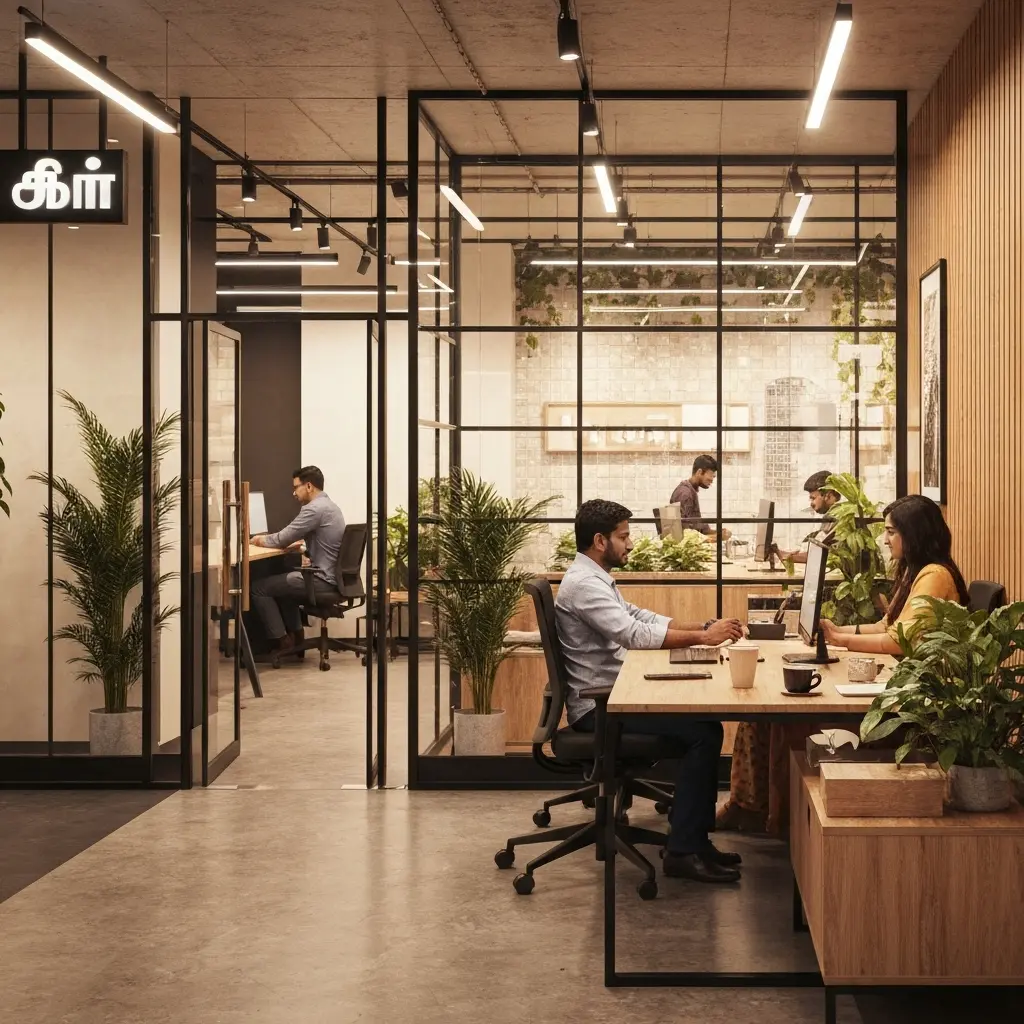
Global data shows 68% of coliving properties use smart tech for efficiency, and professional management is scaling rapidly. This is the essence of the managed workspace model. For a business owner, it means no more dealing with erratic Wi-Fi providers, broken ACs during humid Chennai summers, or cleaning staff management. The operational burden is transferred to a specialist, allowing leadership to focus on core business.
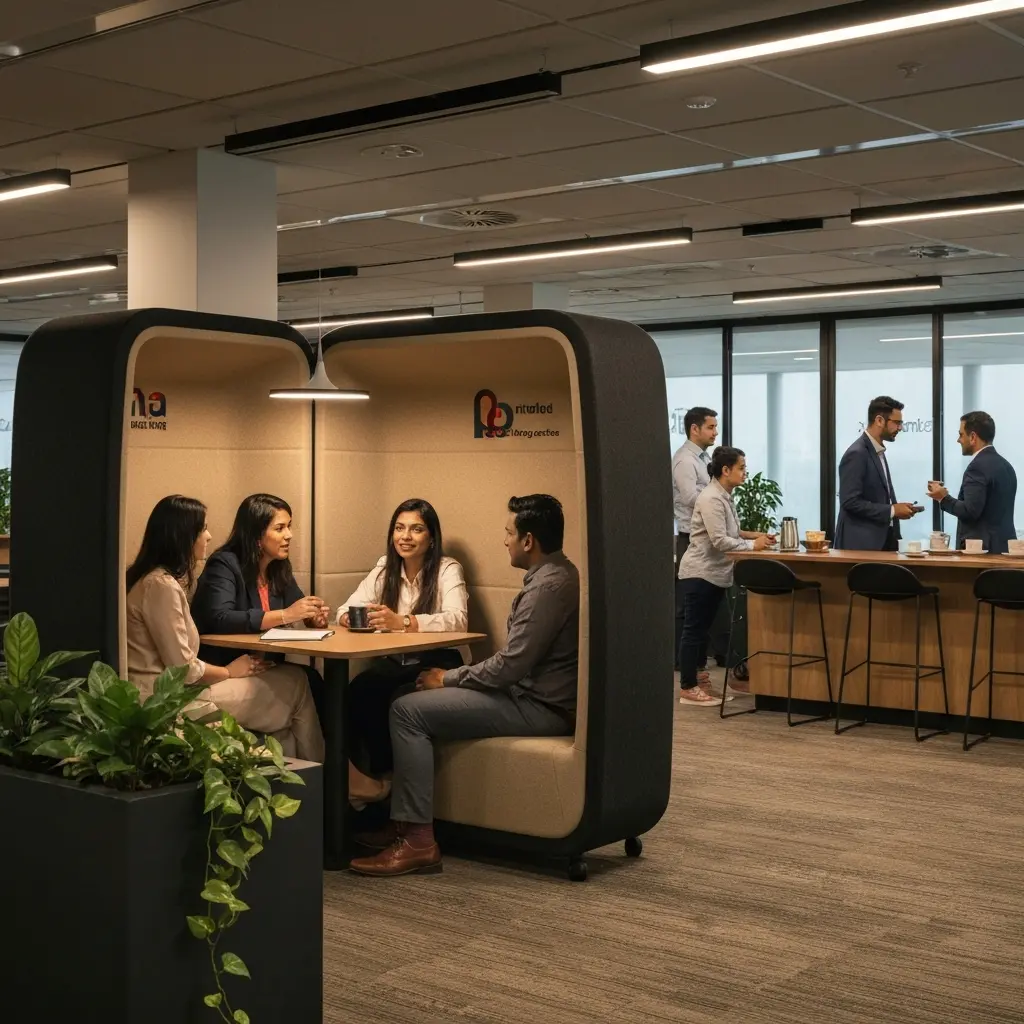
Similarly, the reported 18% increase in occupancy stability from community events in global coliving has a direct parallel. A professional business centre fosters networking and serendipitous connections with other businesses, potentially leading to partnerships, client referrals, or vendor discoveries—all within your building, skipping the OMR traffic for a coffee meeting.
Manager Insight: “The hidden cost of managing an office isn’t just monetary; it’s leadership bandwidth. Outsourcing the workspace to experts like Crizone gives founders back 10-15 hours a month to focus on strategy and growth, not printer leases.”
What Does the 2026 Outlook Mean for Chennai’s Workspace Market?
The trends of 2026 point toward consolidation and sophistication in India’s flexible workspace sector. Expect deeper integration of hospitality-grade service (as seen in the 42% global conversion rate) into Indian business centres. Demand will further segment: from hot desks for freelancers to premium, sound-proof cabins for corporate teams requiring absolute focus and confidentiality for client calls.
For Chennai, locations with superior multi-modal connectivity (like Metro-adjacent centres) will see premium demand, as will spaces offering holistic environments—reliable power backup, wellness rooms, and superior F&B options. The concept of the workspace as a ‘productivity platform’ rather than just a rented room will become standard. As noted in a recent JLL India report, the flex space segment is poised for structured growth, driven by enterprise demand for agile real estate solutions.
Key Takeaways for Indian Founders and Managers
- Reframe Real Estate as OPEX: Move workspace from a capital-intensive, long-term liability to a flexible operational expense that scales with your team size.
- Build a Talent-Centric Model: Use flexible work policies, supported by professional hub spaces, to attract and retain skilled professionals across India, not just your city.
- Prioritise Managed Services: Outsource non-core infrastructure (IT, maintenance, admin) to experts. The efficiency gain and recovered leadership time are significant competitive advantages.
- Leverage the Community: Choose a workspace that actively fosters professional networking. The right business neighbour can become a client, partner, or mentor.
- Plan for Hybrid as Standard: Design your operations, communication, and culture around a hybrid model. A central, well-equipped professional base is critical to making this work effectively.
The global shift towards resident-nomad infrastructure is a powerful signal: the future of work is structured yet flexible, professional yet personal, and global yet locally connected. For the ambitious Indian business, the lesson is clear. Sustainable growth is no longer tethered to a fixed address on a long lease. It is fuelled by agility, smart capital allocation, and creating an environment where talent thrives.
This is precisely the growth partnership Crizone Business Centre offers businesses in Chennai. By providing a portfolio of managed, professional workspaces—from dedicated cabins for focused teams to vibrant lounges for collaboration—we embody the 2026 principles of flexibility, community, and seamless operation. Let us handle the infrastructure, so you can focus on building what matters most: your business.
Continue your workspace search
Explore the most relevant Crizone pages next
If this article is part of your Chennai workspace research, these pages help you move from reading into comparing live plans, locations, and fit.
Explore coworking plans in Chennai
Compare day passes, dedicated desks, private offices, meeting rooms, and virtual office options from one commercial hub page.
Book a day pass in Chennai
Best fit if you need occasional workspace access, a short productive break from home, or a flexible desk for a single day.
Compare dedicated desk options
A stronger fit for regular monthly use when you want a fixed seat, better routine, and predictable workspace costs.