· Business Growth & Workspace · 6 min read
Digital Twin CMS: The Smart Office System Indian Firms Need in 2026
By 2026, smart office technology will be a business necessity. Learn how a Digital Twin CMS drives growth for Indian SMEs by cutting costs, boosting efficiency, and ensuring compliance.
TL;DR: By 2026, a Digital Twin CMS is essential for growth. This “Space OS” moves beyond dashboards to create a live 3D replica of your workspace. For Indian businesses, it automates compliance, slashes operational costs by up to 30%, and creates an intelligent environment that attracts top talent, turning your office from a cost centre into a strategic asset.
For the Indian founder, the traditional office is a web of fixed costs and operational blind spots. You sign a three-year lease in Velachery, commit to lakhs in CAPEX for furniture and servers, and then manage erratic electricity bills and maintenance complaints. The new demand is for agility, intelligence, and foresight—qualities a static lease cannot provide. As global carbon mandates tighten and the smart office market surges past $66 billion, Indian SMEs must future-proof their operations. The key is shifting from merely housing a team to operationalizing your space as a growth lever. This is where the 2026 evolution of workspace management begins, centred on the Digital Twin CMS.
What is a Digital Twin CMS?
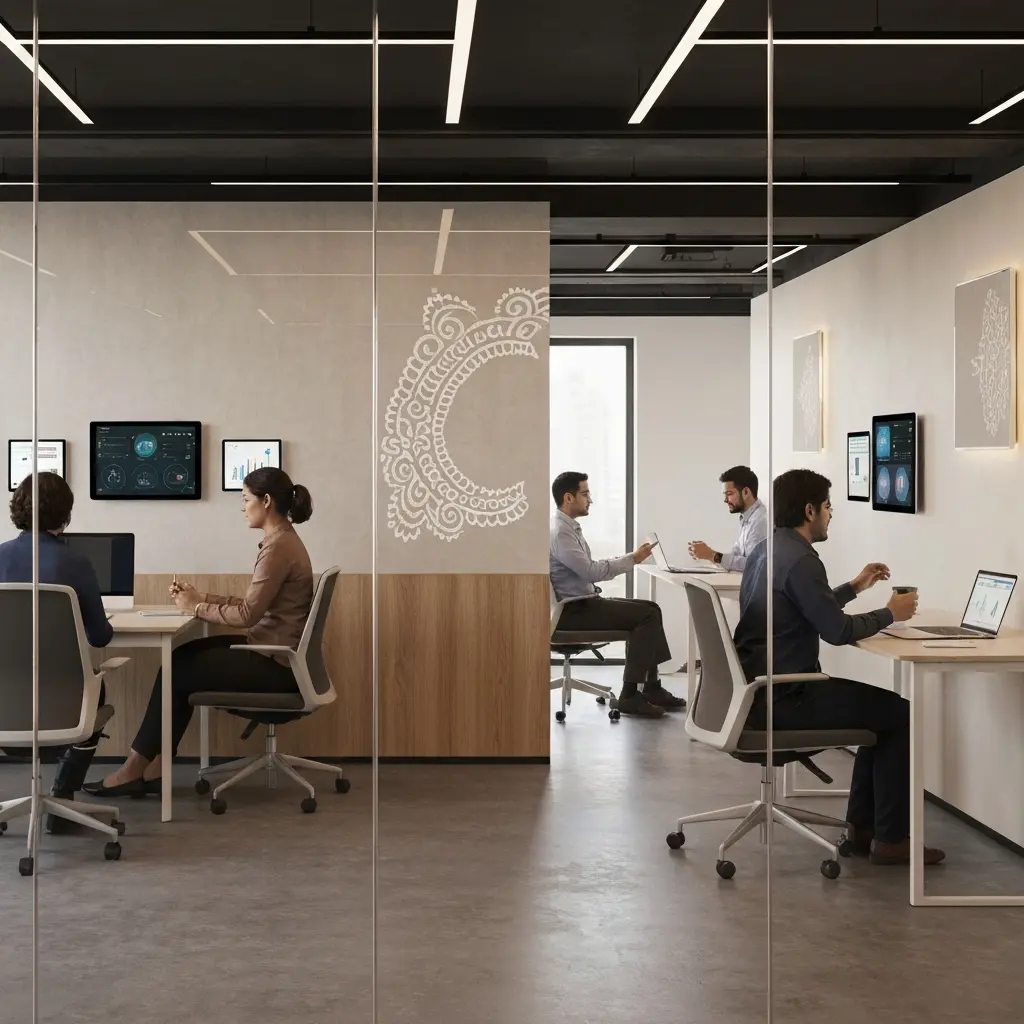
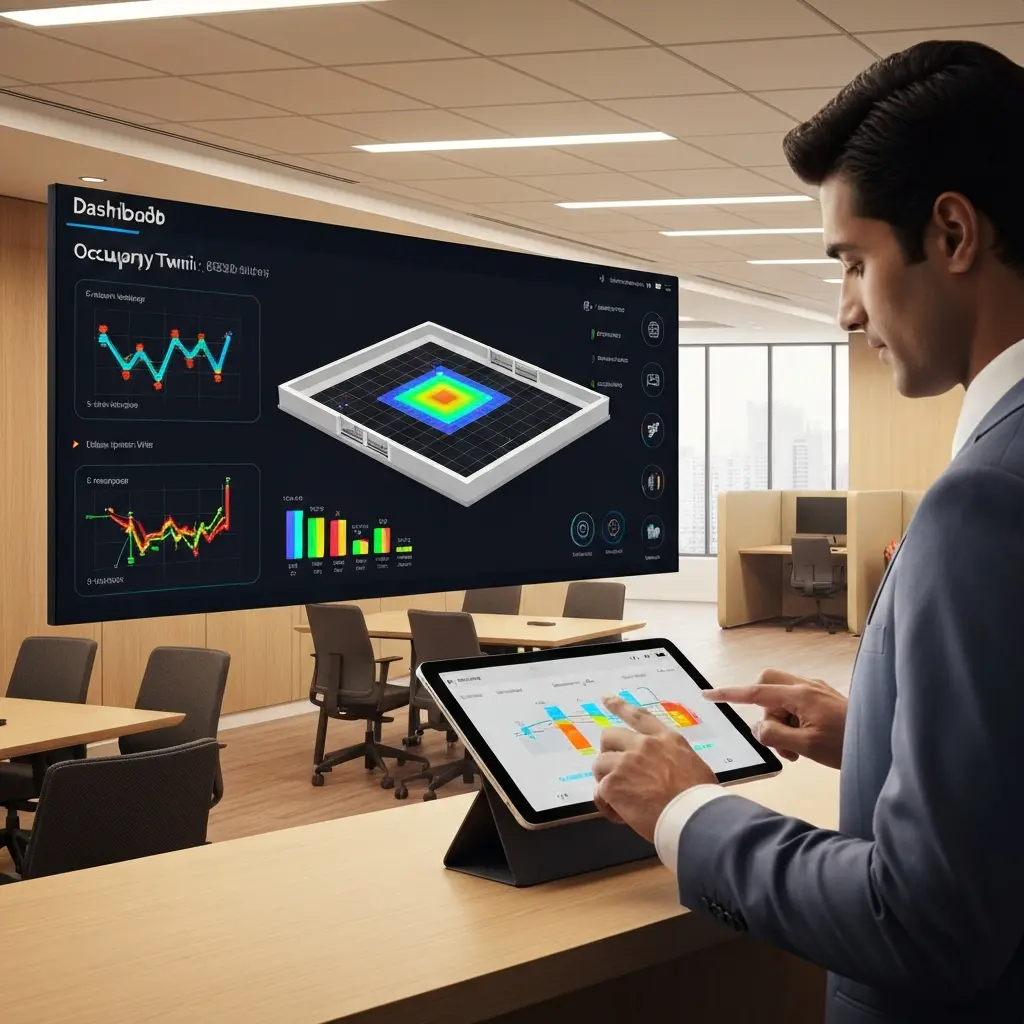
A Digital Twin CMS is a live, dynamic, and data-driven virtual replica of a physical workspace. It goes far beyond a basic booking dashboard. This system integrates real-time data from IoT sensors (occupancy, temperature, energy use) into a unified 3D model. It doesn’t just show you a room is booked; it shows you the live thermal load, predicts maintenance needs, and automatically optimises systems like HVAC and lighting for efficiency and comfort. In essence, it’s an operating system for your space.
How Does a ‘Space OS’ Drive Tangible Growth for Indian SMEs?
For an Indian SME, growth is often stifled by unpredictable overheads and administrative drag. A traditional office lease hides inefficiencies that silently drain resources. A Digital Twin CMS attacks these inefficiencies directly, converting fixed costs into variable, intelligent investments.
Consider energy, which constitutes a significant portion of operational expenditure in India, especially with Chennai’s humid climate demanding constant AC. Legacy systems run on fixed schedules, cooling empty rooms. A smart CMS, commanding nearly 30% of the smart office market, uses desk-level occupancy data to automate HVAC and lighting. This can lead to substantial savings.
| Cost Factor | Traditional Chennai Office | Workspace with Digital Twin CMS |
|---|---|---|
| Monthly Energy Cost (1,000 sq. ft.) | ₹45,000 - ₹60,000 (fixed schedule) | ₹31,500 - ₹42,000 (occupancy-optimised) |
| Maintenance Response | Reactive; 2-3 day resolution | Predictive; <24 hour pre-emptive fix |
| Space Utilisation | Static; ~60% average efficiency | Dynamic; heatmaps boost efficiency by 20-30% |
| Admin Overhead | High (manual tracking, complaints) | Low (automated reports, no-code rules) |
Crizone Pro Tip: The savings from a 30% reduction in energy spend can be directly reinvested into business development or team bonuses. For a growing SME, this operational efficiency is a direct competitive advantage.
As highlighted by JLL’s 2026 India Real Estate Outlook, the ability to demonstrate measurable ESG (Environmental, Social, and Governance) performance is becoming critical for securing partnerships and enterprise clients. A Digital Twin provides the auditable data trail for this.
Is Your Facility Management Ready for 2026’s Skills Gap?
A striking 2026 trend is the 30% technical skills gap in facility management. Your office manager is excellent at vendor relations, not at coding IoT integration scripts. The most advanced CMS platforms now bridge this gap with ‘no-code’ automation builders. This means your team can set simple rules: “If the meeting room sensor shows empty for 15 minutes, automatically release the booking and set HVAC to eco-mode.”
This shift from reactive to Predictive Facility Management is profound. Data shows reactive repairs take twice as long as preventive tasks. In Chennai, a failing AC unit during peak summer can halt productivity for days. A CMS monitoring compressor vibrations and coolant levels can schedule maintenance during a weekend, avoiding business disruption. This reliability is a silent amenity that retains talent.
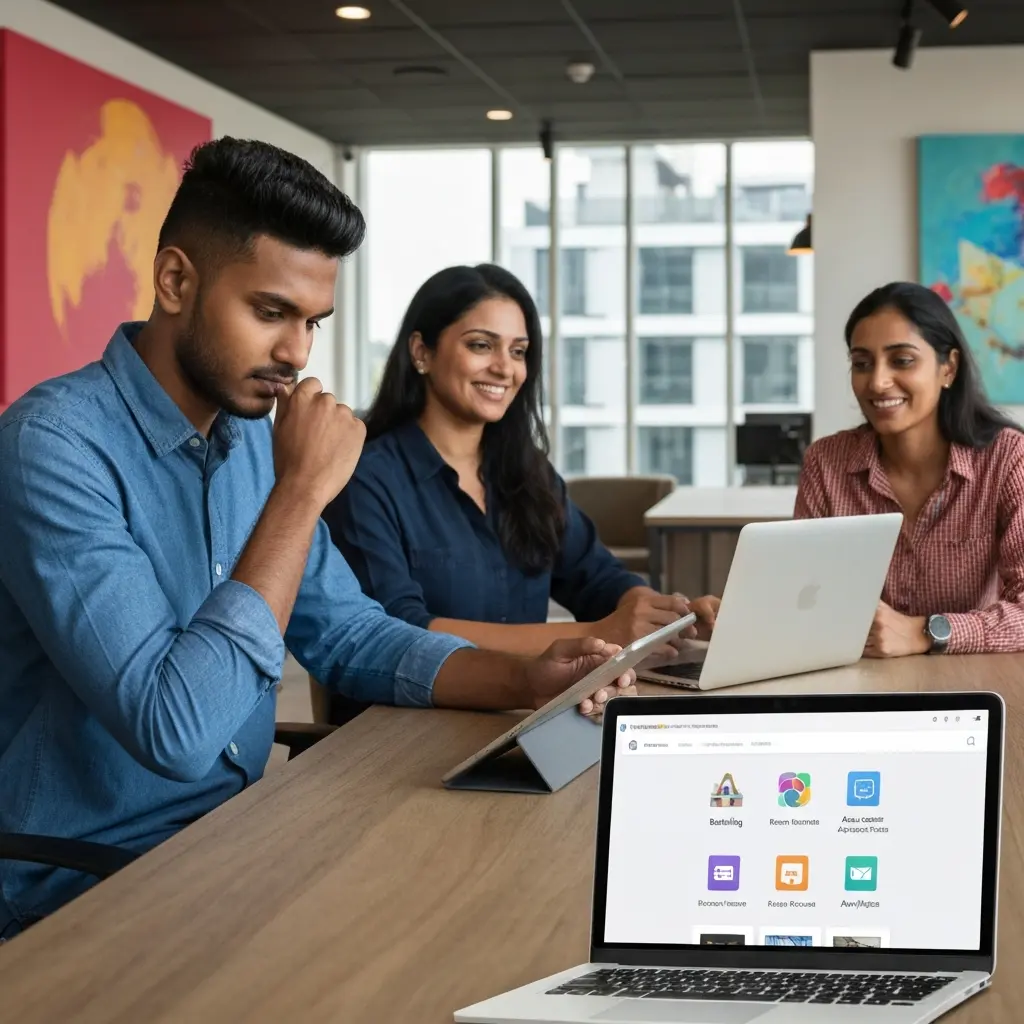
[Image of a simple ‘no-code’ automation interface, showing rule creation: ‘IF Conference Room 1 occupancy = 0 for 15min, THEN release booking & set AC to 28°C.’]
Manager Insight: “Our members value seamless operations. A workspace that intuitively adjusts to their presence—cooling when occupied, saving energy when not—communicates a premium, professional standard that aligns with their brand.”
The system also creates a unified access ecosystem. Using Bluetooth LE or QR codes, a member’s phone becomes their key—not just for the door, but for integrated ‘card-to-floor’ elevator access and turnstiles. This 80% reduction in surface contact is a tangible wellness feature for post-pandemic enterprise teams.
Why Retrofitting Intelligence is the Smart Indian Strategy
With 2026 construction costs inflated, 64% of smart office investments globally are in retrofitting legacy buildings. This is highly relevant for India’s commercial real estate. The strategy isn’t about demolishing and rebuilding; it’s about adding a layer of intelligence to existing infrastructure.
This involves deploying a mesh network of 5G and Matter-supported sensors for occupancy, air quality, and energy metering. A key advantage is resilience: these systems can operate during ISP outages, ensuring security and basic controls remain active. For an Indian business, selecting a workspace provider that has invested in this retrofitting is crucial. It means you access 2026-grade operational intelligence without bearing the capital risk.
Operational Intelligence is the final frontier. The leading 2026 platforms act autonomously. They identify ‘ghost’ bookings—rooms reserved but unused—and automatically release them back into the inventory. They reroute HVAC airflow from a vacant wing to a fully occupied zone in real-time. This isn’t just visualisation; it’s a self-optimising system that constantly extracts maximum value and comfort from every square foot, directly impacting your bottom line.
The 2026 Outlook for India’s Workspace Market
The Indian flexible workspace market will see a clear bifurcation in 2026. Basic co-working spaces offering just a desk and Wi-Fi will compete on price, while premium business centres will compete on intelligence and operational excellence. The differentiator will be the sophistication of the underlying CMS. Enterprise clients, under their own ESG pressures, will mandate workspaces that provide detailed carbon and utilisation reports. Furthermore, the ability to visualise a space in high-fidelity 3D with live occupancy data will expedite corporate lease decisions by up to 30%, a critical factor in India’s competitive talent markets like Bangalore and Hyderabad.
Key Takeaways for Indian Business Leaders
- View workspace as an OS, not a lease. The right management system can turn occupancy costs into a driver of efficiency and employee satisfaction.
- Demand predictive, not reactive, maintenance. Ensure your workspace provider uses IoT data to prevent failures, not just respond to them, minimising business disruption.
- Prioritise integrated, touchless access. A unified access ecosystem via your phone enhances security, wellness, and the professional experience for your team.
- Seek auditable sustainability data. Choose spaces that can provide real-time energy and utilisation reports to support your own corporate ESG goals.
- Opt for providers investing in retrofitting. Gain the benefits of a smart office without the capital expenditure by selecting a centre with a modern, sensor-enabled infrastructure.
Conclusion
The future of work in India is intelligent, efficient, and deeply integrated. The office is no longer a passive container but an active participant in business growth. By 2026, leveraging a Digital Twin CMS will be a standard expectation for high-growth companies seeking to optimise every resource. It provides the clarity to manage, the intelligence to predict, and the automation to excel. For businesses in Chennai looking to operationalise this advantage today, the path forward is clear. Explore how a thoughtfully designed, technology-integrated environment at Crizone Business Centre can become your strategic growth partner.
Continue your workspace search
Explore the most relevant Crizone pages next
If this article is part of your Chennai workspace research, these pages help you move from reading into comparing live plans, locations, and fit.
Explore coworking plans in Chennai
Compare day passes, dedicated desks, private offices, meeting rooms, and virtual office options from one commercial hub page.
Book a day pass in Chennai
Best fit if you need occasional workspace access, a short productive break from home, or a flexible desk for a single day.
Compare dedicated desk options
A stronger fit for regular monthly use when you want a fixed seat, better routine, and predictable workspace costs.