· Business Growth & Workspace · 7 min read
Enterprise Flex Space: A Core Asset for 2026 Portfolio Strategy
Explore how Enterprise Flex Space is becoming a strategic portfolio asset for Indian businesses in 2026, enabling cost savings, hybrid work ROI, and suburban growth in cities like Chennai.
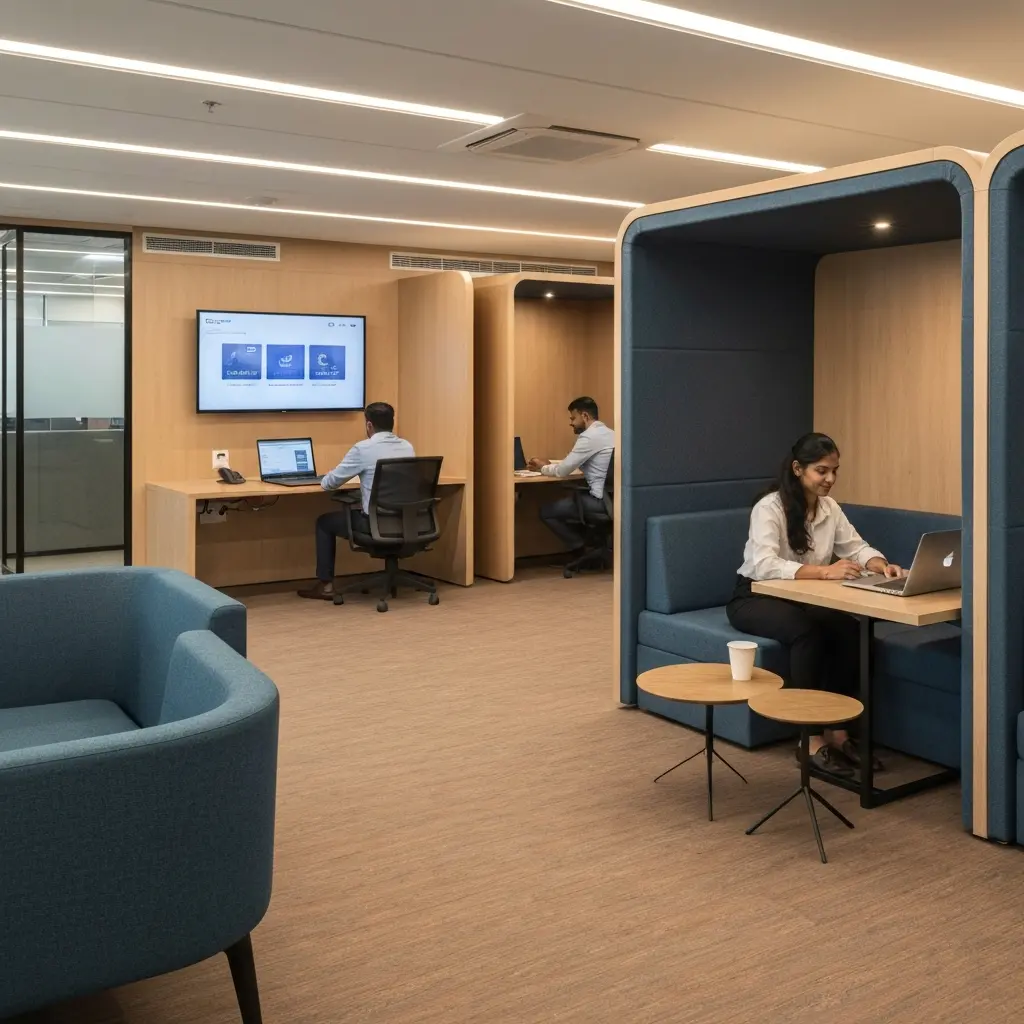
TL;DR: By 2026, flexible workspace has evolved from a peripheral experiment to a core strategic asset. Indian businesses can leverage Enterprise Flex Space to optimise costs, boost productivity with hybrid models, and adapt to suburban growth, turning real estate into a driver for sustainable expansion.\n\n## Introduction\nFor Indian entrepreneurs and SME founders, managing corporate real estate has long been a challenge marked by high capital lock-in and operational rigidity. In cities like Chennai, where traffic on OMR can drain productive hours and traditional office leases demand decade-long commitments, agility is often sacrificed. The global shift towards a ‘Presence with Purpose’ model in 2026 offers a recalibration, moving beyond reactive return-to-office mandates. Enterprise Flex Space emerges as a solution, integrating flexible workspace into core portfolio strategy to buffer against economic volatility and employee resistance. This approach decouples headquarters from daily utility, allowing businesses to scale efficiently while navigating local realities like GST compliance and festive season downtimes.\n\n## What is Enterprise Flex Space?\nEnterprise Flex Space refers to the strategic incorporation of flexible, on-demand workspace solutions—such as coworking, serviced offices, and hybrid hubs—into a company’s primary real estate portfolio. Unlike traditional leases, it offers scalable terms, typically ranging from months to a few years, with bundled amenities and services. In the 2026 context, it is no longer an ad-hoc experiment but a deliberate asset for portfolio optimisation, enabling businesses to align physical space with dynamic operational needs and employee preferences, particularly in hybrid work environments.\n\n## The Financial Recalibration: Cost Savings and Portfolio Agility\nThe 2026 corporate real estate landscape is defined by high interest rates and the need for fiscal prudence. Enterprises are shifting from fixed, long-term leases to flexible formats, with 58% of major firms aiming to allocate at least 10% of their office space to flex options. This buffers against economic swings and reduces upfront capital expenditure. For Indian SMEs, this means converting fixed real estate costs into variable operational expenses, freeing up liquidity for growth initiatives like marketing or R&D.\n\nA comparison of traditional versus flexible costs in Chennai highlights the savings.\n\n| Cost Component | Traditional Office (Annual, CBD Chennai) | Flexible Solution (Crizone-like Centre) |\n|----------------|------------------------------------------|------------------------------------------|\n| Base Rent | ₹15-25 Lakhs for 1,000 sq. ft. | ₹3-6 Lakhs for dedicated desks/cabins |\n| Maintenance & Utilities | ₹2-4 Lakhs (plus AC for humid weather) | Included in membership |\n| Furniture & IT Setup | ₹5-10 Lakhs one-time | Provided and maintained |\n| Compliance (GST/TDS) | Managed internally | Often supported by operator |\n| Total Effective Cost | ₹22-39 Lakhs + management overhead | ₹3-6 Lakhs, scalable monthly |\n\n> Crizone Pro Tip: Start with a flexible membership to test new markets or teams without the burden of a long lease. This agility lets you pivot quickly based on performance, ideal for Chennai’s evolving commercial corridors like Guindy or near Metro stations.\n\nAccording to CBRE India’s 2025 report, the flex space market in India is growing at 20% annually, driven by demand from enterprises seeking portfolio optimisation. By adopting flex space, businesses can achieve up to 30% cost savings on real estate, redirecting funds towards innovation or talent acquisition.\n\n## The Human Capital Advantage: Productivity and Retention\nEmployee expectations have permanently shifted, with 60% of hybrid workers willing to accept a pay cut to retain flexible or ‘remote-near-home’ options. In India, where commute times in cities like Chennai can exceed two hours daily, this translates to tangible productivity gains. Companies using a flex-first hybrid model report an 11% boost in productivity and higher retention rates, as employees value work-life balance and reduced travel stress.\n\n### Is Hybrid Work Right for Your Indian Team?\nAssessing hybrid suitability involves evaluating role functions, collaboration needs, and local infrastructure. For instance, sales teams might benefit from flexible hubs near client clusters, while R&D units may require stable headquarters. Integrating suburban flex spaces—growing at 27% annually globally—can place workers closer to residential hubs like Porur or Velachery, skipping CBD traffic. This not only enhances daily efficiency but also supports talent retention, especially during Indian festive seasons when productivity traditionally dips.\n\n> Manager Insight: Use flexible workspace to offer ‘choice’ as a compensation perk. This can reduce attrition by 15-20%, as per NASSCOM trends, making your firm more attractive in competitive talent markets like Chennai’s IT corridor.\n\nQuantitative data confirms that flexibility is a priced component in compensation packages. By embedding Enterprise Flex Space into your strategy, you align with employee preferences, fostering a culture of trust and output-based performance, which is crucial for scaling Indian startups and SMEs.\n\n## Navigating the 2026 Market: Quality and Location\nThe 2026 flex market exhibits a stark ‘Flight to Quality’ divide. Class A flex assets with premium amenities maintain a 20% vacancy rate, while non-amenitized Class B spaces struggle with over 30% vacancies. For Indian businesses, this underscores the importance of selecting high-quality spaces that enhance brand perception and employee well-being. Ancillary revenue from services like virtual offices now exceeds 25% of coworking income, indicating a shift towards comprehensive business support solutions.\n\nSuburban markets are outperforming CBDs, with flex inventory growing rapidly to meet demand near residential areas. In Chennai, this trend aligns with developments in areas like OMR’s extended zones or near upcoming Metro lines, offering convenience and cost-effectiveness. Enterprises can leverage this for satellite offices, reducing reliance on central locations and tapping into local talent pools.\n\n[Image of a graph showing suburban vs. CBD flex space growth in India from 2024-2026]\n\n> Crizone Pro Tip: Opt for flex spaces with robust amenities—high-speed internet, meeting rooms, and networking events—to maximise ROI. These features support seamless operations and foster collaborations, essential for SMEs looking to expand their client base in Chennai’s dynamic ecosystem.\n\nDespite higher operating costs, 58% of coworking spaces are profitable, with mature operators reaching 63% profitability. This stability ensures reliable partnerships for businesses, making Enterprise Flex Space a viable long-term asset rather than a temporary fix.\n\n## The 2026 Outlook for India\nLooking ahead, the Indian workspace market in 2026 will see accelerated adoption of flexible solutions beyond metros, with tier-2 cities like Coimbatore or Kochi emerging as hubs. Corporate real estate strategies will increasingly blend physical and virtual elements, with virtual office products gaining traction for GST registration and remote team management. Expect tighter integration with proptech for space utilisation analytics, helping businesses optimise layouts based on actual usage patterns. Regulatory adaptations may streamline compliance for flex operators, further reducing administrative burdens for SMEs.\n\n## Key Takeaways\n- Incorporate flex space strategically: Allocate 10-15% of your office portfolio to flexible formats to buffer against economic volatility and scale dynamically.\n- Prioritise quality and amenities: Choose Class A flex assets to enhance productivity, employee satisfaction, and brand value, avoiding high-vacancy, low-amenity options.\n- Leverage suburban growth: Establish presence in suburban or near-residential flex hubs to reduce commute times and tap into local talent, aligning with trends in cities like Chennai.\n- Measure hybrid work ROI: Use metrics like productivity boosts (avg. 11%) and retention rates to justify flex investments, tailoring models to team roles and Indian business cycles.\n- Start small and scale: Begin with a flexible membership to test new markets or project teams, then expand based on data-driven insights, minimising risk and capital lock-in.\n\n## Conclusion\nThe 2026 corporate real estate recalibration positions flexible workspace as a core portfolio asset, essential for navigating cost pressures and hybrid work realities. For Indian businesses, this transformation offers a pathway to growth by converting fixed real estate costs into agile, employee-centric solutions. By embracing Enterprise Flex Space, founders and managers can enhance operational efficiency, support talent retention, and drive sustainable expansion. For businesses in Chennai, Crizone Business Centre provides this exact solution as a growth partner, offering premium, flexible workspace designed for calm efficiency and strategic scalability in India’s evolving market.