· Business Growth & Workspace · 6 min read
Enterprise Flex Strategy 2026: How Hub-and-Spoke is Shaping India
A new Enterprise Flex Strategy 2026 is redefining corporate real estate. Learn how the 'Hub-and-Spoke 2.0' model drives growth for Indian SMEs by de-risking costs and boosting talent retention.
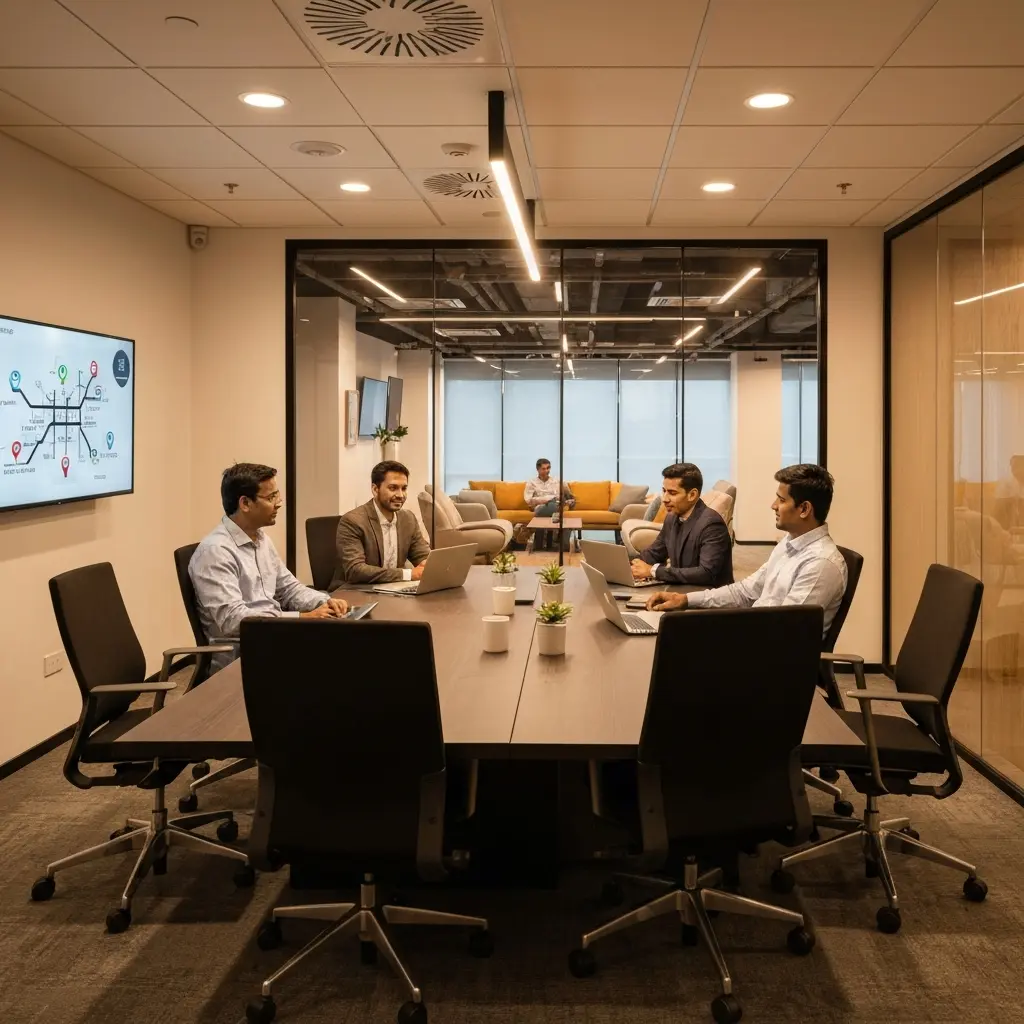
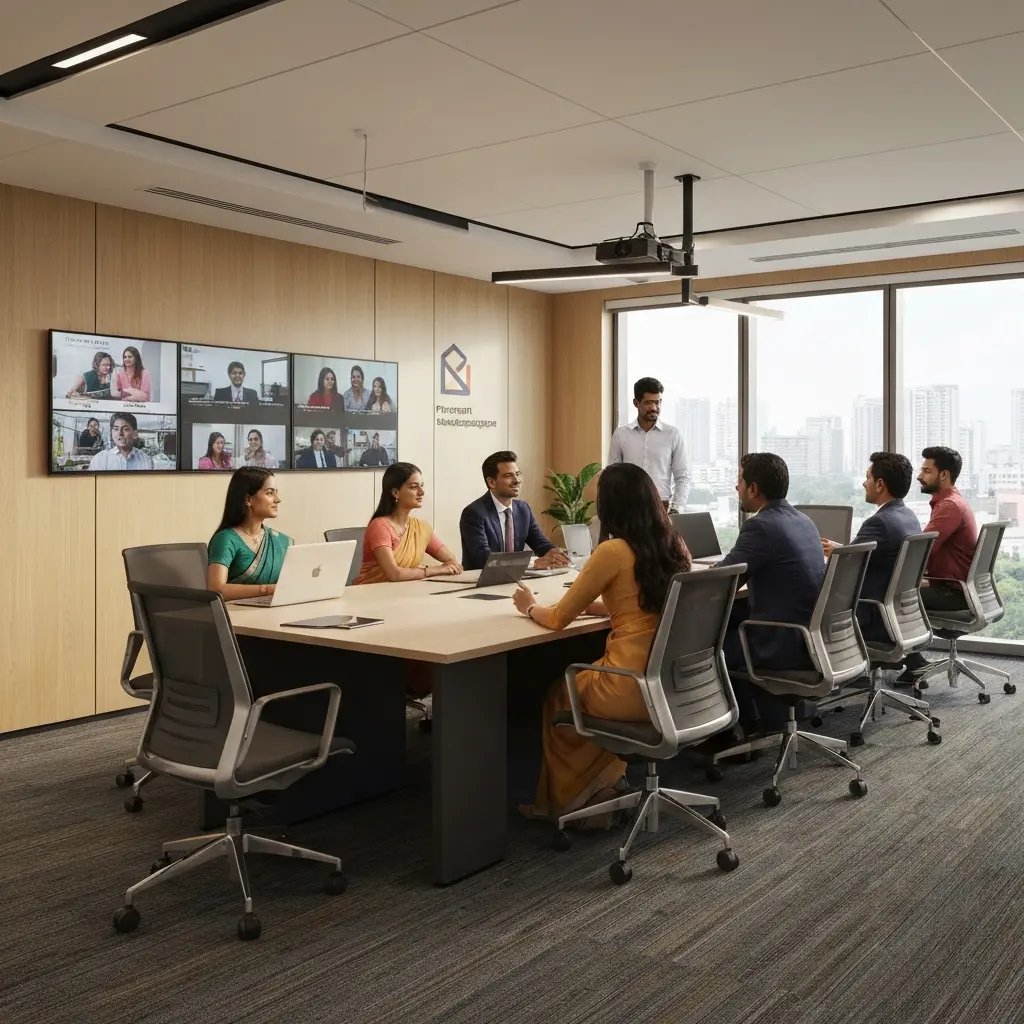
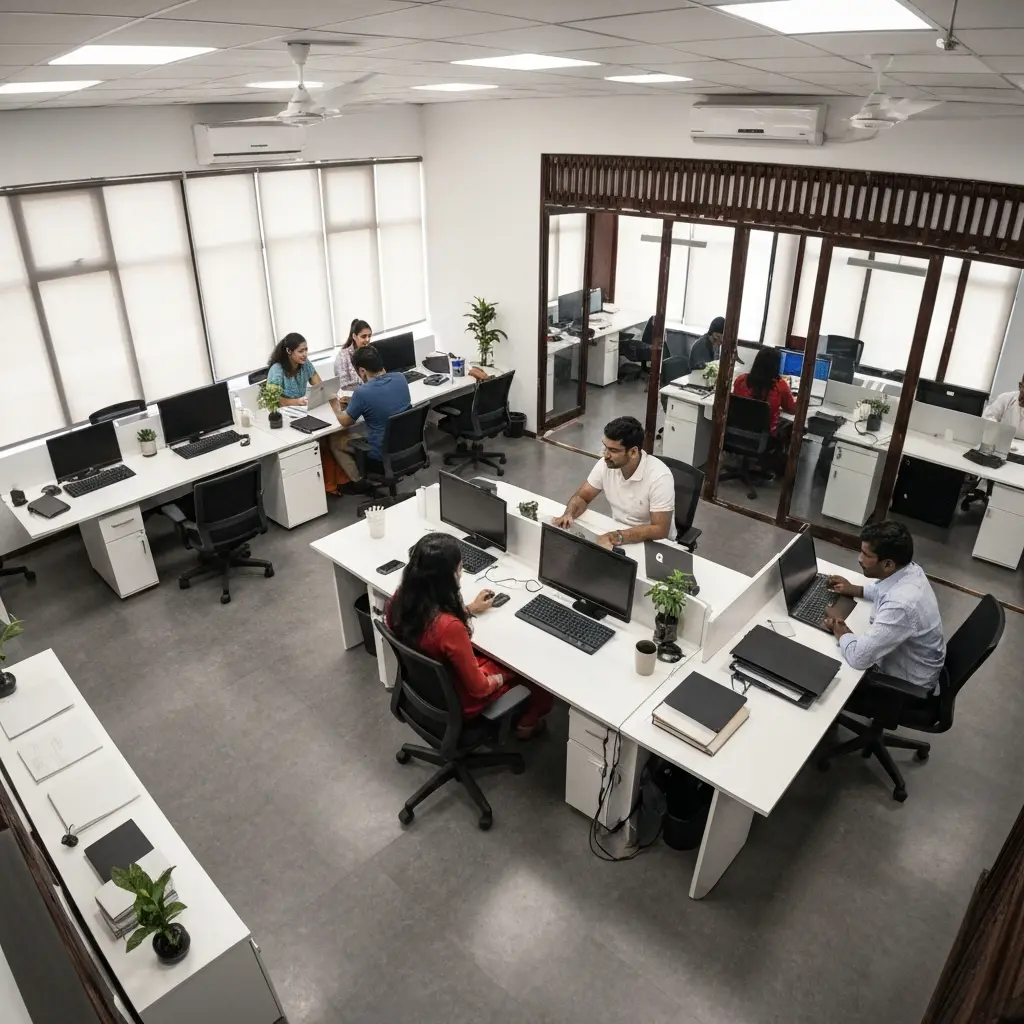
TL;DR: A core Enterprise Flex Strategy 2026 is the move towards distributed ‘Hub-and-Spoke 2.0’ networks. For Indian businesses, this means trading large, fixed-cost HQs for agile, suburban nodes to slash operational costs by up to 25%, retain top talent with shorter commutes, and build a resilient, scalable growth model.\n\nFor the Indian entrepreneur or branch manager, the challenge is no longer just finding an office. It’s navigating soaring commercial rents in areas like Chennai’s Guindy or OMR, managing an unpredictable hybrid workforce, and competing for talent who increasingly prioritise work-life balance over a long, stressful commute. The traditional five-year lease, with its massive upfront capital lock-in and rigid structure, now feels like a strategic liability. The demand is for agility. This shift from fixed assets to flexible networks isn’t a fringe trend—it’s the new operational blueprint, as evidenced by 60% of Fortune 500 firms integrating flex space into their core portfolios. This Enterprise Flex Strategy 2026 offers a powerful roadmap for Indian businesses to grow faster and smarter.\n\n## What is the Enterprise Flex Strategy 2026?\nThe Enterprise Flex Strategy 2026 is a strategic real estate model where large corporations and growing businesses replace or supplement a single, costly headquarters with a distributed network of smaller, flexible workspaces. This ‘Hub-and-Spoke 2.0’ model positions a central hub for key leadership and major meetings, while numerous suburban or city-node spokes place employees closer to home. It is a deliberate shift from owning fixed assets to accessing agile, on-demand infrastructure focused on talent retention, cost de-risking, and operational resilience.\n\n## Why Your Talent Strategy Demands a Distributed Network\nThe primary driver of this shift is no longer just cost; it’s talent. In Indian metros like Chennai, where commute times can erode productivity and morale, the ‘15-minute commute’ has become a powerful recruitment and retention tool. With 65% of new flexible workspace memberships being for locations within 15 minutes of home, businesses that facilitate this are winning. A professional based in Adyar no longer needs to battle OMR traffic daily if their company has a node in Velachery. This isn’t merely a perk; it’s a strategic advantage in a competitive talent market.\n\n> Crizone Pro Tip: When evaluating workspaces, map your team’s residential clusters. A network like Crizone’s, with centres in key Chennai localities, allows you to place teams optimally, turning a gruelling commute into a manageable short trip, directly boosting daily engagement and reducing attrition.\n\nThe data is clear: suburban coworking nodes are outperforming downtown CBDs in occupancy growth. This reflects a deeper change in how and where we work, prioritising employee well-being and productivity over prestigious postal addresses.\n\n## The Financial Logic: De-risking Corporate Real Estate\nFor an Indian SME, capital preservation is critical. The traditional office model involves a heavy, fixed financial burden: security deposits worth crores, long-term lease commitments, and unpredictable operational overheads for maintenance, utilities, and furniture. The new model converts these fixed costs into variable, predictable operational expenses. Firms are reporting an average of 25% savings on operational real estate costs by switching to flexible networks.\n\nConsider the cost comparison for a growing team of 20 in Chennai:\n\n| Cost Factor | Traditional Office (OMR, 1,000 sq. ft.) | Flexible Node Solution (Crizone) |\n| :--- | :--- | :--- |\n| Security Deposit | ₹ 15-20 Lakhs (refundable, but locked) | ₹ 0 |\n| Monthly Rent + Maintenance | ₹ 2.5 - 3 Lakhs (fixed) | From ₹ 1.8 Lakhs (scalable) |\n| Furniture & IT Capex | ₹ 5-7 Lakhs (one-time) | ₹ 0 (fully fitted) |\n| AC & Utility Management | Owner’s responsibility & cost | Managed & included |\n| Contract Flexibility | 3-5 year lock-in | Monthly or annual terms |\n\nThis asset-light approach, accelerated by models like Management Agreements between operators and landlords, frees up capital for core business investments like R&D or marketing.\n\n## Is Privacy the New Premium in Open Plans?\nThe early image of coworking as vast, noisy open halls is obsolete. In 2026, demand for enclosed private offices and soundproof ‘focus pods’ outpaces open-plan desks 3-to-1. For Indian businesses, this addresses key needs: confidential client calls, secure handling of financial data, and deep-focus work away from distractions. A premium flexible workspace today provides the professionalism of a corporate office with the infrastructure and community of a modern hub. This is why 45% of all memberships are now employer-sponsored—companies are investing in these productive, private environments for their teams.\n\n[Image of Private Office vs. Open Plan Demand Graph]\nA bar chart comparing 2026 demand: ‘Enclosed Private Offices/Focus Pods’ at 75% versus ‘Open-Plan Hot Desks’ at 25%.\n\nSmart infrastructure is now standard. For enterprise tenants, features like occupancy sensors to manage Chennai’s humid-weather AC usage and integrated video-conferencing hardware in 95% of meeting rooms are non-negotiables. They ensure seamless operation and professional client interactions, critical for businesses managing hybrid teams across India.\n\n## The 2026 Outlook for Indian Workspaces\nThe Indian flexible workspace market will deepen its focus on enterprise solutions and suburban penetration. We predict a rise in ‘Management Agreements,’ allowing premium brands to expand their node networks into Tier-1 suburbia and high-growth Tier-2 cities without the capital risk. Mid-week peak utilisation (Tues-Wed) will drive innovations in space-as-a-service, like discounted Friday event packages or weekend networking lounges. Operators will increasingly bundle value, with virtual office addresses for GST compliance and premium event spaces becoming significant revenue streams. The workspace will evolve from a rental desk to a holistic business growth platform.\n\n## Key Takeaways\n- Adopt a Hub-and-Node Mindset: Consider a central registered office with multiple smaller team nodes to optimise for talent location and commute reduction.\n- Convert Capex to Opex: Shift locked capital from security deposits and furniture into flexible monthly fees that scale with your team size.\n- Prioritise Privacy & Tech: Choose workspaces that offer soundproof private offices and enterprise-grade, integrated technology for a professional edge.\n- Analyse Total Cost of Occupancy: Look beyond rent. Factor in furniture, utilities, maintenance, and management time saved with a fully serviced solution.\n- Start with a Pilot: Test the model with a department or a new project team before a full-scale migration to validate productivity and cost benefits.\n\n## Conclusion\nThe Enterprise Flex Strategy 2026 is more than a real estate trend; it’s a fundamental rethinking of how a business occupies space to empower its people and protect its capital. The move from monolithic headquarters to agile, talent-centric networks offers Indian SMEs and corporates a framework for resilient, efficient growth. It turns the physical workspace from a fixed cost centre into a strategic, adaptable tool. For businesses in Chennai looking to implement this model, the solution lies in a partner that provides this calibrated mix of professionalism, flexibility, and strategic locations.\n\nExplore how Crizone Business Centre’s network of premium, fully-equipped centres across Chennai can serve as your agile spokes, providing your team with the productive environment they need while you maintain the strategic focus and financial agility your growth demands.
Continue your workspace search
Explore the most relevant Crizone pages next
If this article is part of your Chennai workspace research, these pages help you move from reading into comparing live plans, locations, and fit.
Explore coworking plans in Chennai
Compare day passes, dedicated desks, private offices, meeting rooms, and virtual office options from one commercial hub page.
Book a day pass in Chennai
Best fit if you need occasional workspace access, a short productive break from home, or a flexible desk for a single day.
Compare dedicated desk options
A stronger fit for regular monthly use when you want a fixed seat, better routine, and predictable workspace costs.