· Business Growth & Workspace · 6 min read
Enterprise Flex Strategy: The 2026 Portfolio Shift for Indian Businesses
Major corporations are abandoning rigid HQ leases for agile workspaces. Learn how this Enterprise Flex Strategy cuts costs, boosts agility, and is now essential for Indian businesses.

TL;DR: By 2026, a majority of Fortune 500 companies have pivoted to a core Enterprise Flex Strategy. They are replacing costly, static HQ leases with agile networks of flexible workspaces to cut occupancy costs by 25% and boost talent access. For Indian SMEs and branch operations, this model offers unprecedented growth agility without the capital risk.
Indian business leaders face a uniquely challenging trifecta: escalating commercial rents in prime corridors, debilitating urban traffic, and intense competition for skilled talent. A decade-long, ₹50-lakh office lease on OMR or Gachibowli was once a symbol of stability. Today, it is a significant liability, locking capital and limiting strategic agility. The post-pandemic evolution of work has catalysed a demand for flexibility that goes beyond remote work—it demands a fundamental reimagining of the corporate real estate portfolio. The global trend is decisive, and the data from 2026 reveals this is not a peripheral strategy but the new corporate standard.
What is an Enterprise Flex Strategy?
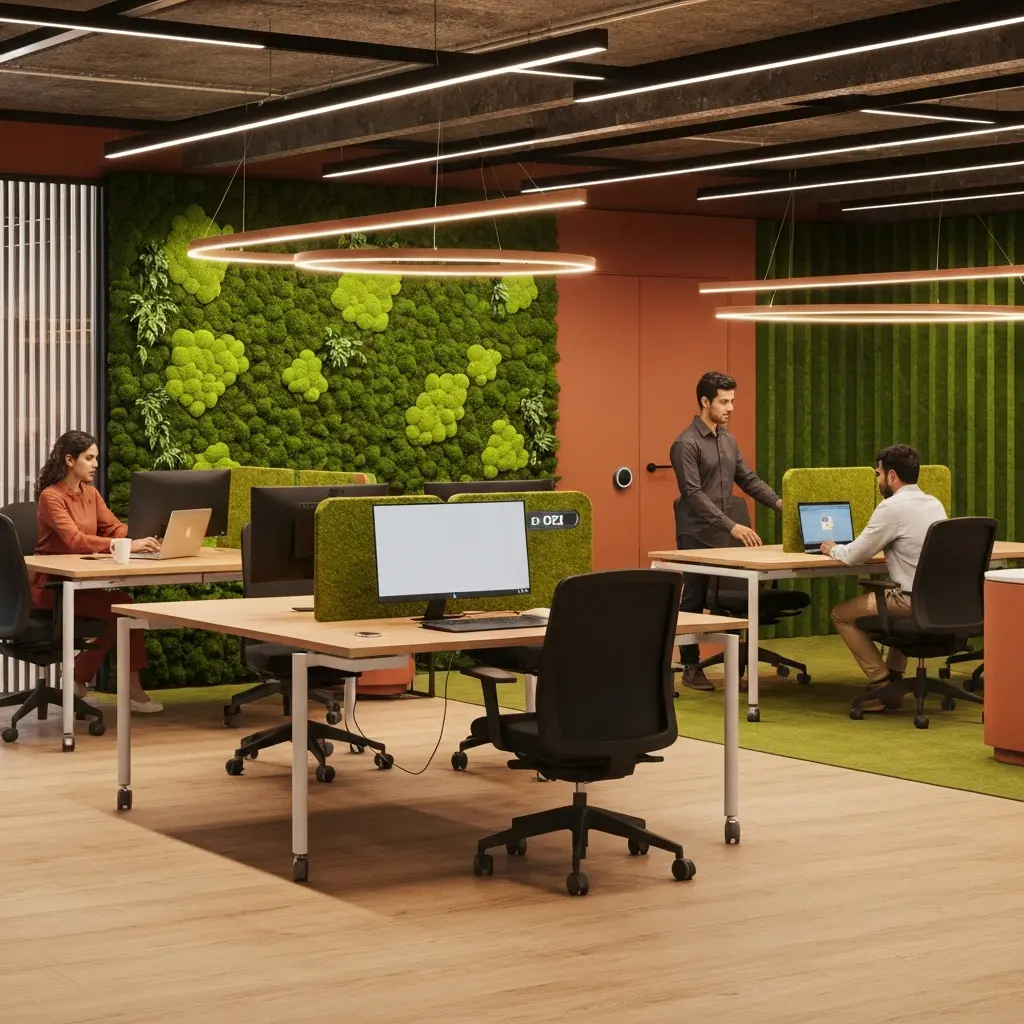
An Enterprise Flex Strategy is a core corporate real estate approach where a company intentionally replaces long-term, single-location leases with a dynamic network of flexible workspaces. This portfolio includes managed office suites, coworking memberships, and hybrid hubs, all operated as a service. The goal is to gain portfolio agility, enabling rapid scaling, decentralised operations, and significant cost optimisation. It treats physical space not as a fixed asset but as an on-demand resource aligned directly with business growth cycles.
Is a Hub-and-Spoke Model the Future for Indian Firms?
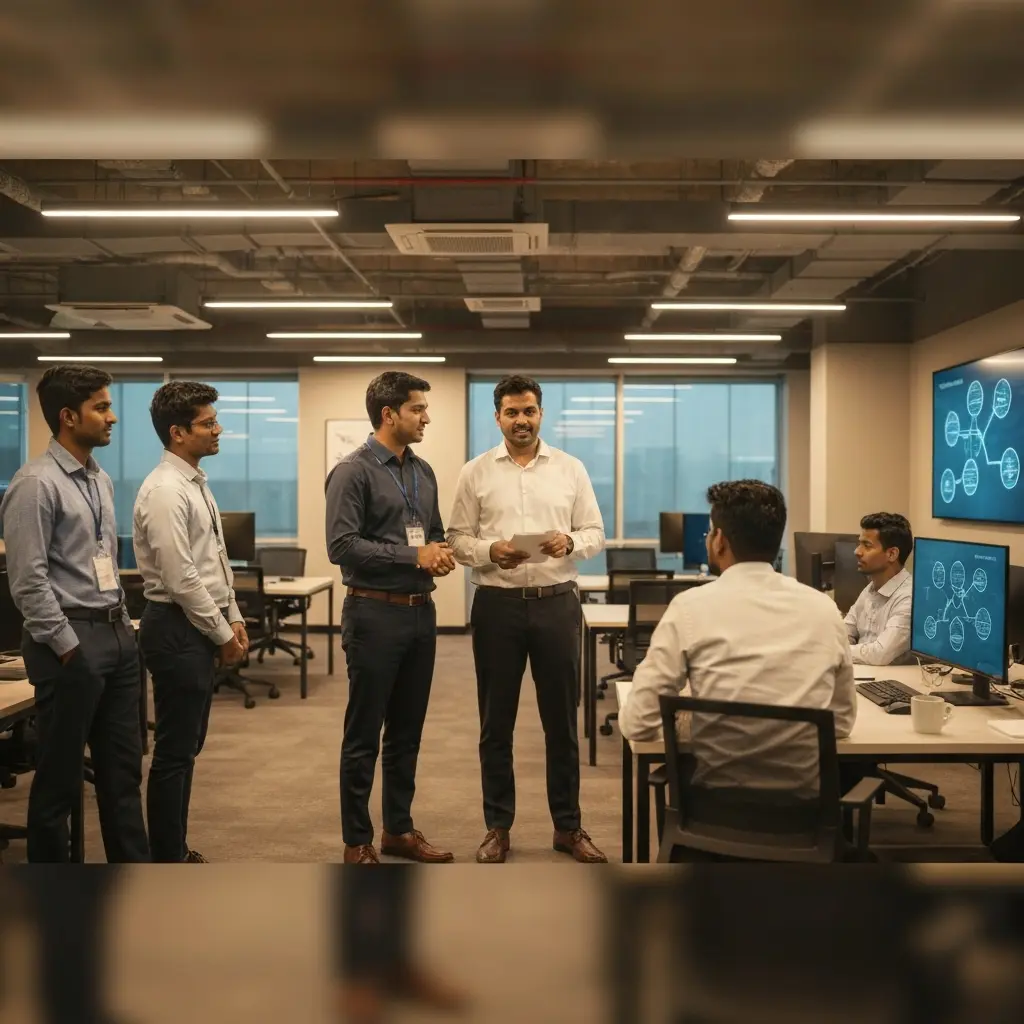
The data reveals that 35% of global enterprises have permanently adopted a ‘Hub-and-Spoke’ model. This involves maintaining a central, cultural headquarters (the Hub) while leveraging multiple flexible workspaces (Spokes) for distributed teams. For an Indian corporation, this could mean a main office in Mumbai’s BKC supplemented by flex spaces in Pune, Hyderabad, and Bengaluru.
For SMEs and startups, this model is even more powerful. A Chennai-based founder can establish a flagship presence at a premium business centre while using affordable, professional flex desks in Coimbatore or Delhi for sales teams. This eliminates the prohibitive cost and legal complexity of setting up full branch offices. The ‘15-Minute City’ trend amplifies this, where talent acquisition shifts from forcing relocation to placing workspaces within a short commute of top candidates’ homes.
Crizone Pro Tip: Start by mapping your team’s geographic distribution. A spoke in a key talent suburb can be a more powerful recruitment tool than a 15% salary hike, especially when considering Chennai’s traffic.
| Expense Head | Traditional Chennai Office (₹ 2000 sq.ft., 5-yr lease) | Flexible Managed Suite Equivalent |
|---|---|---|
| Annual Base Rent | ₹ 24,00,000 | ₹ 18,00,000 (incl. in membership) |
| Maintenance & AMC | ₹ 4,80,000 | ₹ 0 (included) |
| Furniture & Fit-Out Capex | ₹ 12,00,000 (one-time) | ₹ 0 (included) |
| Admin & Front Desk Staff | ₹ 7,20,000 | ₹ 0 (included) |
| Total Year 1 Outlay | ≈ ₹ 48,00,000 | ≈ ₹ 18,00,000 |
Note: Figures are illustrative estimates. The flexible model converts large capex and fixed operational costs into a predictable, scalable OPEX.
How Does This Strategy Drive Profitability and Market Entry?
Corporations report an average 25% reduction in total occupancy costs by replacing decade-long leases with agile agreements. This direct cost saving is compelling, but the strategic advantages for growth-stage Indian businesses are profound.
The data shows 72% of multinationals use flexible workspaces as a primary market-entry tool. Imagine a German automotive tech firm using a managed suite in Chennai to vet local engineering talent and client response for six months before committing to a ₹5-crore build-out. An Indian SME can replicate this strategy domestically, testing a new market in Gujarat or Karnataka with minimal risk.
The profitability of operators has surged (58% reported record profits in Q1 2026) by moving from low-margin hot desks to high-margin, enterprise-grade suites. This signals a maturing market ready to support serious business needs with reliable, premium infrastructure and services like GST-compliant billing and admin support.
Manager Insight: “Treat your first year in a new city as a ‘managed market trial.’ A flexible workspace provides the credibility of a proper office without the long-term liability, letting you validate your business model before you invest heavily.”
[Image of Hub-and-Spoke Model]
Diagram: A central ‘Hub’ connected to multiple regional ‘Spoke’ locations via dotted lines, visually explaining the decentralised, agile corporate portfolio model.
What Does the Standardisation of Hybrid Work Mean for You?
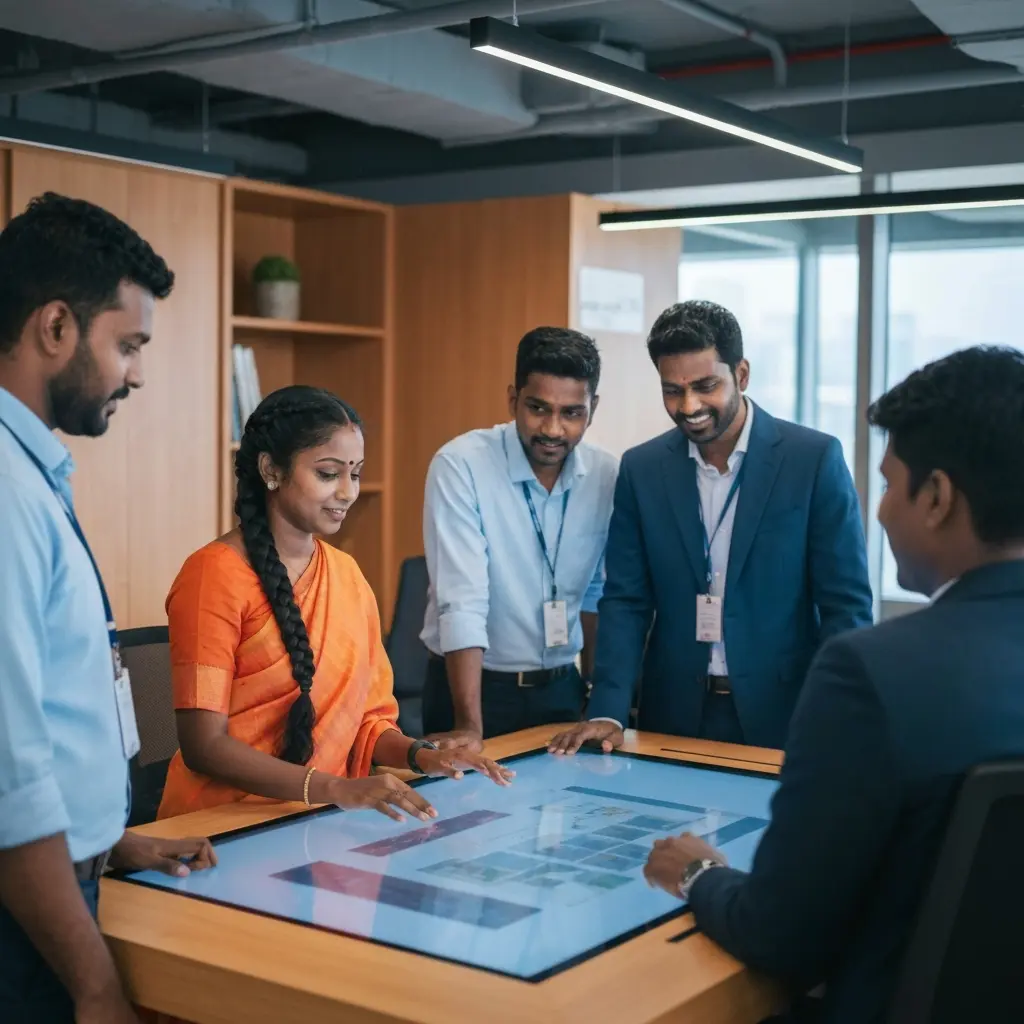
With 78% of global firms formalising hybrid policies, the flexible office is now the designated site for ‘intentional collaboration.’ It is no longer about daily attendance but about purposeful, high-productivity team gatherings. This formalises the need for spaces that foster collaboration, which most traditional branch offices or home setups lack.
For an Indian team manager, this means you can design the work week strategically: two days of focused deep work from anywhere, and three days of coordinated collaboration, client meetings, and workshops at a fully-equipped business centre. This model respects employee preference—critical for talent retention—while ensuring team cohesion and business growth are not sacrificed.
The 2026 Outlook for India’s Workspace Market
The Indian flexible workspace market is poised to accelerate, mirroring and even exceeding global trends. We will see a sharp rise in enterprise-grade managed suites tailored for larger teams (10-50 seats) within premium business centres. Demand will concentrate not just in major CBDs but increasingly in suburban ‘15-minute’ micro-markets and tier-2 cities, driven by talent distribution and infrastructure development. Operators who offer seamless, national portfolio management will become strategic partners for growing Indian businesses.
Key Takeaways for Indian Business Leaders
- Convert Capex to Opex: Shift large upfront fit-out costs and long-term lease liabilities into predictable, scalable operational expenses.
- Adopt a ‘Test-and-Expand’ Model: Use premium flexible workspaces for low-risk market entry into new cities or talent pools before committing to capital expenditure.
- Design for Intentional Collaboration: Formalise a hybrid policy that uses a professional workspace as the anchor for team collaboration, client meetings, and strategic work.
- Prioritise Talent Access: Choose workspace locations based on proximity to your current team and target talent, leveraging the ‘15-Minute City’ advantage to attract and retain the best people.
- Demand Enterprise-Grade Services: Partner with providers that offer not just a desk, but managed services, professional front-office support, and robust IT infrastructure essential for business credibility.
The shift to an Enterprise Flex Strategy is a fundamental recalibration of how businesses view their physical footprint. It is a move from static cost-centre to dynamic growth-enabler. For the ambitious Indian entrepreneur, SME founder, or corporate branch manager, this is not merely following a trend; it is accessing a powerful tool for de-risking expansion, optimising capital, and winning the war for talent. This is the new blueprint for scalable, resilient growth.
This is the exact operational model and growth partnership we enable at Crizone Business Centre. Our portfolio of premium managed suites and services in Chennai is designed to be the agile, professional foundation your business needs to execute this modern strategy successfully.
Continue your workspace search
Explore the most relevant Crizone pages next
If this article is part of your Chennai workspace research, these pages help you move from reading into comparing live plans, locations, and fit.
Explore coworking plans in Chennai
Compare day passes, dedicated desks, private offices, meeting rooms, and virtual office options from one commercial hub page.
Book a day pass in Chennai
Best fit if you need occasional workspace access, a short productive break from home, or a flexible desk for a single day.
Compare dedicated desk options
A stronger fit for regular monthly use when you want a fixed seat, better routine, and predictable workspace costs.