· Business Growth & Workspace · 6 min read
Environmental Agency: The 2026 Workspace Micro-Climate Guide
Discover how Environmental Agency and localised micro-climates are transforming Chennai workspaces in 2026, driving a 19% increase in team performance.
TL;DR: As 2026 approaches, ‘Environmental Agency’ is redefining Indian workspaces. Giving teams control over their immediate temperature, lighting, and acoustics boosts performance by 19%, transforming standard offices into hyper-personalised growth hubs.
Indian businesses face a dual challenge: managing escalating real estate costs in prime hubs while retaining top talent. Traditional office leases demand heavy capital expenditure and offer static, rigid environments that fail to support modern work styles. As global office utilisation reaches a post-pandemic high of 54% in 2026, up from 41% in 2023, employee friction is shifting from commute fatigue to the ‘comfort gap’ within the office itself. To solve this, forward-thinking enterprises are demanding Environmental Agency in their workspace strategies.
Returning to the office is no longer about simply securing a desk; it is about accessing an environment engineered for peak performance. Professionals are actively resisting environments where they lack control over their physical surroundings. This resistance has triggered a massive operational shift in how premium business centres are designed and managed. Operators are now deploying hyper-localised environmental controls to attract high-performance enterprise tenants.
What is Environmental Agency?
Environmental Agency is the operational design framework where professionals have direct control over their immediate physical workspace settings. Rather than relying on a one-size-fits-all central HVAC or lighting grid, this model utilises localised micro-climates, acoustic zoning, and ergonomic autonomy. It empowers employees to adjust their desk-level temperature, lighting, and noise exposure through intelligent infrastructure. By solving thermal and acoustic conflict, it actively drives productivity and wellbeing in shared enterprise spaces.
Engineering Micro-Climates for High Performance
The End of Thermal Conflict
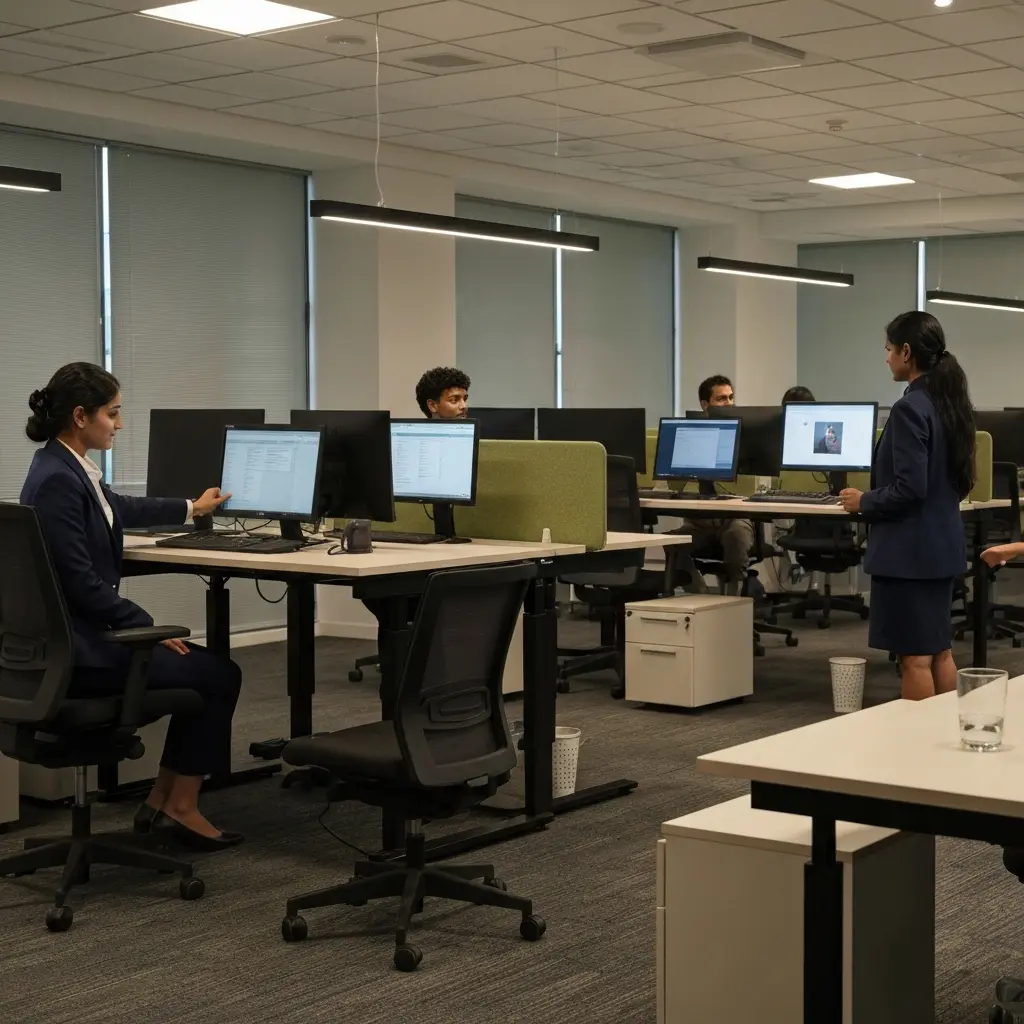
Chennai’s notoriously humid weather forces traditional offices to blast central air conditioning, creating a freezing environment for some and a stuffy one for others. This ‘thermal conflict’ in shared open-plan environments disrupts focus and drains team energy. The 2026 workspace eliminates this friction through strategic ‘Thermal Diversity’, dividing floorplates into distinct climate zones. Teams can now seamlessly transition between cool focus zones for deep analytical work or warmer social hubs for collaborative sessions.
Crizone Pro Tips: Avoid the central thermostat wars that kill office morale. Select a premium business centre that offers distinct temperature zones, allowing your team to migrate organically based on their metabolic rate and daily task requirements.
Biophilic Thermal Regulation
Advanced biophilic integration has completely moved beyond basic aesthetic appeal in modern Indian offices. Botanical living walls are now rigorously engineered as natural ‘evaporative cooling systems’ within premium coworking environments. Capable of lowering ambient zone temperatures by 2–3°C through plant transpiration, these installations drastically reduce reliance on harsh, artificial cooling. This creates a fresher, highly oxygenated micro-climate that sustains high-value collaboration during long afternoon sprints.
[Image of A modern botanical living wall functioning as an evaporative cooling system in a premium Indian coworking space]
Cost Control vs. Capex in 2026 Ergonomics
The True Cost of Acoustic Infrastructure
Fitting out a traditional office to meet modern acoustic standards is becoming prohibitively expensive for Indian SMEs and growing startups. Acoustic infrastructure is now the absolute number one capital expenditure for 2026 fit-outs. With 50% of global operators prioritising deep work pods and single-person offices over traditional hot-desks, building these from scratch drains vital cash flow. Persistent noise complaints remain the top productivity killer, making these acoustic investments non-negotiable for enterprise teams.
Sustainable Furniture and IoT Integration
Sustainable office furniture in 2026 is rapidly pivoting to ‘Circular Systems’ backed by strict take-back mandates. Major manufacturers are reporting a 40% increase in demand for modular desks featuring integrated IoT sensors for posture and thermal tracking. Purchasing these advanced high-infrastructure desks independently requires a massive upfront capital outlay from founders. Rather than sinking working capital into depreciating assets, corporate branch managers are leveraging flexible workspaces that provide this technology as a baseline inclusion.
| Cost Component (per 20-person team) | Traditional Office Lease (Chennai) | Crizone Flex-Space Membership |
|---|---|---|
| Upfront Fit-Out & Furniture | ₹25 Lakhs (Sunk Cost) | ₹0 (Included) |
| Acoustic Pods & IoT Desks | ₹12 Lakhs (Sunk Cost) | ₹0 (Included) |
| HVAC & Electricity (Monthly) | ₹40,000 (Variable/High) | ₹0 (Inclusive) |
| Facility Maintenance (Monthly) | ₹25,000 | ₹0 (Inclusive) |
| GST & TDS Compliance | Complex (Multiple Vendors) | Simplified (Single Invoice) |
Manager Insights: Transitioning to a premium business centre converts heavy capital expenditure into predictable operational expenses. This preserves working capital for core business expansion rather than locking it into rigid real estate fit-outs.
Is Hybrid Work Right for Your Team’s Autonomy?
The Return of the High-Infrastructure Desk
The hybrid model is only effective if the office provides a vastly superior environment to the standard home setup. Market data for 2026 indicates that 73% of employees report a massive 19% gain in performance when they possess personal agency over their workspace. The ‘Return of the Desk’ trend shows that workstations are being completely reimagined as high-infrastructure hubs. Built-in wireless charging, circadian-responsive task lighting, and height-adjustable surfaces bridge the gap between home comfort and corporate efficiency.
Empowering Teams with App-Based Control
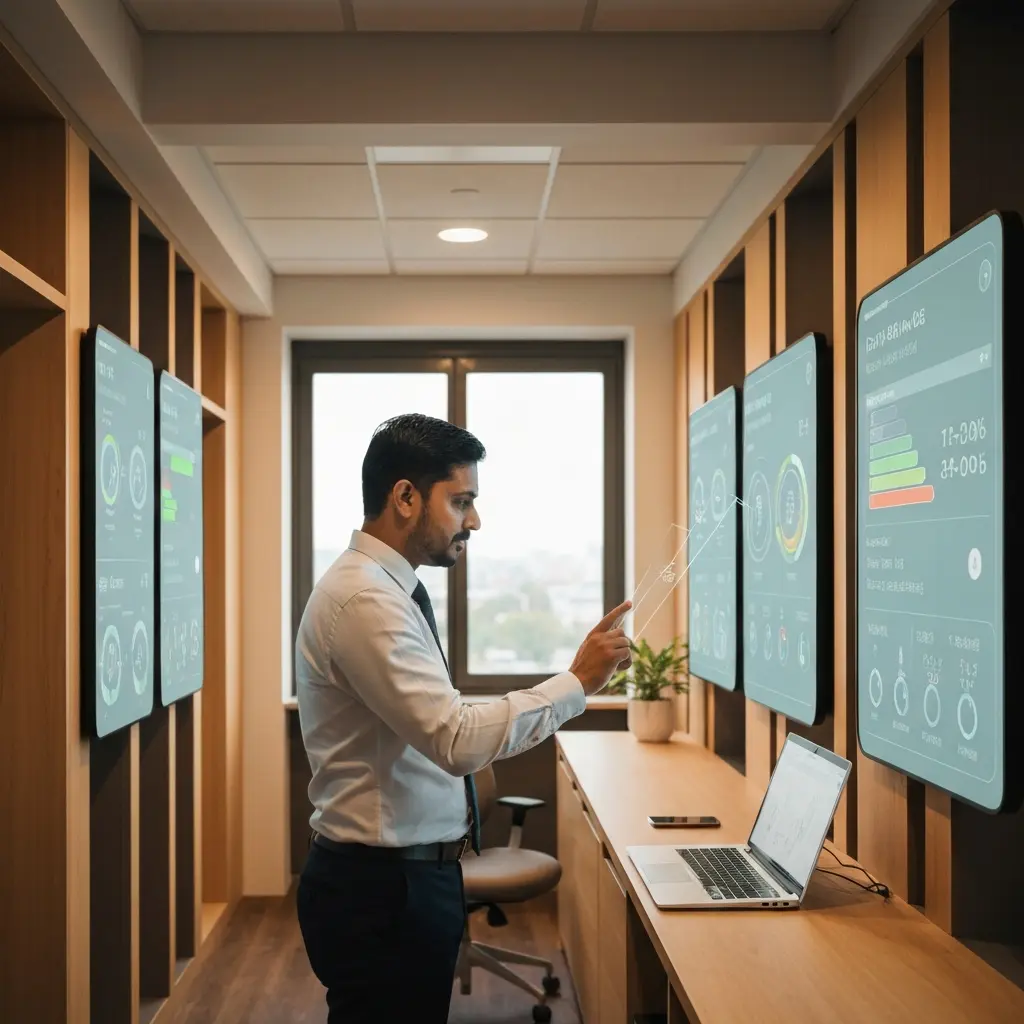
Energy-efficient Variable Air Volume (VAV) systems, connected to personal user apps, are revolutionising user autonomy in the workplace. Coworking members can now directly adjust their immediate desk-level temperature without impacting the wider office floor. This localised control not only elevates individual comfort but reduces total building HVAC energy consumption by up to 30%. The new 2026 WELL Building standards specifically weight this ‘Thermal Autonomy’, rewarding spaces where at least 50% of individual workstations feature localised environmental controls.
[Image of A professional adjusting a mobile app that controls the Variable Air Volume and circadian lighting at their ergonomic desk]
Measuring Intentional Presence
Skipping the heavy OMR traffic is no longer the sole priority for top-tier tech talent in Chennai. They seek environments that actively support and enhance their specific workflow. Forward-thinking coworking operators are entirely moving away from basic ‘Utilisation’ as a key performance indicator. Instead, they are adopting ‘Intentional Presence’ metrics, measuring exactly how environmental comfort directly impacts high-value output and long-term employee retention.
The 2026 Outlook for Indian Workspaces
As the Indian commercial real estate sector matures, the demand for sophisticated, human-centric design will peak in the coming year. Traditional leasing models will face immense pressure to match the agility, sustainability, and infrastructural superiority of premium flex-spaces. By late 2026, environmental agency will transition from a luxury corporate perk to a strict procurement requirement for enterprise branch offices. Sustainable circular systems will dictate fit-out standards, forcing legacy buildings to upgrade or face obsolescence. SMEs and startup founders who align with workspace partners offering these exact micro-climates will secure a distinct, measurable competitive advantage in talent acquisition.
Key Takeaways
- Implement environmental agency to boost team productivity and cognitive performance by up to 19%.
- Leverage thermal diversity to accommodate varying comfort levels without inciting central thermostat conflicts.
- Avoid heavy capital expenditure on acoustic pods and IoT desks by partnering with premium, fully-equipped flex-spaces.
- Prioritise high-infrastructure workstations featuring circadian lighting and ergonomic autonomy to support deep, focused work.
- Focus on ‘Intentional Presence’ metrics that track high-value collaboration rather than simply monitoring daily desk utilisation.
Conclusion
The modern Indian workforce demands significantly more than just a desk and a high-speed Wi-Fi connection; they require an adaptable environment engineered for peak performance. Giving your teams total control over their personal micro-climates and acoustic settings eliminates daily friction, driving both operational efficiency and deep employee satisfaction. Navigating this infrastructural shift independently requires massive capital and logistical effort that distracts from core growth. Crizone Business Centre stands as your ideal growth partner in Chennai, offering an expertly engineered workspace where environmental agency seamlessly fuels your business success.
Continue your workspace search
Explore the most relevant Crizone pages next
If this article is part of your Chennai workspace research, these pages help you move from reading into comparing live plans, locations, and fit.
Explore coworking plans in Chennai
Compare day passes, dedicated desks, private offices, meeting rooms, and virtual office options from one commercial hub page.
Book a day pass in Chennai
Best fit if you need occasional workspace access, a short productive break from home, or a flexible desk for a single day.
Compare dedicated desk options
A stronger fit for regular monthly use when you want a fixed seat, better routine, and predictable workspace costs.