· Business Growth & Workspace · 6 min read
Grid-Interactive Coworking: The New Revenue Stream for Indian Businesses
In 2026, smart, flexible workspaces are turning energy costs into revenue through grid-interactive technology, boosting resilience for Indian SMEs.
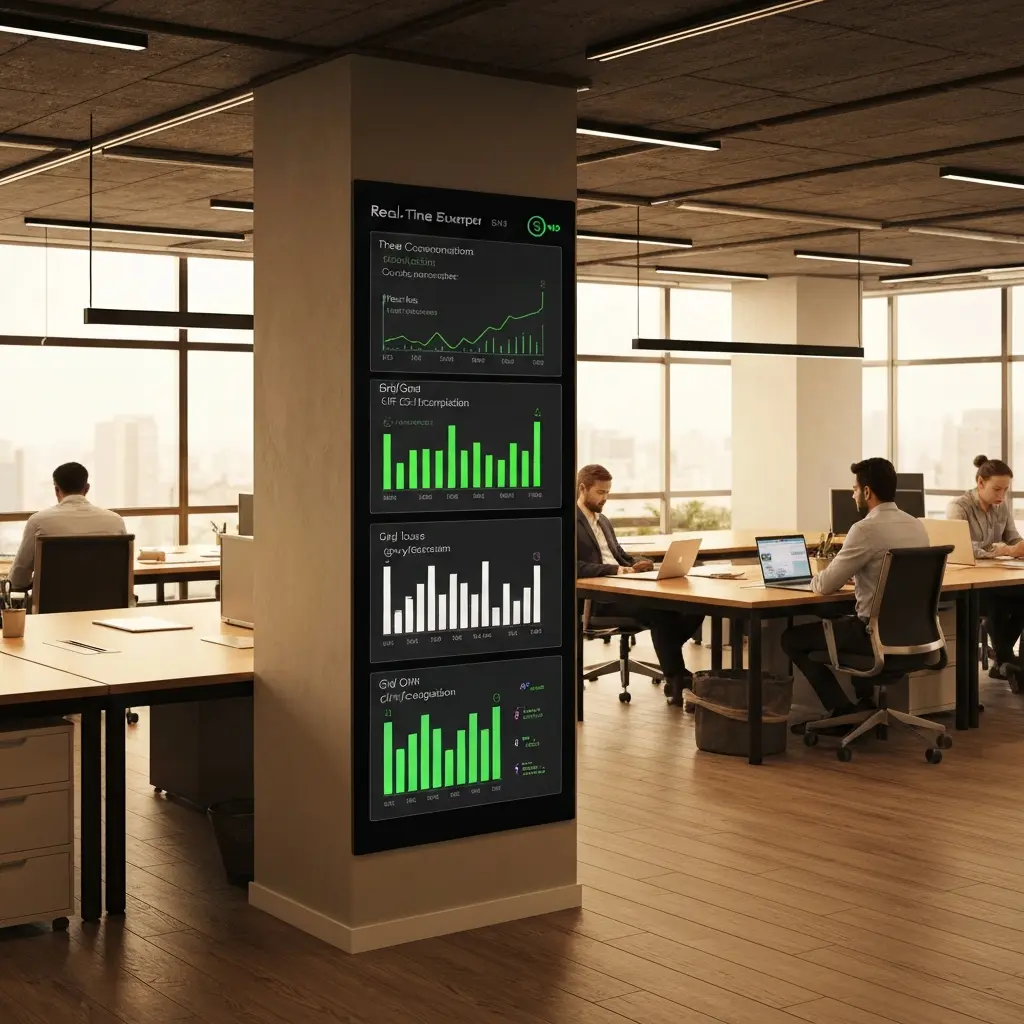
TL;DR: For Indian businesses, a modern workspace is no longer just about rent. By 2026, leading operators will use Grid-Interactive Efficient Building technology to turn energy from a major cost into a strategic asset, creating new revenue and offering resilient, sustainable offices that attract top talent.
Introduction
For Indian entrepreneurs and SMEs, operational efficiency is the cornerstone of growth. Traditional expenses like commercial rent, which can exceed ₹2 lakh per month in Chennai’s business districts, and unpredictable utility costs consistently pressure profit margins. The modern business leader seeks a workspace that is not just a physical address but a dynamic partner in scaling their venture. This demand is reshaping the market, moving beyond flexible desk access to holistic operational intelligence. The next evolution is here: workspaces that actively manage and monetise their energy use, transforming a fixed overhead into a growth lever. The integration of Grid-Interactive Efficient Buildings is set to redefine value, moving the conversation from cost-per-desk to total business resilience and sustainability.
What are Grid-Interactive Efficient Buildings?
A Grid-Interactive Efficient Building (GEB) is a smart, flexible workspace that uses advanced technology to communicate dynamically with the electrical grid. Instead of passively consuming power, it can adjust its energy use, store electricity, and even send power back to the grid based on real-time pricing and demand. This allows the building to participate in ‘energy arbitrage’ (buying low, using/selling high) and ‘demand response’ (reducing usage during peak grid stress), turning energy management into a revenue stream.
Why Should an Indian SME Care About Energy Flexibility?
For a growing business, every rupee saved on overhead is capital that can be reinvested in talent, marketing, or R&D. Energy, traditionally a volatile and opaque cost, is becoming a critical line item. In India, with rising industrial tariffs and infrastructure modernisation charges, this volatility will only increase. A Grid-Interactive Efficient Building shifts this paradigm. By choosing a workspace with this capability, you are not just paying for electricity; you are partnering with an operator whose financial incentives are aligned with minimising your shared operational costs and maximising efficiency. This directly protects your bottom line from future utility hikes, a strategic advantage in competitive markets.
Business Growth Insight: Your office’s operational intelligence is now a competitive metric. A workspace that earns revenue from its smart systems can reinvest in better amenities, technology, and stability, directly benefiting your team’s productivity and your company’s brand.
The Dual Benefit: Slashing Costs and Generating Revenue
How does this translate financially? Let’s examine the two primary mechanisms: cost avoidance and new income. Demand Response programs reward buildings for temporarily reducing non-essential loads (like adjusting HVAC in common areas) during peak grid demand. In 2026, these incentives are substantial. Meanwhile, Energy Arbitrage uses on-site battery storage (BESS) to ‘charge’ during cheap, off-peak hours (often at night) and ‘discharge’ to power the building or sell back to the grid during expensive peak afternoon hours.
| Cost Factor | Traditional Chennai Office (2026 Projection) | Grid-Interactive Coworking Hub |
|---|---|---|
| Base Energy Cost | Volatile; subject to annual hikes (+10-15%) | Managed & optimised; potential for net reduction |
| Peak Demand Charges | High penalty fees for short usage spikes | Actively curtailed through automated systems |
| Infrastructure Surcharges | Passed through directly to tenant | Mitigated via on-site generation/storage |
| Revenue Potential | None | Creates a new non-desk income stream for the operator |
| Net Impact on Tenant | Pure, unpredictable cost | Stable, predictable cost with potential for savings reinvestment |
Meeting the Core Demands of the Modern Indian Professional
The financials are compelling, but the human element is decisive. Data shows 70% of flexible office occupants prioritise a building’s energy resilience and sustainability credentials. For an Indian startup, this is a talent acquisition and retention tool. Top performers, especially from Gen Z and millennial cohorts, actively seek employers whose values align with environmental responsibility. A workspace powered by intelligent, clean energy signals that your company is forward-thinking and stable. Furthermore, in a city like Chennai, where power fluctuations can disrupt critical work, a building with battery storage and grid interaction ensures business continuity—no more lost productivity during unexpected outages.
Crizone Pro Tip: When evaluating a workspace, ask about its energy resilience plan. A provider invested in GEB technology is investing in your uninterrupted workflow, a non-negotiable for client deliverables and team morale.
Is Your Current Office a Liability or an Asset in 2026?
This question frames the strategic shift. A traditional lease is a fixed liability with rising costs. A managed office in a Grid-Interactive Efficient Building becomes an operational asset. The operator’s ability to generate ‘stacking value’ from energy flexibility—participating in multiple grid service markets—improves the asset’s overall valuation. This financial health translates into long-term stability for tenants; you are less likely to face sudden rent increases from an operator struggling with soaring electricity bills. As reported by JLL in their Future of Work research, landlords increasingly favour operators who can master energy performance, making these spaces the premium, sustainable core of India’s commercial real estate future.
[Image of energy value flow diagram in a smart building] Diagram: Visualising the flow of energy and value in a Grid-Interactive Coworking Space, showing solar input, battery storage, occupant usage, and bidirectional grid exchange.
The 2026 Outlook for Indian Workspaces
By 2026, we predict a clear stratification in India’s flexible workspace market. Premium providers will leverage GEB technology as a standard differentiator, offering clients not just a desk but guaranteed power resilience and a share in operational savings. We will see the rise of ‘energy performance’ clauses in managed office agreements, linking service quality to efficiency metrics. For Indian SMEs, the choice will be stark: remain in a cost-centric, volatile traditional setup or migrate to a value-centric, intelligent partner that actively shields your business from external economic pressures and enhances your employer brand.
Key Takeaways
- Energy is now strategic: Your office’s energy profile impacts your costs, your brand, and your ability to attract talent.
- Seek operational partners: Choose workspace providers whose technology and business model are designed to mitigate future cost volatility.
- Prioritise resilience: In India’s developing infrastructure, a workspace with on-site storage and grid interaction is a business continuity plan.
- Ask the right questions: Inquire about a centre’s sustainability certifications, energy management systems, and backup power strategy.
- Think beyond the desk: The total value of a modern workspace lies in its operational intelligence, community, and resilience, not just square footage.
Conclusion
The future of work in India is intelligent, resilient, and sustainable. The businesses that will pull ahead are those that make strategic choices about their foundational operations, including where and how their teams work. Selecting a workspace is no longer a simple real estate decision; it is a choice of a growth partner equipped for the challenges and opportunities of the coming decade.
To experience a workspace built on the principles of calm efficiency and forward-looking stability, consider the environment we cultivate at Crizone Business Centre, where we are preparing today for the smart, sustainable demands of tomorrow’s Chennai.
Continue your workspace search
Explore the most relevant Crizone pages next
If this article is part of your Chennai workspace research, these pages help you move from reading into comparing live plans, locations, and fit.
Explore coworking plans in Chennai
Compare day passes, dedicated desks, private offices, meeting rooms, and virtual office options from one commercial hub page.
Book a day pass in Chennai
Best fit if you need occasional workspace access, a short productive break from home, or a flexible desk for a single day.
Compare dedicated desk options
A stronger fit for regular monthly use when you want a fixed seat, better routine, and predictable workspace costs.